Our Fallen Unity

flag of america
Photo by Sharefaith on Pexels.com


When I was growing up my mom became emotional every December 7. With tears welling in her eyes she would attempt to describe the fear that she felt upon learning of the attack on Pearl Harbor, and the confidence that the nation gleaned from President Roosevelt’s address to the nation. In all honesty I was hard pressed to understand why she remembered that event each year with such great reverence. I’d listen to the repetition of her story and view it through the lens of ancient history rather than that of the life changing event that it was for her. It was not until I experienced the assassination of President John Kennedy that I began to have a fuller appreciation of why it was so important to her to never forget what had happened in her own youth.

When the horrific events of 9/11 unfolded in real time as I was getting ready to go to work seventeen years ago, I realized for the first time just how soul searing a violent act against our country felt. In that moment I knew how my mother had felt on December 7, and why she was never able to forget the shock of what had happened. Like her, I now find myself reliving the horror of September 11, and it never fails to leave me untouched by a kind of grief and longing for the world as it had appeared to be before that fateful day.

Of course, I like most of my fellow Americans had been far too blissfully ignorant of the undercurrent that had been building toward that brazen act of terrorism that might as well have been called an act of war. I was enjoying my life as never before, having reached a peak in my career, and measuring my contentment with a host of friends and the arrivasl of my first grandchildren. The times were so good, almost perfect, and my worries were few. I was far too busy living the good life to worry about signs that things were not as right as I thought. Suddenly on that September day I felt my confidence and even my trademark optimism collapse along with the twin towers. A kind of fear that I had rarely known invaded my psyche, strangling the fairytale world that I had created for myself.

I remember wondering if our country would ever again be the same, and in many ways that concern was well founded. I tend to believe that most of the political problems that our country faces today rose to the forefront on that day. In the ensuing seventeen years they have become more and more complex because of the divides in the way the citizenry viewed the event. Literally one fourth of the present population was not even born on September 11, 2017. Another significant portion was to young to really understand what was happening. Then there are those who watched the attack unfold forming the differing reactions that are inevitable given our human complexities.

I tend to believe that those who are of a more conservative bent are not really racist or any of the other isms that are bandied about so frequently. Instead they were simply shaken to the very core of their beings on that day. They see progress as being a way to reinstate the sense of security that they felt before that day. Others have a perspective of hoping to defeat terrorism by providing a sense of contentment and justice to more people. They truly believe that if we try to be understanding and make life better for everyone that we will finally be able to live in peace. Then there are the youngest among us who have moved on to other issues that seem far more important than dealing with terrosism. It is the friction, the push and the pull, between contrasting solutions that is causing the rancor and distrust between us.

In many ways the events of September 11, 2001, did so much more than take down two buildings and kill thousands of innocent people. It damaged all of the citizenry. We are scarred and our wounds still have not healed. The terrorists accomplished the unthinkable in turning us on one another. I doubt that even they ever thought that the ultimate result of their attack would create a psychological battlefield within families, friendships, cities, states and the nation. Essentially we have yet to come to terms with our biggest fears therefore everything that we touch is tinged with distrust.

I am reminded of my teaching days whenever I witness the misunderstandings between individuals with differing opinions that are now so commonplace, and often filled with hatefulness. It occurs to me that everyone is chattering, but nobody is taking the time to quiet the scene and make a genuine effort to hear and understand what each person is trying to voice. We can’t get to the heart of the issues because there is so much confusion about what people actually believe.

I suppose that if we were to really learn anything from 9/11 it would be that we are far more vulnerable than we ever thought we were. We all suffered in some way on that day. We internalized our emotions and considered ways to move forward, but we weren’t willing enough to share what we were thinking. As our pain grew we allied ourselves with those who appeared to be like minded and turned our backs on those whose beliefs differed. Over time we fell into the trap of justifying ourselves by vilifying anyone with whom we did not agree. The battle lines were drawn, and few among us have the courage to admit that in many ways we have all been wrong and in many ways we have all been right. Our real enemies have won, while we bicker among ourselves.

I had a more difficult time thinking about 9/11 this year than ever because our nation is so fractured. I even attempted to push it from my mind until my granddaughter interviewed me for a school project. All of my old emotions came rushing back into my mind. It was as though I was watching those terrible images all over again. Then on the anniversary of the event I cried as I heard the national anthem being played at the 9/11 memorial site. My chest heaved as I watched a New York City firefighter ring a bell for the fallen. I was reminded of how united we had been for a brief moment. I thought of President George W. Bush climbing onto a pile of rubble and assuring the rescue teams and all of New York City that we heard their plaintive cries. We were the United States of America, the united people ready to do whatever it took to restore a sense of well being.

Somewhere along the way we forgot what we had set out to do. We lost our way. Now is the time to open our hearts and our minds and to remember who we really are as people. We should not fight with each other anymore. If we are to honor those who lost their lives, then we must find ways to get along or the very foundations of what we most cherish will fall. 

The Benefit of Learning

close up of woman working
Photo by Pixabay on Pexels.com

An investment in knowledge pays the best interest. —-Benjamin Franklin

I’ve always believed that education is the most powerful way to combat poverty. I used to tell my students that knowledge is power, and that it is a great gift to each of us that the first twelve years of it is free from the government. Sometimes they pushed back on my enthusiasm interpreting mandatory attendance at school as an onerous thing. Many spoke eagerly of reaching the age at which they would be able to drop out and get on with living the way they so desired. I usually confronted them with arguments designed to convince them that learning is a great privilege that is often denied by authoritarian governments.

In my own lifetime I have heard of grievous examples of governments that persecuted and even executed teachers, leaving entire generations of children without even the most basic educations. This was done, of course, to eradicate thinking and the ability to discover truths. Dictators want to be in charge of the dispensing of information so that it benefits their causes. Sometimes when I explained such things I would challenge my students to never ever allow anyone to take away their rights to schooling. When I put it that way, many of them suddenly became far more eager to partake in the lessons that I and my fellow teachers presented to them.

Unfortunately there always seemed to be a few who were not the least bit interested in pursuing knowledge under any circumstances. Instead they wanted to get out of the need to attend school as soon as possible. They had big plans that did not include what they considered to be a waste of their time. Some also had to deal with poverty. Their parents wanted them to get to work as soon as possible. Extended schooling did not appear to be an option for them. Sadly by following this pathway they generally only managed to keep the grinding cycle of economic disadvantage continuing for one more generation.

I truly enjoyed being part of the KIPP Charter schools because above all were the ideas that there could be no excuses for not taking full advantage of all educational opportunities, and each day at school was focused on hard work. Our promise as teachers was that we would support our students in their journey to and eventually through college. The attitude that we all believed was that together we would be to provide our KIPPsters the necessary tools and attitudes for living better lives.

I have happily witnessed extraordinary results among so many of my former students. I have watched them earning multiple degrees and landing extraordinary jobs. I see photos of them standing in front of the beautiful homes that they have purchased and vicariously enjoyed their travels all over the world. Most of them have broken the crushing routines of grinding poverty that had sometimes stalked their families. Not only are their own lives more prosperous, but they have also been able to help their parents, It is so gratifying to see them using the skills, knowledge, and values that they learned first from all of us who are known as Big KIPPsters and later from their professors at universities and their mentors at work.

I recently became involved in a situation that brought home the sadness that I have always felt when I see young folks eschewing the marvelous opportunities that education provides. I was helping a very sweet woman move from one place to another. As we worked side by side for days I realized how bright she was, but also how her lack of resources had made her life so incredibly difficult. She had no savings, but rather had to rely on one paycheck to another just to provide the most basic standard of living. This meant that she was unable to scrape together enough money for the kind of deposits and down payments that are so often required in today’s real estate market. Unfortunately nobody in her family was able to help her either. In fact, she was quite distraught that so help was forthcoming from either her brothers or her adult children. She was on her own, and realizing that she had no way out my husband and I helped her.

Once we gave her the funds to secure a place to rent she realized that she was also alone in having to move her belongings and those of her elderly mother who lived with her. My husband and I spent a very long nine hours loading furniture and other items into and out of a moving van that we rented for her. While we worked side by side she reflected on her life and admitted that if she had been more attuned to becoming better educated, then perhaps her children might also have been inspired to stay in school and even earn degrees. Everyone’s lives might have been better in the long run instead of being so difficult.

I felt quite saddened by the woman’s situation because I know that her circumstances are repeated many times over in our country. Not all schools take the time or expend the effort to help young people and their parents understand the true value of education. They do not provide the unwavering support that is necessary to help those with few resources to navigate the treacherous waters of being admitted to college and then being able to earn a diploma. It takes money and relationships with people who care to help our poorest citizens to better themselves. 

The key to so many of the social problems faced by our society is to teach our young the importance of a lifetime of learning. Knowledge earns interest indeed. The more we all invest in it, the less we will have to spend on welfare programs in the future. Our bipartisan goal should be to insure that the greatest possible numbers of today’s children embrace and appreciate the value of schooling. When they learn, they earn, and we all benefit.

Finding Refuge From the Storm

lightning and gray clouds
Photo by Andre Furtado on Pexels.com

I’ve had to take a deep breath of late,  and step back for a time. The furor over politics is ratcheting up as we draw nearer to the midterm elections, and the sheer lunacy of it all has been wearing me down, I found myself stewing over the craziness of each day’s episode of election tales deep into to the night. Then I found myself sleeping later and later in the morning to make up for my attacks of insomnia. In spite of the fact that all is going well in my life, I was getting sucked into the vortex of anger that was swirling all around me. It was not until I saw a single hummingbird perched on the branch of a tree near my bedroom window that I found the peace of mind that I had been seeking. Thanks to the feeder that my youngest daughter brought me from Colorado the tiny creature has been attracted to my yard, providing me with some unexpectedly comforting moments.

I suppose that I set myself up for the anxiety that has been stalking me. I was so taken by the calm and bipartisan sweetness of John McCain’s funeral that I had naively believed that the political landscape would be suddenly transformed into a kind of Kumbaya sanctuary. I had been forewarned by one of my wiser and more logical friends not to hold my breath, but being ever the cockeyed optimist I truly thought that we had reached one of those watershed moments in history. Boy, was I wrong, not just in left field but outside of the ballpark entirely.

For a time I was unable to escape the chaos that spoiled my mood. I don’t know about you, but my email account is filled with political adds from all sorts of folks who want to part me from my money for their causes. They have become rather annoying with their daily rants that I guess are supposed to rile me up enough to take out my credit card. Little do they know that they are having the opposite effect. I just want them to go away.

Watching the news on television or listening to it on the radio isn’t any better. I’ve sworn off of CNN, Fox, ABC, NBC, CBS and NPR. Instead I tune in to the local stations mostly to hear the weather report since this is prime hurricane season and my city is often the target of those kinds of storms. Otherwise, I just don’t want to hear the posturing or have to watch the embarrassing behavior of most of the folks in Washington D.C. or those who are hoping to get there. I truly wonder if they all believe that I am as much of an idiot as their commentaries seem to assume. Sorry folks, I’m not falling for any of the propaganda. I can spot the techniques from a mile away. You won’t see me jumping on any kind of bandwagon.

I love catching up with friends and family that I don’t always get to see by way of Facebook. I enjoy knowing how people are doing. Now that I am retired I might lose track of them were it not for all those comments and photos on my wall. Nonetheless, my space has been bombarded with the pros and cons of the newest Nike ad and dire warnings about Brett Kavanaugh. It’s all way too much over the top for me. I’ve had to mostly stay away from it lest I surrender to the temptation to make comments that might cause me to enrage friends and family whom I love. I’ve tried to just leave them to their beliefs, because in the end each of us is entitled to our individual opinions. I’m not going to change mine because someone else is ranting, and I suspect that even if I submit a carefully crafted persuasive piece it will make little difference in the grand scheme of things.

The one thing that I have seen that most infuriated me was an article in which the author submitted an argument that presumed to know what all white people think about the various issues of our time. He laid the blame for most of the world’s ills directly at the feet of anyone of western European ancestry, but most especially those who eventually became Americans. To be fair the author was also white and his intent was to write a kind of mea culpa for being born into such an horrific race. He apologized in the name of all of us.

I did not find his ideas to be as redeeming as many of my friends did. Instead I saw it as patronizing and highly insulting, not to mention presumptive. Only a handful of the world’s people actually know me or anyone else for that matter. It is impossible to make sweeping generalizations about individuals, and it is dangerous to place large groups of people into a single category. The complexities of humans are far too great to assume that we completely understand what makes each person tick.

As for myself, if truth be known I am a political misfit. I have rarely found anyone with whom I totally agree in matters of national concern. I would be maddening to anyone at the extremes of political life, and in turn I long for politicians of old like John Kennedy or Barbara Jordan. I liked George H.W. Bush’s kinder, gentler nation, and I loved bipartisan efforts like those of the Gang of Eight. I advocate for immigration reform and fiscal conservatism at one and the same time. I am against both the death penalty and abortion. I think that it is high time that we fully embrace the idea of gay marriage, but I don’t think that it is right to ignore the religious beliefs of those who disagree. I believe that minorities still suffer at the hands of racists, but I do not believe for a second that all white people are racists. I have seen bad teachers, bad business owners, bad lawmakers, so I assume that there are bad police officers hiding in the mix of the good guys who serve and protect us. I have a theory that there are evil doers who are having a great time watching us tear at each others’ throats. It’s an old political trick that has been around for centuries and to my chagrin it is working rather well.

So for now I will spend more time with my little hummingbird, and less keeping up with the news. Besides, my grandchildren need me to help them review for tests in Geometry and Algebra II, so I have some planning to do. I will ignore the chaos and devote myself to more worthy pursuits.

Built On Love

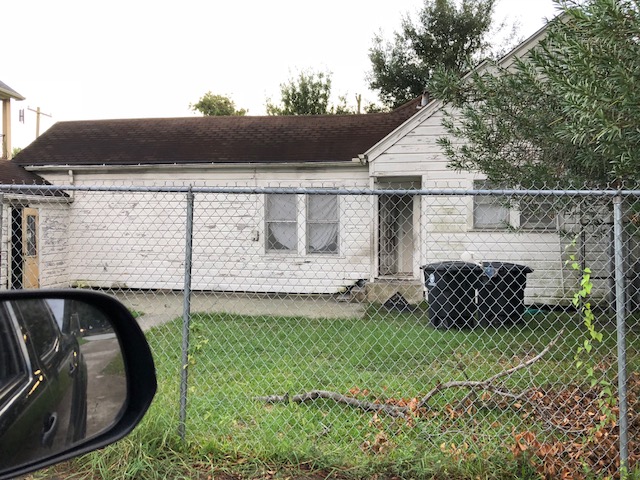
The house

The husband loved his wife and his little daughter so much that he wanted to show his feelings by crafting a strong and beautiful home for them. He ran concrete piers deep into the gumbo like ground, wanting to avoid the shifting motions of the earth in that part of Texas. This would be a place of security, a symbol of just how much he cared for his family. Once the foundation was set, he created a pretty bungalow with curved doorways, warm wooden floors, and windows to allow the sun to lighten each room. It was small, but elegant, a place designed for gatherings of friends and brothers and sisters. It stood on a large lot shaded by trees and within view of the rest of the family homestead. Everyone agreed that it was beautiful, and best of all it made the man’s wife and child smile.

It would be the site for so many gatherings, celebrations, parties, and even times of sadness. It weathered storms, hurricanes, summer heat, icy winter mornings. Inside the family felt comfortable and safe even as life began to change. The man was quite young when he had his accident, a crazy thing really. He fell out of a tree and broke his back. He developed a dangerous infection but could not take the penicillin that might have cured him because he was allergic. He died with so little warning, leaving his wife and daughter bereft and wondering how they would manage without him. They grieved inside the house that he built until they somehow found the healing that they needed. They went on with their lives and the house stood as magnificently as ever.

The man’s wife rose to the challenges set before her. She helped to continue the business that he had built with his brothers. They worked in a back room of that house, loving and laughing and taking care of one another. The daughter grew into a beautiful woman. She set out on her own in a house nearby. She began a family and had a son. Now the rooms were filled with the sounds of play each day as the little boy spent hours with his grandmother. It was still the happy place that the now gone husband had hoped it would be. His memory lived in those rooms.

In a kind of classic love story the beloved wife seemed to long for her husband even as she carried on with courage. She one day discovered that a cancer grew in her body. She was still a young and energetic grandmother, but not able to fight the disease which overtook her body. She died and all who knew her were devastated, wondering how it would be possible to continue her legacy of compassion, love and laughter. They gathered in the house to mourn her and to recall the love that they had shared there.

The daughter moved into her mother’s house. She and her husband and son continued the traditions that her parents had so honored. The house was still as lovely as it had ever been, but the neighborhood had begun to change. Where there had once been a little forest of trees leading to a bayou, an interstate highway had been erected. Neighbors slowly began to move to suburbs far from the center of town. The view of the business district that was only a few miles away began to be dominated by gigantic skyscrapers. The town became a city growing around the little bungalow with a vengeance. Still inside those walls the daughter and her family lived life just as her father had hoped.

The boy grew and fell in love and married, moving to the other side of the city. He and his wife often visited the little house. They loved the Sunday dinners, the Thanksgiving and Christmas celebrations, and the quieter times when the boy watched football with his dad and his wife enjoyed tea and conversation with his mom in the gracious dining room of the house.

Eventually there were more children crawling on the gleaming floors and playing happily with their grandparents. They especially enjoyed the times when they slept over and stayed in the room that had once been their grandmother’s and then their father’s. They heard stories of the original owners of the house and played dress up with hats that had belonged to their great grandmother.

Progress moved farther and farther from the center of the city. The streets near the little bungalow grew dangerous. Crime became a way of life. It was time to leave. The bungalow would become a rental, with hopes that one day the area would become as glorious as it had once been. The lovely rooms were emptied of the family treasures, but the walls retained memories of the wonderful times that had gone before.

Things began to fall apart for the house and the places around it. The people who rented it did not love it. They broke its windows and punched holes in its walls. They did not know how precious it had once been. It was only a way station for them, a place to stop over on the route to something better. In many ways the house and the neighborhood around it became unrecognizable to the members of the family who had at one time enjoyed and appreciated its history.

The husband’s daughter died and left the house to her son, who dreamed for a time of making it a wonderful place to live again. Such reveries never came to pass. There were drug dealers walking on the once placid streets, derelicts lounging on the curbs. At night it was a dangerous place where crimes were commonplace. Still, the boy kept the house even as he watched it sag and saw the damage that renters had inflicted on it. He grew older than his grandfather had been at the time of his death. He made repairs on the house and had to struggle with renters who would not pay. It became an onerous task to keep the house alive, and so one day he decided that it was time to sell it to someone else.

He found a buyer, someone who wanted to build his own dream on the land. The house would be torn down. There was a kind of sadness about the whole affair. As the boy walked through the rooms he saw that the little bungalow was past its time. To revive it would be costly. In some ways it would be merciful to just let it go, to rejoice in the memories of its happier days.

The husband who built that house looked down and smiled at the boy who had been his grandson. He approved. He understood that to everything there is a season and the time for the bungalow had passed. The land was not the same as it had been when he created the place with such great care and love. He would smile that the boy had tried so hard to keep it alive, but he also knew that the little house that was his gift had changed long ago.

The boy and his wife walked through the rooms one last time before surrendering the keys. The floors were scuffed and dirty but still so strong. They heard the voices and the laughter of the people who had once passed through the rooms. The house groaned and creaked and spoke of how old it felt. It told the boy that it was time to let go. It was the love that made that house, and that love lives on , not in walls and floors but in the boy’s heart.

Atonement

autumn autumn colours autumn leaves background
Photo by Pixabay on Pexels.com

I often joke that I may have to spend some time in purgatory when I die before earning a place in heaven. I note that I can rock along for quite some time doing my best to be a good person and then I do or say something not so nice that cancels some of my kindnesses. Truth be told I’m about average when it comes to my humanity. Like the scores of people who came before me and those who inhabit this earth with me I make mistakes. Such is the inevitability for most of us.

Now and again I see another soul who seems to have achieved a bit more perfection. Both of my grandmothers would fall into that category. They were generous, loving guileless women, but I have often thought that being isolated from most of the ugliness of the world as they were may have helped them not to back slide. Women today spend decades out in an often unforgiving world and the temptation to fight back sometimes leads to anger and invective of the sort that my grandmas never invoked. I believe that I will ultimately be forgiven for my lapses because I also firmly feel that my God is all about redemption. I mean, isn’t that more or less what Jesus told the world as He died on the cross?

I have been reminded of the power of honest contrition by admissions of weakness by heroes of mine like Mother Teresa, Jimmy Carter, and John McCain. All three made it clear in their writings and orations that they sometimes failed to follow their own principles. They spoke of making faulty decisions. In other words they were as human as any of us, which I suspect was also the case of my grandmothers, not withstanding my idealized image of them. As humans we are filled with imperfections and contradictions. When all is said and done the question becomes how we have attempted to live the majority of our days, and whether or not we have been willing to admit our transgressions and attempted to change.

My mother and my teachers all taught me that to sin is human, but to ask forgiveness is divine. They also insisted that once I demonstrated true contrition it was important that I move forward rather than eternally looking backward at my failings. I was schooled in the idea that I should love all of my fellow men, and that my hatred should be aimed at behavior that I found to be egregious, not people. That’s an admittedly difficult formula to follow, but it became a glorious model to use in my work as an educator. I was able to separate the flaws from the person, and deal with behaviors while still caring about the child.

We are in a cycle of judgmental excess, all around. We even take our self righteousness to the extreme of looking back in history and condemning entire civilizations and ways of thinking. We forget the rule of social science that tells us that generalizations are rarely acceptable in assessing humans. We also forget how different the world was from ours even a hundred years ago.

I have been watching the Amazon Prime series Lore and have been taken by the ignorance and superstitions that were prevalent in the world of my ancestors. Scientific and medical knowledge was so antiquated. Philosophies were often based on superstitions. People were generally uneducated much like my two sweet grandmothers who were unable to read or write, much less understand scientific and sociological intricacies. I find it oddly ridiculous that in our modern era there are so many who would overlay our own knowledge and understanding on people who often lived in isolation with little or no education simply because they appear to have behaved badly in a past that was as human as the present.

I also have a problem with pointing fingers of judgement at historical figures who attempted to atone for admitted transgressions and mistakes. It is so easy to insist that none of us would ever have been willing to follow bad leaders, but then we will never know if that is true or not. We cannot possibly put ourselves totally in the shoes of someone from another time and place. We would have to become them in every sense of the word, and of course that is impossible. Instead of looking backwards and admonishing people who lived in times far different from ours it is up to us to look forward. We can do that by learning from the past. Reading and studying with an open mind will teach us how to find the best thoughts and ideas. If we are to be fruitful in our quest for a more equitable society then we must spend more time constructing than tearing down, finding the good and building on that foundation.

I saw a group of students from Harvard who asked a professor what they might do right now to begin to foster positive change in our society. His answer stunned them a bit, but it was brilliant. He suggested that they take full advantage of their educational opportunity by becoming persons who have knowledge and the ability to think critically. He challenged them to acquire the tools that they will one day need to become great leaders, He spurned the idea that they spend their time protesting before they knew enough to come to reasoned decisions.

I also seem to go back to the folksy wisdom of my mother who was indeed a brilliant woman. In her times of clarity she understood human nature as well as any sociologist or psychologist. She often told me that people evolve over time, and that life is a journey through many seasons, all of which make us better people if we are willing to grasp the importance of each. She noted that youth was a time for observing and learning. She spoke of knowing when and how to grasp the reigns of leadership and when to pass them down to the next generation. She felt that a wise person would understand that we are all hoping and dreaming and failing. Each of us is an imperfect being with the potential for greatness. Our journeys in that direction challenge us to be humble and compassionate and forgiving. She always believed that there is an overwhelming goodness to this earth that beats with one heart. If that is our focus we will find happiness and purpose, even as we falter.