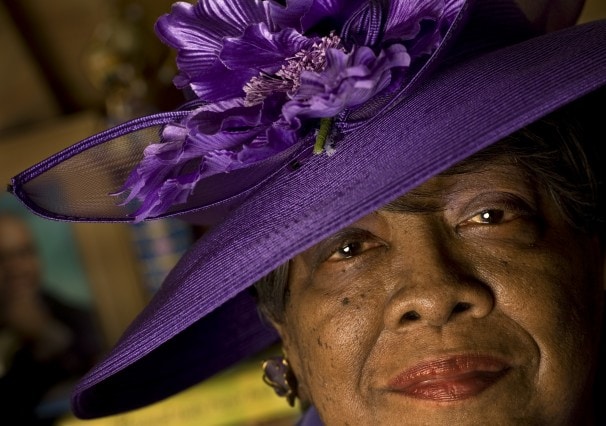
Hats

hat

I love watching the old black and white movies from the thirties, forties and fifties. They remind me of my childhood and how lovely my mother and aunts were when they were young women. In those old films the ladies always wear glamorous hats and the men sport fedoras. It’s actually the way people dressed whenever they went out on the town back in the day and it was always fun to watch the parade of people styling in their finest fashions. I sometimes think that most of us have lost the sense of elegance that was more commonplace decades ago. We are certainly more comfortable but there was something so refined about the efforts that people made when they went to church or just on a downtown shopping excursion.

I still see those who go all out for Sunday services. They wear fashions worthy of a visit to the Queen of England. They don lovely bonnets and wear stockings with their polished pumps. They are a lovely sight and in my mind they present an aura of respect for the occasion. They take the time to elevate their style from the more casual look of jeans and flip flops or sneakers. they stand out from the norm in their fastidiousness unlike the times when dressing up was more common place. 

When I was a young I always had a pair of dress shoes, gloves and a hat at the ready for Sunday services at church and special occasions. The millenary sections of department stores were filled with delightful bonnets of every conceivable style designed to perfectly compliment whatever outfit a woman or girl might wear. In all honesty I never looked particularly good in hats but I loved them nonetheless. I always managed to find at least one that complimented my features that I kept in a round hatbox of the kind that was a mainstay in most women’s closets.

I must admit that all of the lovely styles were sometimes distracting at church, especially on Easter Sunday when there was a virtual parade of fascinators bearing flowers and feathers and veils. It was a day when the old hats that were beginning to fray just a bit were put aside in lieu of the newer models for the spring and summer months. Along with all of the spring frocks, white shoes and spotless gloves the hats were indeed a sight to see.

Whenever we went shopping in downtown Houston my mom would insist that I dress in my Sunday best which meant polishing my shoes until they gleamed, wearing nylon stockings, putting gloves on my hands and donning whichever hat I had that went with the season. We’d catch the city bus so that we would not have to worry about parking a car and ride to Main Street feeling a sense of growing excitement about our adventure.

When we entered the splendor of Foley’s Department Store we felt as grand as any of the ladies wearing Chanel suits, designer hats and furs even though our fashions had been purchased in the bargain basement downstairs. I always thought my mother was one of the most beautiful women of all in her lovely dress and chapeau. She had an elegance that transcended the cost of the things that she wore. She carried herself with so much dignity and confidence that she might have been a resident of River Oaks. I always felt that those little accoutrements like gloves and stockings and hats were the keys to adding a touch of glamour to the occasion.

My husband tells me that he too accompanied his grandmother on shopping excursions downtown on many Saturdays. She had a large collection of hats that she always wore whenever she went out. She was a rare beauty who was able to choose any style and look stunning. She might literally have stepped out of one of those old films that I so enjoy with her sense of fashion and the hats that complimented her lovely features.

The days of men and women wearing fine hats as a matter of fashion are all but gone. The gimme cap is the choice of most men and women rarely cover their locks. Hats are more likely found in antique shops than in department stores. They are the stuff of  history that is slowly fading. We find hats for sale at amusement parks and quirky gift shops. We wear them on Halloween and at festivals but not so much on fine occasions. We seem to prefer to be relaxed and unencumbered by excess gear. Comfort is our accessory of choice.

I enjoy the notion that the members of the royal family in England still adhere to the old ways. Their custom demands that the ladies wear hats for special occasions. The queen always reminds me of my own mother whenever she appears in public. She has her lovely suits and still wears stocking on her legs and always there are her beautiful hats that make her look elegant even as she grows old.

Some traditions are so lovely that they should always have a place. Wearing hats is one that I think we should revive. I greatly admire those who have never given up the custom. They are so wonderfully lovely.   

A Fall Tradition

pumpkin

Fall is filled with a number of traditions for me. I don’t ever see leaves turning glorious colors unless I travel away from my home near Houston. Everything stays green here until the leaves eventually dry into a crispy brown and fall to the ground, so I bring out all of my artificial wreaths and garlands to remind me that somewhere the colors of fall are glorious. I decorate with pumpkins, acorns and pine cones, festooning my home with shades of orange, yellow, red and brown. It’s quite lovely and in many ways I enjoy the decorations of the fall season even more than those of Christmas.

I take an annual fall pilgrimage to The Cheesecake Factory to share a piece of pumpkin cheesecake with husband Mike. The treat is only available for a short time each year so I make careful plans to be certain that I don’t miss the opportunity to enjoy the creamy goodness while I can. I used to purchase an entire pumpkin cheesecake for my birthday but the days when I might eat entire slices without adding inches to my waist are long gone. Sometimes it feels as though simply looking at a slice of pumpkin cheesecake adds a pound or two to my girth. Now I eat sensibly and sparingly, but always include at least one shared slice of my favorite taste of fall.

I rearrange my closet each fall to bring jackets and sweaters within reach in case the weather finally turns cool. I store shorts and sleeveless tops farther to the back. It’s like getting a whole new wardrobe and I always find myself feeling a bit giddy about the way that the clothes hide a multitude of sins in my eternal fight to maintain a healthy weight.

So much about fall makes me incredibly happy save for one tradition that never fails to come around. Ever since I can remember there is a time when my throat begins to feel as though it is going to close up so tightly that I won’t be able to swallow. Almost without warning I am unable to speak in a normal tone of voice. My laryngitis forces me to weakly whisper any communication that I wish to convey. No lemon or honey or medication seems to help until it has run its course. For a few days each and every year I learn what it would be like to be trapped in a state of muteness.

Now that I am retired I am able to simply stay home until my body adjusts to whatever allergic reaction I have had to things floating in the air. When I was still teaching my problem was far more serious. I never felt so bad that I need to retire to bed or stay at home, but attempting to teach a lesson in mathematics with a voice so small that it sounded as though it belonged to a tiny mouse was almost impossible. Sadly each school year of my career I found myself attempting to manage students while keeping them in a learning mode without the aid of my voice that would carry across a room. It was always a challenge.

Amazingly my students always rallied to help me. They immediately sensed my predicament and rather than taking advantage of my inability to actually control the situation they resorted to extreme kindness toward me. No matter how rowdy the group of kids might have been under ordinary circumstances they rose to the occasion and proved themselves to be helpful in my time of need. It was as though their natural tendencies to be good overcame any temptations to use my illness against me. I always let them know how much I appreciated their efforts once my voice finally returned, and they assured me that they would save their shenanigans until it was a fair competition.

I find that all people, not just my students, trend toward kindness. This year when my annual bout of laryngitis came I was scheduled to have my driver’s license renewed. Upon my arrival the workers at the DPS were determined to be as surly as they are known to be until they realized that the squeak in my voice was real. Each person suddenly became incredibly helpful and even smiled at me. They actually seemed to enjoy having an opportunity to be nice. Instead of barking orders they treated me gently and even made suggestions as to how I might treat my illness.

On an evening when I was slated to help my grandsons review for a Pre Calculus test I stopped at a Starbuck’s to get some hot tea in the hopes that it might keep my voice going long enough to be of use to the study process. The barista was quite patient as I attempted to squeak out my order. The expression on his face told me that he was feeling my pain. When I was searching for the change I needed to pay my bill he anxiously waved away the few pennies that I was unable to locate and wished me godspeed and a quick recovery.

I suppose that my point is that each fall when my allergies wreak havoc on my system I am reminded that people are truly good. It’s always been that way and I am certain it always will be. It’s easy to focus on the ugliness in the world but it is the exception, not the rule. That’s why we notice it. What we often fail to see are the thousands of moments when we humans take care of one another without even being asked to do so. Being nudged to remember this each fall is just one more reason that I so love this time of year.

Nothing More Special

img-3327509-2-Roast-dinner

When my father’s parents were living on Arlington Street in the Houston Heights we would go visit them every Sunday after church. My grandmother always prepared a lovely dinner for us and since she was a gifted cook it was invariably our most delicious meal of the week. What was most wonderful about it had little to do with the food, however, and everything to do with the joy of sitting around her big mahogany dining table laughing and talking while we filled our bellies with her beloved dishes.

My grandmother was a stickler for tradition. She covered the table with a crisply ironed cloth on which she placed her Sunday best china. She always waited for me to arrive to set the silverware next to the plates. It was from her that I learned the proper way of placing the knives and forks and spoons and folding the napkins.

In the meantime the aroma of chicken or roast beef tempted our tastebuds while Grandma put the finishing touches on potatoes, vegetables gravy and baked breads. I marveled at her ability to juggle so many culinary tasks at one time and still be so pleasantly patient. She reveled in the art of making us happy with her homegrown abilities that were all memorized in her head. Years of practice made every single item perfect and we waited with growing anticipation for her to finally announce that it was time to gather at our places to say grace before digging into all of the wondrous foods that she had prepared.

I loved the sameness of those Sunday afternoons and I missed them when my grandparents moved away to their farm in Arkansas. My mother did her best to reproduce the feel of those Sunday afternoon galas but I sorely missed the ceremonial nature of the tradition that my grandmother had brought to the table. After my father died my mom switched to going out for brunch after church which was quite a fun treat but was not nearly as wonderful as those formal gatherings at Grandma’s house.

I suppose the my wise mother knew that attempting to reproduce our once glorious Sunday tradition without my grandparents and my father would only serve to emphasize their absence in our lives. She redirected our thoughts of the old times to the adventures of eating yummy pancakes and waffles in restaurants filled with joy and laughter. Still, I would often think about how much I missed Sunday dinner with the family until I rediscovered the routine with my mother-in-law after I married.

To my great delight she was well versed in the art of entertaining on a Sunday afternoon. Like my grandmother she prepared her dining table with fine linens and her best china, silver and glassware. She was particularly well versed in the preparation of a Sunday roast in the grand tradition of England. She had learned how to perfectly roast the meat from her mother, always including potatoes and carrots and green peas. She was masterful at making a dark brown gravy to pour over the muffin-like Yorkshire pudding that was the highlight of the feast. My husband Mike always insisted that his mom never quite mastered the art of making Yorkshire pudding the way his grandmother had, but I never found any reason to fault it. It was gloriously delicious.

As my daughters grew older my mother-in-law taught them the art of setting a table just as my grandmother had done with me. They delighted in being helpful and being part of a routine that had been passed from one generation to the next. It was one of the best times of each week for all of us as we sat together being reminded of the loveliness of family and tradition.

Once the meal was finished the menfolk always went to another room to watch sporting programs or talk about the latest news. My mother-in-law brewed coffee for them and a big pot of tea for me and my girls. She always served it so elegantly along with a tray of cookies bought especially for the occasion. She showed us how to warm the pot before pouring the hot water over the tea and cautioned us in how to wait for the brew to steep. I still laugh because her very English mother who had been born in Newcastle, England had told her that Lipton tea bags made the very best brew.

We would sit and talk about wonderful things while we sipped on our tea and munched on little cookies. I so loved those times because they reminded me of the importance of family and tradition. I’d think of my grandmother who had died when I was fifteen and how she too would have enjoyed the time spent with just us women bonding over conversation and tea.

It’s been a long while since I sat down for a traditional Sunday dinner. My mother-in-law has been gone for sixteen years now. For a time I attempted to resurrect her routine for my children and grandchildren but the world was moving so quickly for everyone that it became more and more difficult to find a time when everyone was free. Sundays used to be more sacred but now weekend homework assignments and even athletic and club obligations pull children away. Everyone is moving at breakneck speed and spending three or four hours eating and relaxing is all too often a luxury that nobody can afford.

I miss those Sunday dinners and the love that they represented. Mostly I miss the people who gathered with us on the Lord’s Day. They have been gone for so long now but I still see them smiling and laughing and enjoying the biggest feast of the week. I’m so happy that I have those wonderfully joyous moments to remember. The memories are so vivid that I can almost smell the food and see my grandmother and my mother-in-law bustling about the kitchen preparing heaping mounds of love for us. There is nothing more special than that.

My Guru

be3bbf50-e0f3-463f-9937-7cc3b04c3b3b

My life as a wife, mom, and teacher was always busy. Everyone in the household was constantly coming and going. Often it seemed as though the only times that we were all together was when we finally managed to get to sleep at night. I’d like to be able to say that I ran a tight and orderly ship but what we mostly had was a state of controlled chaos.

When the demands of our schedules and responsibilities became overwhelming I found myself wanting to go visit my grandfather who had a mysteriously calming influence on me. Being with him felt something like I imagine it would be to have an audience with the Dali Lama. Just seeing him sitting in his recliner puffing on his pipe brought my blood pressure down instantly and the wisdom he exuded with his every remark settled my anxieties more surely than the most powerful medication.

I never had to call my grandfather to set up an appointment. If I just showed up without warning he welcomed me as though he had been planning for my arrival. He was invariably clean shaven and neat in his khaki pants held up by suspenders. He wore the same style of his meticulously polished high top leather shoes that might have been the fashion in his youth before the dawn of the twentieth century. He had lost all but a ring of his hair that he kept neat and trimmed. He was a fastidious man of routine and habit whose calmness was always reliable. I knew what I would find before I even reached his home, and he never disappointed me.

His deep southern drawl cultivated in the foothills of Virginia had a soothing lilt and he gloried in telling the stories that delighted me no matter how many times I heard them. He might have mesmerized an audience in a one man show had he taken his talent on the road, but that is not who he was. Instead his magical effect on me lay in his constancy and the very story of his life that was rooted in hardship and survival without complaint. He was a person of impeccable character who had journeyed through life with grit and hard work. When he spoke he did not so much offer advice as model it through the thematic threads of his tales.

Grandpa was of another time and place who had somehow both transcended and embraced the marvels of the Industrial Revolution and the twenty first century. With his keen intellect and a set of hardcore values rooted in integrity he had somehow overcome one challenge after another. By the time I was making my pilgrimages to see him he owned little more than the clothes on his back and survived in a rented room with a meager pension that provided him with the most basic human needs. In spite of what some might call a very restricted lifestyle he found great joy in the simplicity of his existence which he always boasted was so much grander than what he had known as a boy.

I suppose that his optimism and faith in mankind was the thing that most inspired me. He taught me how to find satisfaction and joy in the most simple aspects of life and to eschew comparisons with those who appear to have more. He believed that it was futile to wish that things had been different in his story. He accepted the many hardships that he experienced as just part of the human experience. He reveled in knowing that he had overcome so much and was still standing.

When my grandfather died I was devastated. His one hundred eight years on this earth had somehow mislead me to believe that he would always be waiting to talk with me. I found myself regretting that I had not gone to see him more often or stayed just a bit longer instead of deferring to things that I had to do. I still hear his comforting voice and smell the aroma of his pipe tobacco wafting into the air. There is so much more that I want to know about him and so much that I would like to say to him.

We seem to be living in a time when society is rushing around faster than ever before. The trend is to tie ourselves and our children to unrelenting schedules. We are continually exposed to an infinite loop of complaining about how terrible things are. We attempt to assuage our stress with entertainments that are of little or no value. Some attempt to hide their pain with drugs and alcohol. It can feel overwhelming to observe the level of dissatisfaction. All of it makes me long for the calm and contentment of my grandfather, a man who dealt with the hand that was given him with grace and appreciation.

When all is said and done my grandfather taught me that we have more control over our lives than we may think. Both good and bad things will indeed happen but we have the ultimate control over what attitudes we choose to have. His philosophy was to find a grain of good even in the worst possible scenario. He was a strong and courageous man not just because he had to be but because he wanted to be. He embraced each moment just as it was, learning something about the world and himself as he went. I miss him greatly but he taught me how to survive and showed me how precious life can and should be. He was my guru.

Therapy

rose

There is something about working outside in my yard that is primal. I throw myself so totally into the tasks of planting and feeding and weeding that I eventually resemble a wild woman with my matted hair and dirty fingernails. My arms and legs and clothing bear the stains of the dirt in which I luxuriate. I’m no Martha Stewart with cute rubber boots, a fashionable hat and perfectly coiffed hair as I tackle the tendencies of nature to challenge me in planning a lovely vista for the plot of land that is my domain. By the time that I finish my work I resemble someone who has been living on the streets without access to soap or water. My muscles, my back and my knees ache from the contortions to which I must subject them in order to keep my garden in tip top shape. There is nothing glamorous about the labor I do in my yard, but somehow it brings me so much contentment that it works quite well to soothe any anxieties that might be stalking me. It’s rewards are immediate and tangible unlike so many of my other duties.

I sometimes feel as though I carry genetic tendencies to luxuriate in the back breaking labor of gardening. All four of my grandparents thought of growing and caring for plants as a glorious pastime. My grandmothers tinkered with their flowers daily and my grandfathers dreamed of becoming independent of markets with the produce from their bountiful crops. Both men toiled on less than satisfying jobs for decades, dreaming of a time when they might own enough land to be known as farmers. One grandfather eventually achieved that goal. The other died before it became a realization. There is something in my own nature that compels me to hold dirt in my hands and watch my plants bursting forth with color or bounty from one season to another.

I remember going to visit my paternal grandmother as a child and taking walks with her to gaze at the wonders of what she had grown. She was known for an ability to reproduce any kind of plant. Someone once joked that she could take a dry dead stick and bring it to life. She rarely purchased vegetation at a nursery. Instead she worked with seeds and cuttings from friends. Both she and my maternal grandmother caught rainwater in barrels and took the time to lovingly water each plant by hand. They collected egg shells, coffee grounds and unused portions of fruits and vegetables to enrich the soil of compost heaps. The food they gave their flowers and bushes and trees came from the recycling of nature’s bounty. It took time and much effort to grow the magnificent specimens that decorated their yards but theirs was a labor of love and a desire to keep the earth beautiful.

Neither of my grandmothers had much formal education. They were unable to read or write, and yet the knowledge of gardening that they held in their heads was encyclopedic. Sadly I was too young to take full advantage of what they knew. I never dreamed that I would one day be as taken with growing things as they were. Had I known that my obsession with gardening would grow as much as it did I might have taken notes and garnered their expertise. They certainly were unable to leave a written record of their practices. Experience was their only guide.

I had a lovely compost heap at my last home. I lived in a neighborhood unencumbered by rules from an HOA. I chose a spot behind my garage that was visible to my neighbors who seemed unconcerned with the unsightly mound. They instead used the times when I added scraps to the soil to talk with me over the chain link fence that separated our property. We conversed quite often and got to know each other well. The loveliness of such moments made my gardening experience even more precious. It took on a communal nature that brought me happiness and security.

Now I generally work behind a wooden fence that is lovely but has the unexpected consequence of keeping me from really knowing the people who live around me. I have privacy but few opportunities to talk with them as we all come and go in a continual rush to complete the tasks of our lives. Most of them hire people to mow their lawns, put mulch in their flowerbeds and generally tend to the upkeep of their yards. When they are outside it is usually behind the wall of the fence so that we hear them but cannot see them. Like the neighbors in the old television show Home Improvement we may catch a glimpse of the tops of their heads if they are especially tall, but little more. We make promises to get together but time passes quickly and the right moment rarely comes to do more than just smile and wave as we go about our individual lives. I sometimes long to tear down the barriers that separate us but instead I just toil quietly on my own.

Working in my garden is a joy. It releases so much serotonin into my brain that I feel as though I have taken a powerful happy pill. I feel close to the earth, to my ancestors, and even to those neighbors that I cannot see. I enjoy the sounds of life and laughter along with the buzzing of the bees and the chirping of the birds. I like the idea of providing a home for butterflies and hummingbirds and tiny lizards and dragon flies. It’s a dirty job in the heat of the south, but one that brings me more happiness than I might ever describe.

As I grow older I am less able to spend hours working outside. I recall the time when my grandmothers eventually abandoned their adventures with nature. They became unable to tackle all of the work that a splendid garden requires and their lovely collections of flowers turned to seed. I dread the thought of becoming that way so I know I must take advantage of the energy and good health that I still possess while I can. Yard work is a lovely therapy for me. I intend to enjoy it while I can.