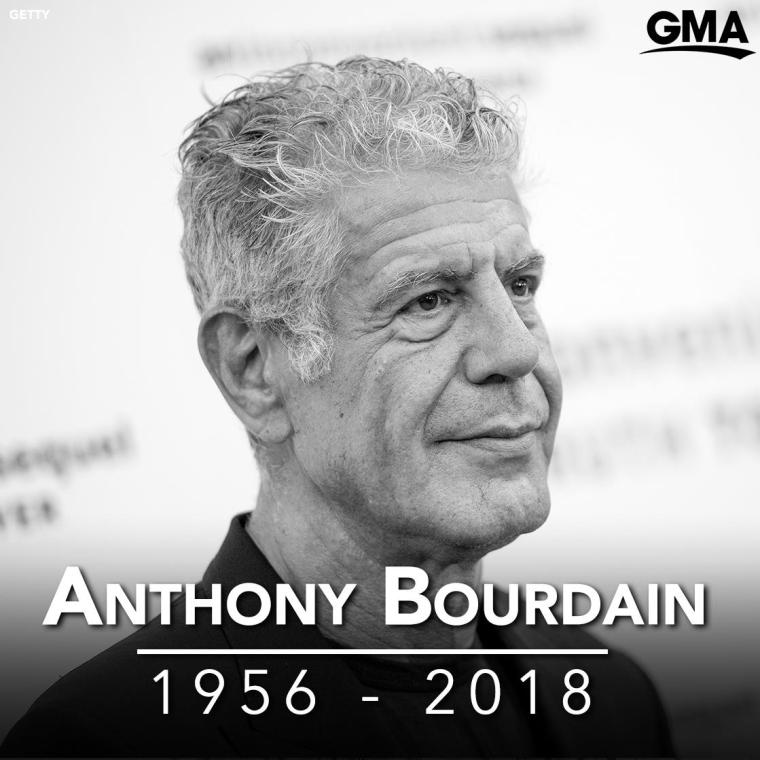
The Banquet Table of Anthony Bourdain

34758946_10155697429407061_7598478641969758208_o

(It’s taken me a bit to consider what I wanted to say about Anthony Bourdain. I suppose that is okay, because all too often we mourn the loss of someone and then seem to move on to other things. I think that he is someone worth remembering, and we would do well to model his approaches to learning about and loving people. His suicide will never define the incredible person that he was. Mental illness all too often steals some of the best among us away.)

When I think of good times with family and friends it almost always involves food. My grandmother Little was a country woman through and through whose dishes focused on things like fried chicken, fresh fish that she caught herself, pot roast and oodles of vegetables from her garden. Eating Sunday dinner with her was more than just a consumption of cuisine worthy of the Pioneer Woman. It was a communion of love that was special from the Happy Village dishes on which she served her recipes to the strawberries and cream that she spread on thin slices of cake. We understood that those gatherings were a gift from our grandma that we have never forgotten. Our senses somehow manage to recall the bounty that she spread on her mahogany dining table with clear detail. Even decades later we are able to recover the tastes, aromas, and sights from the memory banks of our brains. They serve as a the trademark of the wonderful moments that we shared with her. Those memories keep her alive in our minds decades after she was gone.

We so often associate food with our relationships. My mouth waters just a bit when I think of Ed’s “fancy” that included oysters Rockefeller, red beans and rice and conversation that I will never forget. I smile at the thought of Linda’s perennially delicious dishes over which we sat for hours raising our families together and building  lifelong relationships. Bieu’s pig roasts and crawfish boils always bring a diverse group of people together even when we sometimes have no idea what everyone is saying. Monica gives us a taste of Europe and a feeling of welcoming warmth. Michael grills his burgers as the children play and we reminisce about times past and celebrate those yet to come. Granny’s tea time was a backdrop for serious discussions. Uncle Paul’s  green eggs and ham were the stuff of our jokes that in truth were somehow strangely delicious. The tangerines and nuts that filled bowls at Christmas time reunions represented the bounty that our crazy immigrant family had achieved. Grandma Ulrich with her weak, milky, sugary cups of coffee taught us how to bring elegance and joy to the most simple fare. Food is most certainly intimately intertwined with family, friends, relationships.

Anthony Bourdain was one of those people who understood the power and symbolism of sharing food. He traveled the world, breaking bread in places where many of us would not dare tread. He introduced us to the loveliness of our humanity and also taught us the importance of being respectful to all cultures. He truly loved people not for how he wanted them to be, but exactly the way they really were. His enthusiasm for the unusual was always apparent in his stories and interviews. He understood that there is not one right or wrong way of doing things or being. He was a beautiful man in that regard. There was a complexity of his intellect and ability to use words, but there was also a simplicity in his delight over very small joys.

We need more people like Anthony Bourdain, a man who appeared to be judgement free. One of my favorite stories of him was about his defense of an older woman who wrote a restaurant review column for a newspaper in North Dakota. She became the butt of snarky commentary and jokes after she published an earnest piece about the opening of an Olive Garden in her town. She was polite and complimentary of everything from the decor to the professionalism of the server. For her efforts she was virally ridiculed. It was Anthony Bourdain who came to her rescue by noting quite gallantly that she was providing us with a portrait of a part of our society that we sometimes don’t see, and doing it very well. He eventually invited her the New York City and encouraged her to publish her best work. He took the time to get to know her better over coffee in a moment that so special for her. Ultimately her book became a hit with his help, but what was most telling about this incident was his compassion and understanding that each of us has something to offer, something new that will enrich lives. This I believe was the key Anthony Bourdain’s success.

The best people, like Anthony Bourdain, not only regale us with good food and exciting stories. They also show us how to treat one another. My grandmothers and my mother both modeled the same kind of behavior for me, demonstrating how to find the beauty in every single person. They encouraged me to open my heart free of preconceived notions. I have been all of the better because of that and I have attempted to pass down that way of embracing the world to my children and grandsons.

I often recall a time when I took my eldest grandson to a small neighborhood grocery store that often attracted an odd assortment of characters. As we pushed our cart through the narrow aisles we heard a gaggle of languages and witnessed some rather odd forms of dress. All the while music sung in a multitude of foreign languages blared over the loud speakers. After we had been there for a few minutes my grandson beamed his most glorious smile at me and exclaimed, “I like dis place. It’s happy!” His comment swelled my heart with pride.

Anthony Bourdain continually challenged us to move out of our comfort zones so that we might find the enriching experiences that truly make life so much more interesting and enjoyable. He showed us that the way to do that is to sit down and enjoy a meal with strangers who in the exchange might even become friends. There’s a whole world of people out there who very likely would love to spend a few hours sharing their stories while supping on the stuff of life. Anthony Bourdain showed us how to do that and how to really live. May he now rest in peace with a special seat at the great heavenly banquet table.

Save the Children

adult alone anxious black and white
Photo by Kat Jayne on Pexels.com

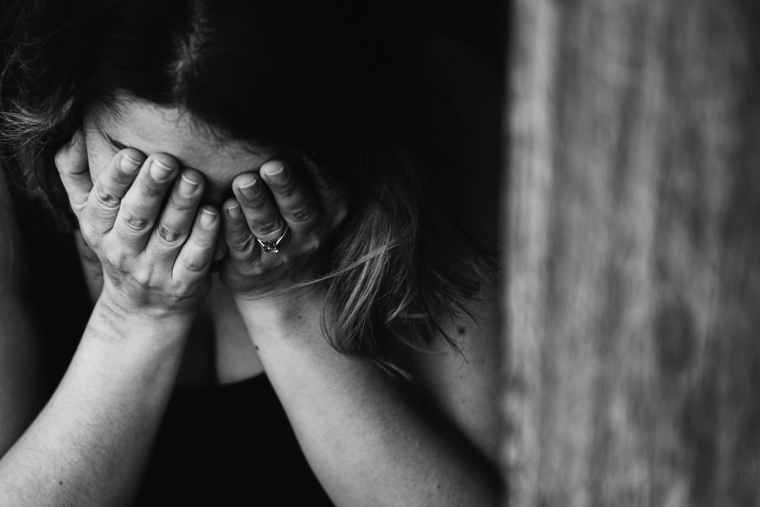
When my mother was only three or four years old her mother had a mental breakdown. The full details of the event are sketchy, but the certainty of what happened to my mom is very clear. The little tyke loved her mama and felt safe with her. When medical personal came to the house, restrained her mother, and then drove away in an ambulance the child that my mother was felt confused and betrayed. This event had a lasting impact on her that was so traumatic that it haunted her the rest of her life. She often spoke of the disdain that she felt for her father whom she held responsible for what she viewed as the imprisonment of her mom. She insisted that her mother had been a good woman who did not deserve the horrific treatment that befell her. Unlike her older siblings she was never able to accept that her mama had been very sick and in need of treatment. She had been so very young when she was torn from her mother’s loving care that it impacted the very essence of her thinking. The scars left by the separation never healed.

My youngest daughter endured a similar situation that was less dramatic but nonetheless frightening to her. When she was not yet three years old my husband contracted a fungal disease that required hospitalization and a long regimen of chemotherapy. Our family was thrown into a kind of chaotic state when we learned that the disease was often fatal. We spent months in a new routine of hospital visits and uncertainty. Years later my girl endured a bought with severe anxiety and depression. Her psychiatrist asked what had occurred at around the age of three that had seemingly caused the her to have an enduring sense of uncertainty and fear. He noted that something had so affected my daughter that she had buried deep seated emotions that were finally coming to the surface and causing her despondency. It was shocking to learn that something that had happened more than a decade earlier that was seemingly resolved had such a profound affect.

Young children see and hear and feel far more than we sometimes know. They are aware of what is happening around them to a larger extent than we imagine, but they do not always have the capacity to interpret the interchanges with their environment, particularly when the security represented by a parent is taken from them. They are unable to fully express the need for the warmth and love of a mother or father that is so essential to their healthy development. It is critical that they have all of their most basic needs addressed, and there is generally no better person to do that for them than a parent who genuinely cares for them. So much of the basic personality is formed during early childhood and every event plays an important role in development. As children we all cling to our parents and look to them to supply our most essential needs. When that relationship is suddenly severed children lose all sense of safety. Unless they are carefully counseled and loved the event will have a lifelong impact.

My father died when I was eight years old. People often marvel that my memories of the days following his death are so crystal clear. I am able to vividly recall people, conversations, the weather, and most of all my own jumbled feelings. I was far more aware of what was happening that the adults around me ever imagined. That being said, without the maturity of adulthood I am certain that I often misinterpreted my situation, and not in a good way. I became a fearful child, someone unwilling to take risks. I was afraid of people and life. It would take me twenty or more years to overcome the shock and awe of the sudden loss of someone that I so loved, and I became a somewhat neurotic and sad little girl. It was only through my study of childhood development and my association with truly caring people that I was able to eventually lay all of the demons that had so haunted me to rest.

For these reasons I am both appalled and concerned for the welfare of immigrant children who are currently being separated from their parents. I realize that we have laws, and the adults who come here illegally are breaking them. In that regard there are many needed discussions regarding the issues, but it seems certain to me that taking children away while their parents are being processed is deeply wrong. The consequences of such inhumane decisions will impact these little ones for decades. The trauma that our government is inflicting on them is morally untenable, as anyone familiar with children understands. In spite of efforts to provide food, beds, education, games and other such amenities to care for them the one thing that the little ones require is missing. They must have their parents to feel secure. What we are doing is so egregious that we simply cannot justify the actions with by quoting laws or even the Bible. We must know that we are bending the truth and God’s word when we attempt to do such things.

I love my country and believe in its innate goodness. It has of late been overtaken by an incivility that is toxic. There seems to be an attitude that winning is more important than being just. The good people in our midst are being pushed aside by bullies, and the ideals of honor and respect are all too often being eschewed by those who insist on all or nothing in their political dealings. As citizens we must join together in the common cause of decency, following the lead of heroes the world over who insist on standing for what is right rather than what will make them popular. We must end the ugliness by demonstrating our best natures. Now is the time for all good men and women to come to the aid of our country. We can no longer allow tactics that so scorch the earth. If we don’t save the children of the world regardless of the circumstances we are doomed to a dark future. Our best hope is in finding our natural goodness again and doing what we know to be right.

Far From Finished

orange and green pen on graphing notepad
Photo by freestocks.org on Pexels.com

From time to time I get writer’s block and find myself searching furiously for a blog topic. That’s when I surf the web for ideas, and luckily there are a number of sites offering suggestions. I found myself laughing out loud at one post about lists that focused on ten things to do before one dies. It occurred to me that my time for considering such things is perhaps running a bit shorter than say someone in his/her twenties since I will turn seventy on my next birthday. While nobody ever knows when the time for parting this world will actually come, it is more and more likely to happen as the years go by, for none of us is immortal.

I’m well past many of the things that once tempted me like learning to be a downhill skier. My bones would be quite unhappy with the falls and I’d rather sit inside a warm chateau sipping on some hot soup at the top of a mountain than contemplating sliding my way down. The same goes for exploring the Amazon River. Such an adventure sounded thrilling until I saw a program about a trek that almost killed Theodore Roosevelt. After realizing how brutal such an excursion would be, I’ve given up all thought of even trying such a crazy thing. I’ll leave that kind of insanity for the young. My new ideas are far more in line with the limitations that age has imposed on my body.

I still want to travel as much as possible. I haven’t seen Buckingham Palace or the Eiffel Tower or the Vatican, and it seems to me that everyone should enjoy a view of those things at least once. I know that we are all a bit spoiled in this era because most of our ancestors were lucky to get a few hundred miles out of the towns in which they were born. Now such travels are rather commonplace, at least for Americans. I sometimes have to admit that I feel a bit guilty about our abundance and opportunities, but then I still dream of seeing more of the world and think I will be a better person for having done so. Travel opens the mind and the heart.

Of course, I still want my book to get published. To spur me forward my husband showed me a TED talk on planning. It made me realize what I need to do to move forward, and I am feeling more determined than ever. I have only a small bit of editing to do and then I must find someone who will help me design a cover. I already know how I want it to look, I just don’t have the skills to do it myself. After that I intend to send it to a company that will format it properly so that I can easily upload it to Amazon. I have to specify the time that I will do these things and then stick with the plan. I have friends and family who have already successfully published their works, so I need to be less hesitant to consult with them. I’m sure they will be more than glad to share their experiences to help get me going.

There are a number of small things that I think should also be on my list. I hope to live long enough to witness the next total eclipse of the sun. It’s not that far away and this time there will be great viewing right here in Texas. I also want to see the fall colors in Vermont and go to the Thanksgiving Day Parade in New York City. Maybe I might catch a showing of Hamilton while I’m in there.

I’d like to take a cooking class and then prepare a special feast for friends and family. My culinary arts are rather basic, but I’m fondly known as “The Bean Queen” and my gumbo might win a prize. I think that baking would be fun or becoming an expert in Italian cuisine. The art and science of food preparation is fascinating to me.

I want to reteach myself Calculus. I once did well with that subject but I was a good fifty years younger the last time I took a such a course. I never taught that subject nor had reason to use it, so it feels as though all memory of it is gone. I once began a review session at a junior college only to develop a bacterial infection after two days that left me hanging over the toilet bowl for over a week. I had to drop the idea of relearning, but never the desire to get back up to speed.

There are entertainers I would love to see in live performances like Yo Yo Ma, Celine Dion, Kelly Clarkson, Usher, The Gypsy Kings. As a matter of fact I would love to take advantage of all of the concerts that come to town. I find that even people that I never thought to be so great end up being fabulous. My in-laws once took me to see Andy Williams. I was polite about their generous offer but believed that it would be a snooze, It was not. In fact it was a very memorable evening that demonstrated what makes someone famous. In person Andy was incredibly charismatic.

I’ve seen a sunset over the Grand Canyon but I’d love to observe a sunrise there. It would be more than cool to be in Chaco Canyon for the solstice. I want to hear the bagpipers at Edinburgh Castle and walk through the streets of the towns in Slovakia where my grandparents lived as children. I’d love to be in the audience of Saturday Night Live or Jimmy Fallon’s Tonight Show or even better would be to see Ellen. I want to reread the great classics and pour over the newest bestsellers. When I become too frail to go too far from home I hope to watch marathons of my all time favorite movies and call friends just to chat.

I suppose that my list is in fact rather endless. There is still so much to do and see. The world is an exciting place that I haven’t explored nearly enough. I’ll write about each of my adventures as they unfold, so stay tuned. I’m far from finished.

A Handshake and A Smile

adult child daylight enjoyment
Photo by Huy ProShoot on Pexels.com

I saw a video that featured kindergarten students giving each other a handshake and a smile each morning before the start of class. It made me happy to see them and also to think of how such small gestures have the power of making a very big difference in virtually any situation.

My husband and I recently began attending Sunday mass at Mary Queen Catholic Church. Mike decided that he wanted to go there because a group of ladies there made him a prayer quilt shortly after his stroke. They sent the lovely item with a promise to pray for him regularly even though they had never before met him. He was quite touched by their kindness and insisted that he wanted to be part of a place that demonstrated so much caring love. Thus we drive a rather good distance each week to be part of that community. Amazingly the inviting attitude is continually apparent there. From the moment that we walk through the door we are greeted by smiling parishioners and priests who open doors for us and make us feel very welcome. It is a form of thoughtfulness that warms our hearts and brings us back again and again. As humans we are as attracted to love as tiny creatures are to light.

The schools where I most enjoyed working emphasized the same kind of attention to people as those kindergartners and my church. Teachers were in the hallways during passing periods greeting students as they walked to class and saying hello to those entering their rooms. It set a positive tone that made virtually everyone feel as though they were part of something quite special, and it didn’t require any extra time or much more effort to do so. In fact it felt so good that it became something that brightened everyone’s days.

One of the principals with whom I worked asked the faculty to catch students doing something good. It was a different take on vigilance that allowed us to notice the wonderful things happening in our school. We complimented the students who were being extraordinarily kind and gave their names to the principal who mentioned them at the end of each day and called them to the office for congratulations. We soon found that there was far more of a spirit of generosity taking place inside our school than we had ever imagined. By focusing on what our students were doing right we changed everyone’s attitudes. Going to the office was not just for getting into trouble any longer, and being nice was as important as making good grades. The environment became happier and happier simply because we chose to hunt for the best rather than the worst.

Watching the news might lead us to believe that our society is doomed and that we are surrounded by hateful reprobates. In truth there are some people who for whatever reason are inconsiderate and even criminal, but time and again the evidence points to a society that is mostly composed of truly wonderful folks whose desire is to live peacefully and happily with one another. Perhaps all we need to make that wish more likely to come true is to make just a bit more of an effort.

I am shy by nature. I have to psyche myself whenever I enter a place where I know very few people. I’ve trained myself to make the first moves toward friendship when needed, but there is noting quite like having someone else offer a hand and a smile before I do. I instantly feel better about the situation, and I suppose that almost anyone would. I return to stores with friendly sales people and make note of those with surly employees. Who after all wants to feel as though they are unwanted?

Children often naturally form groups with those that make them feel the most comfortable. When a new person arrives they may or may not extend a hand of friendship unless they have seen that kind of behavior being modeled. Being the new kid at school can be traumatic if there is not a warm environment. I’ve been there before and it is a horrible feeling. I’ve also been the recipient of efforts to make me feel wanted, and each time that happens I feel a sense of relief. Sometimes it takes practice to teach people the art of inclusion.

I wonder how many acts of violence might be thwarted by a handshake and a smile? Is it possible to change the trajectory of an encounter if the atmosphere is open and welcoming? I suspect that in most cases friendliness is a magical healer.

To this very day I see the faces of people who made me feel good about myself in times when I was anxious. It took so very little for them to quell the fears that were welling in my heart. They turned difficult times into memorable ones and sometimes even led to long time friendships. I seen Zerin asking me to sit with her on my first day at a new school. I recall Flo’s beautiful smile on the occasion of our meeting. I think of Virginia who stilled the tears that were threatening to fall from my eyes because of my nerves. I still smile when I think of Johnny complimenting a birthday dress on my sixteenth birthday when I felt so gawky and unsure of myself. These sweet individuals probably had little idea how calming there actions were at a time when I was worried and feeling not quite myself.

I’d love to see all schools encouraging a routine of shaking hands, smiling and reaching out to everyone, especially anyone who appears to be clinging to the shadows. Kindness should be as much a part of each day as the lessons. If we began when our kids are very young and continue such expectations for all of their lives we might begin to see far less ugliness. It’s certainly worth a try.

No Excuses

black and white blackboard business chalkboard
Photo by Pixabay on Pexels.com

An old feature from CBS popped up on my Facebook page. It catalogued the most crime ridden cities in the United States and described what the infractions were. There were a few surprises on the list, but mostly they consisted of the usual suspects that are traditionally havens for criminals. What was more interesting was the commentary from readers that followed the article as people attempted to determine what actually causes deviant behavior and how we might find ways to curb it.

I’m not a sociologist or expert in criminology, but I spent my lifetime working to educate youngsters, and what I have found is that most of the kids who became lawbreakers shared certain commonalities that had little to do with their economic situation other than placing them in the line of temptation. In the vast majority of cases the kids were from broken homes that had become structureless, without guidance. Often they as well as their parental figures used addictive drugs and joined gangs as a way of belonging. Their lives were focused on getting from one moment to the next as easily as possible. They were not interested in school and no doubt would have simply dropped out were it not for truancy laws. Many of them were marking time until they reached the age of sixteen when they would no longer have to cope with rules that made it illegal for them to leave the world of education. They generally had few positive role models and they almost always laid the blame for their plight on society rather than themselves. They were angry and believed that they had the right to better lives, but were unwilling to do the hard work to take advantage of opportunities. It was heart breaking to watch them becoming more and more adrift and influenced by forces that would ultimately lead them into a very dark world.

As teachers we did our best to motivate them, but we were often uncertain as to how to most effectively help them to escape the bad habits that were bringing them down. We had only a few hours of influence each day and we knew with certainty that when they left us there was no telling how much trouble awaited them. There were many schools of thought as to what we needed to do.

I remember one administrator who felt that only by setting down clear rules and consequences for ignoring them would we ever rescue them. He actually encouraged us to give them after school detentions because at least in that way we would be keeping them safe just a bit longer as well as teaching them that some actions are unacceptable and will be punished by society. He often followed some of the teens home if he thought that they might get into trouble along the way. He indeed saved a large number of individuals, but others only rebelled even more. I began to realize that there was no one approach for everyone.

At the same school we had a coach who used to bring old cars and park them in front of the gym. At the end of the day he invited students to join him for lessons in repairing autos. He had quite a following and many of the youngsters who stayed might otherwise have been up to mischief. Instead they were inspired to learn a trade that would bring them the success that seemed to otherwise elude them. There were fine arts teachers and those who taught science who similarly engaged the interests of children who had once been without any kind of direction.

I also noticed that once some of our kids went to church they changed dramatically. Many of the priests and ministers in the area actively recruited our students with promises of food, fun and fellowship. When they learned Christian principles they began to think about their own lives and actions and even influenced the adults in their lives. The loving concern that they found in those churches felt even more powerful than the gangs and quite often wrought amazing changes in our students.

In my final years in education I worked with the KIPP Charter Schools and their many mantras emphasized hard work, good behavior, goal setting and a willingness to never offer excuses for bad choices. The aim of the schools was to offer students a positive pathway out of poverty and sometimes toxic lifestyles. The route to success was grounded in a focus on education and a belief that with effort anything is possible.

Every single day the students were challenged with rigorous academic work that did not allow them to fall behind. The long days kept them focused on learning with little time for frivolous or criminal pursuits. Those who broke the rules were punished quickly and according to the nature of their actions. Sometimes they were even expelled on a probationary basis until they were able to prove that they were willing to adhere to the standards.

Parents were as much a part of the design as teachers. The adults worked hand in hand to insure that the values of character and industry became an integral part of the youngsters’ lives. While not every individual made it, the majority did and overcame countless obstacles to earn degrees and certifications that lifted them out of poverty and danger.

Poverty alone is not the problem. My brothers and I grew up poor, but we had a mother who never allowed us to wallow in pity or anger. She insisted that we study and work hard. She modeled exemplary character and emphasized that with the will we might accomplish anything. She instilled optimism into our natures and taught us that lack of material wealth did not define us or make us less than even the wealthiest person that we might encounter. Mostly she showed us that sacrifice and honesty were noble qualities that would carry us far. She would have been horrified if we had become so jealous of others that we thought it was somehow our right to steal from them or harm them.

We certainly need to give the poor in our country a lift upward, but helping their children to become self sufficient producers cannot be accomplished with money alone. Instead it requires our efforts to demonstrate how they might survive in positive ways. We must show them the value of hard work and provide them with role models and inspiration. It is a daily task requiring a multitude of good people including their parents.

Dr. Ben Carson often speaks of his own troubled childhood in Detroit where he lived in the midst of temptations that might have lead him into dangerous behaviors. His mother was not willing to simply allow him to waste his life, and so she became a force that changed the trajectory of the person he would become. She pushed him to use the talents that he had by being adult enough to be in charge. She devoted her life to demonstrating to her sons that they had the power within them to become better and better versions of themselves.

I suspect that they key to reduction in crime is to be found in lovingly and firmly guiding children from the time that they are very young, never allowing them to become hopeless, protecting them from forces with evil intent, and slowly showing them how to focus on learning how to use their talents for good. This is a job for parents, teachers, religious groups, and mentors who are willing to demonstrate that the world is a good and inviting place that wants to embrace them. We have much work to do.