
The Numbers In My Head

numbersThis morning I sent birthday greetings to a school friend who turned sixty nine. I’ll be joining her in the last year of my sixties in November. The numbers that I carry in my head just don’t compute. My living aunts are now in their mid to late nineties. My children are well into their forties. I have grandchildren in college. Most of the time I feel much younger than I actually am, but then something happens that sobers me and sends me into a tizzy, like hearing that the son of one of my friends from childhood has died from a heart attack, or that a young woman that I once mentored at work is being treated for cancer.

I am at a somewhat lovely age in that I no longer have to report to work each day. I am free to travel or do whatever pleases me from hour to hour. I still possess almost boundless energy but when I exert myself too much my body reminds me that I am no longer a spring chicken. I’ve got arthritis in my knees and I administer a daily injection of an experimental drug in the hopes of producing stronger bones than the ones left in a lacy swiss cheese condition by my osteoporosis. I act as though I have all of the time in the world to fulfill the goals and dreams that I continue to create for myself, often forgetting that my time on this earth is becoming more and more limited. Those numbers in my head as well as the realities of our human existence talk to me in the dark of night and urge me to seize each day.

I have already lost so many friends with whom I spent my youth. In my mind’s eye I still see them as being vibrant and beautiful. They ran with me and laughed at the clock and thought little of illnesses or endings. It did not occur to me that they would be missing at the very time when we might have had the most fun together, when our labors were done and we were free to roam the earth in search of more adventures. Watching them leave has been difficult and has prompted me to think of my own mortality. Even worse have been the deaths of the children of my peers, the young adults whose passing seems so terribly out of sync with the way things should be. In a perfect world I have the ability to order from least to greatest. In truth occurrences are random in their probabilities.

Mostly I don’t dwell on such things, but there are moments when there is so much suffering around me that it is impossible not to face the facts of life. I realize that if I add multiples of ten to my age I become very old, very quickly. In my mind the nineteen nineties were only yesterday but they actually happened almost thirty years ago. Each day, week, month, year is flying by at warp speed taking me into a future that is more uncertain than any era in which I have so far lived. The dominoes of my life will begin to fall with greater and greater rapidity. I don’t want to think about those things until tomorrow, but they will surely come at a steady pace. The numbers in my head are truth tellers. The math leads to one and only one conclusion, and like J. Alfred Prufrock I rage against the dying of the light.

I want to be prepared for what lies ahead. I want to meet my fate with optimism and courage. I do my best to find happiness even in the darkest hours, but I now understand the fear and the anger that my best friend felt as she understood that her cancer was slowly stealing away her life. I am more open to being sympathetic to the relentless monotony of my aging aunts who are confined to wheelchairs and small rooms. I think of my mother measuring out her days as she grew ever more ill and weak, wanting desperately to leave me with her wisdom. I was confused when my hundred year old grandfather continually spoke of being tired and missing all of his friends and loved ones. I had little patience with the thought of surrendering to fate. I viewed myself as someone who might be dancing jigs right up until my very last breath. That was, of course, before I witnessed people my age being cut down by illnesses that changed them. They had once been warriors like me and it was incongruously difficult to imagine them bedridden and unable to take on the world by storm as they always had. The numbers caught up with them just as they will one day do with me and everyone else that I know, which means that I must begin to focus more and more on what is really important. I have to face the fact that I do not have forever.

People are always more important than things, but things steal our time and energy. When the clock is ticking we have to choose what to push aside. That visit that we speak of making needs to be put on our calendars today, ahead of the cleaning and the repairs of our stuff. Those thoughts that we have wanted to express must be recorded now, not after we take out the trash. The dishes will wait but the call to someone important may come too late if we hesitate. The numbers are there, telling each of us that there is a limit to the count of the days that we each have on this earth. We have to make the best of every single moment before we are no longer able.

I suspect that I may sound a bit morose today. I am thinking of the lost opportunities that I had to celebrate with those who are now gone forever, the moments when I was too preoccupied to really listen to what they had to say. I wrongly believed that there was plenty of time and that I had far more important tasks to perform than lingering just a bit longer with them. Now I see. Now I understand.

My life has been all about numbers. I am a mathematics teacher. I have told my students that the ciphers and algorithms never lie. They link us to both the past and the present. They explain the workings of our world. Now the numbers tell me to embrace the beauty of love and friendships every moment of every day. They remind me of the limits that I am approaching and of the need to prioritize my energies. The numbers will eventually terminate, just as they should. My faith tells me that I will one day find the infinite peace of everlasting life, but until then I must listen to the gentle whispers of the numbers chiding me to live with gusto and an open heart.
  

When Happiness Is Lost

635954839284874644-229042456_Depression

I often write about being optimistic and choosing to be happy. Of course such prescriptions are fine and dandy for those of us who are not afflicted with clinical depression, but for those who are it is virtually impossible to simply will away dark feelings.

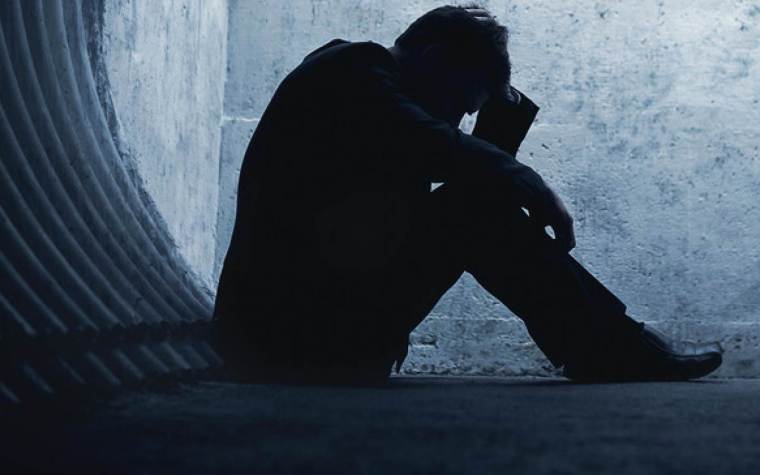
My mother was one of the happiest people on the planet as long as she was not in the throes of her bipolar disorder. When the illness hit, she was literally unable to just wish its debilitating symptoms away. One of the characteristics of her disease was a profound sadness that would overtake her with life changing consequences. She often sat in the dark, drapes drawn tightly closed, crying and worrying for no real reason at all, unable to even venture into her front yard. It was both frightening and heartbreaking to see her in this condition. It was so contrary to the person that she really was.

Mama had shown early signs of her illness that my brothers and I failed to understand. There were times when she would suddenly take to her bed for several days. We always just assumed that she had a bad cold or a virus but it was far more sinister than that. She was fighting away the melancholy that paralyzed her. In the years before her disorder became full blown and noticeably chronic she would feel down for a few days or a week and then somehow return to the person that we knew so well. Unfortunately, in 1969, she experienced a psychotic break that began with crying jags and paranoid fears. Eventually she literally believed that the FBI was trying to frame her for selling drugs. She was convinced that all of us were going to be sent to jail. Her anxiety was so acute that she was in terrible physical pain and even thought that she had died and then miraculously come back to life.

I remember one of my very sweet uncles coming to visit her during this time. He pleaded with her to pull herself together. He reminded her that she had children for whom she needed to care. He argued that she had a wonderful life, filled with love. He felt that she only needed to choose to be happy and all would finally be well. Of course we all learned that such wishful thinking was not going to materialize. It was only after a long hospital stay and medication that she was able to return to us as the person who had always possessed a sunny disposition.

My mother mistakenly believed that her illness had been an anomaly, something that would never happen again. She insisted that she was cured and that she knew how to care for herself in the future. We naively agreed with her, thinking that the worst was behind us. Little did we realize that her condition was chronic, a never ending series of ups and downs taking over the chemistry of her brain. Only with the continual help of psychiatrists would she be able to function. It was a bitter pill for her and a challenge for those of us who loved her. We had to monitor her life to an almost invasive extent because whenever we became lax so did she, and the symptoms would return even worse than the times before.

My mother was known to her doctors as a noncompliant patient. She never admitted that she had a psychological problem, instead blaming me and my brothers for her condition. She wanted desperately to prove that she never needed psychiatric care and that her illness was a figment of our imaginations. Her reluctance to accept her diagnosis and continue her therapy on a regular basis lead to one relapse after another. Her life became far more difficult than it had to be.

Mama had brilliant and caring doctors who became frustrated with her unwillingness to follow their directions. They knew as we did that as long as she followed their instructions she was able to work and be like a ray of sunshine in everyone’s lives. Sometimes her medications had to be changed, but the results were always miraculous. To her detriment and our frustration she chose to discontinue her treatments again and again. As she did so the magnitude of her depression and mania increased. It was as though she was stressing her brain to the point of bursting.

I always understood that my mother wanted to feel normal, and visiting psychiatrists and taking numbing medications with troubling side effects was annoying to her. She gained enough weight from using her drugs to go from being a slender woman to one who was rather heavy. She experienced involuntary tongue flicks and other nervous system twitches. Her ankles would swell to three times their normal size. She hated those things and would quit taking her pills in the hopes of ridding herself of their effects. Of course she would ultimately become very sick again and her doctors would have to restart her therapy from ground zero. It was a hard way of living and I always empathized with her. I tried to imagine what it was like to feel so seriously sad as she often did. I wanted to understand her pain.

Depression is a very real disease for many unfortunate souls. It is not related to an inability to see the glass as half full. Nobody consciously wants to endure its effects. Happily there are ways of improving as long as one is willing to ask for and accept help. It can be a tricky process with a great deal of trial and error in implementing a viable plan. Because it is often a lifetime disorder it can become overwhelming. The important thing is for the depressed person and those around him/her to understand that it is a true medical condition much like diabetes or heart disease. There are treatments that will ultimately work, but they often take time.

Our laws prevent us from forcing adults to accept psychiatric care unless they are deemed to be a danger to themselves or others. While this protection prevents innocents from being falsely forced into therapies that they do not need, it also sometimes makes it very difficult to get a recalcitrant patient the care that they require. All too often families simply look the other way when their loved ones refuse to accept the treatments that they most certainly need. Such situations create very uncomfortable relationships that are painful to everyone concerned. Still I am convinced that it is up to those who love the sick person to insist by hook or crook that they receive the medications and therapies that they need. We can’t just walk away and hope for the best for them.

Mental illness and particularly depression too often results in dire consequences if left untreated. It is a lifetime battle but it need not overcome those who are afflicted. Each of us must learn to see the symptoms and guide those that we know and love to find the help that they need. Perhaps if we all agree to become more educated about the effects of such chronic diseases we will be more likely to deal with their effects more openly. There is nothing about depression or mental illness that should make us feel ashamed. Just as we would seek the best possible treatments for cancer or heart disease so too must we learn how to properly react to mental health issues. We can all be happy but some of us require a little push to get there. Our happiness and that of others need not be lost.

Keep On Trucking

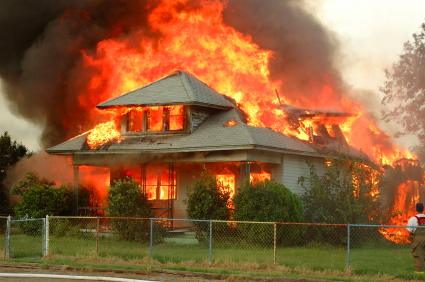
Burning-HouseOn Good Friday I was preparing food for our family’s Easter celebration when a heavy cloud of dark smoke suddenly poured from my oven. As I ran across the room to turn down the heat a small flame erupted in the bottom corner of the appliance. I called for my husband to come help with the situation and just as he raced down the stairs an inferno engulfed the entire cavity. We reached for the fire extinguisher that we store in our pantry but when we attempted to open the oven to apply the fire retardant it was latched shut. Our only option was to yank the appliance out of the wall just enough to create a small crack that allowed us to spray away. Luckily our efforts worked and the blaze was soon out leaving behind a rather nasty mess and an oven that was undoubtedly ready for the scarp heap.

In the same week my daughter was happily driving her new car when she approached a red light. Of course she halted as required but sadly the youngster behind her was so busy texting that he didn’t notice that the traffic was at a standstill. He plowed into the back of her auto with full force. Her beautiful car was a shambles of its former self.

Meanwhile across town a friend went to bed admiring the wood flooring that had just been placed in his home. He was proud of the dramatic and lovely change it had made in his abode. When he arose the following morning expecting to see the gleaming planks he was instead greeted to a most disastrous sight. Water covered the area that had looked so wonderful only hours before, ruined by the overflow from a toilet that had run all through the night.

Each of these incidents were maddeningly inconvenient and costly. It would take days, even weeks to repair the damage that was so unexpected, but eventually all would be set right once again. All three of us were fortunate to have the ability to overcome our disasters, unlike so many whose lives spin frighteningly out of control. While these examples were fixable they demonstrate the importance of keeping the events that occur in our lives in perspective.

My house didn’t burn down as it might have. My daughter walked away from her accident unscathed. My friend’s home was not flooded so badly that it was rendered uninhabitable. Sadly I know people who have faced far worse.

One of my aunts who was in her nineties at the time watched helplessly as her home burned to the ground, eliminating everything that she owned including irreplaceable family heirlooms and treasures. I have known several people whose loved ones have died in car accidents, including myself. I have friends who used to live in New Orleans who came home to total devastation after hurricane Katrina. Such losses are indescribable. They haunt the psyche for years and leave scars that tend to quietly inflict pain. 

We all want to think that we have a modicum of control over our lives but reality demonstrates time and again that the possibility of the unexpected happening is always there. At any given moment our lives might be thrown into utter chaos. We don’t dwell on such facts because we would be immobilized with fear if we did. Instead we go about our daily lives sometimes sweating a bit too much about the small stuff instead of focusing on our blessings. We take the food on our tables for granted. We forget to tell our family members and friends how much we love them. We grumble and complain.

Of course my husband and I were upset over the prospect of having to purchase a new oven and repair the damage to our cabinetry. We certainly might have used the money in other ways, but once the smoke had settled so to speak we began to realize how fortunate we were. Had we both been in another room our kitchen might have been far more damaged, perhaps even destroyed. In another time in our lives we might not have had the money to purchase a new oven and would have had to scramble to find a way to fix the problem. As it was, we had just received a tax refund that essentially covered the costs.

My mother lived on the economic edge for most of her life but she nonetheless always remained optimistic. She used to brag that God loved her so that He somehow took care of every problem that arose for her. Such was her faith that she told us when we were children that she had a money tree from which she would pluck funds when they were needed. She herself lived without an oven for several years because hers had quit functioning and she did not have the funds to get a new one. Rather than complaining she made do until she had accumulated enough to get a new one. She joked that by the time she finally had a way to bake again she realized that she really didn’t need to roast or broil. She didn’t allow herself to worry over things that were in reality inconsequential.

The truth is that there are people on this earth who will never have an oven or a car or a wooden floor. They live in places racked by famine, disease and war. Their lives are so out of their own control that they only have the freedom to exist, and sometimes even that liberty is taken from them. We on the other hand enjoy luxuries that we take for granted, worrying over problems that in reality don’t matter as much as we may think.

I am an admitted control freak even though I have learned time and again that so much of what happens is beyond my reach. The only thing over which I have total power is my own attitude. I can choose to stew over the randomness of occurrences or I can choose to roll with the punches and take the actions needed to set myself aright. There is little point in crying once the milk is flowing across the floor.

I take heart from the courage of the incredible people that I know such as the mother whose six month old son was diagnosed with leukemia who kept a smile on her face throughout her years long ordeal. I think of the friend whose daughter was killed by a drunk driver. She has channeled her grief into counseling others and spreading healing by sharing her own story. I marvel at the woman who had to reinvent herself after hurricane Katrina at a time in life when she should have been retiring comfortably. I am daily inspired by a former student whose brother was murdered and her fight to bring justice for him and all individuals marred by violence. I think of a dear friend who daily cares for a husband sidelined by a severe stroke and dementia. All of these individuals have risen from the ashes of their circumstances in triumph. They have found new meaning for their lives and new appreciation for even the smallest of blessings just as my mother always did.

I know not what challenges will come my way. None of us ever do. My only hope is that I will find the inner strength and positive attitude that will allow me to keep my footing and keep on trucking along. It is after all the best that we might do regardless of the circumstances.

We All Fall Down

maxresdefaultI was twenty years old when my mother had her first mental breakdown. Mine had been a somewhat sheltered life. Aside from my father’s untimely death when I was only eight, I had not seen much of the dark side of existence. I certainly knew nothing about mental illness and the dramatic symptoms that seemed to so suddenly change my mom from a strong, independent woman into someone paralyzed by depression, paranoia and manic episodes. As I witnessed her decline that summer I was overtaken by a state of anxiety that made me feel as though I might surely die. I would visit her during the daylight hours and then return to my apartment in the evenings where I attempted to understand what was happening and to rally help for her among my aunts and uncles whom I was certain would have much better insights into her condition than I had. Mostly though I suffered from my own form of mental stress experiencing panic attacks that threatened to render me useless in the battle to bring my mother back to a healthy state of mind.
I slept little during that period. In fact, that August marked the first time that I was plagued by insomnia. I generally lay awake each night silently crying and feeling as though an elephant was sitting on my chest daring me to breathe. I felt so very alone, convinced that nobody might possibly understand how worried and sad I was. I was walking through those days in a continual daze, pretending to be in control of my situation while actually wanting to run away screaming in desperation. As my mother’s symptoms grew worse I realized that I had inherited total responsibility for her welfare. Circumstances forced me to grow up by a factor of one hundred. While my friends, save those who were fighting in the jungles of Vietnam, were still enjoying the adventures of college and the freedom of their youth, I understood that if I didn’t take charge my mother and my brothers would be in danger. I took a deep breath and became my mother’s keeper in a strange relationship that would span four decades. It was something that I would have happily given up if given even half a chance but the reality was that there was nobody else who could do this for her.

I was as imperfect at being unselfish as anyone might be. There were times when I was hardly able to function myself and when I resented the cross that I had to bear. I became an Academy Award worthy actress, hiding my fears and pain along with my mother’s tragic story as though it was an ugly and unspeakable secret. My unwillingness to open up to people who might have provided succor to me only made things worse but I was not yet ready to accept that I would be far happier bringing the truth into the light. When my mother became well again I naively believed that all of us were going to be fine and that I would never again have to face such a daunting experience. Sadly, she was sick again in only a matter of a few years and I fell apart at the realization that her illness was going to be a chronic fact of our lives.

I continued to be quite secretive about my mother’s fight with mental illness. My own stress increased to an unfortunate level as I quietly and continuously watched for symptoms that would alert me to get her to a doctor before she devolved into a more serious state of mind. I failed to mention my own bouts with anxiety and mild depression but they were quite real and they made me feel as though I wasn’t nearly as strong as I needed to be and that I was somehow defective.

At some point I was no longer able to maintain my silence. I began to speak of my concerns, my feelings of guilt, and the sense of despair that often overcame me. At first it was only the most trusted friends who heard such things but eventually I found the courage to talk with my doctors and finally anyone with whom I had contact. I learned that nobody was going to think ill of me or my mother. Nor was I abandoned. In fact, my admissions generally lead to sharing of similar stories and unlikely alliances. Over time I realized that we all fall down from time to time for one reason or another. We may lose a loved one, face a terrible disease, endure the breakup of an important relationship, fail in achieving a goal, become a victim of violence or suffer from mental illnesses of our own. The truth is that we are both fragile and resilient beings. As such we experience ups and downs throughout our lifetimes. Sometimes are lows are so devastating that we feel as though we may not make it through to the light of day.

I have found that there are always kind and empathetic individuals who are just waiting for our cries of help. All that we have to do is open up our hearts and we will find them, kindred spirits who have also had moments of brokenness and terror. They lovingly provide us with comfort just when we need it, but they will not be able to do so unless we are willing to confess that we are hurting. In acknowledging our humanity we take the first steps toward healing. It took me far too long to admit that I was as imperfect as I am.

I remember kneeling in prayer in the office of an assistant principal who cried with me as he spoke of the people in his family who also suffered from severe mental illnesses. I found succor from a doctor who was giving me a physical for work. He noted the checkbox that indicated that some of my relatives suffered from depression. He gently guided me to a confession that radically changed my life as he assured me that I had no reason to feel guilty about the times when I resented my role as a caretaker. I have had countless individuals hug me in an embrace of solidarity as they outlined their stories of struggles with either their own or someone else’s mental illness. Never once has anyone reacted negatively to my recounting of the journey that me, my mother and my brothers had taken in the house of horrors that was the reality of mental illness. Instead with each telling I felt reassured that I was not and never would be alone.

We all want to be viewed with dignity and respect. It is difficult to admit that we have feet of clay or that we make mistakes and yet it is in facing the demons that attack us in the middle of the night that we find the clarity and calm that we seek. Not only do we find a clearer focus for ourselves, but often we help others as well.

I know of two young ladies who are dealing with very difficult situations. They are far more advanced than I was at their ages. Rather than hiding the hurt and the pain that stalks them, they have been willing to share their feelings and the efforts that they have made to set themselves aright. They write blogs and speak to other young people. They tell of their journeys and admit that they still falter from time to time. The work that they are doing for themselves and for others is not just laudable, it is important. They are living proof that even the seemingly most perfect individuals often find themselves struggling to cope. They are both exceedingly beautiful, intelligent and talented, hardly the type of women who might falter, and yet they have. Their willingness to unmask their struggles is inspiring. They prove that the world is far kinder and gentler than we may imagine and that even the most remarkable among us may need a safety net now and again. It’s as easy as voicing the word “help” to begin the process of healing. We all fall down but there will always be someone willing to pick us up if only we ask.

Remembering the Lessons

KnotTry to imagine this scenario. Groups of Americans from the United States begin to peacefully demonstrate against the president of our country in locales all across the country. The government sends in the military to quell the disturbances and in a show of force they gun down protesters. This angers even more people who join the rebellion which grows angry and violent. There are enraged armed mobs in your town fighting against the soldiers. You watch as the disturbances grow into all out civil war. The lines between enemies are blurry and take on a religious aspect as well as political. Splinter groups form, some of which are barbaric. You and your family members are caught in the crosshairs. Bombs from the government come into your neighborhood. Bullets from the rebels forces lodge in the walls of your home. Terrorists taking advantage of the unrest kill your friends and relatives in the most brutal manners. What was once a place of peace has become hell on earth. You do not want to leave your home but fear that if you do not, you and those that you love will surely die. A final blast of chemical weapons from the government forces convinces you that it is no longer safe to stay in the place that has always been your refuge. You watch children who live near you dying in the cruelest manner. You can’t take the horror any longer and so you decide to flee.

At first you make your way to Mexico or Canada. You are placed in a refugee camp with thousands of others. You are told that you may not stay indefinitely. There are too many of your kind seeking escape from the war. Your temporary residence is infested with crime and want. You live in a tent that is either too hot or too cold. Disease breeds freely in the unsanitary conditions. You feel only slightly better than you did in the place from which you have fled. You try to get to other places that might be more welcoming or more pleasant. The process is difficult and even if you are lucky enough to gain a passage to some nice town in Europe the residents of those places view you with suspicion and disdain. All you really want is to be able to sleep at night without fear. Your dream is to one day be able to return to your home and begin your life anew. Your whole world is upside down and none of it is of your own doing. It all feels so hopeless.

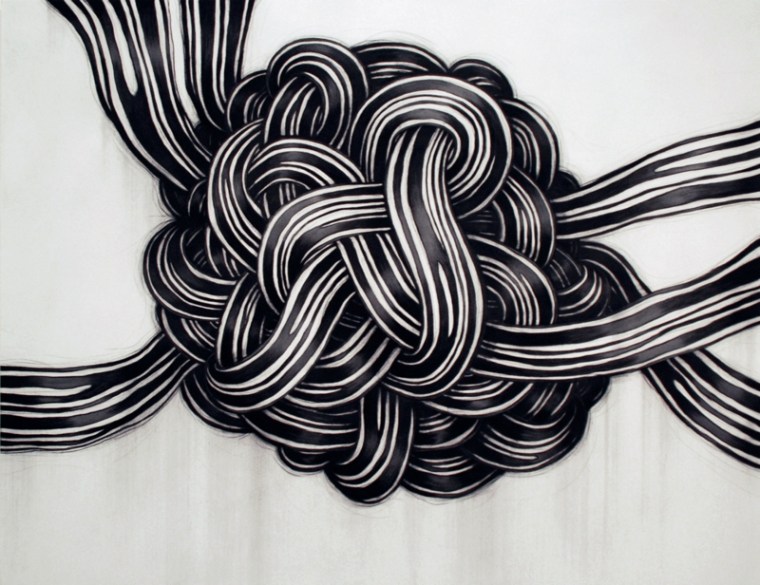
In the meantime, different nations are choosing sides in the battle that rages back in the United States. Not only are there disagreements to resolve between the government and the rebels but also different factions within factions as well as other countries. It is such a tangled mess that you despair that it will ever be possible to sort things out and find the peace that you so desire. You cry for your country and for yourself as years pass without resolution and the gordian knot of trouble only grows tighter.

Of course, these events are not unfolding in the United States but in Syria. Try as we may we will never know the heartache that has so defined the lives of the people of that country since 2011. Their nation sits on the Mediterranean Sea just across from Egypt bordering the countries of Turkey, Iraq, Lebanon and Jordan. The war has displaced more than two million people and stretched the resources of their neighbors and countless European nations. Diplomatic and military efforts have failed to broker any kind of resolution and all the while terrorist groups like ISIL have taken advantage of the situation to make their own claims on the land and its citizens. Shia Muslims have taken to fighting with Sunni Muslims. Russia, China, and Iran side with Syrian President Assad. The United States, Germany, Britain and France have attempted to aid the rebels. It is a standoff that threatens the Middle East, Europe and much of the rest of the world.

I cry for the people of Syria. I understand that the vast majority of them simply want to be left alone and allowed to return to their homes where they might live in peace. None of the rest of us want war either. Nobody seems to have any idea of what is the most effective solution to a daunting problem. Here in the United States we have learned that sending troops and treasure to fight battles can be a solution with no endgame. We have also seen that diplomacy does little. We are caught in a conundrum in which the choices are all unpleasant and the results are uncertain. Do we do nothing and let the people of Syria figure out the path to eventual peace or do we choose a side and commit to fighting for what we believe is right?

The answer to such a question is both confusing and frightening. If we stay out of the fray, things may only escalate and make the situation even more dangerous for all of the world. If we show force we may become involved in a fight from which we cannot extricate ourselves without great loss of life. It feels as though even the wisdom of Solomon might be wanting in knowing what to do.

Today is Good Friday, a day on which we remember the crucifixion and death of Jesus of Nazareth. Politics and religious debates were in full force in the time of Christ just as they are today. An innocent man was put to death for fear that his teachings might result in a rebellion that would topple the power structure. Two thousand years later mankind is still feuding over differences in beliefs but millions in all parts of the globe now follow the lessons of Jesus. His message was powerful and his disciples spread the good news of his word in spite of their own persecutions. It is rather amazing to realize that Jesus Christ is even more revered today than he was when he walked in the Middle East two thousand years ago.

This is a time of reflection and prayer in the world. Perhaps it should also be the moment when we join with people of all faiths in imploring the heavens to help us find a resolution to the unrest that so threatens all of us. We can be inspired by the life of Christ whose constant admonition and example was that we forgive and love. I wonder how we can possibly solve the problems of other nations when we continue to be so hateful with one another right here in the United States. It is truly time for us to set our personal differences aside one individual at a time. It is the moment for us to shed our pride, our hypocrisies and our obstinance. Those are the elements that lead to a Syrian-like war. First come the words and then come the weapons. We must do whatever we need to bind the wounds that have turned  brother against brother right here in our own nation. Perhaps once we have learned to be civil with one another again we will enjoy the combined wisdom of many points of view in finding solutions to the problems that plague our world. I truly fear our future if we fail to return to a state of understanding and humanity within our own ranks. It is only in valuing our collective differences that we will be able to exert the power needed to propel ourselves and the world in the direction of good.