True Love

true-love_2767240He and his friend were giddy in an anticipation of their inside joke. It was a sibling setup, the kind of thing that big brothers sometime do to their little sisters for a laugh. It was supposed to just be all in good fun. He had agreed to go along with the impish brother’s plan to embarrass his unwitting sister, but he was unprepared for what would actually happen.

The two men sat at a table eating the dinner special. Just as agreed he demanded to speak with the cook, his coconspirator’s target. They winked at each other in anticipation of her reaction, stifling their amusement until the preplanned time. She seemed to suddenly appear, a tiny little thing with a puzzled look meekly inquiring, “May I help you sir?”

His chest heaved. His throat constricted. He had not expected to be so taken with her. Suddenly this was no longer a joke. He had never before been so utterly thunderstruck by another human being. His brain began whirring as he knew that he had to abandon the original plan. He took a deep breath and smiled at her. “I wanted to know who made this delicious food. I wanted to tell you to be prepared, because I am going to marry you one day.” 

She smiled and quickly glanced at her confused brother with the kind of knowing look that siblings give one another. It was a sweet moment, and little could she have known that the gentleman who had so complimented her would indeed one day be her husband.

Theirs would be a true love story. He called her his “buddy” and they not only shared the gift of parenting two children but also enjoyed just being together. He showered her with affection and she made him feel more of a man than he felt that he really was. They laughed their way through life’s ups and downs, sharing dreams and hard work and disappointments. They were a team as perfect as ever there was and then came the diagnosis.

She was very sick. The cancer had spread throughout her body. They dismissed her from the hospital and sent her home to die. He was by her side day and night, rarely leaving for more than a few minutes. He became her nurse, caring for her medical needs and soothing her when the pain became almost unbearable. He lay beside her running his hands through her hair and caressing her fevered cheek. He reminded her of how much he had always loved her. He silently prayed for a miracle that would never come.

He was bereft when she died. He never quit talking about her even as the years stretched from one to ten to twenty. His eyes would light up when he told stories of their time together. She was still the love of his life and never a day went by that he did not miss her. He kept her photograph on his bedside table. She was the first thing that he saw each morning and the last thing before he fell asleep each night.

Eventually he too became ill. Not even surgery helped. He slowly sank into a state of confusion that we thought had been brought on by the drugs designed to ease his pain. He told us that she had come to visit him and asked if we had seen her. He seemed happier than he had been in a very long time, and then only a few days later he died.

Love is a beautiful thing, and I am a sucker for stories and movies about romance whether they are tragic or comic. I suspect that I am not alone in that regard. The world has been savoring literature from Romeo and Juliet to Pride and Prejudice for centuries. Mostly the characters of such efforts are young and beautiful. Their’s is love borne out of the passions of youth. Rarely do we see the chronicles of older couples, and yet in so many ways those tales are far more moving. It is in the twilight years that the true ardor of a coupling often becomes the most apparent. Thus it was with my grandparents, and this was their story, one that resonates again and again. They had created a bond with one another that was profound.

Such moving partnerships tend to be quiet and seemingly ordinary and yet each of us has witnessed such unwavering love between people that we have known. These kinds of relationships are selfless and spiritual. They are examples of exactly how young couples should strive to be with one another. Such couples survive all of the challenges that real life throws at them because their partnerships are not shallow, but rather based on a deep and abiding connection between two souls that grows as the two share milestone after milestone.

Instead of watching silly reality shows about superficial people who look for love in all the wrong places we should ask the true survivors to share their experiences. We need to hear from the couple that makes the time to laugh and celebrate regularly with their children, grandchildren and great grandchildren. We would be wise to hear from the caring and devoted wife whose husband has been sidelined by ill health. How nice it would be to realize that love ultimately has little to do with appearance or status and that contentment may be had just sitting together in a backyard.

We all too often paint a very misleading picture of love and marriage for our young. They harbor expectations but rarely think of their own obligations. They forget the importance of their own kindness and patience. They don’t understand the power of being someone’s “buddy.” True soulmates walk with one another through rain, fire and glory. They grow together with all that such an idea implies.

I worry a bit about our world. The kinds of connections that were so visible between my grandmother and grandfather are no longer happening as frequently as they once did. So many are afraid to become committed to another. We have far too many broken and toxic relationships, and I wonder how our young will learn how to truly love as I did from my grandparents. It is in the role models that we see and the stories that we share that we form our own ideas of how to behave with someone that we love. Sadly of late we tend to be focused on the underbelly of marriage rather than the most beautiful examples of how it should be.

If we truly want to be the change that we wish to see then it is up to each of us to find the most incredible couples that we know and introduce their stories to the world. It is time that we once again see just how extraordinary love can be.

An Unexpected Journey

coffee-plantIt was late on a Friday night, just after a Houston Astros baseball game and fireworks display. The crowd was a bit down because the hometown team had lost. Everyone was anxious to get home, and Houston’s congested streets weren’t cooperating. After waiting for what seemed to be forever we turned out of our parking garage needing to navigate instantly across four lanes of wall to wall cars. It became apparent soon enough that such a maneuver wasn’t going to happen. We were stuck and had to go in a direction that was the exact opposite of what we needed. Luckily I knew exactly what to do because the baseball park is located in the eastern end of downtown Houston, an area that I have known for all of my life.

My grandmother once lived only minutes away from where we were in a tiny house just off of Navigation. I had traversed these streets in the backseat of my mother’s car hundreds of times as she regaled me with the stories of her young life and the places that had been so much a part of her history. For most of my childhood this area had been rundown and a bit foreboding. There were often women of the night walking the littered streets or drunken men sipping brew out of bottles hidden in brown paper bags. The old train station was still there back then and Mama often boasted that she had taken a trip all the way to San Diego to visit a friend just after she graduated from high school. That had seemed a rather bold and daring thing to do, and I was proud of my mom’s adventurous spirit. I loved hearing about her youth and the history of east Houston where she had lived with her seven brothers and sisters. It had always been difficult for me to envision what that section of town had actually once been like because it seemed so abandoned and dreary by the time that I was going there.

Today Minute Maid Park, home of the Houston Astros, stands where the train station once dominated the area. In 1912, My grandfather rented a room in a long gone boarding house not far from the stadium before my grandmother arrived from Slovakia. Eventually he purchased a small parcel of land and built a home for his family just to the east of downtown. He had a variety of jobs before settling down at the Houston Packing Company located on Navigation making his commute from home a short one. A service station now stands where there were once pens filled with livestock waiting to be slaughtered.

On the night when we were forced by the traffic to head in the direction of my family’s old homestead I assured my husband that I knew exactly where I was going. Soon enough I was overcome with joy as the aroma of roasting coffee beans filled my nostrils. For the entirety of my childhood I had inhaled that delicious smell on Friday nights when we routinely went to visit my grandmother. It was always so lovely.

The whiff of coffee literally transported me back to a time when I ran and played with my cousins while our parents played penny ante poker as though they were in a Las Vegas competition vying for hundreds of thousands of dollars. In my mind’s eye I could once again see my grandmother padding across the worn wooden floors of her home in her bare feet carrying enameled cups of steaming hot coffee in her hands to offer her guests, including us children. She always smiled beatifically as she offered the brew filled with heaping mounds of sugar and milk. I thought of her saintly face and that sweet smile of satisfaction that she flashed when we sipped on the liquid without complaint. She always kept a big pot of the weak honey colored coffee on her stove, ready for any guests who arrived.

Grandma was ever a loving and generous hostess, and to me she was so beautiful with her blue eyes and her hair arranged in a long black pigtail that trailed down her back. She was not quite five feet tall and as round as Mrs. Santa Claus. She wore faded cotton dresses that she washed by hand and hung out to dry on a clothesline just outside of her back door. The only modern appliances that she owned were her refrigerator, a radio, a record player and a television which she never really watched. The T.V. was there mainly for entertaining two of her sons who still lived with her. She had been born in the nineteenth century and she remained very much a representative of a pre-modern era. Hers was a very simple life. She asked for little and used even less than she was given.

I never got to talk with my grandmother. She did not speak English and I did not speak Slovak. We communicated with facial expressions and hand signals. She called everyone either “pretty boy” or “pretty girl.” It was calming being with her, but I always wondered what she was thinking and what her own history had been. It would have been nice to know how she met my grandfather and what gave her the courage to follow him all the way to a new country, far away from her family and friends. According to one of my aunts she had once spoken enough English to work outside of the home but as her children were born she became more and more tied to her home and lost her ability to speak the words that were foreign to her. Oddly enough most of her children knew only enough Slovak to have the most basic interactions with her. My grandfather had insisted that they speak only English even at home so that they would be fully assimilated into American culture. Perhaps because of his rule not a single one of them had even a slight accent and few would realize that they had grown up with a mother who was unable to speak their tongue.

My husband and I relived my childhood days as we drove through the east Houston streets. I retold my history as we drove along. I gleefully pointed out Eastwood Park where my mother had once danced to the cheers of friends who admired her fancy footwork. I pointed out the building where we had often purchased groceries at Weingarten’s and the spot where we stopped for ice cream on the way home from our Friday night visits. We meandered over to Harrisburg where the new Metro line runs. There I witnessed gentrification efforts inside what had once been little shops where my mother purchased my school shoes and dresses for Sunday church. The Sears store where I first sat on Santa’s lap is gone, replaced by a gaudy strip mall without the elegance of the old department store. We flew past Immaculate Conception Catholic Church and I pointed to a venerable old structure that had at one time been a hospital. So much had changed and yet I felt that I was in familiar territory.

Our journey through my past was a serendipitous little gift for a brief moment in time. It cheered me to return to a place where I had not been for such a long time. My memories of being there will always be so pleasant and filled with so much love and belonging. My grandmother’s house is still is still there, crowded by businesses and industries that make it seem out of place. The new owners have cared for it, preserving its uniqueness. I think they would be quite surprised by the stories they would hear if those walls could talk. I wish that I might share with them how special it always was. Perhaps they already know.

Becoming Temporary Hermits

solitude.jpgAbout a hundred years ago my maternal grandmother traveled from Slovakia to Galveston, Texas all by herself on a steamboat. It must have taken incredible courage for her to leave everything and everyone that she had ever known to meet up with my grandfather who had taken the same journey a year earlier. In the beginning of her American adventure she held a number of jobs outside of her home, including one in which she worked behind a counter at a bakery. Before long she had so many children that she devoted all of her time exclusively to running the family household. Her life was demanding with one pregnancy after another, poverty and the deaths of two of her babies weighing heavily on her. At some point she had a breakdown and was committed to the state mental hospital. She was taken by force in front of her children who would never forget the horror of that moment. When she returned she was not the same, and she became a recluse, never again leaving her home save for a couple of medical emergencies that required hospitalization.
I met my grandmother long after the incident that so altered her life. She seemed happy enough to me, but even as a child I wondered how it was possible for her to be content with such a strange and limiting way of living. Her days were so routine. Her self imposed boundaries were so confining. She had the habit of repeating the same tasks day after day. Each morning she made coffee in a big enamel pot whose inside was stained a warm brown color from the countless iterations of the warm brew. Her rituals included sweeping and mopping the floors, a task that took little time because her house was so small. She worked in her garden, preferring to water her flowers by hand rather than with the hose that stood at the ready nearby.

Grandma often sat on her front porch surveying her domain and the world that kept changing around her. She was a tiny woman, barely five feet tall, and so her bare feet dangled from a chair like those of a tiny girl. Everything about her was childlike, her seeming contentment and lack of worry, her surrender to an uneventful lifestyle, the sweet smile that rarely left her face. She was at once both somewhat strange and quite wonderful to me. She appeared, at least on the surface, to have found a kind of nirvana that few of us ever achieve. I always wanted to know more about her. I desired to learn her thoughts and maybe even her secrets. She was so wonderfully simple and yet her long journey across an ocean told me that there was far more to her than I would ever know. Like my cousins I simply accepted her just as she was, a kind of saintly woman who had chosen to avoid the complexities that so often distract humans from what is most important in life. The essence of her existence was to love and be loved.

As strange as it may sound I thought of my grandmother recently when I was reading a magazine at my dentist’s office. I was anxious about my checkup on a number of levels. I have a phobia about dental work that was born when I first began seeing a pediatric dentist at the age of three. For whatever reason I am one of those unfortunates who has a tendency to get cavities, so at a young age I learned all about anesthetics and the drill. It was horrifying to me and I have never quite developed a more adult way of thinking about dental care. Thus I was attempting to distract my thoughts by reading about the strange case of Richard Simmons.

For those who may not be up to speed, Richard Simmons was a fitness guru who gained great popularity for his bubbly personality, frizzy hair and enthusiasm for a healthy lifestyle. He had his own televised exercise program and was a frequent guest on talk shows. He made a small fortune with fitness videos like Sweating With the Oldies. Up until 2014, he was still quite active, regularly holding exercise sessions at his gym and visiting with his countless friends. Then without warning he one day became a virtual recluse. Few of his former associates have even seen him for the last three years. The concern for his safety grew as this once gregarious man became a seeming prisoner in his own home, creating talk that something terrible must be happening to him.

A podcast detailing the strange disappearance of Richard Simmons became an instant hit as a former business partner took on the role of amateur sleuth in search of answers. Millions tuned in week after week to hear many strange theories being proposed. One fear was that Simmons was being held hostage by his longtime house keeper. Another idea was that he was transitioning into being a woman. It was unfathomable that such a vibrant individual might simply have decided to take a break from the madding crowd. The public concern for Mr. Simmons became so strong that the Los Angeles police eventually visited his home for a wellness check. They reported that they found a very healthy and happy Richard Simmons who spoke of enjoying his new quiet life.

It seems that Richard Simmons who is now sixty eight just decided that it was time to scale back the intensity of his existence. He no longer wanted to be that celebrity that we all know. He wasn’t mentally ill, but he was tired. He didn’t want to be a woman, but rather just to be himself, which included growing a beard and letting his hair go grey. He was not being held against his will, but had chosen to spend time in the serenity of his gardens. He now luxuriates in the quiet and simplicity of a life that he believes he has earned. He feeds the hummingbirds that skitter among his flowers and watches their antics for hours. He luxuriates in the peacefulness that he now feels each and every day.

We modern souls are constantly rushing. We fill our calendars with appointments and rise each morning certain that there will not be enough hours to accomplish all that we must do. We chide ourselves for sleeping too late or allowing ourselves to get off schedule. We are so busy exercising our bodies, counting our calories, building our resumes that we are often chronically exhausted. We race around and around and around like little gerbils on an infinite wheel. We look at someone like my grandmother or Richard Simmons and think that surely there must be something terribly wrong with them. After all, who would choose to stop the world and actually get off? And yet, somewhere in the back of our minds we envy their wisdom and their courage. We sense that they have found the ultimate secret to a life well lived.

Few of us have the capability of dropping out. We don’t enjoy the wealth that would provide us with surrogates to take care of our duties like Richard Simmons. We are not blessed with eight children who will provide us with all that we need like my aunts and uncles did for my grandmother. We have to buy our food and pay our bills and taxes. We must clean and repair our homes and care for our family and friends. We can’t simply hide ourselves away from the world, but we can learn how to give ourselves the gift of solitude now and again. We can plan our calendars in ways that allow us to relax and reflect. We don’t have to have an all or nothing way of dealing with our responsibilities, but we really should learn how to bring more balance into our days. We should find time for ourselves and never feel the need to explain those moments when we become temporary hermits escaping the hustle and bustle and finding peaceful solitude. It is our right to be good to ourselves.

The Importance of Stuff

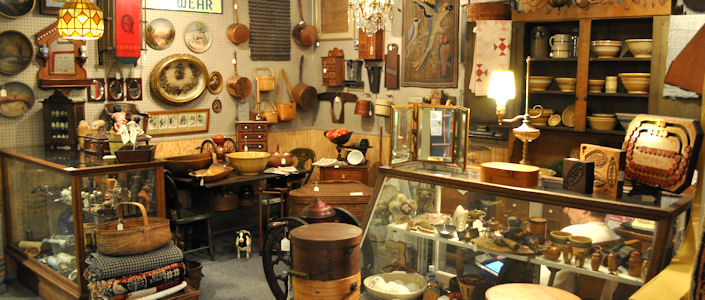
antiques-booth-1My eyes used to glaze over whenever my mother-in-law began recounting her family history. She had worked quite hard to unravel the mysteries of her ancestry. Her quest for answers paid off with a great deal of information that she excitedly related to us in the hopes that we would remember. At the time I suspect that I was a bit too young to truly care about the names and the tales of which she spoke. Now I am duly fascinated by learning not only of her kin but my own. In some ways my husband and I have become the family historians, the keepers of the the tales and artifacts that bring long dead relatives back to life. I now see such responsibility as an honor and I am belatedly scurrying to preserve the information that I know lest it evaporates when I am gone.
I have rooms of my home filled with furniture and objects that once graced the homes of the people from whom my husband and I descended. I treasure them not so much for their value as for the lives of the people that they represent. I try to tell my children and grandchildren who they belonged to and what they meant to those individuals. I’m not certain that they truly understand. Sadly they are still mostly in the state of mind that I had when my dear mother-in-law tried so hard to get me interested. I suppose that something must have stuck in spite of my lack of enthusiasm, because now I am quite driven to learn even more lest we forget. In fact one of my girls recently laughed at me and called me “Granny” the name that she had for my mother-in-law because I was so insistent that she pay attention to the information that I was conveying.

The world is changing rapidly, sometimes far too quickly for my taste, which is a definite sign of age. I recently read that today’s young people view the antiques and collectibles of their parents and grandparents as junk. They prefer more modern furnishings and tend to donate any old things that they inherit to the Salvation Army or Goodwill. They have big estate sales to get rid of the unwanted items. It makes me a bit sad and worried that so much of what presently resides in my home may one day just become a nuisance to those who are left when I am gone. I would like to believe that in between my two daughters and seven grandchildren surely there will be someone who will step up to be the next keeper of the family flame. My treasures are important to me because they represent real people and are part of the hopes and dreams of their lives.

I have a very old pitcher from my great grandmother, Christina. It doesn’t look like much but it feels magical to know that she once held it in her hands. From my great grandfather, John William Seth Smith, I have discharge papers from the Union army at the end of the Civil War. They hold his signature, the only image of him that I have. That scroll across the paper makes him very much alive in my mind. My grandmother Minnie gave me these things when I was still a very young girl and urged me to care for them always, which I have even when I still did not understand their significance.

There is far more from my mother-in-law. We have beautiful furniture that belonged to her mother, aunt and grandmothers. It is truly quite lovely and enhances our home with style and intersting stories of the people who once owned the pieces. I have to admit to being quite happy that my mother-in-law worked so hard to preserve those memories for us. They link us to both our past and our present and are physical signs of the lives of their owners.

I have dishes, linens, and tableware. Sadly there are books about which I worry because the pages are becoming weak and will one day fall apart, which I suppose is the natural way of things. My favorite is a child’s book that once belonged to my father. It may well have been the first thing that he ever read. Perhaps it even began his love affair with reading. I enjoy looking through the pages but I have to be careful because it has become quite delicate. It must be getting close to being one hundred years old.

I can only hope that there will one day be another who cherishes the humble offerings from the past. Perhaps both of my daughters will truly appreciate the photos and stories that I have saved. They loved their grandmothers so and I suspect that they will want to keep their memories alive at least for the time being. It will be interesting to see who among my grandchildren has a bent for sentimentality.

I try to visit the grave sites of my parents and grandparents and those of my husband’s kin as well. We regularly make a day of bringing flowers and spending time remembering the people who were so much a part of our lives. I sense that we are the only ones in our families who do this anymore because there are no signs that anyone else has visited. It makes me a bit sad to think that the time will come when nobody remembers them or goes to honor them.

I know that many people today think that cremation is the best way to handle death. It is not particularly expensive and it is environmentally friendly. They see little reason to set aside land for eternity just to keep the dust of those who died long ago. They may have a point but there is still something a bit reassuring in those everlasting memorials wherever they may be. I was greatly touched by finding the grave site of my great grandmother Christina. I felt a thrill in being beside her ashes or whatever is left of her. I wanted her to know how things had turned out for at least one of her twelve children and their descendants. I stood in a lonely field with the wind blowing across my face. It was deadly silent save for the chirping of nearby birds. I felt a communion with her that I might otherwise never have had. It was a truly moving moment in which I sensed her life and that of all the women before her. I am but a single link in a chain that will hopefully continue infinitely.

Perhaps I am becoming a bit silly as I grow older. I find myself appreciating things that my mother and mother-in-law did and said far more than I once did. I like thinking about the stories that they told and feeling close to them just from recalling those tidbits about their lives. I like visiting with them in the places where they are buried on sunny afternoons and leaving posies to brighten the places where they now rest. I really do hope that the very young come around in their thinking about the artifacts that were left behind by their ancestors just as I finally did. Things are not so important but the people that they represent are the stuff of who we are.

The Honor of Work

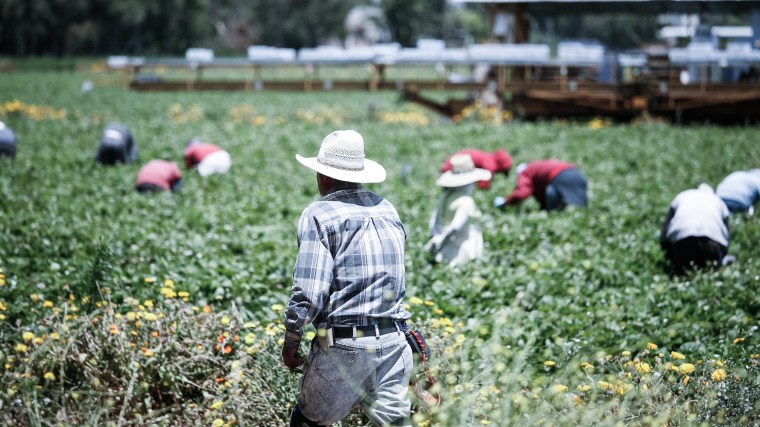
Mexican_Fruit_Pickers_(7618119180).jpgWhen I work in my yard I go all in. I usually end up with dirt smeared on my face and caked under my fingernails. Sweat runs downs my neck and my hair sticks up in all directions. There is nothing pretty about me in those times. The work is hard and often leaves my muscles aching and my back shouting at me in pain. The truth is that I overlook all of those things because I love being a weekend gardner so much. I can feel bursts of serotonin taking me to a happy place in my brain. Still, I think of my grandparents who themselves worked on farms day after back breaking day. I imagine how difficult it must have been for them to rise early and routinely toil in the sun. For me the labor is a hobby, one that I have the power to ignore anytime that I tire of the effort. For them it was the means of earning money to pay for a place to live and food on the table.

My grandparents’ descendants have done well. We generally have professional occupations that allow us to work in air conditioned buildings and bring home salaries good enough to pay others to do most of the back breaking work that we require if we so wish. We purchase our fruits and vegetables from Sprouts and have enough income for luxuries that they never even dreamed of owning. I feel their spirits when I am on my hands and knees caring for my plants while the sun beats down on my head. I frequently stop to savor a cold drink when I grow weary. I survey land that is my own, not the property of someone else. I remember and appreciate all of the things that they did so that one day all of us who came from their blood, sweat and tears would have a far better existence than they had.

I see beauty in the tomatoes, oranges and other produce that lines the bins at HEB. I don’t take such delights for granted because I understand the drudgery that people endured to bring those items to the markets where I shop. There were individuals who picked the fruits and vegetables hour after hour, day after day as long as the sun was shining. They were paid little and only received monetary rewards for full bushel baskets and bins. Their work was routine and tough on both body and soul. They are the nameless men and women whose plight has almost always been ignored throughout history. At one time they may have been slaves or indentured servants. In other eras they were the poor like my grandparents. Today they are mostly immigrants who toil from farm to farm, season to season in search of jobs that few of us would want.

I once traveled to a small town school to work with teachers who were struggling with the Hispanic children in their classrooms. They complained that the sons and daughters of migrant workers were skewing the test scores used to appraise their effectiveness as educators. They referred to the parents “the tree cutters” and insisted that these uneducated people didn’t care enough about their kids to realize the importance of schooling. It didn’t seem to occur to the baffled teachers that the mothers and fathers who worked so hard were in fact incredibly dedicated to their children, so much so that they were willing to do even the dirtiest of jobs. I was saddened by the ignorance of people who should have known better than to treat a significant portion of their student body as stereotypes. Even after my partner and I had shown them how to reach their charges they appeared to be as adamant as ever that the children of these hard working people were an inconvenience that would have preferred to simply wish away.

Most of us who live in the United States of America enjoy a level of plenty that might have made our ancestors feel wealthy. We are provided educational opportunities that were not afforded them. It was not uncommon in my grandparents’ day for youngsters to rarely attend school after the third or fourth grade. Sadly in many parts of the world even today people struggle to meet their most basic needs and even to feel safe. They are chronically hungry and suffer from health problems that are rarely addressed. We on the other hand are a nation that has mostly forgotten what it is like to live the way so many of our grandparents and great grandparents actually did. The conditions under which they labored are now mostly deemed illegal. 

I watched a group of students perform in the one act play, Gut Girls, not long ago. It addressed the working poor at the beginning of the twentieth century. It featured young women who worked in meat packing plants where the conditions were deplorable. I found myself imagining my grandfather who did a similar job for all of his working days. His legs became riddled with varicose veins and more often than not he was in pain but he never missed a single day of work. He boasted to his children that he had managed to feed them all the way through the Great Depression and keep a roof over their heads when others became homeless. He was proud to have regular work no matter how difficult it may have been and his children do not recall a single time when he complained. He endured his aches stoically.

There is great honor in hard work. We should celebrate anyone who is willing to devote time and effort to making an honest living. The person who collects our garbage is important just as the clerk behind the counter of a fast food restaurant is. The janitor is as indispensable as the manager, maybe even more so. We need our engineers and our electricians, our professors and our plumbers. The yard man who sculpts my lawn each weekend is always reliable and willing to do whatever is needed to make my home a lovely place to be. I truly don’t know what I would do without him. 

After a day of manicuring my plants, my hands are shouting at me with the sting of cuts and scrapes and bruises. They remind me to be thankful for what I have. They tell me to appreciate all good people everywhere. They urge me to be more generous and kind. But for the grace of God I might just as well have been born in another place or time that would have demanded more of me than I have ever had to expend.