Finding Refuge From the Storm

lightning and gray clouds
Photo by Andre Furtado on Pexels.com

I’ve had to take a deep breath of late,  and step back for a time. The furor over politics is ratcheting up as we draw nearer to the midterm elections, and the sheer lunacy of it all has been wearing me down, I found myself stewing over the craziness of each day’s episode of election tales deep into to the night. Then I found myself sleeping later and later in the morning to make up for my attacks of insomnia. In spite of the fact that all is going well in my life, I was getting sucked into the vortex of anger that was swirling all around me. It was not until I saw a single hummingbird perched on the branch of a tree near my bedroom window that I found the peace of mind that I had been seeking. Thanks to the feeder that my youngest daughter brought me from Colorado the tiny creature has been attracted to my yard, providing me with some unexpectedly comforting moments.

I suppose that I set myself up for the anxiety that has been stalking me. I was so taken by the calm and bipartisan sweetness of John McCain’s funeral that I had naively believed that the political landscape would be suddenly transformed into a kind of Kumbaya sanctuary. I had been forewarned by one of my wiser and more logical friends not to hold my breath, but being ever the cockeyed optimist I truly thought that we had reached one of those watershed moments in history. Boy, was I wrong, not just in left field but outside of the ballpark entirely.

For a time I was unable to escape the chaos that spoiled my mood. I don’t know about you, but my email account is filled with political adds from all sorts of folks who want to part me from my money for their causes. They have become rather annoying with their daily rants that I guess are supposed to rile me up enough to take out my credit card. Little do they know that they are having the opposite effect. I just want them to go away.

Watching the news on television or listening to it on the radio isn’t any better. I’ve sworn off of CNN, Fox, ABC, NBC, CBS and NPR. Instead I tune in to the local stations mostly to hear the weather report since this is prime hurricane season and my city is often the target of those kinds of storms. Otherwise, I just don’t want to hear the posturing or have to watch the embarrassing behavior of most of the folks in Washington D.C. or those who are hoping to get there. I truly wonder if they all believe that I am as much of an idiot as their commentaries seem to assume. Sorry folks, I’m not falling for any of the propaganda. I can spot the techniques from a mile away. You won’t see me jumping on any kind of bandwagon.

I love catching up with friends and family that I don’t always get to see by way of Facebook. I enjoy knowing how people are doing. Now that I am retired I might lose track of them were it not for all those comments and photos on my wall. Nonetheless, my space has been bombarded with the pros and cons of the newest Nike ad and dire warnings about Brett Kavanaugh. It’s all way too much over the top for me. I’ve had to mostly stay away from it lest I surrender to the temptation to make comments that might cause me to enrage friends and family whom I love. I’ve tried to just leave them to their beliefs, because in the end each of us is entitled to our individual opinions. I’m not going to change mine because someone else is ranting, and I suspect that even if I submit a carefully crafted persuasive piece it will make little difference in the grand scheme of things.

The one thing that I have seen that most infuriated me was an article in which the author submitted an argument that presumed to know what all white people think about the various issues of our time. He laid the blame for most of the world’s ills directly at the feet of anyone of western European ancestry, but most especially those who eventually became Americans. To be fair the author was also white and his intent was to write a kind of mea culpa for being born into such an horrific race. He apologized in the name of all of us.

I did not find his ideas to be as redeeming as many of my friends did. Instead I saw it as patronizing and highly insulting, not to mention presumptive. Only a handful of the world’s people actually know me or anyone else for that matter. It is impossible to make sweeping generalizations about individuals, and it is dangerous to place large groups of people into a single category. The complexities of humans are far too great to assume that we completely understand what makes each person tick.

As for myself, if truth be known I am a political misfit. I have rarely found anyone with whom I totally agree in matters of national concern. I would be maddening to anyone at the extremes of political life, and in turn I long for politicians of old like John Kennedy or Barbara Jordan. I liked George H.W. Bush’s kinder, gentler nation, and I loved bipartisan efforts like those of the Gang of Eight. I advocate for immigration reform and fiscal conservatism at one and the same time. I am against both the death penalty and abortion. I think that it is high time that we fully embrace the idea of gay marriage, but I don’t think that it is right to ignore the religious beliefs of those who disagree. I believe that minorities still suffer at the hands of racists, but I do not believe for a second that all white people are racists. I have seen bad teachers, bad business owners, bad lawmakers, so I assume that there are bad police officers hiding in the mix of the good guys who serve and protect us. I have a theory that there are evil doers who are having a great time watching us tear at each others’ throats. It’s an old political trick that has been around for centuries and to my chagrin it is working rather well.

So for now I will spend more time with my little hummingbird, and less keeping up with the news. Besides, my grandchildren need me to help them review for tests in Geometry and Algebra II, so I have some planning to do. I will ignore the chaos and devote myself to more worthy pursuits.
Built On Love

The house

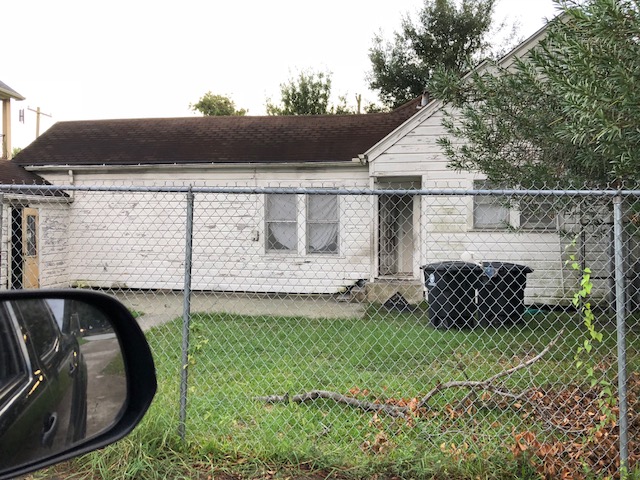
The husband loved his wife and his little daughter so much that he wanted to show his feelings by crafting a strong and beautiful home for them. He ran concrete piers deep into the gumbo like ground, wanting to avoid the shifting motions of the earth in that part of Texas. This would be a place of security, a symbol of just how much he cared for his family. Once the foundation was set, he created a pretty bungalow with curved doorways, warm wooden floors, and windows to allow the sun to lighten each room. It was small, but elegant, a place designed for gatherings of friends and brothers and sisters. It stood on a large lot shaded by trees and within view of the rest of the family homestead. Everyone agreed that it was beautiful, and best of all it made the man’s wife and child smile.

It would be the site for so many gatherings, celebrations, parties, and even times of sadness. It weathered storms, hurricanes, summer heat, icy winter mornings. Inside the family felt comfortable and safe even as life began to change. The man was quite young when he had his accident, a crazy thing really. He fell out of a tree and broke his back. He developed a dangerous infection but could not take the penicillin that might have cured him because he was allergic. He died with so little warning, leaving his wife and daughter bereft and wondering how they would manage without him. They grieved inside the house that he built until they somehow found the healing that they needed. They went on with their lives and the house stood as magnificently as ever.

The man’s wife rose to the challenges set before her. She helped to continue the business that he had built with his brothers. They worked in a back room of that house, loving and laughing and taking care of one another. The daughter grew into a beautiful woman. She set out on her own in a house nearby. She began a family and had a son. Now the rooms were filled with the sounds of play each day as the little boy spent hours with his grandmother. It was still the happy place that the now gone husband had hoped it would be. His memory lived in those rooms.

In a kind of classic love story the beloved wife seemed to long for her husband even as she carried on with courage. She one day discovered that a cancer grew in her body. She was still a young and energetic grandmother, but not able to fight the disease which overtook her body. She died and all who knew her were devastated, wondering how it would be possible to continue her legacy of compassion, love and laughter. They gathered in the house to mourn her and to recall the love that they had shared there.

The daughter moved into her mother’s house. She and her husband and son continued the traditions that her parents had so honored. The house was still as lovely as it had ever been, but the neighborhood had begun to change. Where there had once been a little forest of trees leading to a bayou, an interstate highway had been erected. Neighbors slowly began to move to suburbs far from the center of town. The view of the business district that was only a few miles away began to be dominated by gigantic skyscrapers. The town became a city growing around the little bungalow with a vengeance. Still inside those walls the daughter and her family lived life just as her father had hoped.

The boy grew and fell in love and married, moving to the other side of the city. He and his wife often visited the little house. They loved the Sunday dinners, the Thanksgiving and Christmas celebrations, and the quieter times when the boy watched football with his dad and his wife enjoyed tea and conversation with his mom in the gracious dining room of the house.

Eventually there were more children crawling on the gleaming floors and playing happily with their grandparents. They especially enjoyed the times when they slept over and stayed in the room that had once been their grandmother’s and then their father’s. They heard stories of the original owners of the house and played dress up with hats that had belonged to their great grandmother.

Progress moved farther and farther from the center of the city. The streets near the little bungalow grew dangerous. Crime became a way of life. It was time to leave. The bungalow would become a rental, with hopes that one day the area would become as glorious as it had once been. The lovely rooms were emptied of the family treasures, but the walls retained memories of the wonderful times that had gone before.

Things began to fall apart for the house and the places around it. The people who rented it did not love it. They broke its windows and punched holes in its walls. They did not know how precious it had once been. It was only a way station for them, a place to stop over on the route to something better. In many ways the house and the neighborhood around it became unrecognizable to the members of the family who had at one time enjoyed and appreciated its history.

The husband’s daughter died and left the house to her son, who dreamed for a time of making it a wonderful place to live again. Such reveries never came to pass. There were drug dealers walking on the once placid streets, derelicts lounging on the curbs. At night it was a dangerous place where crimes were commonplace. Still, the boy kept the house even as he watched it sag and saw the damage that renters had inflicted on it. He grew older than his grandfather had been at the time of his death. He made repairs on the house and had to struggle with renters who would not pay. It became an onerous task to keep the house alive, and so one day he decided that it was time to sell it to someone else.

He found a buyer, someone who wanted to build his own dream on the land. The house would be torn down. There was a kind of sadness about the whole affair. As the boy walked through the rooms he saw that the little bungalow was past its time. To revive it would be costly. In some ways it would be merciful to just let it go, to rejoice in the memories of its happier days.

The husband who built that house looked down and smiled at the boy who had been his grandson. He approved. He understood that to everything there is a season and the time for the bungalow had passed. The land was not the same as it had been when he created the place with such great care and love. He would smile that the boy had tried so hard to keep it alive, but he also knew that the little house that was his gift had changed long ago.

The boy and his wife walked through the rooms one last time before surrendering the keys. The floors were scuffed and dirty but still so strong. They heard the voices and the laughter of the people who had once passed through the rooms. The house groaned and creaked and spoke of how old it felt. It told the boy that it was time to let go. It was the love that made that house, and that love lives on , not in walls and floors but in the boy’s heart.

Show Them How Tough You Are

accomplishment action adventure challenge
Photo by Pixabay on Pexels.com

One of my educator friends posted an article about a more and more prevalent kind of enabler known as a Lawnmower Parent. In general this is not just one who constantly watches over children, but also goes out of the way to pave the way for them, make things smoother sailing. In the example presented in the article a father calls a teacher out of the classroom to ask her to deliver a water bottle to his child. The teacher is stunned that the father has gone to such lengths to accommodate the student, and proceeds to provide additional examples of a worrisome trend that she sees all too often.

About the same time that I read about Lawnmower Parents I listened to the moving eulogy of Meghan McCain for her father John. There was much to talk about in her words, but one of the ideas that really struck me was her description of an incident in which she was fearful and ready to give up. Her dad encouraged her by urging her to “Show them how tough you are.”

In my own childhood, my mom often reiterated stories of hard times when she was just a girl when her father insisted that she hold her head high and ignore the taunts of those who attempted to deter her from feeling confident. He even held weekly family meetings in which he insisted that each of his children had much of which to be proud even though they were often viewed as different, poor, immigrants. He wanted no excuses, no bad behavior, and to his credit they all turned out to be exceptionally hard working and honest adults who passed down the notion of self reliance to their children and grandchildren.

Luckily I have seen very little Lawnmower Parent behavior in my own dealings with the education of students. I suppose that there have always been well meaning adults who over pampered their kids, but on the whole it has not really been a trend in my circles. I was once offered a bribe from a wealthy father if I would change his son’s final average in mathematics. Of course I adamantly declined the offer and then explained to the man why I believed that aiding his son in that manner was an horrific idea. By the end of the conversation the parent had realized that softening the blow of a subpar performance by his son would be the worst possible way of dealing with the disappointment. I had made it very clear that the student would learn far more from the experience if the full responsibility were placed at his feet rather than those of the adults. It was time to demonstrate that life is about hard work and self reflection, changing bad habits rather than covering them up.

All of us have been faced with situations that nearly broke our spirits. There will also be moments that are so difficult to face that our inclinations will be to run away. Still there are situations in which the only honorable thing to do is to show the world how tough we are. We have to work through the pain, the sorrow, the humiliation and keep moving forward.

The people that I most admire are imperfect beings, many of whom failed horribly at something. Rather than giving up or relying on someone else to fight for them, they picked themselves up and kept trying again and again until they ultimately succeeded. They overcame great problems at great prices. They were unwilling to be defeated. They showed all of us who were rooting for them just how tough they were.

I was quite excited about a post from a young woman who had attended one of the schools where I worked. She had become pregnant in her senior year and it seemed that she would not be able to fulfill her dreams with her new responsibility of raising a child. She remained undaunted and worked sometimes to the point of exhaustion while she held down a job, took care of her child, and studied at one of the local universities. She literally took one step at a time day by day, and ultimately earned a college degree. Knowing that her earning capacity would be improved with an advanced degree she continued her regimen of working, mothering and learning until she had also earned a Masters degree. She found a wonderful job, married the father of her child, and before long bought a beautiful custom built home. She showed us how tough she was, and we all celebrated her as an inspiration, a model of determination and grit.

I also know about certain instances when parents are compelled to stand up for their children. They are not being overly protective in such situations, but rather making certain that justice prevails. I have seen many occasions in which teachers were unmoving, even rude when students requested consideration for extenuating circumstances. They were so hard nosed that parents had to intervene. I’ve had such encounters with unfair teaching practices with my own two daughters. I felt compelled to speak out, particularly after my children had been ignored.

As educators we certainly hope that parents will not constantly make excuses for their youngsters, but at the same time we have to ask ourselves if we are somehow being unreasonable. Sometimes our hard and fast rules simply do not work for specific situations. We must be willing to demonstrate flexibility and a willingness to listen to our students’ pleas. When we don’t, it should not be too surprising if parents intervene.

Teaching is quite demanding, but so is being a student. Kids today seem to have virtually every hour of every day filled with tasks they must perform. We ask much of them, and sometimes forget that we are not the only ones piling assignments on them. We would do well to hear what they have to say before exhorting them to “deal with it.” We all reach a point after which we simply can do no more.

I’ve had to be tough throughout my life, but there have indeed been times when I knew that I was about to break. I often allowed myself the luxury of a bit of self pity, a mental health holiday, a pile of unfinished duties. It was how I built up the strength that I needed to keep moving forward, and because I understood how easily such a state of mind can appear I tried to be understanding with my students, my teachers, and the parents. Perhaps instead of pointing fingers at one another with insulting labels we just need to take the time to find out what is really going on. It is then that we will begin helping our young to learn how to show how tough they are.

It Is Holy

light sunset people water
Photo by Negative Space on Pexels.com

“Tis a Fearful Thing

‘Tis a fearful thing

to love what death can touch.

A fearful thing

to love, to hope, to dream, to be –

to be,

And oh, to lose.

A thing for fools, this,

And a holy thing,

a holy thing

to love.

For your life has lived in me,

your laugh once lifted me,

your word was gift to me.

To remember this brings painful joy.

‘Tis a human thing, love,

a holy thing, to love

what death has touched.” 

― Judah Halevi

I’ve found myself thinking of my dad, dreaming about him in the last few days. I wasn’t quite sure why, and then I remembered that his birthday would have been this week. He would have turned ninety five had he not died at the age of thirty three. Given that his father lived to one hundred eight, and he shared those genes, he might have had thirteen more years ahead of him. Of course that was not meant to be. Instead he was outlived by his mother and his father. He was mourned by his wife and children, children who are now older than he would ever be. Still we think of him, love him, and wonder what life might have been like if he had hung around just a bit more.

Some might consider it impossible to long for someone for sixty two years. It might appear to be neurotic, unhealthy, but it is a human thing to love what death has touched. My father lives on in me and in my brothers, in our children and grandchildren, We see snatches of him and the power of DNA in all of us. Thinking of him does indeed bring painful joy. We cling to the things that we know about him, even though we still have so many questions about who he really was. We see him through the eyes of the children that we were, idealized in many ways because of our innocence. We have learned about him from secondary sources, people who walked and talked with him. They have forgotten his flaws and now only choose to speak of him with a kind of reverence. It is a human thing to be that way. We all do it.

I try to tell my daughters and my grandchildren about him. I don’t seem to have adequate words to reveal his essence, his flesh and blood. They stare at me with blank looks when I attempt to regale them with stories about a man whom they never met. They do not comprehend because they never heard him telling a joke or smiled at the sound of his laughter. They can’t even imagine how much he loved sports, especially his beloved Texas A&M Aggies. They never sat with him on a fishing pier and literally felt his entire spirit soaring with the peace that being near the ocean brought him. They were not lucky enough to accompany him to a bookstore, any bookstore, and to witness his love, his passion, for the written word. They did not see him devouring print while classical music played softly in the background. They never got to watch him smile at his wife with a love and pride that stirred the heart. He is for them only a story, one that is difficult to fully grasp.

Even my brothers are only vaguely able to create a complete picture of him in their minds. A five year old and two year old are only capable of remembering so much. They often come to me for confirmation of the images of him that pop into their minds. They want to know if they are only dreaming or if they have been lucky enough to actually have a small part of him stored away.

Loving is a fearful thing, because sometimes it is punctuated with loss. Loss hurts. It scars. It shatters a part of the soul. Still loving is something that we never regret. We are always better for it. It is human. It is holy.

It’s A Sin To Kill A Mockingbird

bird painting wall
Photo by rawpixel.com on Pexels.com

Over the summer I reread To Kill a Mockingbird along with my grandson, Eli. Much as Scout and Jem grew emotionally in the course of the story, so I realized how differently I saw the novel more than fifty years after I first eagerly turned its pages. Even though I was in high school at the time of my first encounter with the tale, I was still quite naive, innocent and filled with ideals. I have seen much and learned much in the five decades that have passed and I suppose that while I still lean toward optimism, I understand that I must admit to a bit of cynicism in judging society’s progress with regard to justice and equality. Like Atticus I see the evil that exists in the world, but I am still convinced that on the whole there is far more good than evil.

Atticus tells his children that it’s a sin to kill a mockingbird, an guileless creature undeserving of harm. So too do I believe that it is up to us to protect the young, the weak, the sick and the blameless souls in our midst. I suppose that I was drawn to teaching because I saw it as a way to strengthen our youth by providing them with skills that would allow them to navigate through the contradictory aspects of human nature. It is often difficult to conceive of a world that fosters the gentleness of a Jimmy Carter also spawning the pure evil of an Adolf Hitler, and yet the reality is that we do indeed have the good, the bad and the ugly among us.

It is difficult to know when it is time to introduce our children to the underside of society. As parents and educators we so desire to shield them from unpleasantries. We monitor their friendships and activities. We are careful about the programs that they watch, the language that they hear. Ultimately the time comes when even our best efforts are not enough to shelter them from reality. They will encounter a bully or hear a racist utterance. They will be hurt by unkindness or the blows of violence. They will see things that are foreign to their natures. We will be bereft when we see them hurt. It makes sense to slowly introduce them to certain truths, but it is a balancing act to do so without frightening them, killing their spirits.

I found sharing this powerful book by Harper Lee to be a profound way to touch on topics that were somewhat foreign to my grandson. He understood the concept of bullies. He had seen ugliness at school, but his life has been mostly untouched by even hints of racism. He was curious about a time in history that I had seen firsthand when the black race was treated almost as being inhuman. He listened intently as I spoke of the separate water fountains, bathrooms, schools, neighborhoods that were the norm. It was almost unfathomable to him that such conditions existed and were even embraced by a significant portion of the population. When we read about Tom Robinson, the unfortunate black soul falsely accused of raping a white woman, Eli was certain that the evidence would clear him. He was literally devastated when the final verdict was read. It was an eye opening experience told in such a powerful way in the pages of the remarkable book.

We hear about the parents of black children having “the talk” with them about the dangers that lurk due to a residue of racism that sadly still exists in some quarters. I suggest that each of us needs to have a conversation with our youngsters to discuss the inequities that they may encounter either personally or in others, and to help them to determine how to react when they see such things. Just as Atticus helped to develop a moral foundation in his children, so too must we speak of even difficult things with our kids.

We don’t have to throw everything at them all at once, and often we can use literature or movies or experiences to convey the important information that we want them to learn. We have to be willing to take the time needed to allow for questions that might be difficult to answer. Above all we must be honest and gentle. It is far better for our children to learn about injustice, inequality, trust, loyalty and values from us than from a tragic incident that may rock their sense of security and confidence. We can slowly build up their principles and their knowledge of the world without frightening them in the process.

Our best method is to be like Atticus, adults who model what it means to have unimpeachable character. We must always remember the maxim that what people believe is what they do, not what they say. Our children are monitoring our every move and imitating the behaviors that we model. They will learn as much just from seeing us interact with our fellow humans from day to day as they will from listening to our advice.

Guiding our children to be unprejudiced, just, and kind is hard work, but in making the effort to be good examples we ourselves grow and become better people. When we realize that those little eyes are constantly looking to us we try harder, simply because we love them and want the best for them. We don’t have to be perfect. Our kids will learn as much from our admission of mistakes as from our best moments.

Senator John McCain died shortly after I had finished To Kill a Mockingbird with Eli. Somehow I found myself thinking about his life and how he had shown us all how to live. Then I read his final letter and I was as moved by his words as I had been by Atticus Finch. In that letter are all of the elements of a life well lived, so herewith is his message to us all:

My fellow Americans, whom I have gratefully served for 60 years, and especially my fellow Arizonians, thank you for the privilege of serving you and for the rewarding life that service in uniform and in public office has allowed me to lead. I’ve tried to serve our country honorably. I’ve made mistakes, but I hope my love for America will be weighed favorably against them. I’ve often observed that I am the luckiest person on Earth. I feel that way even now as I prepare for the end of my life. I’ve loved my life, all of it.

I’ve had experiences, adventures, friendships enough for ten satisfying lives and I am so thankful. Like most people, I have regrets but I would not trade a day of my life in good or bad times for the best day of anybody else’s. I owe the satisfaction to the love of my family. One man has never had a more loving wife or children he was prouder of than I am of mine. And I owe it to America to be connected with America’s causes, liberty, equal justice, respect for the dignity of all people brings happiness more sublime that life’s fleeting pleasures. Our identities and sense of worth are not circumscribed but are enlarged by serving good causes bigger than ourselves.

Fellow Americans, that association has meant more to me than any other. I lived and died a proud American. We are citizens of the world’s greatest republic. A nation of ideals, not blood and soil. We are blessed and a blessing to humanity when we uphold and advance those ideals at home and in the world. We have helped liberate more people from tyranny and poverty than ever before in history. We have acquired great wealth and power in the progress. We weaken our greatness when we confuse our patriotism with rivalries that have sown resentment and hatred and violence in all the corners of the globe. We weaken it when we hide behind walls rather than tear them down, when we doubt the power of our ideals rather than trust them to be the great force for change they have always been. We are 325 million opinionated, vociferous individuals. We argue and compete and sometimes even vilify each other in our raucous public debates.

But, we have always had so much more in common with each other than in disagreement. If only we remember that and give each other the benefit of the presumption that we all love our country, we’ll get through these challenging times. We will come through them stronger than before. We always do. Ten years ago, I had the privilege to concede defeat in the election for president. I want to end my farewell to you with heartfelt faith in Americans that I felt so powerfully that evening. I feel it powerfully still. Do not despair of our present difficulties, we believe always in the promise and greatness of America because nothing is inevitable here. Americans never quit, we never surrender, we never hide from history, we make history. Farewell fellow Americans. God bless you and god bless America.

Consider sharing this letter with you middle schoolers or high schoolers. I think that they will understand what Senator McCain was trying to say. It will be a great way to begin important dialogues with them.