Jack

pexels-photo.jpg

Jack is one of those names that almost instantly brings warm feelings to my heart and a smile to my face. I suppose that it is mainly because that was my father’s name and he set the standard for the type of person whom I believe should bear that moniker. Jack of Titanic fame only confirmed my belief that those who bear that designation are adventurous, loving, and courageous souls just like my dad. Then along came Jack from This Is Us who reminds me of my own daddy in so many ways. In fact I’ve yet to meet or hear of a Jack that I didn’t like, souls so full of joy and intellect, people like Jack Kennedy and even a man with whom I attended school for dozens of years who still makes me laugh with his humorous ways just like those with which my father so impishly entertained us. One of my brothers officially bears the Jack designation even though he goes by Mike, and a grandson honors his great grandfather by living with the same level of joy that seems to go hand in hand with being known by that grand but simple title. Even a favorite cousin was named Jack and the two of us enjoyed the most amazing childhood together.

Somehow when I hear the name Jack I have a Pavlovian reaction of comfort and happiness. I suppose that there are actually Jacks who are not good at all, but I have never met them. My own reaction to hearing that short but sweet sound is always positive and my Aunt Polly’s two husbands, my uncles, only strengthened my belief that there is something magical about people who bear the appellation of Jack.

My first Uncle Jack was a delight. He was a tall thin drink of water with a grin that lit up his face like Times Square. He seemed born to laugh and was an encyclopedia of  stories and jokes. He is the man who introduced me to westerns, and I liked nothing better than spending time watching those old black and white adventures like Maverick, The Rifleman, Gunsmoke, and Have Gun Will Travel with him.

After my father died it was Uncle Jack who saved my family by helping us to purchase a new car to replace the one that was wrecked in Daddy’s accident. He accompanied us as we searched for a home to settle into our new life. He was smart and understood how to get things done even though his education had been limited. He was a practical soul, a survivor, someone who overcame challenges. I loved him so, and always felt quite safe when he was around. He was the uncle who was the most fun, someone who actually talked to me. Sometimes he seemed like a kid himself who never became too old to have a good time. When he died suddenly I was heartbroken. Like my own father I felt that he was far too young to leave us, but I suppose that some people are so spectacular that they have only a limited amount of time to live on this earth.

My Aunt Polly has always been a beautiful and gregarious woman who doesn’t spend much time feeling sorry for herself. It wasn’t too long after Uncle Jack’s death that she began socializing once again. In the process she met a new Jack and the two of them fell in love and were married. His full name was Jack Tolbert and he like the other Jacks that I have known was sweetness itself, as well as being a most interesting character. He had experienced great tragedy and yet he somehow always appeared to be so serene and pleasant. He loved music and often carried his guitar with him so that he might lead a group in song. He played with other musicians and found much delight in strumming different tunes with his friends. He also had a profound love of God that no doubt sustained him through the trials that he endured.

When Jack Tolbert was only eleven years old he was riding with his older brother when one of the tires on the car blew out. He waited inside the vehicle whole his sibling was replacing the flat. Without warning another driver came speeding by and hit Jack’s brother, killing him instantly. This terrible event was only the beginning of a string of tragedies that would seem to haunt his life. Another sibling was later crippled while hunting, and a third died in the assault on Normandy on D-Day. Jack’s parents both left this earth while still in their forties, and still he carried on, working for an airline and finding solace in his music and his God.

When Jack was in his sixties his beloved wife was diagnosed with ALS. For three years he cared for her with patience and love until she succumbed to the crippling disease. Like my Aunt Polly he eventually began to embrace life again and that is when the two of them met and fell in love. It was a second chance at happiness for both of them and in the next twenty five years they would have great fun together, traveling and hosting big parties for family and friends. As always Jack would regale those of us who were his guests with song and his own sweet smile.

Aunt Polly and my new Uncle Jack liked to play cards and dominoes and loved seeing their children, grandchildren and great grandchildren. They would sadly lose sons even as they grew older and older. Just before Christmas one year they were decorating their front yard with lights when their house somehow caught on fire and quickly was engulfed in flames. So many of their belongings and memories burned before their eyes. They were in their nineties by then and the loss took a terrible toll on their health. They moved to a home for seniors and Jack’s mind slowly began to fade away. It was not long before he was a shell of himself, barely understanding what was happening from day to day. Last week he quietly passed away at the age of ninety nine, leaving friends and family to remember what a fine man he had always been, another Jack of such distinctive character, someone who had grasped life with all of his heart.

The Jacks that I have known have been a noble lot, the kind of men who seem to spread delight wherever they go. I miss the Jacks who have already gone to be with God, but I will never forget how wonderful they made my life and I appreciate the ones who are still here to lift up my spirit even on difficult days. Jack is such a simple name and yet the Jacks I have known have meant so much to me that the very sound of that single syllable is music to my ears.

A Kind of Angel

pexels-photo-414586.jpegThe first time I saw her I was struck by her elegance. Her hands were particularly lovely with long slender beautifully manicured fingers. She used them for effect in conversation and they were mesmerizing. She was kind and welcoming, but I somehow still felt inadequate in her presence. I found myself fidgeting and trying to think of something intelligent to say, some remark that would prove that I was worthy of her company. Nothing came to me so I just sat quietly listening to her confidently speak of this and that. I liked her, but I was in awe and so I felt uncomfortable and hardly tasted the food that was set before me. It would be a very long time before I understood that her strength and confidence made her kind and loving. She would be a lifelong ally, a kind of angel protecting me and those that I loved. That’s the way she was, a selfless person.

She was a tiny thing, only five feet tall, but she somehow always seemed statuesque. When she drove her car her head barely peeked over the dashboard. Sometimes it appeared that nobody was behind the wheel, and the sight of it made me laugh. She taught me many things about people and their natures. She was a great listener, someone who truly cared. Her advice was right on target, but I didn’t always take it. Perhaps I was hard headed or maybe a bit silly or even a tiny bit jealous from time to time. Still, I loved her so and took our moments together for granted as though she would always be around.

She had often told me of her health problems. She had already lived far longer than she should have. She was born with a heart condition. Not even surgery would guarantee that she would live as long as most of us do. I suppose that knowing that the clock was ticking made her more aware of the need to get as much out of each day as possible. She lived with optimism and a generous spirit, but she was unwilling to put up with hypocrites or fools. She was intensely loyal and protective of those that she loved. Like a mama bear she went after anyone who attempted to hurt the members of her family. She was not someone with whom to trifle.

I hung on to her words and tucked them away in my memory for future use, which was wise because she is gone now, and I miss her so. There are occasions when I need her wisdom and wish that we might have just one more opportunity to discuss the things that worry me. She had a way of setting things right by helping me to find the answers that I sought. She was stern with me whenever I was being foolish. She reminded me of my own strength and pushed me to be the person that I was meant to be.

I know that I am very fortunate for having known such a remarkable woman. Her spirit still lives inside my heart. When I waver I can almost hear her voice urging me to be courageous. It’s almost as though she leaves me little hints that tell me that she is still watching over me like a guardian. A few nights ago when I was stewing over a situation unable to sleep I listened to music from Pandora, and out of the blue came Fur Elise a song that she often played on the piano with those exquisite hands. I smiled as a calm came over me. I recalled the words she had used to soothe me when I became stressed and certain that my world was crashing down. She taught me how to control whatever I might and ignore those things that were beyond my reach.

It is something that she had learned as a child after she was told that she must relax or run the risk of dying. Instead of stewing over the possibility of an early demise she decided to pack as much wonder into each day as she might. She understood that she did not have time to waste on worry if her days were numbered. She did all of the things that she was instructed to do to stay as healthy as possible and then really lived. She ultimately survived far longer than her doctors had predicted. I suspect that was because she did not waste a single moment on cynicism or sadness.

She died peacefully. One moment she was hugging her husband and telling him how much she loved him. In the next second she had a violent headache and then went into a stroke induced coma. As she lay dying she appeared to be a sleeping beauty. It almost seemed as though she would awake and smile at us and give us her laugh of delight that literally brought sunshine into a room. We didn’t want to believe that she was taking her final breaths because she meant so much to all of us. She waited until we had all gone for some dinner to partake of her heavenly reward. It was so like her not to upset us by leaving while we watched. She would not have wanted us to be hurt.

It has been almost sixteen years since she left but somehow I feel her presence again and again. I see her in her granddaughters and great grandchildren. I retell them her stories and know that she would want me to remind them of what is important. Family and friendships were the focus of her life. Nothing was more important even though she was a woman who might have done anything. Those of us who knew her rank her among the greatest heroines of all time. Those who did not will never understand what they missed. She lived her life with integrity and compassion. I was lucky to be her daughter-in-law and her friend.

Becoming Our Personal Bests

pexels-photo-618612.jpeg

I was driving home in the dark after spending the evening helping my grandsons complete a Geometry test review. It had been a long day and I was quite tired so I needed some sound in the car to keep me alert during the fairly long journey. I keep my radio tuned to NPR and just as I had hope there was an interesting program on the air. All of the guests were speaking about the idea of giving humans a small nudge to motivate them to do something difficult. It seems that there is a right way to get people to take risks and a wrong way that makes them complacent and uncomfortable with trying new things. Unfortunately much of the parenting and guiding and teaching that we tend to do is often exactly the opposite of how best to inspire humans,

As a mom, grandmother and long time educator I found myself instantly fascinated with the topic, so I turned up the volume and listened intently to a parade of experts giving pointers on how to create adults who are willing to push themselves beyond their comfort zones. It seems that every single theory was grounded in the idea that making mistakes can be a powerful tool for learning as long as it happens in the right kind of environment. If the emphasis is on personal growth rather than ranking, an individual is far more likely to demonstrate a willingness to venture into uncharted waters. There is something in our human natures that wants to be adventurous, but we throw on the brakes of caution whenever we realize that we are being compared and judged. We don’t want to be embarrassed by our mistakes and so all too often we quietly give up rather than endure the pain associated with failure.

One of the guests discussing this issue spoke of an horrific childhood experience that she had with a teacher who seated children in the classroom in order of IQ, from highest to lowest. Aside from the personal humiliation associated with such an arrangement she noted that it created artificial barriers to learning in which those lowest in the ranking began to believe that they didn’t have a chance to improve or master new concepts. It also segregated the students from one another by making them believe that those at the front of the class were smart and part of an exclusive group and those at the end were hopelessly doomed to uninteresting lives. The woman who was subjected to this horrible situation still shudders at the psychological damage it did to her and her peers.

My own high school experience was not much better. We were grouped according to an entrance exam and previous grades. Each six weeks a list noting our class rank was posted on a bulletin board in the main hall. We gathered together each time it appeared to determine where we were in the order, trying not to look at the very bottom because we somehow understood that there was indignity associated with being last. To this day I shudder at the idea of such shameless and ignorant humiliation that the listing created and the fear that it planted in me.

As humans we are born with a willingness to try different things. As babies we innocently explore and develop. Nobody thinks it odd that each little one grows at his/her own pace. It is the natural way of things and generally there is no worry unless the child shows signs of some type of extreme difficulty. In those early years our curiosity is at a peak. We want to know about and try everything. Learning is natural and fun. It is only when we begin to impose the artifices of tests and grades and competitions that many children begin to waver. When they feel that they are being judged badly because they are not quite as good as their peers, they sometimes slowly become and less and less inclined to participate in the process. In fact, even those at the top reach a certain comfort level and sometimes stop exploring lest they fail and lose their status.

As adults we want to encourage our young to be the best versions of themselves and so whenever they succeed at an endeavor we tend to praise them not so much for the attempts as for the outward judgement of their accomplishment. In other words we celebrate a good grade more than we cheer on effort. We pin our hopes on winning rather than a willingness to try. There is a kind of invisible ranking by IQ or ability that destroys a young child’s natural instinct to try things out. It deadens their souls just a bit, and in the worst case scenario convinces them that their possibilities for life are severely limited.

Sometimes it has the most deleterious effect on those children who started out at the top. They become so accustomed to being the best that they come unglued at the first sign of a challenge. They question themselves and withdraw from the race. They choose easy pathways that allow them to maintain their status, but their interest in reaching higher and higher is stifled. This is particularly true whenever a child suddenly fails after a lifetime of seeming perfection. We sometimes neglect to show them how to rebound from disasters.

The world will no doubt always be competitive but during the formative years the ideal is to instill a growth mindset into our young. We must strive to praise hard work and progress as much as mastery. We need to break learning down into doable chunks and celebrate the achievement of reaching particular milestones as much as we do high marks.

I have learned from watching my grandsons in swimming and track that each effort that they make is measured in personal improvements that may be little more than a tenth of a second. The focus of competition is with themselves. They understand that by beating their own records they move closer and closer to besting those who run with them. Races are generally won with very small but important differences. My grandsons work hard to close the gaps and they begin with themselves. Even if they do not gain a medal, they feel excited when they learn that they have shaved just a bit more time off of their own records. Improvement is a slow but focused process that they keep chasing because they are willing to stay in the race.

We can do so much much better with our young, but for now it is a difficult battle as long as tests are used to rank them, their teachers, their schools, and their communities. We are killing the natural instincts and curiosity one mistake at a time. Instead of encouraging our children to develop a love of reading we force them to submit to comprehension tests having little to do with how we humans enjoy the written word. We make the world of mathematics terrifying and far more difficult than it needs to be. We mystify science and insinuate that only a select few will ever be bright enough to work with its principles. We categorize children before they have even had the opportunity to explore and enjoy the wonders of learning. By the time we are adults we have boxed ourselves into rigid mindsets from which few of us ever escape.

It’s time for an overhaul of how we guide and teach our children. We have the know how and potential to use our most precious resource to the fullest. We just need to begin.

The Art Of The Deal

pexels-photo-185933.jpeg

My brothers and I were discussing our family heritage the other day. We are all too aware that the untimely death of our father changed the trajectory of our lives dramatically. We often wonder what things might have been like if…

Our daddy had an unstoppable sense of humor. His book collection included volumes filled with jokes. His favorite television programs featured comedians. He was a great storyteller and peppered his tales with yarns that made his friends laugh. He found something funny in the darnedest places and when they happened to be from real life, that was even better.

The first house that my parents purchased was in southeast Houston on Kingsbury Street in a new housing development like many that were springing up all across America in the years after World War II. My father had finally earned a degree in Mechanical Engineering and he landed a job in downtown Houston. The location of the house was perfect for starting a new career and raising a family. Most of our neighbors were young like my parents and the men were college graduates engaged in all sorts of interesting professions. They had children in the same age groups as my brothers and I so there was always lots of fun to be had. 

Most of our moms stayed home back then while our fathers went to work each day. The women had routines that they carefully followed for the care of  their children and homes. I remember that my mother washed clothes on Mondays, which was a bigger deal than it might seem because dryers were still a dream of the future, and so she had to hang her wet items on a clothesline to dry in the sun. 

Tuesdays were for ironing and as I recall my mother had a bottle with a perforated lid that she would fill with water to shake on the clothes that needed a bit of steam from the iron. On Wednesdays our mother dusted and cleaned and mopped the wooden floors and linoleum until they gleamed. Sometimes she even used floor wax to achieve a better shine. Thursdays were reserved for her sewing and mending. She made all of my clothing and most  of hers. Friday brought meal planning, dusting and changing the linens on the bed. Saturdays meant shopping trips and Sundays were for church and visiting grandparents.

While all of this activity was happening I was mostly a free range kid which meant that I roamed the neighborhood with my friends, but never without checking in frequently with my mom. Bear in mind I was only around six years old when I began to assert my independence, but things were quite different back then. All of the ladies kept their doors and windows wide open and provided a kind of community watchfulness over the children. At any given moment an adult was checking on us without drawing attention to that fact.

I generally just went up and down the street playing with whichever kid was available. Most of the time my favorite partner was a girl named Merrily, but sometimes she was busy so I would hang out with a boy who was about my age. His dad was a very successful businessman according to the rumors that floated around the area. His family owned two very luxurious cars and his mom even employed a maid. His house was furnished with exquisite furniture and art work. I enjoyed visiting with him and vicariously living in style.

I had earned a number of holy cards as prizes for good grades and exemplary behavior in my first grade class at St. Peter’s Catholic School. They were beautifully illustrated so I thought that an art connoisseur like my friend might enjoy seeing them. I took them with me on one of my forays to his home, and just as I had thought he marveled at how exquisite they were. He was not a Catholic so he had never before seen such things and he begged me to give him some of them. Instead I struck a financial deal with him, asking for one dollar for each of the lovely images. Without hesitating he broke open his piggy bank and presented a five dollar bill for the lot. I was happy to oblige because I figured that I would earn more of them if I tried really hard at school. It was a win win situation.

All seemed well until the phone rang as I was eating dinner with my family that evening. My mom was a bit irritated by the interruption but answered the phone nonetheless. When she returned she gave me a foreboding look and told my dad that I had sold holy cards to the kid down the street. She explained that his mother was quite upset because they did not believe in such things. Besides, the woman had argued, the price I had charged was prohibitive. She wanted me to return the five dollars immediately and reclaim my holy cards.

I could tell that my mother was not pleased with me but before I even had a chance to explain myself my father burst into uncontrollable laughter, leaving me and my mother quite confused. He smiled and winked at me as he stood to remove his wallet from his back pocket and then he removed a five dollar bill and handed it to my mother. “Use this to pay for the holy cards,” he told her. “Let Sharron keep her profit. It’s worth it to know that my little girl outsmarted the financial wizard’s son. I love it,” he bragged with a huge grin on his face. With that pronouncement I breathed a sigh of relief and smiled with pride at my wonderful daddy who had who seemed to understand the importance of my first foray into the art of the deal. My mom on the other hand simply shook her head while attempting to hide her own amusement with the situation.

I always loved the way my father appreciated the ingeniousness of me and my brothers. He often laughed at antics that might have driven other parents wild. When my little brother took things apart Daddy almost always defended him by asserting that he was only attempting to understand how things work. My dad encouraged us to have an adventurous spirit that would guide us as we explored the world. He believed that life was meant to be lived without fear and I suppose that he went out in a blaze of glory following his own credo.

After my father died I became more cautious. It would be years before I was willing to leave my comfort zone and try things, but I always remembered those moments when he encouraged me to use my imagination and intellect. Mostly though I loved that he knew how to laugh whenever we were just being kids. In some ways he was the man who never quite grew up, a kind of Peter Pan who left this earth for Never Never Land far too soon. Somehow in the brief time that he was around he taught me the importance of viewing the world through humorous eyes. Knowing when to laugh rather than cry has made things so much better than they might otherwise have been. 

The Legacy

Mary B. Ulrich & Sharron

We each possess a unique gift which we might give our children and our grandchildren. It is the story of who we are and from whence we have come. The links that we provide from one generation to the next form a foundation for the young. Sometimes to get where they are going they need to know where they have been. They learn this when we tell them about our family history. 

I grew up in two different worlds. The first was marked by refinement and a certain level of privilege. Before my father died we lived in homes that were newer and more spacious than those of the other members of our extended family. Our house was always beautifully furnished and filled with books and music. We went on yearly vacations, traveling all over the United States in fancy cars. I mostly took my good fortune for granted. I had little idea how much work it had taken my father to earn his college degree so that he might have a well paying job that supported our lifestyle. I did not then understand that our position in the middle class had been an enormous social leap for both of my parents. I had no idea that our situation was as fragile as it actually was.

Part two of my biography was one of great challenges. My father’s death changed our situation in palatable ways. Our economic status shrunk overnight. My mother had to use her intellect and resources to stretch our budget into almost impossible proportions. Every decision had to be weighed and measured with great care lest we find ourselves without the basics of living. Somehow she always managed to see us through each struggle that we faced, but I still find myself wondering how she performed so many miracles. We had just what we needed to survive and not a bit more. Vacations became a thing of the past other than visiting our grandparents’ farm. Somehow in spite of the rigidity of our budget we never felt deprived. Our mother put food on the table at every meal and kept our few articles of clothing clean and mended.

As children we were entertained by friendships with children in the neighborhood. We built forts out of Christmas trees or by hanging sheets and bedspreads on the clotheslines where our laundry dried on warm sunny days. We held games of Red Rover and Swing the Statue in the front yard and rode our bicycles down to the woods or the park. Someone was always inventing some adventurous way of spending the daylight hours, and everyone ran free in their shorts and bare feet so that we hardly noticed that we may not have had clothes as fine as theirs.

On Friday nights we always went to visit our Slovakian grandmother who welcomed us with  mugs of sugary coffee laced with so much milk that we hardly noticed the taste of the brew. She gave us slices of fresh rye bread from Weingarten’s grocery and on very special days fried up slices of round steak in her big iron skillet.

The most English we ever heard from her was her greeting of “Hello, pretty boy/girl.” She made us feel loved and special even though we never once were able to have a conversation with her. Most of the time she sat in her chair and in the corner of her tiny living room smiling at us while we ran around like a bunch of noisy hell cats. My aunts and uncles engaged in games of penny poker or argued as though they were still young children vying for their mother’s attention. We played “hide and find,” our own version of the childhood game that has been around for centuries. Sometimes we created our own family newspaper or watched episodes of “The Twilight Zone” or Friday night wrestling.

We often sat in our bachelor uncle’s bedroom talking and telling jokes within view of his loaded pistol which we would never have dared to touch. Sadly we did use his records as coasters for our drinks, but he didn’t seem to notice our disrespect for his prize collection of music from Louis Armstrong and other jazz greats. We knew that he worked for the Post Office and had once been a railroad man until he broke his leg in an accident. He had matchbooks from gambling spots in Galveston and there was a mysterious air about him. He was both a bit scary and a great big teddy bear at one and the same time and he loved us all.

We often wondered about our grandfather who had died before most of us were born. We knew little of him, but heard that he had worked at a meat packing plant all the way up until the time that he had a stroke from which he eventually died. He had built a huge library of books of all sorts that he brought home one at a time each Friday evening after he was paid. He owned a cow that provided milk for his eight children and cherished the goal of one day having a farm of his own. Each Sunday afternoon he gave his family lessons on morality and good citizenship and taught them to be proud of who they were. I would have like to have met him because I think he must have been a very interesting man.

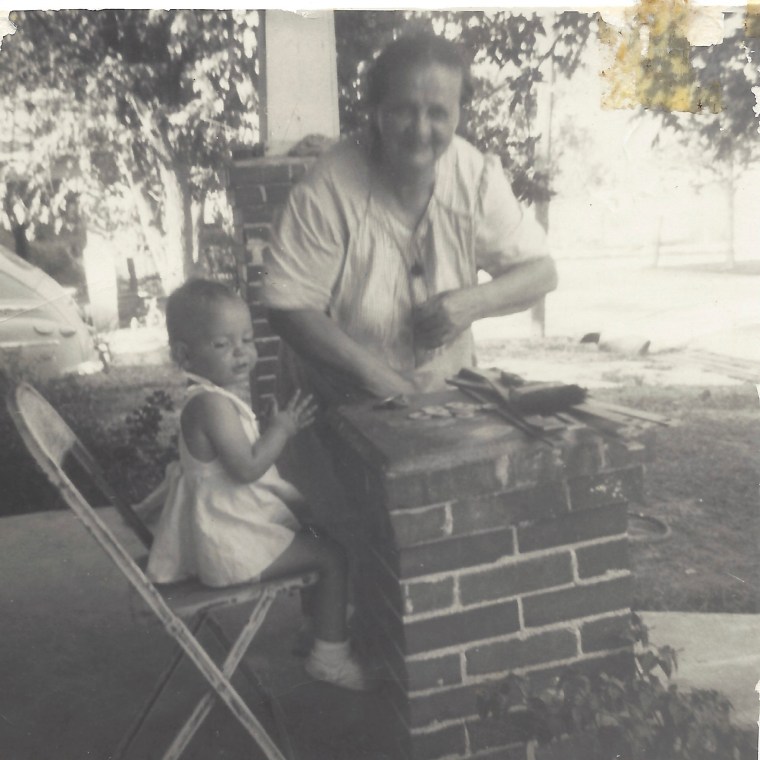
On Sundays we always went to see people from our father’s side of the family. Our mother thought that it was important for us to stay in contact with them. My paternal grandmother was a tiny woman who was famous for her cooking. Going to her house always meant that we would be treated to an extraordinary meal. When she wasn’t busy creating yummy dishes, she was either crocheting or embroidering or making quilts. Her sewing was like delicate works of art and her crooked old hands belied her ability to weave intricate stitches and knots. Her gardens were legendary and she even knew how to talk with birds. I always found it fascinating that her knowledge of the world was encyclopedic given that she was illiterate. I don’t have any recipes or instructions from her because she carried all that she knew inside her head.

My grandfather was a strong man with great big hands that he used to build things. He smoked a pipe and told the most delightful stories. He might have been a wonderful writer but for lack of time. He worked until he was eighty eight years old and only quit because his supervisor thought that his advanced age made him a liability. He read for hours every single day and was able to quote passages well into his nineties. He drove an old black Plymouth whose leather seats smelled of sweet tobacco. Life had always been hard for him, but he was a survivor of the highest order and insisted on maintaining optimism no matter how terrible things became.

I learned that I was from strong stock, people who were determined to live and love and carry on regardless of what befell them. They taught me the value of hard work, education and determination. They helped me to realize that I need not be held back by my circumstances. They encouraged me and my brothers to dream big and to believe in ourselves. They were always there in both the good and bad times. We knew that we were never alone, and still aren’t. This is who we were and what has made us who we are. Our children and grandchildren are part of the unending thread that traces back through the centuries. I hope that they always remember how grand and noble their heritage truly is. The legacy of their family is indeed rich.