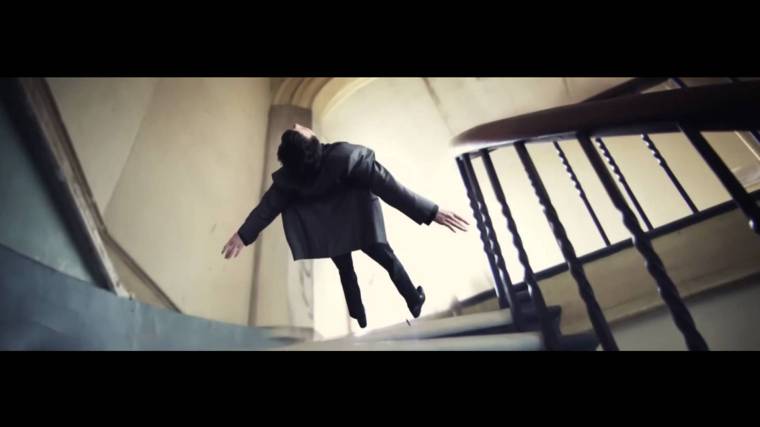
We All Fall Down

maxresdefaultI was twenty years old when my mother had her first mental breakdown. Mine had been a somewhat sheltered life. Aside from my father’s untimely death when I was only eight, I had not seen much of the dark side of existence. I certainly knew nothing about mental illness and the dramatic symptoms that seemed to so suddenly change my mom from a strong, independent woman into someone paralyzed by depression, paranoia and manic episodes. As I witnessed her decline that summer I was overtaken by a state of anxiety that made me feel as though I might surely die. I would visit her during the daylight hours and then return to my apartment in the evenings where I attempted to understand what was happening and to rally help for her among my aunts and uncles whom I was certain would have much better insights into her condition than I had. Mostly though I suffered from my own form of mental stress experiencing panic attacks that threatened to render me useless in the battle to bring my mother back to a healthy state of mind.

I slept little during that period. In fact, that August marked the first time that I was plagued by insomnia. I generally lay awake each night silently crying and feeling as though an elephant was sitting on my chest daring me to breathe. I felt so very alone, convinced that nobody might possibly understand how worried and sad I was. I was walking through those days in a continual daze, pretending to be in control of my situation while actually wanting to run away screaming in desperation. As my mother’s symptoms grew worse I realized that I had inherited total responsibility for her welfare. Circumstances forced me to grow up by a factor of one hundred. While my friends, save those who were fighting in the jungles of Vietnam, were still enjoying the adventures of college and the freedom of their youth, I understood that if I didn’t take charge my mother and my brothers would be in danger. I took a deep breath and became my mother’s keeper in a strange relationship that would span four decades. It was something that I would have happily given up if given even half a chance but the reality was that there was nobody else who could do this for her.

I was as imperfect at being unselfish as anyone might be. There were times when I was hardly able to function myself and when I resented the cross that I had to bear. I became an Academy Award worthy actress, hiding my fears and pain along with my mother’s tragic story as though it was an ugly and unspeakable secret. My unwillingness to open up to people who might have provided succor to me only made things worse but I was not yet ready to accept that I would be far happier bringing the truth into the light. When my mother became well again I naively believed that all of us were going to be fine and that I would never again have to face such a daunting experience. Sadly, she was sick again in only a matter of a few years and I fell apart at the realization that her illness was going to be a chronic fact of our lives.

I continued to be quite secretive about my mother’s fight with mental illness. My own stress increased to an unfortunate level as I quietly and continuously watched for symptoms that would alert me to get her to a doctor before she devolved into a more serious state of mind. I failed to mention my own bouts with anxiety and mild depression but they were quite real and they made me feel as though I wasn’t nearly as strong as I needed to be and that I was somehow defective.

At some point I was no longer able to maintain my silence. I began to speak of my concerns, my feelings of guilt, and the sense of despair that often overcame me. At first it was only the most trusted friends who heard such things but eventually I found the courage to talk with my doctors and finally anyone with whom I had contact. I learned that nobody was going to think ill of me or my mother. Nor was I abandoned. In fact, my admissions generally lead to sharing of similar stories and unlikely alliances. Over time I realized that we all fall down from time to time for one reason or another. We may lose a loved one, face a terrible disease, endure the breakup of an important relationship, fail in achieving a goal, become a victim of violence or suffer from mental illnesses of our own. The truth is that we are both fragile and resilient beings. As such we experience ups and downs throughout our lifetimes. Sometimes are lows are so devastating that we feel as though we may not make it through to the light of day.

I have found that there are always kind and empathetic individuals who are just waiting for our cries of help. All that we have to do is open up our hearts and we will find them, kindred spirits who have also had moments of brokenness and terror. They lovingly provide us with comfort just when we need it, but they will not be able to do so unless we are willing to confess that we are hurting. In acknowledging our humanity we take the first steps toward healing. It took me far too long to admit that I was as imperfect as I am.

I remember kneeling in prayer in the office of an assistant principal who cried with me as he spoke of the people in his family who also suffered from severe mental illnesses. I found succor from a doctor who was giving me a physical for work. He noted the checkbox that indicated that some of my relatives suffered from depression. He gently guided me to a confession that radically changed my life as he assured me that I had no reason to feel guilty about the times when I resented my role as a caretaker. I have had countless individuals hug me in an embrace of solidarity as they outlined their stories of struggles with either their own or someone else’s mental illness. Never once has anyone reacted negatively to my recounting of the journey that me, my mother and my brothers had taken in the house of horrors that was the reality of mental illness. Instead with each telling I felt reassured that I was not and never would be alone.

We all want to be viewed with dignity and respect. It is difficult to admit that we have feet of clay or that we make mistakes and yet it is in facing the demons that attack us in the middle of the night that we find the clarity and calm that we seek. Not only do we find a clearer focus for ourselves, but often we help others as well.

I know of two young ladies who are dealing with very difficult situations. They are far more advanced than I was at their ages. Rather than hiding the hurt and the pain that stalks them, they have been willing to share their feelings and the efforts that they have made to set themselves aright. They write blogs and speak to other young people. They tell of their journeys and admit that they still falter from time to time. The work that they are doing for themselves and for others is not just laudable, it is important. They are living proof that even the seemingly most perfect individuals often find themselves struggling to cope. They are both exceedingly beautiful, intelligent and talented, hardly the type of women who might falter, and yet they have. Their willingness to unmask their struggles is inspiring. They prove that the world is far kinder and gentler than we may imagine and that even the most remarkable among us may need a safety net now and again. It’s as easy as voicing the word “help” to begin the process of healing. We all fall down but there will always be someone willing to pick us up if only we ask.
Remembering the Lessons

KnotTry to imagine this scenario. Groups of Americans from the United States begin to peacefully demonstrate against the president of our country in locales all across the country. The government sends in the military to quell the disturbances and in a show of force they gun down protesters. This angers even more people who join the rebellion which grows angry and violent. There are enraged armed mobs in your town fighting against the soldiers. You watch as the disturbances grow into all out civil war. The lines between enemies are blurry and take on a religious aspect as well as political. Splinter groups form, some of which are barbaric. You and your family members are caught in the crosshairs. Bombs from the government come into your neighborhood. Bullets from the rebels forces lodge in the walls of your home. Terrorists taking advantage of the unrest kill your friends and relatives in the most brutal manners. What was once a place of peace has become hell on earth. You do not want to leave your home but fear that if you do not, you and those that you love will surely die. A final blast of chemical weapons from the government forces convinces you that it is no longer safe to stay in the place that has always been your refuge. You watch children who live near you dying in the cruelest manner. You can’t take the horror any longer and so you decide to flee.

At first you make your way to Mexico or Canada. You are placed in a refugee camp with thousands of others. You are told that you may not stay indefinitely. There are too many of your kind seeking escape from the war. Your temporary residence is infested with crime and want. You live in a tent that is either too hot or too cold. Disease breeds freely in the unsanitary conditions. You feel only slightly better than you did in the place from which you have fled. You try to get to other places that might be more welcoming or more pleasant. The process is difficult and even if you are lucky enough to gain a passage to some nice town in Europe the residents of those places view you with suspicion and disdain. All you really want is to be able to sleep at night without fear. Your dream is to one day be able to return to your home and begin your life anew. Your whole world is upside down and none of it is of your own doing. It all feels so hopeless.

In the meantime, different nations are choosing sides in the battle that rages back in the United States. Not only are there disagreements to resolve between the government and the rebels but also different factions within factions as well as other countries. It is such a tangled mess that you despair that it will ever be possible to sort things out and find the peace that you so desire. You cry for your country and for yourself as years pass without resolution and the gordian knot of trouble only grows tighter.

Of course, these events are not unfolding in the United States but in Syria. Try as we may we will never know the heartache that has so defined the lives of the people of that country since 2011. Their nation sits on the Mediterranean Sea just across from Egypt bordering the countries of Turkey, Iraq, Lebanon and Jordan. The war has displaced more than two million people and stretched the resources of their neighbors and countless European nations. Diplomatic and military efforts have failed to broker any kind of resolution and all the while terrorist groups like ISIL have taken advantage of the situation to make their own claims on the land and its citizens. Shia Muslims have taken to fighting with Sunni Muslims. Russia, China, and Iran side with Syrian President Assad. The United States, Germany, Britain and France have attempted to aid the rebels. It is a standoff that threatens the Middle East, Europe and much of the rest of the world.

I cry for the people of Syria. I understand that the vast majority of them simply want to be left alone and allowed to return to their homes where they might live in peace. None of the rest of us want war either. Nobody seems to have any idea of what is the most effective solution to a daunting problem. Here in the United States we have learned that sending troops and treasure to fight battles can be a solution with no endgame. We have also seen that diplomacy does little. We are caught in a conundrum in which the choices are all unpleasant and the results are uncertain. Do we do nothing and let the people of Syria figure out the path to eventual peace or do we choose a side and commit to fighting for what we believe is right?

The answer to such a question is both confusing and frightening. If we stay out of the fray, things may only escalate and make the situation even more dangerous for all of the world. If we show force we may become involved in a fight from which we cannot extricate ourselves without great loss of life. It feels as though even the wisdom of Solomon might be wanting in knowing what to do.

Today is Good Friday, a day on which we remember the crucifixion and death of Jesus of Nazareth. Politics and religious debates were in full force in the time of Christ just as they are today. An innocent man was put to death for fear that his teachings might result in a rebellion that would topple the power structure. Two thousand years later mankind is still feuding over differences in beliefs but millions in all parts of the globe now follow the lessons of Jesus. His message was powerful and his disciples spread the good news of his word in spite of their own persecutions. It is rather amazing to realize that Jesus Christ is even more revered today than he was when he walked in the Middle East two thousand years ago.

This is a time of reflection and prayer in the world. Perhaps it should also be the moment when we join with people of all faiths in imploring the heavens to help us find a resolution to the unrest that so threatens all of us. We can be inspired by the life of Christ whose constant admonition and example was that we forgive and love. I wonder how we can possibly solve the problems of other nations when we continue to be so hateful with one another right here in the United States. It is truly time for us to set our personal differences aside one individual at a time. It is the moment for us to shed our pride, our hypocrisies and our obstinance. Those are the elements that lead to a Syrian-like war. First come the words and then come the weapons. We must do whatever we need to bind the wounds that have turned  brother against brother right here in our own nation. Perhaps once we have learned to be civil with one another again we will enjoy the combined wisdom of many points of view in finding solutions to the problems that plague our world. I truly fear our future if we fail to return to a state of understanding and humanity within our own ranks. It is only in valuing our collective differences that we will be able to exert the power needed to propel ourselves and the world in the direction of good. 

Becoming Temporary Hermits

solitude.jpgAbout a hundred years ago my maternal grandmother traveled from Slovakia to Galveston, Texas all by herself on a steamboat. It must have taken incredible courage for her to leave everything and everyone that she had ever known to meet up with my grandfather who had taken the same journey a year earlier. In the beginning of her American adventure she held a number of jobs outside of her home, including one in which she worked behind a counter at a bakery. Before long she had so many children that she devoted all of her time exclusively to running the family household. Her life was demanding with one pregnancy after another, poverty and the deaths of two of her babies weighing heavily on her. At some point she had a breakdown and was committed to the state mental hospital. She was taken by force in front of her children who would never forget the horror of that moment. When she returned she was not the same, and she became a recluse, never again leaving her home save for a couple of medical emergencies that required hospitalization.
I met my grandmother long after the incident that so altered her life. She seemed happy enough to me, but even as a child I wondered how it was possible for her to be content with such a strange and limiting way of living. Her days were so routine. Her self imposed boundaries were so confining. She had the habit of repeating the same tasks day after day. Each morning she made coffee in a big enamel pot whose inside was stained a warm brown color from the countless iterations of the warm brew. Her rituals included sweeping and mopping the floors, a task that took little time because her house was so small. She worked in her garden, preferring to water her flowers by hand rather than with the hose that stood at the ready nearby.

Grandma often sat on her front porch surveying her domain and the world that kept changing around her. She was a tiny woman, barely five feet tall, and so her bare feet dangled from a chair like those of a tiny girl. Everything about her was childlike, her seeming contentment and lack of worry, her surrender to an uneventful lifestyle, the sweet smile that rarely left her face. She was at once both somewhat strange and quite wonderful to me. She appeared, at least on the surface, to have found a kind of nirvana that few of us ever achieve. I always wanted to know more about her. I desired to learn her thoughts and maybe even her secrets. She was so wonderfully simple and yet her long journey across an ocean told me that there was far more to her than I would ever know. Like my cousins I simply accepted her just as she was, a kind of saintly woman who had chosen to avoid the complexities that so often distract humans from what is most important in life. The essence of her existence was to love and be loved.

As strange as it may sound I thought of my grandmother recently when I was reading a magazine at my dentist’s office. I was anxious about my checkup on a number of levels. I have a phobia about dental work that was born when I first began seeing a pediatric dentist at the age of three. For whatever reason I am one of those unfortunates who has a tendency to get cavities, so at a young age I learned all about anesthetics and the drill. It was horrifying to me and I have never quite developed a more adult way of thinking about dental care. Thus I was attempting to distract my thoughts by reading about the strange case of Richard Simmons.

For those who may not be up to speed, Richard Simmons was a fitness guru who gained great popularity for his bubbly personality, frizzy hair and enthusiasm for a healthy lifestyle. He had his own televised exercise program and was a frequent guest on talk shows. He made a small fortune with fitness videos like Sweating With the Oldies. Up until 2014, he was still quite active, regularly holding exercise sessions at his gym and visiting with his countless friends. Then without warning he one day became a virtual recluse. Few of his former associates have even seen him for the last three years. The concern for his safety grew as this once gregarious man became a seeming prisoner in his own home, creating talk that something terrible must be happening to him.

A podcast detailing the strange disappearance of Richard Simmons became an instant hit as a former business partner took on the role of amateur sleuth in search of answers. Millions tuned in week after week to hear many strange theories being proposed. One fear was that Simmons was being held hostage by his longtime house keeper. Another idea was that he was transitioning into being a woman. It was unfathomable that such a vibrant individual might simply have decided to take a break from the madding crowd. The public concern for Mr. Simmons became so strong that the Los Angeles police eventually visited his home for a wellness check. They reported that they found a very healthy and happy Richard Simmons who spoke of enjoying his new quiet life.

It seems that Richard Simmons who is now sixty eight just decided that it was time to scale back the intensity of his existence. He no longer wanted to be that celebrity that we all know. He wasn’t mentally ill, but he was tired. He didn’t want to be a woman, but rather just to be himself, which included growing a beard and letting his hair go grey. He was not being held against his will, but had chosen to spend time in the serenity of his gardens. He now luxuriates in the quiet and simplicity of a life that he believes he has earned. He feeds the hummingbirds that skitter among his flowers and watches their antics for hours. He luxuriates in the peacefulness that he now feels each and every day.

We modern souls are constantly rushing. We fill our calendars with appointments and rise each morning certain that there will not be enough hours to accomplish all that we must do. We chide ourselves for sleeping too late or allowing ourselves to get off schedule. We are so busy exercising our bodies, counting our calories, building our resumes that we are often chronically exhausted. We race around and around and around like little gerbils on an infinite wheel. We look at someone like my grandmother or Richard Simmons and think that surely there must be something terribly wrong with them. After all, who would choose to stop the world and actually get off? And yet, somewhere in the back of our minds we envy their wisdom and their courage. We sense that they have found the ultimate secret to a life well lived.

Few of us have the capability of dropping out. We don’t enjoy the wealth that would provide us with surrogates to take care of our duties like Richard Simmons. We are not blessed with eight children who will provide us with all that we need like my aunts and uncles did for my grandmother. We have to buy our food and pay our bills and taxes. We must clean and repair our homes and care for our family and friends. We can’t simply hide ourselves away from the world, but we can learn how to give ourselves the gift of solitude now and again. We can plan our calendars in ways that allow us to relax and reflect. We don’t have to have an all or nothing way of dealing with our responsibilities, but we really should learn how to bring more balance into our days. We should find time for ourselves and never feel the need to explain those moments when we become temporary hermits escaping the hustle and bustle and finding peaceful solitude. It is our right to be good to ourselves.

The Importance of Stuff

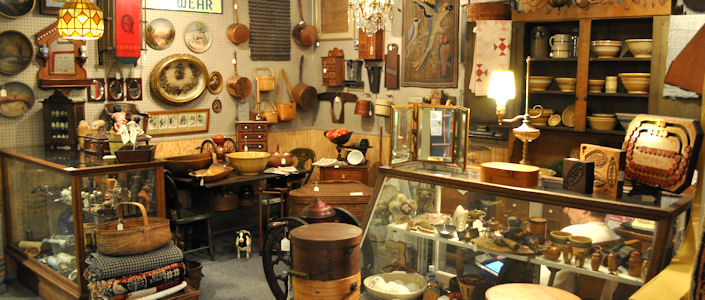
antiques-booth-1My eyes used to glaze over whenever my mother-in-law began recounting her family history. She had worked quite hard to unravel the mysteries of her ancestry. Her quest for answers paid off with a great deal of information that she excitedly related to us in the hopes that we would remember. At the time I suspect that I was a bit too young to truly care about the names and the tales of which she spoke. Now I am duly fascinated by learning not only of her kin but my own. In some ways my husband and I have become the family historians, the keepers of the the tales and artifacts that bring long dead relatives back to life. I now see such responsibility as an honor and I am belatedly scurrying to preserve the information that I know lest it evaporates when I am gone.
I have rooms of my home filled with furniture and objects that once graced the homes of the people from whom my husband and I descended. I treasure them not so much for their value as for the lives of the people that they represent. I try to tell my children and grandchildren who they belonged to and what they meant to those individuals. I’m not certain that they truly understand. Sadly they are still mostly in the state of mind that I had when my dear mother-in-law tried so hard to get me interested. I suppose that something must have stuck in spite of my lack of enthusiasm, because now I am quite driven to learn even more lest we forget. In fact one of my girls recently laughed at me and called me “Granny” the name that she had for my mother-in-law because I was so insistent that she pay attention to the information that I was conveying.

The world is changing rapidly, sometimes far too quickly for my taste, which is a definite sign of age. I recently read that today’s young people view the antiques and collectibles of their parents and grandparents as junk. They prefer more modern furnishings and tend to donate any old things that they inherit to the Salvation Army or Goodwill. They have big estate sales to get rid of the unwanted items. It makes me a bit sad and worried that so much of what presently resides in my home may one day just become a nuisance to those who are left when I am gone. I would like to believe that in between my two daughters and seven grandchildren surely there will be someone who will step up to be the next keeper of the family flame. My treasures are important to me because they represent real people and are part of the hopes and dreams of their lives.

I have a very old pitcher from my great grandmother, Christina. It doesn’t look like much but it feels magical to know that she once held it in her hands. From my great grandfather, John William Seth Smith, I have discharge papers from the Union army at the end of the Civil War. They hold his signature, the only image of him that I have. That scroll across the paper makes him very much alive in my mind. My grandmother Minnie gave me these things when I was still a very young girl and urged me to care for them always, which I have even when I still did not understand their significance.

There is far more from my mother-in-law. We have beautiful furniture that belonged to her mother, aunt and grandmothers. It is truly quite lovely and enhances our home with style and intersting stories of the people who once owned the pieces. I have to admit to being quite happy that my mother-in-law worked so hard to preserve those memories for us. They link us to both our past and our present and are physical signs of the lives of their owners.

I have dishes, linens, and tableware. Sadly there are books about which I worry because the pages are becoming weak and will one day fall apart, which I suppose is the natural way of things. My favorite is a child’s book that once belonged to my father. It may well have been the first thing that he ever read. Perhaps it even began his love affair with reading. I enjoy looking through the pages but I have to be careful because it has become quite delicate. It must be getting close to being one hundred years old.

I can only hope that there will one day be another who cherishes the humble offerings from the past. Perhaps both of my daughters will truly appreciate the photos and stories that I have saved. They loved their grandmothers so and I suspect that they will want to keep their memories alive at least for the time being. It will be interesting to see who among my grandchildren has a bent for sentimentality.

I try to visit the grave sites of my parents and grandparents and those of my husband’s kin as well. We regularly make a day of bringing flowers and spending time remembering the people who were so much a part of our lives. I sense that we are the only ones in our families who do this anymore because there are no signs that anyone else has visited. It makes me a bit sad to think that the time will come when nobody remembers them or goes to honor them.

I know that many people today think that cremation is the best way to handle death. It is not particularly expensive and it is environmentally friendly. They see little reason to set aside land for eternity just to keep the dust of those who died long ago. They may have a point but there is still something a bit reassuring in those everlasting memorials wherever they may be. I was greatly touched by finding the grave site of my great grandmother Christina. I felt a thrill in being beside her ashes or whatever is left of her. I wanted her to know how things had turned out for at least one of her twelve children and their descendants. I stood in a lonely field with the wind blowing across my face. It was deadly silent save for the chirping of nearby birds. I felt a communion with her that I might otherwise never have had. It was a truly moving moment in which I sensed her life and that of all the women before her. I am but a single link in a chain that will hopefully continue infinitely.

Perhaps I am becoming a bit silly as I grow older. I find myself appreciating things that my mother and mother-in-law did and said far more than I once did. I like thinking about the stories that they told and feeling close to them just from recalling those tidbits about their lives. I like visiting with them in the places where they are buried on sunny afternoons and leaving posies to brighten the places where they now rest. I really do hope that the very young come around in their thinking about the artifacts that were left behind by their ancestors just as I finally did. Things are not so important but the people that they represent are the stuff of who we are.

The Honor of Work

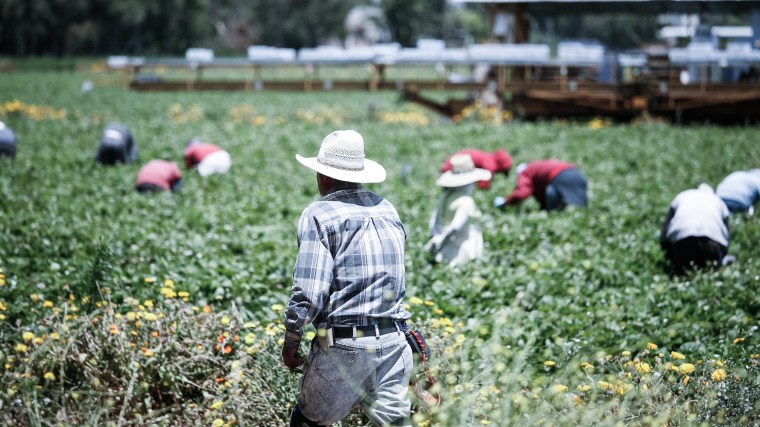
Mexican_Fruit_Pickers_(7618119180).jpgWhen I work in my yard I go all in. I usually end up with dirt smeared on my face and caked under my fingernails. Sweat runs downs my neck and my hair sticks up in all directions. There is nothing pretty about me in those times. The work is hard and often leaves my muscles aching and my back shouting at me in pain. The truth is that I overlook all of those things because I love being a weekend gardner so much. I can feel bursts of serotonin taking me to a happy place in my brain. Still, I think of my grandparents who themselves worked on farms day after back breaking day. I imagine how difficult it must have been for them to rise early and routinely toil in the sun. For me the labor is a hobby, one that I have the power to ignore anytime that I tire of the effort. For them it was the means of earning money to pay for a place to live and food on the table.

My grandparents’ descendants have done well. We generally have professional occupations that allow us to work in air conditioned buildings and bring home salaries good enough to pay others to do most of the back breaking work that we require if we so wish. We purchase our fruits and vegetables from Sprouts and have enough income for luxuries that they never even dreamed of owning. I feel their spirits when I am on my hands and knees caring for my plants while the sun beats down on my head. I frequently stop to savor a cold drink when I grow weary. I survey land that is my own, not the property of someone else. I remember and appreciate all of the things that they did so that one day all of us who came from their blood, sweat and tears would have a far better existence than they had.

I see beauty in the tomatoes, oranges and other produce that lines the bins at HEB. I don’t take such delights for granted because I understand the drudgery that people endured to bring those items to the markets where I shop. There were individuals who picked the fruits and vegetables hour after hour, day after day as long as the sun was shining. They were paid little and only received monetary rewards for full bushel baskets and bins. Their work was routine and tough on both body and soul. They are the nameless men and women whose plight has almost always been ignored throughout history. At one time they may have been slaves or indentured servants. In other eras they were the poor like my grandparents. Today they are mostly immigrants who toil from farm to farm, season to season in search of jobs that few of us would want.

I once traveled to a small town school to work with teachers who were struggling with the Hispanic children in their classrooms. They complained that the sons and daughters of migrant workers were skewing the test scores used to appraise their effectiveness as educators. They referred to the parents “the tree cutters” and insisted that these uneducated people didn’t care enough about their kids to realize the importance of schooling. It didn’t seem to occur to the baffled teachers that the mothers and fathers who worked so hard were in fact incredibly dedicated to their children, so much so that they were willing to do even the dirtiest of jobs. I was saddened by the ignorance of people who should have known better than to treat a significant portion of their student body as stereotypes. Even after my partner and I had shown them how to reach their charges they appeared to be as adamant as ever that the children of these hard working people were an inconvenience that would have preferred to simply wish away.

Most of us who live in the United States of America enjoy a level of plenty that might have made our ancestors feel wealthy. We are provided educational opportunities that were not afforded them. It was not uncommon in my grandparents’ day for youngsters to rarely attend school after the third or fourth grade. Sadly in many parts of the world even today people struggle to meet their most basic needs and even to feel safe. They are chronically hungry and suffer from health problems that are rarely addressed. We on the other hand are a nation that has mostly forgotten what it is like to live the way so many of our grandparents and great grandparents actually did. The conditions under which they labored are now mostly deemed illegal. 

I watched a group of students perform in the one act play, Gut Girls, not long ago. It addressed the working poor at the beginning of the twentieth century. It featured young women who worked in meat packing plants where the conditions were deplorable. I found myself imagining my grandfather who did a similar job for all of his working days. His legs became riddled with varicose veins and more often than not he was in pain but he never missed a single day of work. He boasted to his children that he had managed to feed them all the way through the Great Depression and keep a roof over their heads when others became homeless. He was proud to have regular work no matter how difficult it may have been and his children do not recall a single time when he complained. He endured his aches stoically.

There is great honor in hard work. We should celebrate anyone who is willing to devote time and effort to making an honest living. The person who collects our garbage is important just as the clerk behind the counter of a fast food restaurant is. The janitor is as indispensable as the manager, maybe even more so. We need our engineers and our electricians, our professors and our plumbers. The yard man who sculpts my lawn each weekend is always reliable and willing to do whatever is needed to make my home a lovely place to be. I truly don’t know what I would do without him. 

After a day of manicuring my plants, my hands are shouting at me with the sting of cuts and scrapes and bruises. They remind me to be thankful for what I have. They tell me to appreciate all good people everywhere. They urge me to be more generous and kind. But for the grace of God I might just as well have been born in another place or time that would have demanded more of me than I have ever had to expend.