We Don’t Have To Be Who We Are

dnadoublehelix2I once took a psychology class that focused on reviewing the history of learning theories. The professor pointed out that our knowledge of the brain and how it works is less complete than say what we know about the heart. This is because for most of history the brain was considered to be an almost sacred vessel, the repository of the mind and the center of spirituality. For this reason it was considered sacrilege to invade the space in which it resides, even in terms of merely discussing it.

At the end of the nineteenth century pioneers in the study of how we think began to posit theories and perform experiments. Many of these men and women were seen as societal pariahs with ghastly and ghoulish ideas. Their work was often marginalized and misunderstood. Luckily they had the courage to continue their research and build a foundation of knowledge upon which much of what we know about the brain today is based.

The brain is perhaps the most interesting aspect of our human bodies. We are still learning how it works. We have yet to become as expert at repairing malfunctions of our brains as well as we do with our other organs. We are hundreds of years behind in our understanding of how it operates, but we have indeed made great strides in unlocking so many of its secrets. Those who spend their days in research and medicine take us closer and closer to the time when we may be able to fix even the most delicate problems.

The twentieth century heralded a kind of scientific renaissance. Not only did we conquer gravity and successfully fly above the ground and into the heavens, but we increased our knowledge about our own bodies and what makes the remarkable machine that resides inside each of us operate. Part of those studies lead to questions of just how much each of us is affected by nature versus nurture.

What we have learned thus far is that each person carries a specific set of DNA that defines much of our physicality and even affects our intelligence. Once we are born with certain traits it is up to first our parents and later ourselves to determine how we will use the basic aspects of our chemical and biological makeup. We can’t change the color of our eyes unless we mask them with colored contacts, but we are able to either enhance or retard other aspects of who we are with our upbringing and the choices that we ultimately make as adults.

We know for example that we may carry a propensity for obesity but if our parents feed us healthy diets and encourage us to exercise regularly we may enter adulthood with a foundation for maintaining a lifestyle that will keep us fit. If on the other hand indulgent parents fill our bellies with sugary treats and allow us to sit in front of gaming units for hours every day it is more likely that the gene that makes us obese will take the lead. In other words we are not necessarily bound to the fate of all aspects of our genetic makeup. There are things that we have the power to control if we are willing.

As we learn more and more about our own personal DNA we have the powerful capability of improving or even overriding certain tendencies that lurk inside our bodies. If we bear a marker that tells us that we may be prone to heart disease we may start early eating a cardiac friendly diet and exercising to make that muscle that is the engine of our bodies stronger. We don’t necessarily have to be victimized by the reality that we carry signs of pending trouble. We can be proactive in preventing the very disease that threatens us.

I am fascinated that DNA is even able to determine which of us are related to one another. I have found a host of cousins that I never knew existed just by testing my own DNA. There is something rather powerful and mysterious about the double helix that is the essence of our lives, but it is also rather liberating to know that we often have the power to change our physical destinies with our own choices and actions.

I don’t think that we use the power of our knowledge nearly enough. We all too often operate as though we are still as ignorant about our makeup as we were hundreds of years ago. We make studies of health and nutrition come across as so dry and boring that our young have little interest in such things when in reality the information is fascinating and has the potential of radically altering their lives for the better. 

One of my mother’s all time favorite high school classes was homemaking. In today’s world such an elective would no doubt be viewed as not only having little value but even as being a bit insulting to women. Ironically my mom was constantly quoting her teacher and speaking of the things that she learned from her. She had a keen sense of nutrition and how to create a healthy and safe environment in our home. She used the information that she had learned in highly practical and useful ways. The class was deemed important by her in guiding her daily life even as she grew into her old age.

We miss the mark with our students today. Our health classes are riddled with definitions and rules that do little to inspire. Perhaps we should instead be showing them how to cook healthy meals and which forms of exercise work best. Our quest for creating more scientists and mathematicians is a worthy one but we would do even better if we were to also emphasize and encourage healthy lifestyles, not with lectures but by demonstrating how to be kind to our bodies. We have sadly regressed in this regard.

I recall watching a program many years ago in which a particular tribe of native Americans were found to have a disproportionately high incidence of diabetes. Groups of researchers descended on the area in hopes of learning why this was happening. What they found was that the people ate enormous amounts of fast food and led sedentary lives. More importantly, the scientists did a study of the history of the tribe. They saw that these were people whose ancestors had been runners who traveled everywhere on foot at rapid speeds. They had even held an annual contest to determine champions able to navigate long distances over rough terrain in record time. Their genetic structures showed that they needed this kind of physical activity to keep from succumbing to the symptoms of diabetes. The scientists built fitness centers for the entire population and sent personal trainers and nutritionists to help the citizens change their habits. Within a year the incidence of diabetes had fallen to levels below the national average in most cases without the use of medications.

We owe it to ourselves to use the remarkable genetic information that is available to us to improve our lives and those of our children. To ignore the warning signs that lie inside our bodies is foolish. It’s time that we all became both aware and active in the care and feeding of the bodies that affect us for good or ill. Let’s choose good.
They Dance Alone

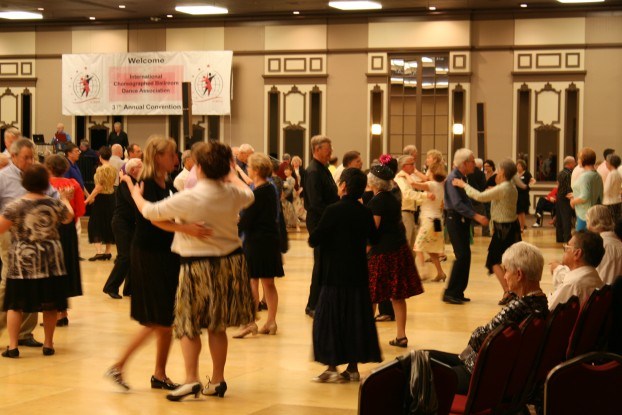
IMG_1914-e1373088974248For days now They Dance Alone, a song from Sting, has been playing in my head. It begins with the words, Why are these women dancing on their own? Why is there sadness in their eyes? It refers to those who were widowed by the war of revolution, but it might apply to anyone who has lost a spouse.

I’ve always imagined that I have enough empathy to truly understand what it is like to lose that person who has been one’s best friend, soulmate, lover. I thought I had the concept down pat until my own husband had a stroke. Just seeing him become so vulnerable nearly brought me to my knees, and even though he is still with me I find myself constantly looking for him and listening to him breathe at night. Having him gone forever is unimaginable. I now know that I did not ever truly understand what it has been like for friends and relatives whose spouses or partners are already gone. I now feel the raggedness of the hole that punctures the heart. I think of those who dance alone constantly.

I remember the devastation that my mother endured after my father died. Only now do I think that I am moving closer to understanding the extent of her emotional breakdown. I find myself wondering how she found the strength to pull herself together. I suspect that it was only her love for her children that pushed her to rise up from the despair that she must surely have felt.

Not long ago I attended the funeral of a young man who once lived next door to me. I still think of him as a cute and friendly teenager who was always eager to help. He was far too young to die and his widow was bereft. I have since followed her on Facebook and she struggles every single day to continue without him. Now more than ever I somewhat comprehend what she is experiencing.

And so it goes. There is the young widow whose husband left on a business trip and never returned, the neighbor whose husband was sick for years but somehow overcame each challenge to his health, our dear friend whose wife died of cancer. There is my cousin whose husband passed just before Thanksgiving after years of fighting to survive heart failure, the colleague whose spouse finally fell victim to heart disease. I suddenly have a far deeper kinship with them. I feel the visceral attack that such an incident engenders.

I’ve also been thinking of the people that I know who are caring for spouses who are very very sick. A long time friend literally devotes every hour of every day to her husband who had a major stroke that left him unable to do anything for himself and attacked his brain so violently that he suffers from early onset of dementia. I have been watching the courage and grace of my son-in-law’s mom who has spent months visiting one doctor after another with her husband. Her life has been upended and yet she keeps a smile on her face and demonstrates a level of optimism that inspires everyone. Still another friend has been caring for a husband with Alzheimer’s for many years now. She literally has to plan for someone to be with him each time she leaves home. I also have a cousin who has been watching over her husband who has Parkinson’s disease for longer than I can remember. These women are so remarkable and before now I underestimated the love and devotion that they so generously share with their husbands.  It’s so difficult to think of the fear that they have somehow managed to subdue as they watch their loved ones suffer through their illnesses.

The old saw that we sometimes see our lives flash in front of us is all too real. During the days since my husband’s stroke I have literally thought back on the first time that I met him when he was so handsome and enchanting and I got that tingle of love each time I saw him. I’ve had flashbacks of him holding our girls when they were babies. I’ve remembered the times when he helped me hold it together when my mother was very sick. I’ve relived every single trip that we ever took. It is as though the chronicles of our time together have played in my mind like a biographical movie. In my heart I have laughed and cried and always in the end I worry, which is sadly so much a part of my nature. I once again have been feeling that little tingle of unadulterated love just at the sight of him. I also find myself thinking of all of those people who dance alone.

I just attended a wedding in Cancun where two people began their lives together. They celebrated their love and I thought even then of how happy I was to be there with the love of my life. In just a little over a year we will have been married for fifty years. He has been the most important person in my world for so long now that it feels impossible to ever be without him.

I have great faith that his stroke was only a warning of what might be if we are not more careful. We will change our ways and do everything possible to help him to heal and become stronger. It will be a partnership as we work our way back to a healthy lifestyle. Our friends and family will be with us. Of this I am certain. We are surrounded by prayers and positive thoughts and love. Still I feel guilty that I never fully appreciated the gravity of loss until this moment. I was cavalier in believing that I was somehow so sensitive that I might comprehend what they were feeling. Now I know that I wasn’t even close. I need to send lots of love to the people whose hearts have been rent in two. I have to congratulate them on being so strong, often without the level of compassion that they really needed. Now I know why there has been sadness in their eyes. I feel how awful it must be to dance alone. I promise to remember them.

Real Life

Yoda-peace_670I read the following words on Facebook the other day, “No matter how you feel–get up, dress up, show up and never give up.”

I actually like the idea behind that statement, and it’s a philosophy that I have followed for most of my life. I suspect that most people do the same. We muddle through even when times get really hard. We paste those faux smiles on our faces, gulp down enough caffeine to keep us awake and slog through whatever mess is doing its best to hold us back. Somehow though I suspect that there are unfortunate souls among us who simply can’t push on no matter how much they wish to do so. For reasons of physical or mental illnesses they reach a point at which keeping calm and carrying on is absolutely impossible. They are trapped inside circumstances that they did not ever wish to endure, and I wonder how platitudes such as the one above that actually inspires me must sound to them.

It’s rather easy for most of us to adjust our attitudes, but when someone’s brain is chemically imbalanced it can be akin to climbing Mt. Everest without oxygen tanks. Depression, bipolar disorder and anxieties cripple those afflicted with such diseases just as strokes, heart disease and other serious physical ailments all too often sideline individuals who might once have been warriors of activity and optimism. In our eagerness to keep everyone feeling as happy and productive as possible we sometimes forget to note that courage isn’t always measured by getting up, dressing up and showing up.

Some of the bravest people that I have known are those who deal with chronic illnesses, either physical or mental. They often become homebound from time to time when their symptoms overwhelm their bodies or their minds. They certainly never want to just give up but they are often stymied by the realities that they must face. It’s rather natural for them to want to rage at the unfairness of their situations, but as a society we tend to prefer for them to make the rest of us feel good by pretending that everything is just fine. We generally don’t like hearing bad news or the honest voices of those who are suffering. We discourage discourse that accurately describes the truth. Instead we elevate those who appear to overcome adversity without ever uttering a single angry or negative thought, never considering that they may need to vent the feelings that are in reality bearing down on them.

I wonder how many people break apart simply because they are afraid that admitting their fears and their anger will alienate everyone else. Our culture rewards stoics and those who manage to maintain the course. We deem Yoda to be a font of wisdom because he tells us that fear leads to hate and hate leads to suffering. He makes it sound easy to have better lives simply by eliminating our fears, but how many times have we been shocked to learn of someone who was crushed under the weight of pretending that everything was fine? How often do we avoid an individual who attempts to tell us about the hurt and pain? Why do we recoil so whenever someone brings up delicate truths?

I thank God every single day that I awake and realize that my body and my mind are sound enough that I have the capacity to face whatever challenges come my way. I have learned not to be smug about my ability to be strong in the face of hardships because I have realized that at least for now I am enjoying a great gift. I have seen what it was like for friends and family members who did not have the luxury of being able to push themselves as their bodies or their minds shut down leaving them struggling to face the day. I remember the rage of a friend who was dying at a young age. She did not want to pretend that she was content to accept her lot. She unburdened her heart to me and only smiled as though she was at peace when strangers came looking for strength from her. She resented that she so often had to hide her tears and be the adult in the room. She needed to be honest so that she might ultimately endure her fate, but so often she was the one who was comforting everybody else. They thought that she was such a beautiful soul and in fact she was, but she so wanted to be able to speak of the pain that filled her thoughts.

My mother in turn grew weary of always wearing a mask when her mind seemed almost to take control over her free will. She spoke of the terror of hearing herself say things that she did not want to say that seemed to be coming from voices inside of her brain that had taken control of who she would be. When her mental illness became the most unbearable she hid behind drawn drapes fearing that someone might come to her door and see her in her weakened state. She too was furiously enraged over her illness which she fought with her very being. Over and over again she rose from the ashes of defeat but always with fewer and fewer friends willing to walk with her when she was the most ill. Before long my once vivacious and stalwart mother who had been the life of so many parties found herself alone save for family because the symptoms of her illness were too difficult for people to observe.

We all need to learn how to stand by the people that we know who are suffering and unable for whatever reason to pretend that all is well. We should be ready to offer understanding and a willingness to accept them even when they feel as though they just want to surrender to the negativity that is stalking them. We should all learn how to just listen and not be so quick to force platitudes on them. Our role should be to assure them that we will not abandon them and that our love for them will never waver. They need to know that it is safe to be exactly the person that they need to be. Real life is not always pretty and that is okay.

How To Be A Father

10433198_10204665991323147_2774262802798031590_nAs I was talking about this and that with a woman who was framing a piece of Mayan art that I had purchased at Chichen Itza, she casually mentioned buying herself a certain kind of tool for Father’s Day. She looked up from her work and let the comment hang in the air as though she expected me to have some kind of reaction. Of course I simply carried on with my babbling as though nothing unusual had been said. I didn’t even bother to mention that my brothers and I had always honored our mother with gifts on Father’s Day because she had been both our mother and our father all rolled up in one amazing person after my dad died.

In today’s society my family situation would not be considered unusual at all because there are huge numbers of children who are growing up with only one parent. My brothers and I are proof that it is possible to raise healthy and happy children in nontraditional ways. Still, I think that part of the secret to our mother’s success in rearing us was that she provided us with examples of exceptional male role models. Starting with stories of our father, she noted his best traits and explained how and why they had been so important. She encouraged us to watch and learn about goodness from men like Mr. Barry and our Uncle William. She took us to visit our grandfather regularly and noted the wisdom of his words that she prompted us to heed. She pointed out the loyalty of neighbor men like Frenchy Janot and took my brothers to watch Uncle Harold and Uncle Louie build and repair things. She created a picture of the exemplary father in our minds that helped me to find a man who would be kind and loving to our children and my brothers to successfully play a role that they had mostly seen from afar.

I suppose that because of my experience I have long observed fathers and mentally rated their abilities as parents. I am proud and happy to say that my son-in-law Scott is an exceptional dad who continually takes the time to interact with his four sons in loving and instructional ways. It has occurred to me as I watch him in action that he must have learned how to be such a great parent from his own father Gary, better known as Boppa to his grandchildren. Indeed as I have viewed Gary’s behavior around his family I believe that I have seen the actions of someone who literally revels in his role and exceeds the expectations that society has for fathers.

Gary grew up in Houston, Texas just as I did, but while I was living in the southeast part of town he was living in the southwest near the Medical Center. Still we experienced the world of childhood in very similar ways with adventures along the city’s bayous and games that filled our days with sheer delight. He still uses some of the same jokes and stories that I also heard and enjoyed when I was a kid.

Gary went to the University of Texas in Austin and became a die hard Longhorn and Chemical Engineer and met Barbara, the love of his life. They married and he began his life as a family man who worked hard to provide for Barbara and the two children that they would have together. It seems to me that the key to Gary’s personality was his insistence on making life fun. He saw the routine of our days as one grand adventure after another, filled with great wonders. Thus he made travel and learning and laughter the centerpieces of his family’s time together. Over the years they have gone all over the world experiencing the culture and flavor of different places right down to the smallest detail. At every juncture Gary was there patiently explaining the historical, literary and scientific significance of the things that they saw. Mostly though he made even the mundane seem exceptional and he had a knack for making the people around him feel very good about themselves.

Today I know Gary as a grandfather and he has continued his masterful abilities with his six grandchildren, taking each of them on grand tours and planning annual get togethers and traditions. He spares no expense because he sees such experiences as the stuff that sparks the imagination, so if the best way to view something is by helicopter then by golly everyone will have that adventure. He has ridden on the London Eye and trekked across Germany with the latest generation of young people who absolutely adore him. Even the children of my other daughter love being in his presence and laugh with delight as he plies his magic with them.

The true key to Gary’s success as a parent and grandparent lies in the unconditional love that he showers on the members of his family day in and day out. They are the center of his universe and they know it. He makes no bones about treasuring them just as they are with no demands that they conform to some preconceived notion of who he thinks they should be. He delights in their uniqueness and provides them with the confidence that comes from having such a nonjudgemental fan. He always seems willing to help them through rough patches in their lives with total support and he eagerly shares the wisdom that he has garnered from his own experiences. He continually shows them and all of us who know him what it means to be the very best kind of father.

Gary is fighting his own battles these days with an illness that has sapped his energies and sidelined him from the things that he most loves to do. Nonetheless he courageously steps up again and again to demonstrate to his family what it means to live life as fully as possible. He ignores his pain and pushes through at plays, sporting events, graduations and parties. He speaks little of his own struggles instead inquiring about the people around him and doing his best to make them feel happy. He is a very good man in every sense of the word and by example he has taught his son and his grandchildren and even those of us who are his friends how to be the kind of people who truly make a difference, the kind of people who love and are truly loved. He has shown us how to be a father.

Tough People

Tough times don’t last, but tough people do. — Unknown

I have known individuals who seemed capable of walking on glass through fire. I remember hearing about a young man who was in a plane crash with all of the members of his family. He was the only survivor. To put it mildly he in fact appeared to define the idea of surviving. With the support and love of his relatives he somehow managed to grow into a happy and well adjusted man. I wondered how he did so. I imagined myself falling apart and being an emotional basket case for the remainder of my life if I had to endure the same circumstances.

I have often found myself thinking about the survivors of the Holocaust who walked out of those concentration camps with nothing but their own lives. I’ve read that in many cases they were not even given the opportunity to return to their former homes. They were all alone, sick, with only dreary prospects for the future, but they somehow found the courage to not only continue, but to become inspirations for all who knew them. The human spirit is indeed remarkable.

At the same time there are those who are so fragile. Like delicate glass figurines they are sometimes beaten down by the circumstances that befall them. The chemistry in their brains goes awry or they are saddled with such severe disabilities that they are unable to lead anything even close to what we might think of as normal lives.

I had a dear friend who suffered from chronic depression. When she was well she was almost magical. Her talents were extraordinary and she was more generous than anyone I have ever known. Without warning her mind would fall into a dark abyss over and over again. Her melancholy prevented her from working or even handling routine activities around her house. She hated being subjected to the spells that so impeded her ability to maintain a sense of constancy, and in spite of regular visits to doctors and faithful attention to medication and therapies, her episodes returned again and again. It would have been so wrong to imply that somehow she was not a tough person, but in truth she earned a reputation as someone who was undependable. It broke my heart to witness the judgements that she endured because she was amazingly adept at keeping her head above water. She clung tenaciously to life and her faith, never losing hope even in her darkest hours.

We have so many platitudes that seem to eliminate the efforts of certain people. We certainly herald the brave souls who come back full force from daunting challenges, but we often overlook those for whom the recovery is not nearly as simple. Addictions are particularly difficult to overcome. It’s not always easy to just say no. Those who eventually eliminate offensive drugs or foods or beverages fight quiet battles every minute of every day that are not always obvious. We chastise and nag them when they fall prey to the temptations but rarely give them the credit that they are due for making it through one more day without harming themselves with the things that they so crave.

Each of us will face tough times now and again in our lives. We will engage in fights to overcome all sorts of difficulties. We may have to walk away from an abusive relationship or watch someone who is dear to us die. We may find ourselves feeling insecure on a job that seems to demand more than we think we have. We sometimes wonder if our parenting skills are sufficient to help guide our children into adulthood. We will all have those moments of feeling overwhelmed by the barrage of failures, disappointments and losses that beat us down.

Tough people do not handle everything perfectly, but they do keep trying, sometimes with tears of frustration streaming down their faces. They get up each morning and start all over again, but they also know when they need to just stay in bed to rest for the big race that is to come. Knowing when and how to be really good to yourself is part of being strong. There really is a time for tears and another for laughter. Our emotions and anxieties often remind us of just how human we really are and there is nothing wrong with that. In fact, those who are never willing to admit that they are tired, confused, angry or lost are most likely going to explode at some point.

I find it refreshing when someone reaches out for help. It is not an easy thing to do, but it demonstrates great strength and wisdom. I often wish that my mother would have been more willing to accept the help that was so often offered to her. She insisted on denying that she had any problems whatsoever when in fact she was drowning in her efforts to be totally independent of others. I have often suspected that by attempting to control her emotions so tightly she actually made the symptoms of her mental illness more pronounced. Sometimes surrender is the best thing that we might do for ourselves on the road to getting better.

One of the most encouraging things that I ever read was that St. Mother Theresa sometimes questioned her own faith. Such a revelation reminded me that even someone as saintly as she was finds themselves in the very human position of temporarily losing hope. It is not in those moments that we are measured, but in how we pull ourselves out of the dark ditches into which we fall. We are our toughest when we rise from the deepest pits.