Saving A Mind

colorful fluorescent lamps
Photo by Timea Kadar on Pexels.com

The world can often seem to be far more violent than it once was, but even a brief glance at the past proves that we have always had evil in our midst. The biggest difference between now and then is that we hear about every instance of criminal or terroristic behavior almost instantly regardless of where it happens. Not that long ago we maybe heard a one minute blurb on the nightly news or read about the incidents in our local newspaper. It was easy for knowledge of such things to slip through the cracks so to speak. Those who committed heinous crimes usually did not achieve the level of notoriety that they do in the current climate. There was not as much incentive for copy cats. There was not as much information for those with sick minds to emulate.

I have a fascination with people and the way they do things. My interest made me a good educator because I did not just provide information to my students, but I was also understanding of who they were and what they needed to be confident and successful. I quickly learned that the teen years are difficult for even the most gifted and mentally healthy young people. In following my students after they graduated from college and entered their twenties I realized how confusing it can be to transition into the adult world. What I found in my observations is that there are certain situations that lead to more frustrations and tendencies to feel lost and abandoned. Our journeys through life require love and support which is not always forthcoming for every person. Feelings of alienation are amplified by mental illnesses and a sense of aloneness.

If we examine the lives of criminals and those who do horrendous things there are often commonalities. Loss of a parent or loved one can trigger unresolved anger, particularly at certain critical ages or when the individual has other mental problems. So many of our offenders are people who have been abused or who have disorders of the mind that have been improperly treated. They are already filled with frustrations and then some comment or incident triggers the rage that has been seething inside of them. In the aftermath of their criminal acts there always seem to be individuals who noted disturbing behaviors in them but felt helpless to do anything about them.

The conundrum that we have is how to balance our right to individual freedom with common sense approaches to treating conditions that may lead to tragedy. At the present time our society bends in favor of caution with regard to personal rights. We are more likely to defer to a person’s decision to be left alone, even when our instincts tell us that trouble is brewing in his/her mind. Our laws only allow us to force therapies and treatments in extreme cases. Furthermore, we often ignore cues as being just the way a certain individual is rather than seeing them as signs of greatly needed attention.

When we couple all of this with the generalized anger that is so commonplace today, we are creating human time bombs that have the potential to go off at any moment. While we rant over things that make little or no difference in people’s lives we miss opportunities to help someone overcome the war raging in the mind. Over and over again we ask why we have so many guns or bombs or implements of violence while showing little or not interest in discovering why we have such broken beings. Maybe because we are still too timid to speak of the diseases that exist in the mind or to tackle childhood abuses that so often lead to monstrous adults.

We ask when we will have enough courage to take away the means of violence, but we rarely ask when we will have enough courage to attack the problems of the mind that so often lead to that violence. We act as though noting the mental problems of a criminal are akin to excusing the acts rather than admitting that we somehow missed the cues that might have prevented the murderous rage from ever happening, and there are always signs.

There were teachers, students and parents who expressed their fears of the young men who wreaked mayhem at Columbine long before anything happened. Their concerns were all but ignored. There was a psychiatrist who noted that the crazed attacker of a movie theater was dangerous, but she was ignored. Nobody really listened to the mother of the autistic loner who was afraid of her son who would later kill little children at an elementary school. The list goes on and on and on yet we still do not insist that our system of mental health needs a full overhaul. We continue to avoid the family with the strange acting child or teen. We forget to support and counsel someone who has experienced a tragic loss.

When my father died I was only eight years old. Few adults thought that I had any real idea of what had happened or that my emotions were developed enough to really matter. The truth is that I was filled with a mixed bag of confused feelings. I was depressed but mostly angry. Luckily my mother created an environment in which I was able to eventually sort the toxic thoughts that ran through my mind. I experienced stability and kindness that helped me to feel secure in a moment when my world felt so chaotic. It took a long while to reach a point of well being, but the healthy routine of my world along with an entire village of people who were interested in helping me led me out of the darkness. As an educator I know that far too many young people in similar situations who feel totally alone and hopeless. Unless their anxieties are addressed they will only grow more and more angry over time. Before long society will simply view them as troublemakers and evil doers. We will have missed the opportunities to help them to become better versions of themselves.

When a shooting or other violent act occurs it should be a reminder to us that we have much work to do to save more minds. We inoculate against disease and treat illnesses of the body routinely, but we are still way behind when it comes to the mind. It’s time we attempt to catch up.

Lost

man holding plastic bag with coat
Photo by sergio omassi on Pexels.com

Some stories stay in a little corner of the mind and never go away. I suppose for me one of those is something that I read in Texas Monthly magazine years ago. No doubt my reaction was tempered by my experience of caring for my mother when she was struggling with mental illness, but even beyond that it was a cautionary tale that said so much about the state of mental health in our society.

A college professor was enjoying coffee and a lively conversation with her colleagues inside a little cafe on the Drag just across the street from the University of Texas Austin campus. She was having a relaxing time until a bedraggled woman entered the eatery and began yelling at the cashier in the front of the establishment. Virtually all of the customers including the professor stared at the commotion with a sense of dismay and embarrassment. It was obvious that the woman was inebriated, high on drugs, or out of her mind. She wore the strange rags of a homeless person, her hair filled with tangles and even bits of debris. Nobody knew quite what to make of the situation or what to do. It was left to the manager to escort the woman back onto the street outside before things returned to normal.

At that moment the professor looked furtively at her watch and explained that she had forgotten an appointment with a student, and had to leave immediately. She apologetically put two twenty dollar bills on the table indicating that they should take care of her share of the charges and rushed out in a noticeably agitated state.

When she reached the sidewalk she searched for the woman who had just been in the cafe. She was relieved to see the old lady limping slowly just a few feet away. The professor rushed to the woman’s side, smiled and implored, “Mama, it’s me, your daughter Elizabeth. Do you remember me?”

The woman paused and with a faraway look appeared to be attempting to remember something very important. She touched the professor’s face with her grimy hands and then grinned as though a warm memory had come into her mind. “Lizzie,” she whispered, “I’m so glad to see you. How have you been?”

The professor expressed her own joy in finding her mother and then suggested that they go to her home where they might have a more comfortable place to catch up on what had been happening in their lives. She guided the still somewhat confused woman across the street, into the campus, and toward the parking spot where the car awaited. While the professor drove she exchanged small talk with her mother and thought of all of the time that had passed since she had last seen her.

The professor’s mom had been a brilliant and beautiful woman, an accomplished artist and a stunning mother. Life back then had been so happy and devoid of any indication that tragedy was looming. Her mother’s illness demonstrated itself quite slowly. At first it simply seemed as though the woman was a bit depressed, but the depression led to mania and the mania exhibited itself in paranoia. Before long the professor’s mom was undergoing treatments for mental illness that worked until she refused to take her medications. Then one day she disappeared. All efforts to find her had been in vain. The professor became frantic and lost all sense of normalcy while she invested in private detectives and spent evenings and weekends driving up and down streets hoping to find her mother. Was she in jail or dead or in another town?

Eventually so much time went by that everyone told the professor to just give up. She was becoming ill in her own way from all of the stress. It was time to live again, which she did, but always with the hope that one day she would find out what had happened to her mother. Now here she was sitting next to this raggedy lady who was not anything like the once accomplished person that she had called Mom.

In the following days the professor took a sick leave from work. She cleaned up her mother, fed her healthy meals, gave her new clothes and a safe place to sleep. She made appointments with doctors and began to think that life was finally going to return to normal. The doctors agreed that her mother’s mental and physical health was so fragile that she needed to go to the hospital for a time. The professor visited her each morning and evening. The two women began to have conversations that made sense. They expressed their love and devotion for one another. They began to make plans for the future.

One afternoon the professor went to the hospital with a celebratory bouquet of flowers for her mom. She was over the moon with happiness as she went to her mother’s room until she opened the door and found the room empty. In a panic she rushed to the nurses’ station to find out what had happened. She was informed that her mother had been released earlier that day and nobody knew where she had gone.

The professor upbraided the staff demanding to know how they could have sent her away without any notification. She demanded to know what they had been thinking. Their response was that it was the woman’s right to leave without permission from anyone. The laws did not include making the professor a party to any decisions. They were sorry, but it was just the way things were.

The professor looked for her mom for weeks and then months all to no avail. Someone suggested that her mom might have taken a bus to another city like Houston or Dallas. The professor drove to those places on weekends in a fruitless attempt to find her mother. At the time that the article was published the professor still had no idea where her mom may have gone. She was lost to her once again.

Finding Hope

people gathered inside house sitting on sofa
Photo by Daria Shevtsova on Pexels.com

Statistics can be a powerful way of understanding trends in our society, but they can also be misleading. Learning the truth about the numbers that we see requires analysis, critical thinking. Since we are continuously bombarded with information regarding the state of our world based on statistics we need to consider what that data is actually telling us. Something as simple as the intervals of a graph has the power of visually changing the way we interpret the facts. So it is with the ever recurring claim that the lifespan of the average American has continued in a downward direction since its apex in the nineteen sixties. It’s important that we begin to understand what that bit of information actually means, and what we may need to do to halt the decline.

We are often told of the need to improve medical care in this country by the use of this astounding statistic. For most of us it simply seems almost impossible to believe that we have such phenomenal medical facilities and still are losing the battle of saving lives, and yet it is real. A deeper analysis demonstrates that the downward trend is related mostly to alcoholism, drug abuse, and suicide. It is not so much that our country is lacking in quality medical care as that we have an epidemic of self harm that results in deaths from overdoses, cirrhosis of the liver, and increasing numbers of suicides, especially and shockingly among our middle age population. It is a quiet and grim trend about which we say little, but it is prevalent all across the country and most particularly in areas where businesses have failed and lifestyles have drastically changed.

HBO in conjunction with Dr. Sunjay Gupta filmed a documentary called One Nation Under Stress that attempted to get to the heart of why so many are turning to drugs, alcohol and even death as answers to problems. We know that addictions can be difficult to overcome, but what attracts people to chemical means of coping with anxiety in the first place? Why are ordinary middle class individuals in so much pain that they feel compelled to shut out their sadness with chemicals that alter their brains and damage their health?  What is really happening?

Dr. Gupta and the experts that he consulted note that our society is continuously and relentlessly changing, particularly in small towns that often rely on particular industries for the welfare of the populace. Many of the old avenues for work are being eliminated and in the process people find themselves suddenly left with no meaning or income in their lives. The losses that they incur both physically and emotionally drive them to seek solace in harmful ways or to despair entirely. Additionally our society has lost many of the support systems that were once so prevalent. The extended family units and neighborhood associations that were once so common have crumbled in many ways leaving individuals feeling alone and unable to cope. In fact, a certain irony is that recent immigrants are actually doing better than long time citizens because they cling to one another in communities that emphasize care and support.

Those in the middle of the economic spectrum are the most likely to feel the weight of stress. They are subjected to a kind of collective pressure and worry about losing their status and all of their comforts. They often feel quite alone in their struggles and so the abuses to their bodies and minds begin. They are reluctant to share their concerns, and often feel that they have nobody whom they trust enough to do so anyway. The anxiety bears down on them both mentally and physically.

I experienced a kind of microcosm of such feelings during the rains of hurricane Harvey which so inundated my city. My husband Mike and I were alone in our home hearing reports of devastation that was affecting both strangers and dear friends and family. Mike had suffered from a stroke only a few weeks earlier and we had been told that his chances of suffering from another attack were at their highest during this time. I was quietly frantic with worry, so much so that I was hardly sleeping and had to keep my mind occupied by preparing my home for the possibility that it might flood. When my daughter and her family had to leave their neighborhood for fear that the levee that protected their home high fail I felt incredibly alone with the realization that they were now so far away and Mike and I were so isolated from everyone. It was a series of reassuring texts from a former student who assured me that he was on alert if Mike and I needed a rescue that kept me from totally losing my composure. The lifeline that he gave me quelled my fears as did the random meetings with a neighbor across the street with whom I spoke as we both assessed the drainage system that was working to keep the water away from our homes. Facebook also gave me a way of knowing what was happening to friends and members of my family. It provided me with a way of expressing my anxiety rather than bottling it up inside. Ultimately I made it through those horrific days, but I found myself wondering if it would have been possible without those human connections that kept me grounded.

What happens when a person feels that there is no one to help? How does one cope when the pressure is not for just a few days but over a long period of time? What might each of us do to help those who have lost their way? Do we sometimes underestimate the power of a text, a message, a phone call in changing the tenor of a person’s thoughts? Have we emphasized independence so much that we have lost the emotional support of multi-generations living and working together?

Mike and I were recently discussing the Great Depression. Our parents were children during that time. It was our grandparents who bore the full brunt of that era. We noted that they survived by sharing responsibilities and resources. Whole families of sons and daughters and cousins and grandparents pooled their funds and their food to keep afloat. It was a cooperative effort that brought our ancestors through the tragedy. Hidden in their efforts was a great deal of love. Our people understood that the were going to make it because so many cared about the welfare of each individual.

We would do well to reinstate the power of family and neighbors to ease suffering. Old people should feel assured that they will find the care that they need if they become sick. Young folk should know that they will have the encouragement and support to launch themselves as adults even when they make mistakes. Those in the middle should never be reluctant to ask for help when things go awry. If we open our hearts and begin to embrace the people for whom we care perhaps we can stem the tide of self medication and self destruction that is literally killing people in our midst. The change that we need is to be found inside our relationships. If we focus on strengthening them many of our problems will be solved.

The Greatest Gift

Gary

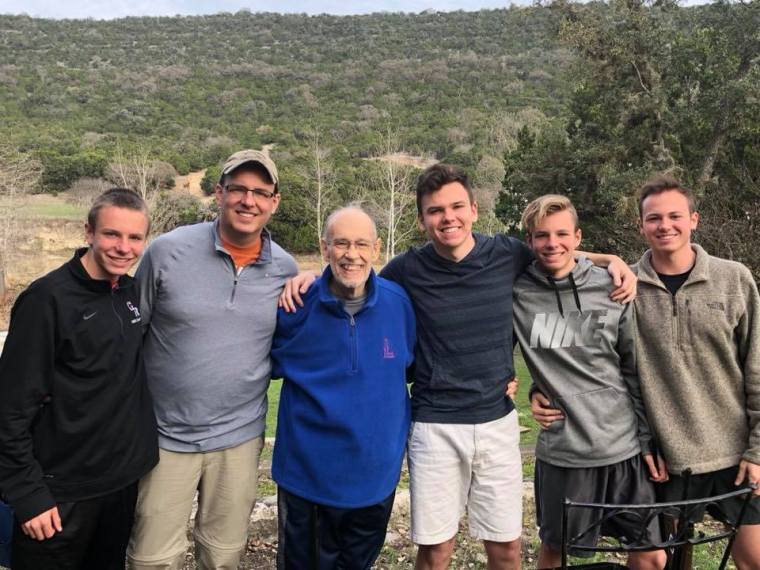
My son-in-law, daughter, and grandsons are in a state of grief. Their beloved Boppa died on New Years Day. Boppa, otherwise known as Gary Greene, was a good man who loved his wife without reservation and cherished his children and grandchildren with every fiber of his body and soul. He was also filled with a spirit of fun. He believed in squeezing as much joy out of each day as humanly possible.

Gary was born in Houston, Texas and grew up in an area not far from the Texas Medical Center. He graduated from Bellaire High School and then set out for the University of Texas where he earned a degree in Chemical Engineering. While he was a student there he met his wife Barbara and the two of them fell in love, married and set out on a five decades long adventure that took them all over the United States and around the world. In fact, traveling became one of their greatest joys along with their two children Scott and Terri.

Gary worked hard at his jobs, dedicated to making a comfortable life for his family. He was a Texan through and through but whenever his companies asked him to move he dutifully went where he was needed and turned the relocation into an opportunity to learn more about different places. All the while he always found time to support his children’s interests and to open his home and his heart to their friends. His loyalty to his beloved Texas Longhorns never wavered either no matter where he roamed.

Gary eventually found his way back to Texas as his working years slowly came to a close. He retired to the Austin area and threw himself joyfully into the role of being a grandfather. He took each his six grandchildren on special trips to places like London, Germany, Washington State and such. A few years ago he planned a gala vacation right after Christmas for the entire family in Mexico. On another occasion he took everyone to Hawaii. Every excursion was punctuated with his impish sense of humor, exciting activities and lots of ice cream.

Gary rarely missed the yearly reunion of his wife’s family on Thanksgiving Day. He reveled in the games and songs and loving significance of the event and became known as the resident genealogist, creating expansive charts outlining the history of the family and recording all of the new births. For many years he and his crew were the reigning champions of the washer contest, and he became as loved by his extended family of in-laws as he was by Barbara and his children.

Gary had a sonorous voice that might have served him well as a radio broadcaster. He used it often to tell his many stories and jokes. He also enjoyed singing and had hours of fun in a barber shop quartet. He and Barbara even learned how to square dance when he demonstrated yet another unexpected talent.

Most of all Gary enjoyed watching the birds that live around us. He often rose early in the morning and walked quietly through wooded areas with his binoculars and a scope to catch a glimpse of feathered creatures. It was a relaxing hobby that was so in tune with his affection for nature and the joy that spending time outdoors always brought him.

Gary had been a leader when his son Scott was in the Boy Scouts. He never lost his interest in the remarkable training that the organization affords young people. He often wore his regalia and badges when his grandsons moved up through the ranks in their own quests of excellence in the scouts. Nothing made him prouder than watching them grow into fine capable young men with amazing skills and a love of our earth and each other.

In many ways Gary Greene was an old fashioned kind of man who earnestly embodied the traits of a Mr. Rogers or a Jimmy Stewart. Family was paramount to him and he enjoyed introducing first his children and then his grandchildren to the places and skills and ideas that he had known as a young man. He taught them how to drive and how to fish. He showed them how to respectfully handle a BB gun. He played games with them like Spoons and taught them to love listening to John Denver. He took them rafting down rivers, horseback riding in the country, and zip lining in exotic places. Mostly though he just loved each one them for whomever they chose to be.

There is great sadness among the members of Gary Greene’s family. He has died after a years long struggle with cancer during which he showed them what true courage really is. He slowly lost his ability to walk and his body was riddled with pain, but he continued bringing fun into their lives as long as he could. He has left a big hole in their hearts, but the legacy of joy and optimism with which he approached each day will sustain them for all of their years to come.

Gary Greene really lived and loved. The torch of all that he believed has been passed to his children and grandchildren to remember and honor who he was with their own lives. He demonstrated to them all of the character that one needs to live happily and well. He will no doubt live on as they emulate his spirit, the greatest gift that anyone might ever leave on this earth. 

Our Loss Is Heaven’s Gain

Lance

There are special angels who live among us. If we are very lucky we have the pleasure of meeting them. I have been blessed to know more than my share of such people, and sadly I have seen far too many of them grace this earth only to be called to a heavenly reward far sooner than we would wish.

I first met Lance Bertrand when he was a young South Houston High School student. He was a year or so older than my eldest daughter and a member of St. Frances Cabrini Catholic Church where I was a parishioner. Lance was someone who was hard to miss because he was stunningly handsome and always seemed to bear an almost perfect smile. He was also exceptionally bright, one of the academic stars of his class.

Back then our family hung out all of the time with my good friend, Pat and her husband Bill. We spent so many Fridays and Saturdays sharing movies and lots of good food and laughs. My daughters became like sisters to Pat’s daughter Lisa so it was quite special that all of them ended up attending the same high school, South Houston and the same church as well. We were very much like family. Eventually the girls became more and more independent as they grew older and often spent their weekends with members of their high school classes. Everybody knew everybody else, so Pat and I always felt so comfortable and assured that they were going to be safe.

Lisa was belonged to a very special group of young people that included Lance, so we got to know him quite well. We saw that he was always polite and respectful and honest and kind. He was very much the type of teenager that all parents wish their children would befriend, and to our delight he and Lisa became truly kindred spirits. A wonderful relationship grew between them that would continue from year to year, place to place.

Lance went to Texas A&M University and earned a degree in engineering. He quickly landed a job with Texas Instruments and before long he had even purchased a home. He and Lisa continued their friendship even as Lisa married and began to have her own children. Meanwhile Lance never forgot any of us and quite thoughtfully sent our family a Christmas card each year. We looked forward to hearing from him and were quite happy to know that he was doing well because he was indeed such a fine person. We thought that he deserved all the best that life has to offer.

Many years ago we were saddened to learn that Lance had brain cancer. He fought the disease like a gladiator and maintained his optimism and kindness through the ups and downs of his many treatments. He was determined to lead a glorious life in spite of the challenges that hunted him down over and over again. Along the way he fell in love with a beautiful woman who embraced his goodness and stood by him even as his cancer progressed. They had two beautiful children and for a time it felt as though Lance was going to beat the odds and defy the disease that refused to go away.

Sadly it eventually returned with a vengeance leaving him bound to a wheelchair and growing weaker with the passage of time. Somehow that beautiful smile of his that made everyone that he encountered feel so good never seemed to leave his face. He continued to be a good friend, a loving father and a devoted husband, rarely complaining. It was as though he wanted to take care of everyone else.

Last week Lance Bertrand died. His high school friends Lisa and Sam were there with his wife and members of his family. He received the last rites and went peacefully. Those who were there feel assured that he is a true angel in heaven and they were honored that they were able to be with him at the end because he had always been there for them.

I know that everyone who was lucky enough to be in Lance Bertrand’s sphere will miss him deeply. He was an exceptional person who did so much in his very short life. He was loved because he so freely gave love. He was an original, one of a kind whose absence will create a void in many hearts. At the same time he taught all of us the meaning of faith, courage, determination and generosity for his thoughts were rarely with himself and always about others.

Rest in peace, Lance  Bertrand. Your pain is gone. Your battles have ended. Now it is time to rejoice in the rewards that you have surely earned with a life well lived.