
Smart, Nice, Accomplished, Aware

photography of person using macbook
Photo by LinkedIn Sales Navigator on Pexels.com

Appraising an individual or a program has always been difficult. We are a nation of numbers and like to use hard cold facts to determine the worth or success of the people and things that we judge. Businesses consider profits, time spent without accidents or complaints. Schools look at the test scores of students and performance on a number of measurable factors such as attendance, quality of lesson plans. Universities look at grades, class rank, scores on exams, extra curricular activities and creativity of essays. Still we have yet to find a system for determining the worth of people in various situations that is a hundred percent accurate because in reality each of us is incredibly complex. We might form close approximations of the value of any one person, but we will invariably find flaws in the systems that we use unless we are very careful.

I use the world of education as an example because it is the environment that I know best. It might be thought that a teacher whose students score particularly high on a standardized test must surely be a better educator than someone whose results appear to be mediocre. The hidden flaw to this kind of thinking lies in knowing where these students ranked before the respective teachers worked with them. It might be that the youngsters whose outcomes appeared to be so spectacular had actually done better the previous school year while those with mediocre grades may have improved by a quantum leap. The question then becomes which teacher is actually the better of the two.

The same difficulties occur when attempting to compare students who are applying as undergraduates to universities. It has long been known that kids who attend high schools like Bellaire or Clear Lake in the Houston area have an exceedingly difficult time landing in the top ten percent of their graduating classes because so many of their classmates are making all A’s. These schools are not easy, quite the contrary, but the students are intensely dedicated and bright. On the other hand there are campuses with terrible reputations where a reasonably hard working pupil will easily earn a top standing in the class.

We also know that there are some individuals who panic over high stakes standardized tests. Their scores rarely align with the capabilities that they exhibit day in and day out. Others whose study habits may be marginal at best have a talent for blowing the lid off of the one and done assessments. Comparing the two very different types of students sometimes requires an unproven leap of faith.

The question becomes how to determine who is most deserving of a job or a slot in a particular program. How can we be fair and still come close to making the right decisions? What criteria are useful, and what may mislead us? It is a conundrum that plagues virtually every aspect of our society and we have yet to create a foolproof methodology that takes all of the necessary factors into account. Our attempts to be fair and objective invariably end up unwittingly relying a great deal of subjective reasoning.

Recently I was somewhat amused and befuddled to learn that the Tucks School of Business at Dartmouth University has made a few changes to its admissions requirements for the MBA program. In an effort to find well rounded and diverse individuals they have decided to search for four particular qualities in their applicants. They have proclaimed that they intend to find students who are smart, nice, accomplished and aware.

Being smart means that the prospective students must have good grades and test scores that reflect written and verbal communications skills along with a good sense of numbers. Nonetheless the school emphasizes that potential candidates should be humble as well, a profoundly important life skill, but one that is ridiculously difficult to determine either in an interview or through references. Who among us chooses references that we do not believe will be rock solid in our favor? How many of us assume a kind of persona during interviews that does not adequately demonstrate who we really are?

Accomplishments appear to be relatively easy to determine. It is unlikely that someone will continually advance in a workplace if they possess many negative habits and yet there is always a possibility that accolades may not be as well deserved as they may appear. Additionally a listing of different activities gives little insight into how well those things were actually done. We all know someone who joins a number of groups but has little dedication to any of them.

In looking for students who are aware Tuck notes that reflection is mandatory. They insist that students be able to think about their character, their past and their future. This is a noble goal indeed. Still I wonder if a well spoken individual gregarious enough to share inner thoughts is in actuality more aware than someone who is circumspect but a bit more reserved with regard to revealing personal insights. It seems that even with essays, reviews and a psychological assessment it may be difficult to know who is aware and who is not. I’ve seen many a person who is masterful at blowing smoke only to later be viewed as a fraud, and others who rose to challenges with a quiet strength that surprised everyone.

Finally there is the matter of being nice. Tuck states that this is the quintessential quality that they want their students to possess. By nice they mean someone who celebrates and supports the success of others, is willing to ask for help, shares and respects different opinions, is both strong and vulnerable. They want students who possess a set of moral principles to which they hold fast even as they are being challenged.

While I find the desire to find such nice people laudable I also wonder how in the world  it is even possible to determine such a thing. The word nice is perhaps one of the most subjective ideas that there may be. What does it actually mean to be nice? That definition varies greatly from person to person, situation to situation. Nice often means having to be very tough. Sometimes it requires being firm rather than flexible. It is an ever changing concept that is far too nebulous to use as a measurement for determining who earns a slot at in a prestigious graduate program.

The university insists that they possess sound methodologies for determining which prospective students possess each of the four aspects that they have outlined. With respect to niceness they appear to believe that student essays and reference instruments will reveal the presence of nice qualities. I beg to differ. The concept itself is far too ill defined to be worthy of such an important decision making process. It’s bound to result in exaggerations and even falsehoods from those seeking admission. It is on its face a very unreliable albeit worthy quality to use when assessing strangers.

I often think back to students that I have known, some of whom appeared to be fabulous on paper and others whose performances, accomplishments and character seemed lackluster at best. The lesser candidates often nonetheless possessed extraordinary capabilities that might never be noted in today’s world of electronic and highly  specific measurements. I think particularly of a remarkable student who by all appearances was almost subpar. When all of the measurements failed to note was that he was literally financially and emotionally responsible for his family from the time of middle school. He attended his classes during the day but worked long hours every single night, rarely having the time to complete homework assignments. He often missed days at school to drive his disabled brother to appointments with doctors. His time was filled with major responsibilities of which he never spoke. Somehow he still managed to pass all of his classes and complete all requirements for graduation from high school. By the time he walked across the stage he had been working forty hour weeks for years. He had no extra curricular activities to list nor did he seem to have completed any community service, and yet he was already operating as a very responsible adult while his classmates were still immature by his standards. Not even a carefully crafted and objective admissions packet would have indicated that he was a worthy candidate for a prestigious program and so he instead chose a college with open enrollment and with sheer will eventually earned a degree while still being the breadwinner for his family.

I wish the Tuck School of Business well, but something tells me that their admissions process is still as fraught with problems as most of our systems are. There are just so many variables about humans that we have yet to quantify.

Flip or Fly Away

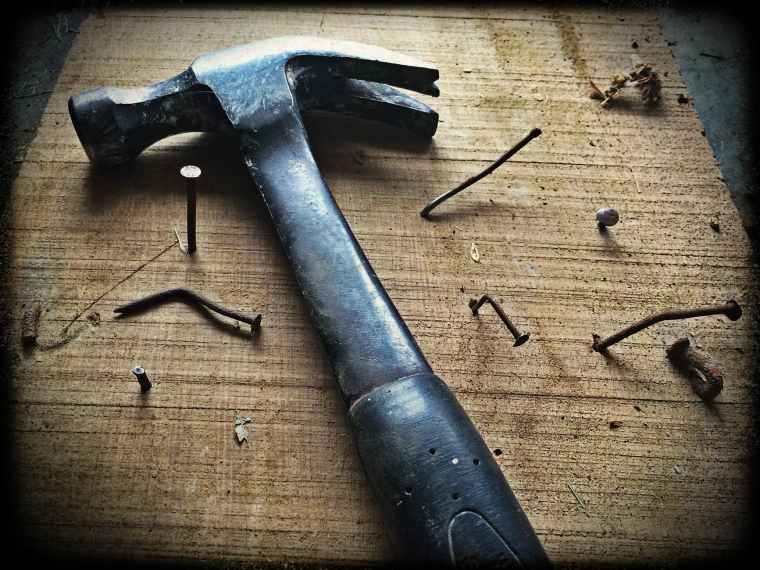
black claw hammer on brown wooden plank
Photo by Pixabay on Pexels.com

I’m addicted to HGTV. I love watching the transformation of homes from rundown and ugly to bright and beautiful. Chip and Joanna and the Property Brothers make the whole process seem so quick and easy, not to mention affordable. It’s like watching a sweet fairytale unfold in under an hour. Of course I get inspired and think of small changes here and there that I might make inside my own home. That’s when reality rears its ugly head and I realize that what I have viewed on television is little more than fantasy for most of us.

The first thought that I generally have once I’m pulled back down to earth is that the people who seek the home improvements and upgrades are certainly well heeled financially. They reel off budget figures that make my head spin like someone in need of an exorcism. I mean who walks around with an eight hundred thousand dollar home purchase budget with one hundred thousand dollars set aside for renovations? What do these young thirty somethings actually do for a living that allows them to throw around money like that? How realistic is it for the rest of us to watch their homes being created with seemingly limitless income flows when we might be lucky to have a few thousand to devote to a project.

As I’ve reported in past blogs we recently had a bit of damage from a faulty hot water heater in our house. The estimate of the damage was in the range of about eight thousand dollars. Of course we have a high deductible so we did not receive that amount but the figure actually did represent the reality of the situation. What we got for almost ten thousand dollars was the replacement of most of the walls in an upstairs bathroom and a great deal of ceiling work in the kitchen. In addition those areas were freshly painted and we replaced an outdated light fixture. Since much of our carpet was ruined we decided to replace all of it and luckily got a sweet deal since manufacturers had reduced prices to help the victims of hurricane Harvey. Our nephew provided us with the electrical work that we needed and we did a great deal of the painting ourselves. Still the cost ate up what to me was an enormous amount of money, so I found myself wondering if those of us devotedly following the dream house episodes on HGTV are deluding ourselves into believing that with a few dollars and a hammer we too might transform our homes into nirvanas worthy of a photo shoot.

I laugh at those programs on another level as well. The designers react in horror to the wear and tear that they often discover in homes. They cringe at the crayon marks on walls and the scuffs on wooden floors caused by the children who occupy the spaces. They hint that the parents should take the little ones away and teach them how to be more orderly and respectful of property. They sneer at the everyday items that crowd closets and lurk in corners of rooms. They seem to want the occupants to tread lightly, not really using the house as a real home.

Let’s face it. Most of us actually sleep in our beds, eat food on the sofa, and purchase big televisions to watch our favorite programs. In other words we live in the buildings that protect us. They are not just showplaces staged to appeal to the masses. They are our very own and sometimes that means that there will be a puzzle on the dining room table, books piled next to the bed, dirty dishes in the sink, clothes tossed on a chair or even the floor, signs of life everywhere. We, the viewers of these programs, know in our hearts that nothing that we are watching seems real.

I used to truly enjoy following the guy who flipped houses in San Antonio. He’d find a bargain for well under two hundred thousand dollars and fix it up for maybe thirty or forty thousand more. The places weren’t perfect but they were definitely nice and clean and affordable for the common man. I suspect that this fellow was instrumental in starting a trend of regular folks buying an ugly house, doing a few repairs and then attempting to sell it at a profit of maybe ten or twenty thousand dollars. Along the way they no doubt found that the process was fraught with way more problems than they might ever have imagined. It took longer, cost more and brought in less gain than they had hoped.

I suppose that I will continue watching these shows if for no other reason than to get a few decorating ideas, but after having spent my traveling budget on my home this year I realize as I’m stuck in my four walls that seeing new places is a much better investment. Decorating trends come and go. The house continually needs repairs here and there. The joy of spending money on paint and flooring is soon gone, but those fabulous trips to exciting places pay back dividends again and again. The memories never fade or become thread bare. Even years later they bring smiles.

I suspect that what we really need is more Rick Steves or Anthony Bourdain. A great trip is a bargain and its profit is priceless. The average Joe doesn’t need a million bucks to live like one as long as he/she leaves home now and again to see the rest of the world. Instead of flipping a house, maybe we should just fly away.

Flip or Fly Away?

black claw hammer on brown wooden plank
Photo by Pixabay on Pexels.com

I’m addicted to HGTV. I love watching the transformation of homes from rundown and ugly to bright and beautiful. Chip and Joanna and the Property Brothers make the whole process seem so quick and easy, not to mention affordable. It’s like watching a sweet fairytale unfold in under an hour. Of course I get inspired and think of small changes here and there that I might make inside my own home. That’s when reality rears its ugly head and I realize that what I have viewed on television is little more than fantasy for most of us.

The first thought that I generally have once I’m pulled back down to earth is that the people who seek the home improvements and upgrades are certainly well heeled financially. They reel off budget figures that make my head spin like someone in need of an exorcism. I mean who walks around with an eight hundred thousand home purchase budget with an extra one hundred thousand dollars set aside for renovations? What do these young thirty somethings actually do for a living that allows them to throw around money like that? How realistic is it for the rest of us to watch their homes being created with seemingly limitless income flows when we might be lucky to have a few thousand to devote to a project.

As I’ve reported in past blogs we recently had a bit of damage from a faulty hot water heater in our house. The estimate of for the repairs made by the insurance adjuster was in the range of about eight thousand dollars. Of course we have a high deductible so we did not receive that amount but the figure actually did represent the reality of the situation. What we got for almost ten thousand dollars was the replacement of most of the walls in an upstairs bathroom and a great deal of ceiling work in the kitchen. In addition those areas were freshly painted and we replaced an outdated light fixture. Since much of our carpet was ruined we decided to replace all of it and luckily got a sweet deal since manufacturers had reduced prices to help the victims of hurricane Harvey. Our nephew helped us with the electrical work that we needed and we did a great deal of the painting ourselves. Still the cost ate up what to me was an enormous amount of money, so I found myself wondering if those of us devotedly following the dream house episodes on HGTV are deluding ourselves into believing that with a few dollars and a hammer we too might transform our homes into nirvanas worthy of a photo shoot.

I laugh at those programs on another level as well. The designers react in horror to the wear and tear that they often discover in homes. They cringe at the crayon marks on walls and the scuffs on wooden floors caused by the children who occupy the spaces. They hint that the parents should take the little ones away and teach them how to be more orderly and respectful of property. They sneer at the everyday items that crowd closets and lurk in corners of rooms. They seem to want the occupants to tread lightly, not really using the house as a real home.

Let’s face it. Most of us actually sleep in our beds, eat food on the sofa, and purchase big televisions to watch our favorite programs. In other words we live in the buildings that protect us. They are not just showplaces staged to appeal to the masses. They are our very own and sometimes that means that there will be a puzzle on the dining room table, books piled next to the bed, dirty dishes in the sink, clothes tossed on a chair or even the floor, signs of life everywhere. We, the viewers of these programs, know in our hearts that nothing that we are watching seems real.

I used to truly enjoy following the guy who flipped houses in San Antonio. He’d find a bargain for well under two hundred thousand dollars and fix it up for maybe thirty or forty thousand more. The places weren’t perfect but they were definitely nice and clean and affordable for the common man. I suspect that this fellow was instrumental in starting a trend of regular folks buying an ugly house, doing a few repairs and then attempting to sell it at a profit of maybe ten or twenty thousand dollars. Along the way they no doubt found that the process was fraught with way more problems that they might ever have imagined. It took longer, cost more and brought in less gain that they had hoped.

I suppose that I will continue watching these shows if for no other reason than to get a few decorating ideas, but after having spent my traveling budget on my home this year I realize as I’m stuck in my four walls that seeing new places is a much better investment. Decorating trends come and go. The house continually needs repairs here and there. The joy of spending money on paint and flooring is soon gone, but those fabulous trips to exciting places pay back dividends again and again. The memories never fade or become thread bare. Even years later they bring smiles.

I suspect that what we really need is more Rick Steves. A great trip is a bargain and its profit is priceless. The average Joe doesn’t need a million bucks to live like one as long as he/she leaves home now and again to see the rest of the world. Instead of flipping a house, maybe we should just fly away.

The King Center Drive In

37400793_10204729964807004_1633942547380305920_nA high school friend posted a photo of an empty lot that is for sale in Houston, Texas for $1,975,000. The raw land located at Martin Luther King Drive and Loop 610 was once the home of the King Center Drive In, a glorious place that served up entertainment to the folks who lived in southeast Houston for most of my childhood, teen years and early married life. Eventually the place closed down and went the way of other outdoor theaters, attracting fewer and fewer customers as we became less acclimated to the heat and mosquitoes over time. Nonetheless those of us who saw the image of the long gone movie mecca were filled with grand memories of good times with friends and family.

I have to admit that there was nothing more exciting to me as a kid as going to the King Center Drive In on a Friday or Saturday night. I’d check the newspaper to see what was showing, and if it was fit for family watching I’d connive with my brothers to work with me to get our mother to take us. We often used my youngest brother as our secret weapon because Mama somehow never seemed able to turn him down. He’d go to her with all of his cuteness and hint that he’d love to spend an evening at the movies. Since our mother enjoyed such outings as much as we did it was never really that difficult to get her to say yes to our proposals.

There was always a snack bar at the theater but we were on a fairly strict budget so our mom made sandwiches and iced down bottles of coke to satisfy our hunger. She also made enough popcorn in her iron skillet to fill a grocery bag. We’d stow away our food and a few pillows inside the car and head off for what was sure to be a fun evening.

Mama always wanted to get there early to secure a prime spot. She’d test the speakers before settling for a specific place and then while she set things up in the car we’d run to the playground located just in front of the big screen. We often saw friends from our neighborhood or made new acquaintances as children seem to so naturally do. Mostly though we were eager for the sky to grow dark so that the movie might begin.

Mama always kept something called a Pic in the glove compartment along with a box of matches. The incense like coil was supposed to discourage mosquitoes from entering the car, but we still had a few of the brave pests nipping at our skin. I suppose that it was actually quite hot in the summer, but since we didn’t have air conditioning at the house we never noticed the temperature. Instead we munched on our sandwiches, sipped our cokes and topped off our feast with the popcorn while glorious films of the fifties and sixties played out larger than life right before our eyes.

The initial feature was always a first run film, but it wasn’t always our favorite of the movies. After an intermission designed to lure us to the snack bar there was a second feature that was older, a kind of rerun. If Mama was feeling flush she’d give us some money to purchase whatever we wanted at the snack bar before the next movie began. It was so hard to decide what delicacies to choose. There were donuts, chips, candies of all kinds. Since we never had sweets at home I almost always chose some chocolatey, gooey delight filled with caramel.

Sometimes one of my brothers would be unable to fight off sleep and surrendered to slumber in the back seat. I proudly fought off all inclinations to doze off if only to prove to my mother that I was worthy of the prime seat in the front of the car. Also the really cool movies with more adult content came in the second slot, and I enjoyed feeling a bit more mature than my little brothers.

As I grew into my teen years I began attending the movies with my friends. I was a dateless wonder in high school but I had great fun with big groups of girls. We went with whoever was able to get a car. We did a great deal more talking and giggling than paying attention to the movies. My favorite times were with Karen, a neighbor from across the street. She drove her mother’s big yellow Buick which held enough gals to qualify as one of those clown cars at the circus. At first I was embarrassed when my mother shoved a grocery bag of popcorn into my arms as we were leaving for one of the outings, but the yummy snack was such a hit that the girls always requested that I bring my offering along.

I often laughed at the antics of people in other cars. There were of course the couples whose only purpose in coming seemed to be to make out. Then there were the goobers who honked their horns whenever a love scene came on the screen. There were groups who hid some of their passengers until they were safely past the pay station since the cost was sometimes based on the number of folks inside the car. There were families that made way too much noise, and since we mostly had to keep our windows open that was quite annoying. Then of course there were the malfunctions of the speakers and projectors that drove everyone to honk in protest.

Eventually I was going to to the King Center Drive In with my husband and my small children. Those days didn’t last very long because by then we had become spoiled by the air conditioned comfort that was almost universal. It just seemed nicer to watch a movie at an indoor theater. Of course that meant paying way too much all around. Soon enough it became preferable to wait for the release of tapes and then DVDs to see our movies in the comfort of our homes. For little or no money we could watch while wearing our pajamas and munching on fabulous snacks. By then the King Center Drive In was long gone, but not our memories.

Perhaps we lost something special with the closing of those once fabulous places. Whole generations have no idea how fun it was to wait in a long line of cars anticipating an evening of make believe. The lot for the King Center Drive In may now be empty but our memories of being there are still as vibrant and colorful as ever.

Changing the World One Person At a Time

36285163_10214036549806978_1792077685531344896_o.jpg

I watched an interesting movie, An Inspector Calls, a few nights ago that has stayed on mind. It was based on a play written by the English author J.B. Priestly and was first performed in 1945. It alludes to the impact that each of us has on the people that we encounter, even when those meetings are impersonal and brief. Each day as we go about our lives we are leaving impressions that either enrich or hurt the people with whom we interact. What we say and do is affecting someone’s psyche in deep and meaningful ways, making it imperative that we think before we act. 

All too often we are wrapped up in our own trials and tribulations, forgetting the power that we yield in even the most mundane situations. If we are irritable, taking out our frustrations on complete strangers we may think little of our actions, but our anger may in fact ruin the day of the person who is the recipient of our barbs. How we choose to treat people actually matters, and may in fact have lasting consequences of which we are completely unaware. So why wouldn’t we continually do our best to more pleasant and understanding?

According to a recent 20/20 episode road rage has become a national problem. In city after city there have been tragic cases of individuals who become so angry that they lose their composure and end up creating mayhem in the process. Far too many people are coming unglued and overreacting to snarls of traffic. Everyday folk become Mr. Hyde when they take command of the driver’s seat in a car. They forget that the automobile can become a weapon with fatal consequences when emotions take hold.

Extreme examples of people snapping and resorting to violence are still mostly rare, but we all too often use our words to tear people apart. It has become more and more acceptable to speak our minds, as though being brutally forthright is a badge of honor rather than the destructive force that it actually is. We sometimes even applaud those who utter vile things about the people with whom they disagree. It’s supposed to be a sign of toughness to be able to take an insult on the chin, but I find myself wondering how much damage is being caused by the deep hurt that is being so nonchalantly used to win arguments. Sticks and stones may indeed break our bones, but words are often even more powerful in breaking spirits.

I have to admit to feeling a bit sad these days as I see so much mean spirited behavior being bandied about without much thought. I find myself wondering how many souls are quietly hurting because of the suspension of manners in so many situations. Surely we must all be somewhat affronted by commentaries that threaten and insult. Where is the kindness that we know is far more effective in healing?

I was impressed by former President Barack Obama’s speech in South Africa upon the occasion of what would have been Nelson Mandela’s one hundredth birthday. He pointed out that Mr. Mandela understood the importance of forgiveness and understanding in leading a nation. Even though he had been imprisoned and treated badly, he chose not to hold grudges against those who had tormented him. He realized that the only way to bring his country together was to mend the divisions and bring all of the people together.

I have found that the greatest people of all time have understood the basic principle and power of love. Abraham Lincoln, Gandhi, Dr. Martin Luther King, Jr., and of course Jesus Christ followed a righteous path of justice, inclusion, and above all nonviolence. They were willing to forgive, to understand, to create alliances between people of different beliefs. In the final analysis we are all stronger when we come together in a spirit of forgiveness and peace.

I have a friend named Andriel who personifies the way in which each of us may play a small role in making our world a better place to be. Andriel’s life was shattered a few years ago when her beautiful daughter was killed in an automobile accident. The tragedy touched many of us, but its effect on Andriel was unimaginable. From the ashes of that time, Andriel has worked her way back to wholeness not by stewing in anger over the unfairness of her plight, but by reaching out to one hurting soul at a time and embracing them in their moment of need. She has healed herself by healing others, and continually being conscious of the power of even the smallest of her actions. She encourages  and inspires all who know her to consciously embrace and appreciate the people around them with positivity. She is a life coach who has walked in a valley of pain and sorrow only to emerge more whole than ever before. Her secret to being a joyful minister lies in opening her heart in all that she says and does, remembering how fragile each of us sometimes may be.

Andriel has advised those who follow her to spend some time each and everyday helping to mend someone who is broken. Make that phone call. Send that text. Say those words that are in your heart but somehow remain unspoken. Let people know how much they mean to you, how much you love them. Your efforts may make all the difference in someone’s life.

We don’t have to be victims of a movement of so called strong men and women who would abase and belittle us. We can do what we know is right and muffle the sounds of ugliness. There are more good people than bad. That has always been true. We have the power to change the world, one life at a time.