
 The history of mankind is the instant between two strides taken by a traveler. — Franz Kafka
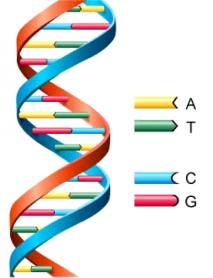
There is great diversity among the people who live on this planet. Each of us is a unique blend of nature and nurture. We are born with a pattern of DNA inside our bodies that identifies us and holds the history of our ancestors. Ironically the genetic differences between one human being and another are miniscule. On the whole we are more alike in basic composition than we are different. All of us are members of the humanoid species known as homo sapiens, a Latin phrase meaning “wise human.” Our kind evolved over hundreds of thousands of years. Other humanoid types did not survive but remarkably we did, overcoming monumental challenges as we traveled from eastern Africa to all parts of the known world.
Modern man often follows the money but our ancestors set out on the original journeys in search of food. Unlike the prey for which they searched homo sapiens stood upright, had a larger brain, and created tools that allowed them to overcome animals that were faster and stronger. Early humans worked together and created societies that moved together, protecting one another from dangers but also communicating with stories and flights of imagination. They not only made useful implements but also invented musical instruments and made images that resembled the animals that they tracked. They explored the world both on foot and inside their minds.
Even as other humanoid species became extinct homo sapiens found ways to grow and prosper as the dominant force on our planet. They imprinted their wills and their creativity on themselves and on the earth. They celebrated the relentless changing of the seasons with rituals and customs that they developed and followed from one generation to the next. They created systems for maintaining their very existence and sidelining the darker sides of their natures. There were geniuses among them who learned how to read the workings of the heavens and to invent better and better tools for survival and comfort.
Today we live in a world so remarkable that none of our earliest ancestors would recognize us as being one of them and yet our DNA tells us that we are indeed mostly the same. We continue to evolve and learn more about our world, our universe and ourselves. There are people so creative that they boggle even our modern minds and yet they are our brothers and sisters, with essentially the identical chemical composition and genetic codes that we possess. Even people in remote and far flung parts of the world operate from similar human habits. The shades of our skin vary according to the adaptations that our ancestors needed to survive in different latitudes. The ways that we eat and the recipes that we use are based on the food sources available to us. Those who came before us were a flexible and ingenious lot who adjusted to the environments in which they found themselves. Our numbers today tell us that most of them made it to live another day and devise better and better ways to do more than simply exist. Time and again mankind has realized the potential that lies within each of us.
While individual accomplishments have literally changed the world, it is in our willingness to live as a community of people that our true greatness is realized. The physicist Stephen Hawking is celebrated for his remarkable intellect but were it not for the contributions of his fellow man he no doubt might have died long before he was able to pronounce his theories of the universe. He is able to “speak” to us in spite of the horrible disease that took his ability to move or talk. Others have provided him with the support and the tools that he needs to continue his work and his conversations with the scientific community. When reveling in his genius we often forget the group effort that has made his survival possible.
Each day there are literally thousands upon thousands of nameless individuals who make our lives what they are. We take our conveniences for granted until a natural disaster or a war causes the systems that we have contrived to break down. When the normalcy of our world falls apart we begin to realize just how greatly we depend on one another and yet somehow even as we create comforts that allow us more and more freedom to develop ourselves we all too often separate ourselves into artificial groups. We identify ourselves based on the color of our skin, our political leanings, our incomes, our levels of education, our sexual orientations, our male or female chromosomes, our religions or lack thereof, our countries, our states, our cities, our zip codes. We become members of certain groups and view those outside of our own parameters with suspicion. We forget that it has always been our ability to work together in a spirit of community that has insured the very survival of our species.
If it were possible for each of us to track our ancestry all the way back to the beginnings of mankind’s time here on earth we would learn that we are all cousins descended from the same people who long ago stood up and began a journey that would ultimately span the globe. Perhaps one day we will realize that our bickering is rivalry among siblings and we will learn how to understand and cooperate in a spirit without judgement or evil intent. Surely if we are able to view inside the very essence of our bodies we will one day realize the ultimate potential of our hearts and minds.
 I didn’t cry much when my father died, not because I had no emotions but rather because I somehow believed that I needed to stay strong for my mother and my brothers. I don’t think that it was particularly healthy of me to prevent the natural feelings that were causing me so much internal pain from becoming public. For a great deal of my life I have tended to be stoic. I’ve often put forth a strong face when what I really wanted to do was allow myself to sob. Over time I realized that tears and sadness are a natural aspect of our humanity that is to be celebrated rather than hidden. We are made to react to hurt and loss and pain with a release of our real feelings. Big girls really do cry and it is not just an okay thing to do, but a therapeutic release. When our minds and bodies urge us to set our tears free, we should feel comfortable responding to the instinct.
 There is a tree in Rockport, Texas that has been growing in the same spot for centuries. Some wise soul thought to save the old oak forever by declaring it an historical treasure and building a fence around it. People travel from all parts of the world just to stand under the shade of the sprawling limbs and to marvel at the girth of the ancient trunk. They snap photos of the wondrous image and try to imagine what the old tree has seen in its time on this earth. If only it could talk we might hear of native people pausing under its branches to rest after a day of hunting and fishing or learn of explorers from Spain who traveled along the Gulf Coast searching for cities of gold. Did the tree once see vast flocks of whooping cranes wintering in the area in their annual journey from Canada? How did it manage to withstand the forces of tropical storms and punishing hurricanes? What is its secret to long life?
 Because I grew up in a single parent family led by a strong and confident woman I am strong willed and independent. Had my husband, Mike, not been nurtured by a mother who was an equal to mine in her commanding presence he might have struggled with my personality after we married forty eight years ago today. I suppose that the real me may have been a bit of a surprise to him. I was a month shy from being twenty years old on that Friday when I walked down the aisle to exchange vows. We were still in that tingly romantic stage of our relationship. Both of us were on our best behavior. As so often happens our true selves ultimately revealed themselves in the day to day routines that evolved and Mike noticed that I was not exactly the person that he thought I was.
 She was a brilliant young woman who excelled in virtually every arena of life with the exception of her mathematics classes. She had learned to excuse her missteps in Algebra with a tilt of her head and the classic excuse, “I’m just no good in math.” Somewhere along her educational way she had decided to accept mediocrity when dealing with formulas and algorithms because it had secretly bothered her competitive spirit that questions of trains meeting at a station seemed both meaningless and confusing. Little of it made sense and she had it on good authority that she would rarely use any of the information again in “real” life. She approached mathematics with disdain and longed for the day when required courses would no longer stalk her. One day she would proclaim to her family and friends that she had done well without being a mathematical whiz and that her genes were evidently unfit for ciphering.
