You Are Where You Belong

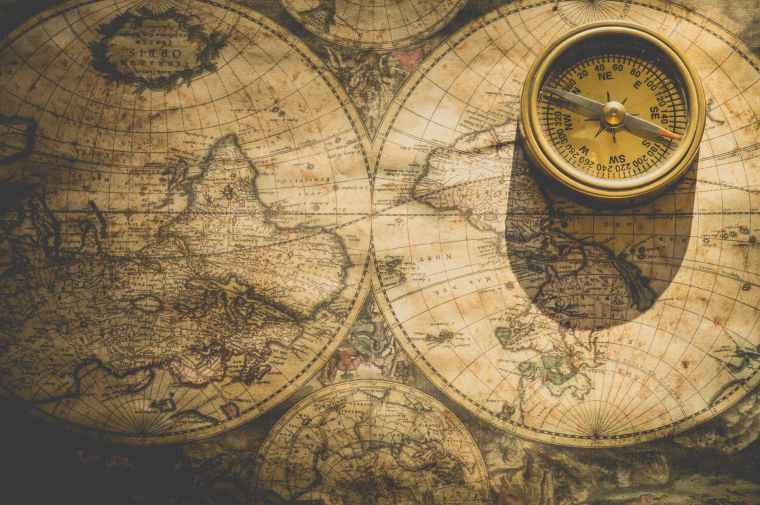
blur cartography close up concept
Photo by slon_dot_pics on Pexels.com

Everything you did brought you where you are now, where you belong.

—-Bran, Game of Thrones

Both the books and the HBO series of the epic Game of Thrones have been an international success making countless individuals famous and wealthy, not the least of which is the author, George R.R. Martin. Like The Lord of the Rings the story serves as a kind of fantastical history of mankind with a cast of characters with both godlike abilities and disappointing human frailties. GOT as it came to be known is made exciting with dragons, magic, battles and intrigue but at its heart is the story of people. It is one gigantic metaphor for all that each of us endures as we march steadfastly on our personal hero’s journey.

I once wrote an extensive paper about my paternal grandfather for an oral history/folklore class. I interviewed the patriarch of my family over a period of countless hours learning as much about the facts of his life as possible, as well as determining the overriding theme of his existence as revealed by his words and the things that he chose to remember. By the time that I made my recordings he was over one hundred years old and had experienced the most incredible events of the twentieth century which he often used as a comparison to the nineteenth century into which he was born. While his life was filled with hardship and abandonment much like Jon Snow in Game of Thrones he harbored little ill will toward those who had chosen to neglect him, instead patterning his life after those he most admired.

Grandpa often spoke of everyday heroes like the grandmother who raised him with a kind of reverence for nature and people. He was apt to recall a strong man from his childhood community who performed unbelievable feats. He borrowed his name and his greatest admiration from an uncle who had graduated from West Point. He regaled us with stories of people of honor and integrity as though they had been gallant knights of old. He almost pridefully boasted of his own prowess in being immune to the ravages of the smallpox epidemic that overtook his town as well as his determination to boldly walk away from what he believed to be his drunken ways. He journeyed alone from one place to another until he found his ultimate purpose in life which was to love and care for the fair maiden, Minnie Bell, his wife and my grandmother. He was loyal to her and to his children, and he overcame one challenge after another with the overriding belief that his journey was exactly as it had been meant to be.

I cut my teeth on stories from my grandfather and the fairytales that my father read to me. My own life was punctuated with tragedies that changed my course again and again. While I am at heart a person of routine I had to learn how to adapt to sudden and unexpected changes just as we all do. Life is never a straight open road, instead it is a series of twists and turns and rocky pathways. We have to not only be willing to endure the surprises that await us but also to deal with them. Like my grandfather I not only learned how to don my armor in difficult times, but also how to appreciate how each little alteration of the journey seemed to lead me to people and places that I was destined to encounter. Everything brought me to this very moment in time and I know that it is exactly where I belong.

Each of us is a character in our own epic story in which we meet villains, heroes, brave knights who protect us. We are sometimes betrayed, but more often we find comrades who stand beside us through the worst that nature or mankind throws in our paths. We ourselves falter and learn and grow. We are surprised by those who rise to occasions when we had underestimated their bravery. We are humbled by those who seem lost and then fight to redeem themselves. We find true love when we least expect it. We learn how to appreciate the best of our days because we understand that there will also be those that leave us exhausted and bereft. If we are wise we are flexible and willing to embrace change for it is as inevitable as the rising and setting of the sun.

The stories that we tell, that we read, that we cherish have only so many themes, so many literary devices. No matter how fantastical they may be, in the end they are based on our common human experiences and they center on people and how they adapt to the forces that enter their lives. Our history is in fact a personal tale that should remind us of our imperfections and the power of mercy and redemption in moving us forward.

We are living is strange time. All the progress of mankind should be making us happy but instead the world is tinged by discontent. We are walling ourselves off inside our castle keeps, when our knowledge should tell us that eventually the things that we most fear will find a way inside. We need to be open to alliances with those who differ from us and we must develop alternative ways of thinking. We need to search for the real heroes who are often the quiet ones rather than those who boast. Mostly we must remember that each of us has a grand purpose that is not nearly as ordinary as we may believe. Let us rejoice and be happy in the good that we have done and show mercy when we falter, never forgetting that we are just where we belong.

A Paperless World

laptop on table turned on
Photo by Eugene Chystiakov on Pexels.com

The world is becoming more and more technical, and the trend is forcing us to learn how to use complex implements for living or be left behind. There is such a rush to modernize and improve the way we do things that most of the electronics that we buy are outdated within a few years. Technology is the new driver of industry creating a conceivably better way of living, but also a host of unforeseen problems.

When I attended college as an undergraduate I typed my papers on what was essentially a keyboard that directed a piece of shaped and cut metal to strike an inked ribbon to leave an impression of a letter on a sheet of paper. If I mistakenly hit the wrong key I had to use a white liquid to hide my error and then strike the correct button to hide what I had done. A bit of correction fluid here and there was somewhat unnoticeable, but I tended to have far too many slips of the hand as I typed, and so my entries were more often than not rather messy looking. I invariably lost points for the rather shabby appearance of my efforts, even though I was known to type and retype my papers in an effort to make them perfect. I once begged a professor to allow me to simply hand print my offering on lined paper which he obligingly agreed to accept. He noted with a laugh that my scribing was a hundred times better than my typing.

I was thrilled with the invention of the word processor which permitted me to concentrate on my phrasing rather than the physical construction of my papers. My days as a graduate student were far easier than my earlier years of education, but as usual inventors were not satisfied with leaving things in a simple state. They had to create software that enabled the users to develop professional looking presentation pieces that were often far too complex for me to manipulate. I generally didn’t have the time to study the processes, and so once again I found myself falling behind not in how I said something, but in how it looked on the page.

It was about the time of my graduate studies that the Internet was becoming a thing on college campuses. One of my professors taught us how to use it and required us to send him emails. It seemed almost like magic to be able to communicate so easily with him. It would only be a couple of years later that the concept of email would become a thing and the need for almost everyone to purchase a computer became a reality. Before long the educational world was onboard for creating an almost paperless society.

At first I worried mostly about my economically disadvantaged students. The virtual way of doing business did not always work so well for them. It assumed that they had computers and wifi in their homes, which many of them did not. I was often criticized for allowing them to use my machines and printers rather than the computer lab, but I had learned that the fight for use of the facilities was real. Over time home computers and Internet access became as common as having a stove for almost every person, but I was still concerned about those who were not up to speed with the world of technology. I saw the changes happening so quickly that most students were working with outdated and sometimes unreliable equipment that created huge problems for them. I remember one young man who had worked for weeks on a research paper only to have some quirk of his home computer lose all of the writing that he had done. Because he had been conferring with me on a regular basis I was able to confirm to his teacher that he had indeed been nearing the completion of his great efforts and he was given one  additional night to attempt to recreate his paper.

Now students are being bombarded with technological demands. They register for classes online, receive emails with syllabi and instructions for projects, take online tests under the eye of proctors for whom they must pay, and submit assignments electronically. They must watch for confirmations that their work has been received and be alert for last minute messages. The old face to face meetings with professors during office hours are often replaced by attempts to “speak” with them via text or email. In spite of the fact that messages get lost in the barrage of information drowning students each day and equipment failures at the worst possible moments excuses are rarely considered. Students live and die by their ability to cull the wheat from the chaff, and must hope and pray that there is no power failure or unforeseen problem when due dates loom.

I have heard many stories from my former students about issues that they have encountered because of the assumptions by professors that they will be able to navigate successfully in a fully automated world. One young man spoke of how his dyslexia was not well served by computerized tests. Another called me in a panic one evening when his laptop crashed just before an important paper was due. Others have spoken of having to spend far too much time perusing their email inboxes each day just to be certain that they were not missing some important information from their professors. Sadly occasionally they became so snowed under that one tiny misstep obliterated what had been an excellent grade in the class. The brave new world of technology can be as hurtful as it is helpful.

Technology has been a boon to much of our way of life, but it has also created unforeseen problems as evidenced by cyber bullying, out of control tweeting, and an inundation of information that often creates new anxieties. Without checks and balances the electronic way of doing things can leave individuals feeling alone and isolated. What was supposed to be an aid to better living can become a source of major frustration.

We know full well that each human is an individual with a very specific learning style which highly computerized teaching does not always address. I am a very tactile person who needs to have a paper in my hand with words written on it that I may then highlight and annotate. That is how I best study and how I do well on tests. If I have to deal with a computer screen I still need a piece of paper on which to jot my ideas and create outlines. The paperless world does not work well with my dyslexia and I’m soon transposing numbers and reading words that are not on the screen. I’m certain that there are many others just like me who are struggling with the demands of an electronic world.

As we educate individuals we must ask ourselves why someone might make all A’s on traditional work in our classes and then suddenly make a failing grade on a computer generated assignment. Surely we need to take the time to find out what happened and then adjust for that student accordingly. The key to good teaching has always been to understand that there can never be a one size fits all way of operating. We have to be ready to deal with the exceptions to rules.

I was the valedictorian of my high school class of 1966. I was proud of that accomplishment then as now because I earned it with old fashioned hard work, not native intellect. What it taught me was that goals are achieved through persistence and effort. The playing field on which I excelled felt level and fair because it allowed me to learn the way I am best suited. I’m not so sure that I would have done as well in today’s environment. The learning difficulties that I overcame would be sorely challenged by the letters that seem to jump around and glow on electronic pages. There would be no place for me to set them right with my markers and pens and little drawings. Like my blind student who required braille books, I need materials in my hands to learn most efficiently. I wonder how many more like me are struggling to demonstrate that they have what it takes because it is so often assumed that everyone does better when no paper or textbooks are involved. It’s something that we need to think about and address.

Discovering a Remarkable Story

beige analog gauge
Photo by Ylanite Koppens on Pexels.com

I loved my maternal grandmother, Maria Bartacovik Ulrich, but never really knew her. She was a sweet presence in my life, but because she spoke little or no English and I had no knowledge of her Slovakian language we communicated mostly with facial expressions. She was a short, round woman filled with the wrinkles of old age. She kept her hair in a long braid that trailed down her back, at least until she became seriously ill and her daughters cut it to make the task of maintaining it easier. She seemed to be of another world, another century and I always longed to be able to ask her questions and learn more about the girl she had once been. Instead we exchanged smiles as she called me “pretty girl,” and while I loved the simplicity of her greeting I wondered if she actually knew my name or those of my many cousins.

Grandma Ulrich padded around her home in her bare feet which were tiny but often appeared swollen. At gatherings she prepared cups of coffee for all of her guests, bringing the watery brew proudly in enamel cups filled with more milk and sugar than java. I loved that gesture which she repeated hundreds of times when the members of her family filled her home with raucous conversation. I saw her as an exceptional hostess who wanted us to feel welcome in her domain, and we always did.

Grandma Ulrich had lovely blue eyes, and as I gazed into them I wondered what thoughts were behind them. It would not be until long after she was dead that I would do enough research and ask enough questions to learn a tiny bit about her. It amazed me to find that this shy and unassuming woman had traveled alone from her hometown in the Slovakian region of Austria Hungary to Bremen, Germany where she boarded a steamship bound for Galveston, Texas. She came to meet my grandfather who had arrived before her to pave the way of their new life together. Somehow it almost seems inconceivable that such an unassuming woman would have the courage to embark on a journey to a world of which she knew very little. She must have been very much in love, and perhaps she was guided by the exuberance of youth as well.

She arrived not too many years before the outbreak of World War II and for all intents forever lost track of her family back home. My eldest aunt says that Grandma worked as a cook for the laborers on a large farm in an area of Houston on the east side of town. Later she tried a variety of jobs including laboring as a cleaning woman in a large downtown building. When her English improved she even found work behind the counter of a small bakery. This was a daring Grandma Ulrich that I had never known, and even now I have a difficult time imagining the woman who was frightened to leave her home as such a courageous person.

My grandmother was a woman of her times without benefit of any form of birth control other than abstinence, and so she had one baby after another. There were nine pregnancies in a row including one in which she carried twins. By the time my mother, the youngest of her children, was born Grandma had buried two of her babies. Her body must have been in a state of hormonal hell as she yo-yoed from conception into post partum depression again and again. Her tiny home and her life was dominated by rowdy children whom she dearly loved, but I can’t fathom that she ever had a moment to herself.

At some point my grandmother showed signs of a mental breakdown and she was taken away by force to the state hospital in Austin. It was a traumatic time for her and for her children who rarely spoke of it, carefully guarding a secret that was too painful to mention. Once Grandma returned home she would never again have enough trust to leave the safety of her house without putting up a fight. She was content to simply create a daily routine and quietly live out the rest of her days.

I am fascinated by the woman who was my grandmother. I suppose that if truth be told we, her grandchildren, took her for granted. She was someone who was just there, an almost invisible presence in our lives. She seemed simple and yet she was so complex. We thought her witless and yet she must surely have had thoughts and dreams. Like so many women her contribution to the world was unseen and under appreciated. We did not think to connect the dots of her existence and the incredible impact it has had on the world. We assumed that she would not have been interested in knowing that from her humble beginnings in America have come engineers, doctors, teachers, accountants, business leaders, athletes, lawyers. Members of her now very extended family are brilliant and beautiful, and genetics tells us that her contribution to such success is present in all of us. Most importantly the lessons that she taught her children have been passed down through the generations. We may not have been able to communicate with her but her children knew and understood her messages of integrity and hard work. She modeled a steadfastness for them that they emulated often without even realizing how deeply her character had imprinted on them.

If by some magic I were able to see my grandmother again and actually speak with her without the restrictions on communication that once defined our relationship I would want to know everything about her. I have grown to understand how amazing she was and how worthy of my attention to her story should be. Like so many many women she was dutiful and in her role she built the foundation of a family and the future. Her contributions are incalculable but her legacy continues to blossom. Now I finally realize through discovery of her remarkable story that this tiny quiet woman was a tower of strength and I feel honored to be part of the world that she helped to build.

Legacy

framed photo lot
Photo by tom balabaud on Pexels.com

I recently saw an interview with politicians, celebrities and sports figures who were asked to describe what they would like their legacies to be. Most spoke of accomplishments related to their craft, which is certainly understandable given that society so often judges us by our occupations and what we do with them. Surely, I thought, there must be more to what we leave of ourselves than the body of our work life since there is so much more to each of us.

Of course I truly enjoyed being an educator and hope that I somehow will be remembered for my efforts in that profession. I honestly never saw myself as the most remarkable mathematics teacher ever, but I did put a great deal of effort into finding the best in each of my students, and helping them to realize the amazing potential that each of them had. I know that I loved each of them and toiled to make the learning process a bit more important to them.

I took particular pride in my work with teachers as well. We need exceptional educators and I’ve had the privilege of mentoring some of the most extraordinary ones. It has swelled me with pride to see both my students and my teachers go on to shine more than I ever might have. I like to think that my mark on the world is enhanced by the very small influence that I had on their successes, but in the end what they accomplish is theirs, not mine.

I tried to be a good mother, but I continually found myself in awe of moms who have it more together than I ever dreamed of being. I painfully recall every mistake that I made, and they were many. I was ultimately just happy that my daughters became such fine women in spite of my blunders. Being a mother is indeed one of the most difficult jobs on the planet. At the same time it is a joy and a great blessing to have the privilege of molding a life. The pride and the worries of parenting never really end so my grade as a parent is still listed as an Incomplete. Being a mom has been the central focus of my efforts and has created the most glorious purpose in my life, but also the one in which I often felt the most inept. I suppose that most mothers have those kind of feelings because it is such a daunting responsibility.

More than anything I would like my legacy to be that I was always a person of integrity. Fame and fortune have never meant as much to me as being honorable. My life is truly an open book. Aside from some missteps here and there I have never knowingly tried to hurt someone, nor have I lied or cheated to get ahead. My heroes are not necessarily the people who have been the most successful in life, but rather those who stood for a set of principles at all times. Nothing disappoints me more than learning of betrayal. I instead try to be steadfastly loyal, and I surround myself with people of a similar bent.

Our world is too much concerned with so called “winners” these days and if I were to leave any message to the people that I love it would be to be true to yourself and the people around you. I may not have a great deal of money in the bank or a list of grand titles when I die, but I have done my best to be worthy of trust. I know that there are liars and cheats in this world, but I choose not to be one of them, even if it means appearing to lose. I truly believe that at the end of the day each of us will earn our just rewards for doing our best to live good lives. Winning through deviousness is an earthly thing that doesn’t not last through eternity.

The people that we recall with the most respect are those who are kind and loving and sincere. We are dust and to dust we shall return just as our possessions will eventually rot and become useless. Our good names will live on in the minds of those who have known us if we tried to be truly good people. That is the kind of legacy I hope to achieve. It’s something that I work on every single day.

My mother died with few material possessions left behind, but her simple gestures of concern for people are remembered to this very day. My grandfather was penniless but my brothers and I recall his wisdom and optimism. My grandmothers were so gentle that everyone felt serenely safe with them. I hardly had time to know my father and yet his imprint on me is as deep as if he had been guiding me for all of my life. He gave me a love for learning and travel and the beauty of many art forms. My mother-in-law demonstrated how to be elegantly strong. None of them reached too far beyond the confines of their tiny network of friends and family, but each of them left a footprint on this earth that really mattered, for in their actions was character of the highest order. It was from their examples that my own desire to be a better person grew.

A legacy is strictly defined as an inheritance, a benefaction, an endowment, but it is really anything handed down from the past. It is a kind of gift to the present that need not be material. In fact the best legacies tend to be those that show us ways to be our personal best. I hope that I will be remembered for the good that I have done. It’s a challenge, but one that I take seriously.

And Still I Try

book book pages bookcase browse
Photo by Pixabay on Pexels.com

I don’t just like to write. I also love to read. I am in awe of great writers, and they are many in number. Some of them are friends of mine while others are strangers who become like friends through their words. There are those who have a knack for choosing just the right words, the most stunning imagery, the clearest poetic phrasing. I am often moved by their ability to convey a universe of ideas in the space of a sentence or paragraph. These are the true masters among us whose canvases are blank sheets of paper and whose art is created from combinations of letters, words, and punctuation. It’s a simple enough exercise, and yet some of us still draw stick figures when we attempt to write, while others join the infinite with their masterpieces. I am transformed by their work, even while I am a bit jealous of it. I want to reach their level of of excellence knowing that my own efforts are mostly feeble, and still I try.

I was listening to a program on National Public Radio that spoke of the emotions elicited by great art both visual and audible. Music by far is the most likely to stir something in our souls that brings us to tears. Studies show that paintings are often the most vivid representations of life, but we humans rarely gaze at them long enough to become as emotionally involved as we do when we hear songs or symphonies. When we read we often skim so quickly over the words that we absorb only a minimal appreciation for what they are conveying, but when those same words are acted by great players we may find ourselves sobbing. Music and acting are so fluid, while canvases and manuscripts may appear static, leaving us with little more than a passing idea of what they actually represent. When we actually take the time to allow our minds to feel the content of a great work of visual or written art we are transformed.

My father had an appreciation for all forms of art. He played music while he read, a daily routine that included hours of perusing newspaper columns, books of poetry, novels, and nonfiction. He returned to stanzas and passages again and again. Repeating the rhythms and phrases that most appealed to him. He memorized the best of them, ready to quote them in appropriate moments. Bookstores were his galleries, places where he found hidden jewels that appealed to his senses. He held books and printed papers as though they were treasures to be treated with the highest regard. He transferred his love for the written word to me. He showed me how to be discerning in my search for the artistry of a great poet or author, My high school English teacher, Father Shane, transformed my sensibilities into an art form of itself by insuring me that being a studied appreciator of great writing is a kind of accomplishment in its own right.

The best writers among us invert the world as we see it, turn it upside down and inside out making even the hideous beautiful. They appear to have a gift, a natural genius that makes it easy and inevitable that they will leave us breathless with their creations. Still we know from stories and examples that they have to work hard to hone their craft. They don’t simply peck out five hundred words in an hour to reveal thoughts and ideas so memorable that they will last through the decades and centuries. We hear of F. Scott Fitzgerald driving himself almost insane in his attempts to reproduce the beauty of The Great Gatsby. Shakespeare’s works were both brilliant and ordinary depending on which of his plays is being considered. The demon of perfection haunts writers and sends them into fits of desperation. There is no feeling as dreaded as having a block that creates an almost impenetrable wall between ideas and final copy.

I wonder how a J.K. Rowling is able to fashion and sustain a story and characters so perfectly that her books become beloved treasures, keepsakes to visit again and again. How does a Tolkien create entire worlds with a make believe history that seems so real, while others are one trick ponies or abject failures in spite of Herculian efforts? Is it possible to push ourselves to find our own inner genius and then demonstrate it to the world, or is the mark of greatness limited to only a select few?

I read, and read and read, learning new ways of saying old things. I practice and practice, but find myself falling short of the goals that I set for myself. My time is growing short. I am not a Grandma Moses who will suddenly stun the world with my talent, and yet I would like to be. I would so enjoy finding that sweet spot that might touch a place in a reader’s heart that makes them cry for joy. I want to transcend the ordinary and find my personal best, which I sense is buried somewhere inside of me. I suspect that I will know when I have managed to get closer to my ultimate goal, but I worry that there is some calculus that will keep me forever making only closer and closer approximations of what I want to achieve.

Reading and writing have become my routines. I push myself to exercise my mind the way some work on their bodies. I find peace in my experiments with words, and inspiration in the genius of those who have already accomplished what I hope to one day achieve. Writing is my Holy Grail, my Mt. Everest, my nemesis and my consolation, and still I try.