The Cries Of A Child

baby-tears-small-child-sad-47090.jpeg

I recently had a very long day. I had arisen early and prepared for a series of appointments which literally spanned the hours from nine in the morning to six in the evening. After completing all of my duties I picked up my husband and the two of us hit the gym around seven. We finished our workouts about an hour and a half later and only then began to think about having dinner. I instinctively understood that it was a bad idea to eat at such a late hour, but it had been one of those days in which I had moved from one thing to another without a moment to even think of nutrition. Since the YMCA that we use is across from a grocery store I suggested that we find one of their prepared meals to heat at home rather than opting for fast food. It would be a quick and preferable alternative to undoing our attempts at a healthy lifestyle and would cost less as well. It seemed to be a grand idea.

The section containing what we wanted was located near the front of the store and we quickly found choices of seafood and chicken coupled with fresh vegetables that ranged from four hundred to five hundred calories. We made our selections and headed for the checkout which wasn’t particularly crowded because by then the clock was ticking toward nine. As we were waiting behind a young couple buying ice cream and a number of items that we have chosen to eliminate from our diet I heard the screams and cries of a small child.

I glanced over to see a father attempting to control a little boy who had obviously reached his limit of navigating happily through his own long day. I felt for the father who was doing his best to console his son, but as a mom I knew that the youngster was simply exhausted and ready for bed. The frazzled dad didn’t appear to be in much better shape. I imagined that both of them had been blowing and going all day long and that the child had been the first to hit the wall. I thought of how tired I was and remembered the times when I would work all day outside of the home and be making last minute runs to the store to purchase items that we had to have for the following day. I just wanted to go hug the little boy and tell the man that things would be better and that he would one day be able to laugh about such incidents. Still, I worried about our often relentlessly fast paced and demanding society and wondered what it is actually doing to all of us.

I’m retired now, so one really rough day of obligations isn’t that tough on me. I am able to sleep in after challenging schedules, but that wasn’t always the case. My work hours were often erratic and almost always long. I recall so many times when I reached home after nine or ten at night hoping that my family’s needs had been sufficiently met. Routines were difficult to create because we each had such divergent schedules. There were times when we literally felt like strangers passing one another in the night. As a teacher I had to attend meetings, conferences, trainings, performances, and field trips. Those demands only increased once I became an administrator. I assumed the role of caring not only for my students, but also for my teachers. All too often my own family had to take a back seat, and to this very day I worry that I may have neglected them a bit more than I should have, even though they appeared to be quite resilient.

My husband too had to work strange hours from time to time. My dear mother and mother-in-law often covered for us when our obligations coincided and our girls were going to be home alone. I know that I missed some important moments with them, and even though they were safe and sound the guilt that I felt was far greater than I might have wanted to admit at the time. I have often wondered if we as a society have created an unhealthy new world order with our two parent careers, or if our children are actually okay with just rolling with the whatever happens. After all, the only reality that they know is the one that we as parents create for them. They do not experience the same type of steadfast routine that I did when I was growing up. The world is different for them and they seem to have adapted, but when I see a youngster like that little boy crying from sheer exhaustion, I wonder how many times I too pushed my children to the brink. I think about how I might have done things differently or at least a bit better.

Parenting is one of the most difficult jobs that there is. In today’s world many adults are raising children all alone. They don’t enjoy the benefits that I had of extended family members filling the gaps. I can only imagine the tough choices that they must continually make as they balance work and home obligations. Most organizations don’t take too kindly to absences even when they are supposedly allowed. Shirking overtime demands is a quick way of losing momentum in climbing the career ladder. Those who defiantly insist on working only the minimally required amount of time are in danger of receiving lukewarm appraisals and of being thought to be lazy. The tension between work and home is real and both men and women feel the push and pull. It’s tough to be all things to all people, and yet we seem oblivious to the toll it is taking on all of us. We just keep moving day after day like drones on a conveyor belt, hoping that one day there will be some rest.

There was a time when workers generally had a more carefully constructed schedule that allowed them to arrive home each evening at a fairly consistent time. If they worked long enough for the same company they would accrue as many as six weeks of vacation time and their bank of sick days would steadily grow. Jobs were fairly plentiful and raises and bonuses were an expected part of the packages. Many organizations provided generous pensions and health insurance benefits. One by one many of those things have gone the way of the buggy whip. A single worker today often fulfills the duties that might have required multiple individuals in an earlier era. Employment opportunities are more difficult to find and once someone lands a job he/she is expected to demonstrate utmost loyalty and dedication to the cause. It’s a dog eat dog environment that is putting new stresses on individuals and their families.

I have to admit to being overjoyed that I’m now retired, but I can’t just rest on my laurels. I actually worry about today’s workers as I see them struggling to keep pace and still maintain their own health and happiness. I wonder if it will ever be possible to slow things down once again as I think of a time and a promise that our inventiveness would one day create a world in which we would get things done in a shorter work day that would provide us more time to enjoy ourselves. Instead we have just decreased the need for workers and increased the demands on those lucky enough to land the jobs. There seems to be no end to the demands that we place on employees and I fear that many of the ills that we see in our society are incubated in such an environment. Perhaps it’s time to rethink the way we do things. The cries of our children are telling us that something is wrong. Surely we can do better.


Becoming Our Personal Bests

pexels-photo-618612.jpeg

I was driving home in the dark after spending the evening helping my grandsons complete a Geometry test review. It had been a long day and I was quite tired so I needed some sound in the car to keep me alert during the fairly long journey. I keep my radio tuned to NPR and just as I had hope there was an interesting program on the air. All of the guests were speaking about the idea of giving humans a small nudge to motivate them to do something difficult. It seems that there is a right way to get people to take risks and a wrong way that makes them complacent and uncomfortable with trying new things. Unfortunately much of the parenting and guiding and teaching that we tend to do is often exactly the opposite of how best to inspire humans,

As a mom, grandmother and long time educator I found myself instantly fascinated with the topic, so I turned up the volume and listened intently to a parade of experts giving pointers on how to create adults who are willing to push themselves beyond their comfort zones. It seems that every single theory was grounded in the idea that making mistakes can be a powerful tool for learning as long as it happens in the right kind of environment. If the emphasis is on personal growth rather than ranking, an individual is far more likely to demonstrate a willingness to venture into uncharted waters. There is something in our human natures that wants to be adventurous, but we throw on the brakes of caution whenever we realize that we are being compared and judged. We don’t want to be embarrassed by our mistakes and so all too often we quietly give up rather than endure the pain associated with failure.

One of the guests discussing this issue spoke of an horrific childhood experience that she had with a teacher who seated children in the classroom in order of IQ, from highest to lowest. Aside from the personal humiliation associated with such an arrangement she noted that it created artificial barriers to learning in which those lowest in the ranking began to believe that they didn’t have a chance to improve or master new concepts. It also segregated the students from one another by making them believe that those at the front of the class were smart and part of an exclusive group and those at the end were hopelessly doomed to uninteresting lives. The woman who was subjected to this horrible situation still shudders at the psychological damage it did to her and her peers.

My own high school experience was not much better. We were grouped according to an entrance exam and previous grades. Each six weeks a list noting our class rank was posted on a bulletin board in the main hall. We gathered together each time it appeared to determine where we were in the order, trying not to look at the very bottom because we somehow understood that there was indignity associated with being last. To this day I shudder at the idea of such shameless and ignorant humiliation that the listing created and the fear that it planted in me.

As humans we are born with a willingness to try different things. As babies we innocently explore and develop. Nobody thinks it odd that each little one grows at his/her own pace. It is the natural way of things and generally there is no worry unless the child shows signs of some type of extreme difficulty. In those early years our curiosity is at a peak. We want to know about and try everything. Learning is natural and fun. It is only when we begin to impose the artifices of tests and grades and competitions that many children begin to waver. When they feel that they are being judged badly because they are not quite as good as their peers, they sometimes slowly become and less and less inclined to participate in the process. In fact, even those at the top reach a certain comfort level and sometimes stop exploring lest they fail and lose their status.

As adults we want to encourage our young to be the best versions of themselves and so whenever they succeed at an endeavor we tend to praise them not so much for the attempts as for the outward judgement of their accomplishment. In other words we celebrate a good grade more than we cheer on effort. We pin our hopes on winning rather than a willingness to try. There is a kind of invisible ranking by IQ or ability that destroys a young child’s natural instinct to try things out. It deadens their souls just a bit, and in the worst case scenario convinces them that their possibilities for life are severely limited.

Sometimes it has the most deleterious effect on those children who started out at the top. They become so accustomed to being the best that they come unglued at the first sign of a challenge. They question themselves and withdraw from the race. They choose easy pathways that allow them to maintain their status, but their interest in reaching higher and higher is stifled. This is particularly true whenever a child suddenly fails after a lifetime of seeming perfection. We sometimes neglect to show them how to rebound from disasters.

The world will no doubt always be competitive but during the formative years the ideal is to instill a growth mindset into our young. We must strive to praise hard work and progress as much as mastery. We need to break learning down into doable chunks and celebrate the achievement of reaching particular milestones as much as we do high marks.

I have learned from watching my grandsons in swimming and track that each effort that they make is measured in personal improvements that may be little more than a tenth of a second. The focus of competition is with themselves. They understand that by beating their own records they move closer and closer to besting those who run with them. Races are generally won with very small but important differences. My grandsons work hard to close the gaps and they begin with themselves. Even if they do not gain a medal, they feel excited when they learn that they have shaved just a bit more time off of their own records. Improvement is a slow but focused process that they keep chasing because they are willing to stay in the race.

We can do so much much better with our young, but for now it is a difficult battle as long as tests are used to rank them, their teachers, their schools, and their communities. We are killing the natural instincts and curiosity one mistake at a time. Instead of encouraging our children to develop a love of reading we force them to submit to comprehension tests having little to do with how we humans enjoy the written word. We make the world of mathematics terrifying and far more difficult than it needs to be. We mystify science and insinuate that only a select few will ever be bright enough to work with its principles. We categorize children before they have even had the opportunity to explore and enjoy the wonders of learning. By the time we are adults we have boxed ourselves into rigid mindsets from which few of us ever escape.

It’s time for an overhaul of how we guide and teach our children. We have the know how and potential to use our most precious resource to the fullest. We just need to begin.

The Art Of The Deal

pexels-photo-185933.jpeg

My brothers and I were discussing our family heritage the other day. We are all too aware that the untimely death of our father changed the trajectory of our lives dramatically. We often wonder what things might have been like if…

Our daddy had an unstoppable sense of humor. His book collection included volumes filled with jokes. His favorite television programs featured comedians. He was a great storyteller and peppered his tales with yarns that made his friends laugh. He found something funny in the darnedest places and when they happened to be from real life, that was even better.

The first house that my parents purchased was in southeast Houston on Kingsbury Street in a new housing development like many that were springing up all across America in the years after World War II. My father had finally earned a degree in Mechanical Engineering and he landed a job in downtown Houston. The location of the house was perfect for starting a new career and raising a family. Most of our neighbors were young like my parents and the men were college graduates engaged in all sorts of interesting professions. They had children in the same age groups as my brothers and I so there was always lots of fun to be had. 

Most of our moms stayed home back then while our fathers went to work each day. The women had routines that they carefully followed for the care of  their children and homes. I remember that my mother washed clothes on Mondays, which was a bigger deal than it might seem because dryers were still a dream of the future, and so she had to hang her wet items on a clothesline to dry in the sun. 

Tuesdays were for ironing and as I recall my mother had a bottle with a perforated lid that she would fill with water to shake on the clothes that needed a bit of steam from the iron. On Wednesdays our mother dusted and cleaned and mopped the wooden floors and linoleum until they gleamed. Sometimes she even used floor wax to achieve a better shine. Thursdays were reserved for her sewing and mending. She made all of my clothing and most  of hers. Friday brought meal planning, dusting and changing the linens on the bed. Saturdays meant shopping trips and Sundays were for church and visiting grandparents.

While all of this activity was happening I was mostly a free range kid which meant that I roamed the neighborhood with my friends, but never without checking in frequently with my mom. Bear in mind I was only around six years old when I began to assert my independence, but things were quite different back then. All of the ladies kept their doors and windows wide open and provided a kind of community watchfulness over the children. At any given moment an adult was checking on us without drawing attention to that fact.

I generally just went up and down the street playing with whichever kid was available. Most of the time my favorite partner was a girl named Merrily, but sometimes she was busy so I would hang out with a boy who was about my age. His dad was a very successful businessman according to the rumors that floated around the area. His family owned two very luxurious cars and his mom even employed a maid. His house was furnished with exquisite furniture and art work. I enjoyed visiting with him and vicariously living in style.

I had earned a number of holy cards as prizes for good grades and exemplary behavior in my first grade class at St. Peter’s Catholic School. They were beautifully illustrated so I thought that an art connoisseur like my friend might enjoy seeing them. I took them with me on one of my forays to his home, and just as I had thought he marveled at how exquisite they were. He was not a Catholic so he had never before seen such things and he begged me to give him some of them. Instead I struck a financial deal with him, asking for one dollar for each of the lovely images. Without hesitating he broke open his piggy bank and presented a five dollar bill for the lot. I was happy to oblige because I figured that I would earn more of them if I tried really hard at school. It was a win win situation.

All seemed well until the phone rang as I was eating dinner with my family that evening. My mom was a bit irritated by the interruption but answered the phone nonetheless. When she returned she gave me a foreboding look and told my dad that I had sold holy cards to the kid down the street. She explained that his mother was quite upset because they did not believe in such things. Besides, the woman had argued, the price I had charged was prohibitive. She wanted me to return the five dollars immediately and reclaim my holy cards.

I could tell that my mother was not pleased with me but before I even had a chance to explain myself my father burst into uncontrollable laughter, leaving me and my mother quite confused. He smiled and winked at me as he stood to remove his wallet from his back pocket and then he removed a five dollar bill and handed it to my mother. “Use this to pay for the holy cards,” he told her. “Let Sharron keep her profit. It’s worth it to know that my little girl outsmarted the financial wizard’s son. I love it,” he bragged with a huge grin on his face. With that pronouncement I breathed a sigh of relief and smiled with pride at my wonderful daddy who had who seemed to understand the importance of my first foray into the art of the deal. My mom on the other hand simply shook her head while attempting to hide her own amusement with the situation.

I always loved the way my father appreciated the ingeniousness of me and my brothers. He often laughed at antics that might have driven other parents wild. When my little brother took things apart Daddy almost always defended him by asserting that he was only attempting to understand how things work. My dad encouraged us to have an adventurous spirit that would guide us as we explored the world. He believed that life was meant to be lived without fear and I suppose that he went out in a blaze of glory following his own credo.

After my father died I became more cautious. It would be years before I was willing to leave my comfort zone and try things, but I always remembered those moments when he encouraged me to use my imagination and intellect. Mostly though I loved that he knew how to laugh whenever we were just being kids. In some ways he was the man who never quite grew up, a kind of Peter Pan who left this earth for Never Never Land far too soon. Somehow in the brief time that he was around he taught me the importance of viewing the world through humorous eyes. Knowing when to laugh rather than cry has made things so much better than they might otherwise have been. 

The Balancing Act

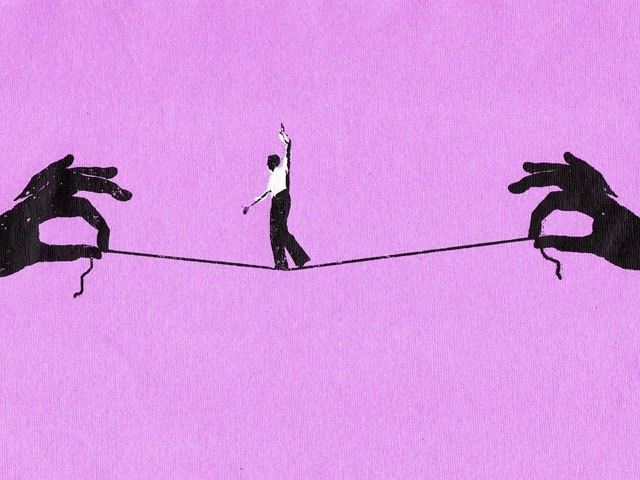
BalancingThere it was, a meme that spoke to me more than I cared to admit. “You’re killing yourself for a job that would replace you if you dropped dead within a week.” It’s a rather simplistic thought that generalizes a bit too much, but it’s point is thought provoking. It’s main thrust might be applied to almost any situation in life with just a few changes of words. The fact is that we sometimes become so over involved in certain situations that we lose sight of what is really most important in our lives. Our work ethic overtakes us to the point of wearing us down, and then we grieve when we realize that perhaps our efforts were not appreciated nearly as much as we had thought. Finding that sweet spot that allows us to achieve balance in our lives is one of our greatest challenges, and one that is far more important than we might imagine.

We are taught the importance of hard work from the time that we are quite young. In today’s world those lessons begin earlier and earlier as very small children are enrolled in early education programs, sports clubs, music lessons and a host of activities that keep them busy from the time that they awake until they fall into their beds at night. Some tiny children have an endless round of appointments designed to develop the best of their talents. Parents and nannies help them adhere to carefully orchestrated schedules. Admittedly there are many children who thrive in such circumstances, but there are others who begin to show signs of stress in the form of crying fits, behavior changes and exhaustion.

I have seen such children hanging limply onto their parents with vacant looks and sometimes even fear. When I worked in an after school program for pre-schoolers and kindergartners it was sometimes difficult to keep them awake because they were so tired. Many of them had arrived at the school at seven in the morning and would not be picked up by their parents until six in the evening. They were grumpy and probably would have benefitted more from play time at home than the all day structure that ruled their little lives. Smaller doses of opportunity generally work better for little ones, but we all too often adopt a more is better philosophy forgetting that all of us need respite from the daily grind now and then.

As children grow older the demands on their time and energy only increase. Not only do we plan their hours, but we also introduce them to the glories of competitiveness. We expect them to perfect their skills and talents so that they will eventually become champions. Of course there is nothing innately wrong with that, but often in our quest to help them to become their best selves we over extend them so that their hours are filled, leaving them with little time to explore and create on their own. Sometimes down time can be more powerful in helping youngsters to begin to know themselves than keeping them so busy that they can’t really think, It is when they are on their own that they organically develop and learn through trial and error.

By high school the pressure on our teens can be overwhelming. Not only are they expected to do well academically in as many Advanced Placement classes as possible, but also to participate in extracurricular activities and community service. As one young man recently noted, they generally have about seven hours to themselves each evening if they stay up until midnight, less if they go to bed earlier. If they are involved in athletics or other organizations that number of hours may be reduced by two or four hours each day, leaving them only a short amount of time to study and just relax and be a teenager. Research has shown that most high school students are sleep deprived from attempting to pack so much into their daily schedules.

One of my grandsons decided on his own to remedy the trend of over extending. While he was in high school he achieved balance by carefully limiting the number of activities and advanced classes in which he was willing to participate. He realized that he was more often enriched by discussions at the family dinner table or late night intellectual conversations with his father and older brother. He understood the importance of quiet times without obligations attached to them. He saw that far too many of his peers were crashing and burning because they were carrying way too much excess baggage on their shoulders.

When we finally go to work we want to impress our supervisors as well as our peers. We are often willing to go an extra mile to demonstrate our loyalty, which is all well and good if we also remember our own personal needs. When our job becomes an obsession then we may want to step back just a bit. if we see that family and friends are suffering because we are continually absent, a real problem is beginning to brew. When we can’t even rest without dwelling on our work, we may have become over involved. 

I’m not particularly someone to give advice regarding work life balance because there were multiple instances when I became so focused on studies or work that I totally neglected those who really loved me. I have been competitive to the extreme at times, and sadly my efforts were not always noted and appreciated by my superiors. Luckily those dearest to me were always there to pick up the pieces of my disappointments. At some point along my journey I finally managed to find a kind of work/life balance that made me far healthier than I had ever before been.

I am a living example of someone who looked outward and did my best to impress people who no doubt would have quickly found a substitute for me had I dropped dead. I worked so hard to be the valedictorian of my high school that I missed many of the joys of friendship and adventure that are an integral part of growing up. My achievement was soon forgotten and I found myself having to prove my mettle again and again in real life. I strove to be that person who demonstrated a willingness to be the last woman standing in pursuit of the goals of those for whom I worked. When others went home, I stayed behind to help, sometimes even when my own children needed me to be with them. I regret that I pushed myself so hard, but I am also thankful for dear friends like Pat and Bill who gently counseled me to learn how to focus on what was most important in my life. With such guidance and the support of my family I eventually found ways to have it all. I was able to clock out from work and leave it behind while I luxuriated in the warmth of home. It took me far too long to get there.

If I had one bit of advice for young men and women who are just beginning their careers or for new parents it would be to follow the wisdom of one of my teachers from long ago. He told us that we all needed to be fully present in whatever we were doing, never allowing ourselves to dwell on other things that were bearing down on us. He emphasized that we should work hard and play hard with equal vigor. He cautioned us to adjust whenever we found ourselves too preoccupied with any one thing. Keeping that balance, he suggested, would make us both healthy and happy. His was a message that all of us would do well to hear. Unfortunately I ignored his message for far too long. I’m glad I finally got my head on straight.

It’s Ten O’Clock

disillusionment-clipart-analog-clock-in-yellow-at-ten-o-clock_416058

It’s ten o’clock. Do you know where your children are?” If you grew up or were a parent in the 1960s, 1970s or 1980s you heard this question every night before the late newscast came on. It was a public service announcement that made sense then, but may be a bit confusing in today’s world. Back in those decades most children were what we now call “free range kids.” They played outside for hours at a time, often with little or no supervision other than a quick glance outside a window from a parent. They wandered away from home to visit with neighborhood friends, not always bothering to check in with parents before doing so. It wasn’t unusual at all for children to return outdoors after dinner to play in the dark under a street light or on someone’s front porch. It was a time of innocence when parents and kids both rarely worried about being harmed. Everyone knew everyone else and watched over one another. Perhaps the freedom that little ones enjoyed back then was fueled by naivety, but it was highly unusual for someone to be lost or harmed, there was little reason to worry.

The closest thing to a dangerous experience that I recall came when my youngest brother was playing a game of football in his bare feet in an overgrown field of grass. Hidden in the tall weeds was a broken bottle with its ragged edge pointing upward. When he stepped back to catch a pass he placed his unprotected foot on the shard of glass which immediately severed his achilles tendon. He bled profusely, but my mom and I miraculously got him to the doctor’s office in time to get it stitched back in place. I remember my mother instructing me in how to apply pressure to the wound to keep the bleeding to a minimum while she drove the car. I was quite frightened but didn’t let my mom see my fears. Of course at that time none of us were wearing a seatbelt and my mother did not carry health insurance either. The former was not yet invented and the latter was too expensive. The doctor did all of the surgery in his office proclaiming again and again that it was a miracle that my sibling didn’t bleed to death on the way over. I suspect that our final bill was little more than around twenty dollars and that even included pain medication that the doc threw in for good measure.

Needless to say times have changed so very much. Parents who allow their children to roam freely today run the risk of being reported to CPS. Few doctors would meet a patient at the office and take care of such a serious situation, especially if the family was uninsured. The world often feels far more dangerous than it ever did back then. Most of the time there are very few children playing outside for hours, and never all alone. They are busy with more carefully planned activities. Play dates have become the norm rather than random knocks at the door from friends seeking adventure. Children spend hours involved with computer games and surfing online. The real dangers lie in encounters with child predators masquerading in anonymity. Bullying either online or with texts has become epidemic. It’s no longer a matter of wondering where your kids are, but of whom they may be encountering on the worldwide web. The simplicity and innocence that marked my childhood and that of my own children seems to be a relic of the past. Parents have to be more careful than ever, even as they hover nervously.

I’m  not certain when everything began to change. Perhaps my experiences come from living in a city that had fewer than a million people when I was young and then somehow became a behemoth of over four million in a short period of time. Being in a place that large certainly makes a huge difference in how willing parents are to allow their children the freedom to interact without their watchful eyes. The dangers seem to grow exponentially in a major urban area. Still it just seems that over the years we have become more worried as a whole society. Maybe our twenty four hour news cycle has made us more aware of what might happen if we ride a bicycle without a helmet or drink from a water hose. I still wonder nonetheless why we no longer see children roller skating down the sidewalk or climbing the tree in the front yard even when their parents are around to guard them. Where are the street basketball games? When did our kids stop playing hop scotch on the driveway? Are they missing something wonderful, or is their world actually just an improved version of ours?

Children today certainly appear to be happy enough. I’ve always known youngsters to be quite adaptable. They tend to accept whatever reality is theirs. They don’t feel that they are missing something that they have never experienced. The child who lives in a high rise building in New York City learns to play in different ways from a counterpart growing up on a farm in Iowa. Both of them will tend to be perfectly happy as long as they are nurtured and loved. Perhaps the nostalgia that old folks like me have is thought to be quaint or even strange by the children of today. They would think it unwise, perhaps even crazy to ride down a highway in the bed of a pickup truck. They might easily bore of lying on their backs staring up at clouds searching for shapes of animals.

Sometimes it’s difficult to tell if things are getting better or if we have lost something special that we once had. I suppose that the reality is that we will always move ever forward, and while it may feel pleasant to lose ourselves in memories we are better served by joining in the forward progress. We have surely learned a great deal about how to be healthier and safer than ever before. We understand what smoking will do to our overall health. We realize that wearing seat belts and engineering safer cars has truly saved lives. We have used our common sense and our inventiveness to prevent harm and injuries to our most vulnerable. I suppose that it is a very good thing that we no longer have to ask where are children are when the clock strikes ten.