What Did You Do This Summer?

summer-vacation

“What did you did this summer?” It’s a question that will no doubt be repeated many times in the coming weeks as schools open and students return to classrooms once again. I’ve answered that query countless times, but only once has my answer held as much transformative impact as it does for this particular summer.

The last time that I felt as changed by events was when I entered the fourth grade after my father died. I wasn’t doing very well then. I was still quite afraid of what the future might hold for my family.. Everything was so uncertain and my faith that all would eventually get better was severely shaken. Our family would prove to be up to the task of moving forward with only one parent, and I would learn how truly strong we actually were, but it would take a great deal of time for me to realize that. This year’s ringing of the school bells marks another moment when I have been severely tested, but this time I have enough confidence and wisdom from experience to understand not only that I will be alright, but also that I have found a newfound contentment that comes from the certainty of knowing what is most important.

I am the first to admit that I am a planner and control freak. I’ve already placed appointments on my calendar for December. I like to have routines and keep things flowing smoothly. Deciding how I was going to spend my summer was no exception. I wanted to take my grandson to New Orleans in June because he had never been there. Our trip was indeed quite successful, but it was only the beginning of all the wondrous things that I was prepared to do, including experiencing a grand adventure traveling to Cancun and attending the wedding of a very dear friend. That particular journey was so incredibly exciting and made even better by the pleasant emotions that I shared with others who attended the ceremony who also happen to be quite important to me. I returned from my trip filled with joy and so many stories. After such a remarkable excursion I might have been content to spend the rest of my summer at home, but I had planned for so much more to come.

After spending the Fourth of July holiday with all of my children and grandchildren I was slated to relax for a week in a lovely Texas state park with friends Monica and Franz. Then I was traveling to Colorado to meet up with my brother and his family so that we might drive together to Wyoming to observe the total eclipse of the sun. I already had purchased the special glasses that I would need for the viewing, and I was beyond excited about that once in a lifetime event. I had no idea just how radically everything that I had scheduled would change, but it all did.

On July 3, my husband had a stroke as many of you who regularly read my blog already know. The thing is that as soon as I saw him lying on the floor unable to get up, with his mouth and eye drooping, nothing else mattered to me but the fact that he was still alive. If I had been required to give up every single material item that I own to keep him with me, I would surely have agreed to do so. As it was his symptoms disappeared within minutes and he is doing well these days even though he is not yet out of the woods. We’ve been mostly tied down to the house and our days have been rather quiet and uneventful. Because there is an increased chance that he will have another stroke within the first ninety days after the one that occurred in July we have cancelled all of our out of town plans, and it doesn’t bother me at all.

What I did this summer is change. I don’t want anything other than to enjoy the moment that I happen to be experiencing. I am finding happiness in the most ordinary activities, and I am so filled with love that my heart is fairly bursting. I have had the time to take stock of my blessings and they are many. I feel like a newlywed with my husband. After almost forty nine years of marriage I admit that I had been taking him for granted, but now I treasure every second that we are together. I like to hear the sound of his voice, and things that sometimes irritated me before now seem quite adorable.

I have also learned to appreciate the challenges and struggles that my friends endure. I find myself thinking about the shut-ins and the widows, those fighting illnesses and those who are afraid and uncertain. I am no longer as ignorant of their feelings, nor as cavalier about how brave they are. I have a new found respect for those who are wounded are marginalized. I have realized in a very spiritual way that nothing on the face of this earth is ever more important that its people.

I have enjoyed my interactions with friends and family as never before, and in the process I have remembered and appreciated those who helped me to become who I am today. I have had many thoughts of my departed mother and mother-in-law, and my only regret is that I never truly thanked them enough for the love that they showered on me. Now I understand how important it is to let people know exactly how much I care about them, not tomorrow but today.

I am like a whole new person, and it feels so very good to be me. I have found a contentment that is peaceful and fulfilling. I know that God is with me and that I have never been alone nor ever will be. I may be tested again, and my worst fears may come to pass, but I will be okay. This is what I learned this summer, and what a glorious time I have had reaching this destination! 
Let It Go

12-_00168v

I grew up in Houston, Texas in the south. As a child I remember hearing Dixie being played and sung now and again. When I was young I actually believed that I had descended from Confederate Rebels and it was only later that I found out how wrong I had been. Of course my mom’s ancestors were busy chafing under the rule of Hungarians while the Civil War raged here. It was from my father’s side that I assumed that I had come from bonafide Johnny Reb stock. Imagine my shock, and maybe even a bit of relief, when my genealogical searches revealed that my great grandfather, John William Seth Smith, was a Lieutenant in the Kentucky Volunteers and that he fought for the Union. In fact, he participated in a number of crucial battles and was around to bury the dead at Shiloh. It ends up that the inclement weather and horror of that event badly affected his health in later years and after the war he seemed rather intent on putting his days of fighting behind him. I suppose that those of us who are still arguing over the aftermath of that terrible conflict might be wise to follow his lead.

I’ve always had a fascination for history and so I have read a number of biographies and historical texts. Robert E. Lee was someone about whom I wanted to know more. In so many ways he was an enigma. He graduated from West Point and for a time was one of the most highly respected generals in the Army of the United States. He sometimes questioned the morality of slavery, but nonetheless held the odd belief that it served a purpose in helping the enslaved humans to learn the necessary skills to be full fledged members of society. He loved his country but felt a higher allegiance to his state. He saw secession as treason, but agreed to join the Confederate cause nonetheless. In other words he was a highly conflicted man who wanted to be honorable but often demonstrated profound confusion about how one should live. In the end he actually felt that the long war should never have happened, and he spent much of his later years attempting to free his soul from guilt. 

The aftermath of most wars becomes a time for trying and punishing those guilty of crimes or treason, while the rest of the population goes on to live ordinary and quiet lives like my grandfather. The days after the Civil War were different. Both Abraham Lincoln and Ulysses S. Grant felt that no purpose would be served in meting out vengeance against their fellow countrymen who had gone astray. There were no trials in which Robert E. Lee and other Confederate leaders were held accountable or punished. Instead they were allowed to live with only their own self reflection to determine the final chronicle of what they had done. For Robert E. Lee it was a bitter pill to ruminate on the utter folly of the war and its impact on the entire country. He must have asked himself time and again why he had gone against his own beliefs that secession would be a fools errand.

Time has a way of glossing over the ugly realities of history. As the years passed people from the south often found ways to excuse the actions of their ancestors who had believed that destroying the country was actually the only way to deal with political conflicts. They saw the war as being noble and courageous, but the truth is that it was a horror that need never have happened. To celebrate those who led their fellowmen into the very jaws of hell seems to be a rather ridiculous idea, and yet that is what happened in cities and towns all across the south where monuments and statues were erected to honor men who in many ways had been fools. Perhaps it was a way of ignoring the truth of how incredibly wrong the entire conflict had been.

It would be one thing to mourn the lost souls who died in those terrible battles that pitted American brother against American brother, but it is quite another to glorify those who had took the common people so far astray. It would be akin to building monuments in honor of Adolf Hitler all over Germany. We would surely see the inappropriateness of such memorials, but somehow we fail to realize how ludicrous it is to honor men who literally performed treasonous acts against the United States when they chose to go to war against the government. Perhaps Robert E. Lee said it best. “I think it wiser not to keep open the sores of war, but to follow the example of nations who endeavored to obliterate the marks of civil strife and to commit to oblivion the feelings it engendered.”

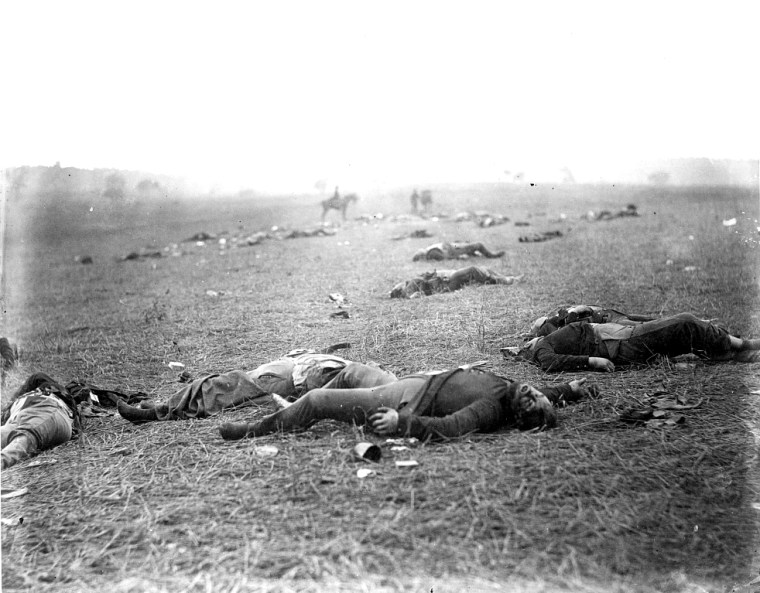
We have harbored the feelings of separation and divisiveness far too long. Walking through the Shiloh battlefield I felt no glory, but only a deep sadness that people were unable to find ways to settle their differences through any means other than fighting and killing. There is no magnificence at Gettysburg, only despair that man’s anger overwhelmed his ability to find common solutions. War is always hell. Slavery was wrong. We all know in our hearts that these are truths. Why then do we continue to quibble over hunks of stone and metal that remind us of a past that was horrific by anyone’s standards? We can remember all of those who lost their lives with compassion, but we need not attempt to honor those who were responsible for the carnage. Taking down the troublesome statues does not erase the history, for we can never forget how terrible it was. Instead it focuses on understanding and a willingness to move on and let go of feelings that seem to have festered long after they should have been set aside.

I suspect that if Robert E. Lee were to hear of the battles that now ensue over the appropriateness of monuments to in his honor he would remind us of his own words and respectfully ask us to take the monoliths down. We should do so not out of a sense of political correctness, but because it is time for healing that will never fully happen until we are willing to admit to the wrongness of that terrible chapter of our history. We can place those images on battlefields or inside museums where the story of that time might be told, but it is no longer necessary to glorify the mistakes of our past. We must move ever forward and remember the words of another contemporary of Robert E. Lee.

As the war neared its end and President Abraham Lincoln delivered his second inaugural address his mood was melancholy and compassionate. He pointed to the horrific waste of the war but also its necessity in bringing justice to our land. Still he wanted all of us to come together as brothers “with malice toward none, with charity for all, with firmness in the right as God gives us to see the right, let us strive on to finish the work we are in, to bind up the nation’s wounds, to care for him who shall have born the battle and for his widow and his orphan, to do all which may achieve and cherish a just and lasting peace among ourselves and all nations.”

This is our challenge as the American people. In the name of all 600,000 men who lost their lives as well as those who were forever altered, it is time for us to heed the words of our great president who himself became a martyr to his noble dedication to the proposition that all men are created equal. It is far past time to stop the fighting and to let it go.

Bliss

18622147_10212589589995817_4316414510225396392_nI got my first real job when I was fifteen years old. Our family physician was looking for a summer replacement for the receptionist in his clinic. In spite of the fact that I looked about ten years old at the time he took a chance by hiring me. After that I worked for him each summer until I graduated from high school. I also did babysitting on weekends from the age of twelve, and I was particularly popular because I was always available since I was a dateless wonder in those days. My foray into the world of work continued unabated from those times until I finally retired a few years back. If you count tutoring gigs that I still do you might say that I have never completely stopped earning a paycheck, but I have definitely slowed down. Now I am still constantly on the go, but mostly in the form of trips here and there. I like to travel whenever the opportunity presents itself because I am fully aware of the reality that the day may come when I am no longer able to do so.
I take great delight in my little jaunts no matter how simple they may be. I find it quite exciting to leave my own backyard and venture to places that are far away from home. I’ve learned a great deal about humans and nature and how much we are actually alike from my travels. The people and places that I have encountered have generally been quite welcoming, and I discover something new each time that I explore new horizons. Still, I have learned that there is much to be celebrated right at home. I don’t have to hit the road to find the bliss of adventure which is often staring me in the face in my own hometown.

After travels to New Orleans and Cancun this summer I needed to recharge my batteries so to speak by sticking around Houston for a time. When I learned that my daughter was embarking on some landscaping and renovation projects around her house I eagerly volunteered to be part of the work crew because being a fixer upper is in my DNA. My ancestors were farmers and builders and somehow I feel a spark of genetic compatibility with them each time that I hold dirt in my hands or transform broken objects and rooms into things of beauty. In an unexplainable way I get as much joy out of such enterprises as jetting away to picturesque destinations.

Thus I found myself spending three days working the soil and puttering with the plants in my daughter’s backyard. I listened to the birds chattering and announcing my intrusion into their domain and heard the dreamy sound of a train whistle in the distance. Somehow I felt a kinship with all of the ancestors whom I had never met but felt myself to be so much like. I wondered what they would think of me and my family, their descendants who have done so well. We are all educated and part of the middle class while they were lucky to go to school beyond the fifth grade. They tilled the soil to make the food that would carry them through heartless winters while I was creating a tropical paradise beside my daughter’s pool. I thought of how far our family had come, and I felt a burst of pride and gratitude for the blessings that have been bestowed upon us as a direct result of the extreme sacrifices of my family members of so long ago.

A few days later I was feting my father-in-law with wine from the Texas hill country, shrimp from the waters around New Orleans and steak from our local HEB. It was an intimate gathering with just me, my husband, and my in-laws. We laughed and spoke of this and that and I thought of how much I loved being with them. In fact if I had to choose between a junket to Europe or an afternoon with them, there would be no contest. I would want to spend my time just enjoying their presence.

I suppose that I have reached that age of wisdom when I understand what true bliss actually is. It has little to do with great wealth or possessions and everything to do with treasuring the moments that we have whether they be simple or extravagant. Being truly and fully part of the passing parade that defines our lives is what matters most. In the long run all of the money on earth can’t buy contentment. It has to come from inside our hearts.

I fully understand that each of us needs certain material possessions to insure our well being, but our constant pursuit of greater and greater riches is a poor way to spend our time, especially when we consider that we never really know how much more of it we will have to enjoy the people and places that bring us joy. It is up to us to find pleasure no matter where we are, and it isn’t all that difficult to do.

My husband and I have taken to eating dinner outside each evening when the temperature cools down just a bit. We like to watch the wildlife that joins us during our nightly meals with great regularity. We enjoy the antics of a particular lizard whose injured tail has given him the dubious name of Stubby. We listen for the doves who greet us from the rooftop and the bluejays who fly from one tree to another. We catch quick glances of hummingbirds who flit around the yard so fast that we can barely keep up with them. Our little routine is a joyful experience that brings us together quietly and with little fanfare. It gives us the kind of bliss that we have learned to more fully appreciate.

I am no fool. I realize that I have been truly blessed and that there are those who never received the gift of time to rest and enjoy the fruits of a lifetime of labor. Even more so because I understand that truth, I am grateful for the small and the great pleasures that come my way. I have learned to find the exquisite beauty of a moment and it is a wonderful way to experience life.

Churches

19510606_1819990221352292_3124586995295021826_nI write my blogs in the early morning hours when the world is a fairly quiet place. I look out on the little world of my backyard as I gather my thoughts and seek inspiration for a topic. Sometimes the ideas seem to pop out of nowhere like a distant call inside my head. It is as though I am being gently compelled to speak of a certain idea, event or individual. This day lead me to a rather strange place.

It began as I pondered my recent trip to Mexico and a visit to San Sebastian Church in an old colonial town dating back to the fifteen hundreds. Our tour bus stopped just long enough for a quick peek inside the old structure where daily mass was being celebrated in spite of all of the gawking tourists. The sounds of the ritual prayers were so soothing to me, and their familiarity in spite of being uttered in a somewhat foreign language helped me to fully understand just how the word “catholic” means universal. I remembered my religion teachers telling us back when I was still a child that we might go anywhere on earth and find the same mass with the same prayers. Here I was thousands of miles away from home and I knew exactly what was going on inside that historical church just as I suspect its earliest parishioners would have also known. It was a joyful moment for me as the people raised their voices in song and praise because I felt a deep connection to them that came from being part of a Church that transcends local geography.

Of course I also thought about the tragedy of missionary work in Mexico that had so ignorantly trampled the culture and traditions of the Mayan people who were indigenous to the area. In the misguided belief that the natives and their own religious ideas were somehow less advanced, the Franciscans built San Sebastian and other churches throughout Mexico hoping to save them. We now see the practice as questionable, but back then it was viewed as a matter of doing God’s work. Thus it often is with religious fervor. There is a very thin line between actually helping people by spreading the love of Christ and being presumptuously and wrongly judgmental. Sadly the history of missionary work in the colonies of the European nations intent on founding new worlds were sometimes far too dismissive of the local morays.

Such backward thinking is present in radical and fundamental religious sects even in today’s more enlightened world. In particular the members of Westboro Baptist Church are an example of demonstrating the most obnoxious and invasive forms of overreach. In a blind belief that they somehow have all of the eternal answers they time and again force their presence and their tainted ideas about God on people who would rather not have to deal with them. This past weekend was no exception as noted by a longtime and dear friend of mine whose children were shocked when they encountered a demonstration being held by the group in front of a Lutheran church in Pasadena, Texas. The zealots were holding signs that read, “God Hates Gays!” a particularly repulsive statement to my friend because she is in fact a lesbian woman.

I firmly believe as my friend does that God doesn’t hate anyone. To say so is to contradict all of the preachings of Jesus whose one and only commandment was that we love one another. I often wonder how we manage to take His clear and powerful message and distort it to conform to twisted interpretations. I have little doubt that if Jesus were to walk among us once again He would emphatically reiterate that His is a religion of peace and kindness devoid of judging and other such nonsense. I can almost envision Him tearing up signs that indicate that any form of hate is a product of God. To me such pronouncements are nothing short of blasphemy, a perversion of His words.

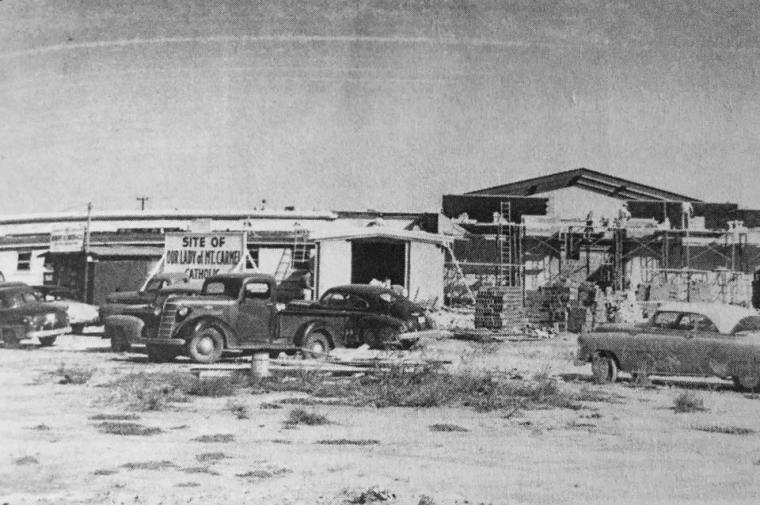
Ironically as I was experiencing the sting of anger over the hurt that I knew my friend was feeling because of the rabid Westboro folk, I encountered a grainy old black and white photo of Our Lady of Mount Carmel Catholic Church being built back in the early nineteen fifties. The church opened its doors for the first mass in the same month in which I turned four years old. Two years later I was a parishioner there along with my parents. I would spend the remainder of my school years learning about my Catholic faith in that parish built near Hobby Airport back when southeast Houston was little more than empty fields waiting to be developed in the post World War II boom. It was a wonderful experience in every sense mostly because it was where I was taught about a God who is all about love.

In the same spirit as Pope Francis today the nuns and priests and laypeople who were my teachers and mentors unveiled a love filled religion to me and my classmates. They taught us to honor our fellow humans and to see ourselves as citizens of a beautiful world in which we are all cherished by God. Ours were lessons in understanding and inclusion. We were told to empathize rather than indict, and so I struggle to understand how some fanatical Christians or those of other over zealous sects can be so self righteous as to presume that they are speaking and acting for God.

Of course religion or lack of it is a very personal thing. I would be loathe to foist my own faith on someone else. Still I would be remiss to simply leave my friend and others who are abused and misjudged to endure the taunts of groups like Westboro Baptist Church without defense from those of us who disagree with hateful preaching. Sometimes we have to speak up when the actions of others are so egregious.

Yes, it is a free country. Yes, the folks from Westboro Baptist Church have a right to their freedoms of religion and speech. I will not ever deny them those things. What I will do is shout from the rooftops that God is not about any form of hate and never will be. I will embrace my friend who is in fact a good and godly woman. I am certain that she is loved by our Lord, and I want her to know that those of us who have been lucky enough to join her in our collective journey through this life will always be by her side.

How To Be A Father

10433198_10204665991323147_2774262802798031590_nAs I was talking about this and that with a woman who was framing a piece of Mayan art that I had purchased at Chichen Itza, she casually mentioned buying herself a certain kind of tool for Father’s Day. She looked up from her work and let the comment hang in the air as though she expected me to have some kind of reaction. Of course I simply carried on with my babbling as though nothing unusual had been said. I didn’t even bother to mention that my brothers and I had always honored our mother with gifts on Father’s Day because she had been both our mother and our father all rolled up in one amazing person after my dad died.

In today’s society my family situation would not be considered unusual at all because there are huge numbers of children who are growing up with only one parent. My brothers and I are proof that it is possible to raise healthy and happy children in nontraditional ways. Still, I think that part of the secret to our mother’s success in rearing us was that she provided us with examples of exceptional male role models. Starting with stories of our father, she noted his best traits and explained how and why they had been so important. She encouraged us to watch and learn about goodness from men like Mr. Barry and our Uncle William. She took us to visit our grandfather regularly and noted the wisdom of his words that she prompted us to heed. She pointed out the loyalty of neighbor men like Frenchy Janot and took my brothers to watch Uncle Harold and Uncle Louie build and repair things. She created a picture of the exemplary father in our minds that helped me to find a man who would be kind and loving to our children and my brothers to successfully play a role that they had mostly seen from afar.

I suppose that because of my experience I have long observed fathers and mentally rated their abilities as parents. I am proud and happy to say that my son-in-law Scott is an exceptional dad who continually takes the time to interact with his four sons in loving and instructional ways. It has occurred to me as I watch him in action that he must have learned how to be such a great parent from his own father Gary, better known as Boppa to his grandchildren. Indeed as I have viewed Gary’s behavior around his family I believe that I have seen the actions of someone who literally revels in his role and exceeds the expectations that society has for fathers.

Gary grew up in Houston, Texas just as I did, but while I was living in the southeast part of town he was living in the southwest near the Medical Center. Still we experienced the world of childhood in very similar ways with adventures along the city’s bayous and games that filled our days with sheer delight. He still uses some of the same jokes and stories that I also heard and enjoyed when I was a kid.

Gary went to the University of Texas in Austin and became a die hard Longhorn and Chemical Engineer and met Barbara, the love of his life. They married and he began his life as a family man who worked hard to provide for Barbara and the two children that they would have together. It seems to me that the key to Gary’s personality was his insistence on making life fun. He saw the routine of our days as one grand adventure after another, filled with great wonders. Thus he made travel and learning and laughter the centerpieces of his family’s time together. Over the years they have gone all over the world experiencing the culture and flavor of different places right down to the smallest detail. At every juncture Gary was there patiently explaining the historical, literary and scientific significance of the things that they saw. Mostly though he made even the mundane seem exceptional and he had a knack for making the people around him feel very good about themselves.

Today I know Gary as a grandfather and he has continued his masterful abilities with his six grandchildren, taking each of them on grand tours and planning annual get togethers and traditions. He spares no expense because he sees such experiences as the stuff that sparks the imagination, so if the best way to view something is by helicopter then by golly everyone will have that adventure. He has ridden on the London Eye and trekked across Germany with the latest generation of young people who absolutely adore him. Even the children of my other daughter love being in his presence and laugh with delight as he plies his magic with them.

The true key to Gary’s success as a parent and grandparent lies in the unconditional love that he showers on the members of his family day in and day out. They are the center of his universe and they know it. He makes no bones about treasuring them just as they are with no demands that they conform to some preconceived notion of who he thinks they should be. He delights in their uniqueness and provides them with the confidence that comes from having such a nonjudgemental fan. He always seems willing to help them through rough patches in their lives with total support and he eagerly shares the wisdom that he has garnered from his own experiences. He continually shows them and all of us who know him what it means to be the very best kind of father.

Gary is fighting his own battles these days with an illness that has sapped his energies and sidelined him from the things that he most loves to do. Nonetheless he courageously steps up again and again to demonstrate to his family what it means to live life as fully as possible. He ignores his pain and pushes through at plays, sporting events, graduations and parties. He speaks little of his own struggles instead inquiring about the people around him and doing his best to make them feel happy. He is a very good man in every sense of the word and by example he has taught his son and his grandchildren and even those of us who are his friends how to be the kind of people who truly make a difference, the kind of people who love and are truly loved. He has shown us how to be a father.