Another Ding, Another Scratch

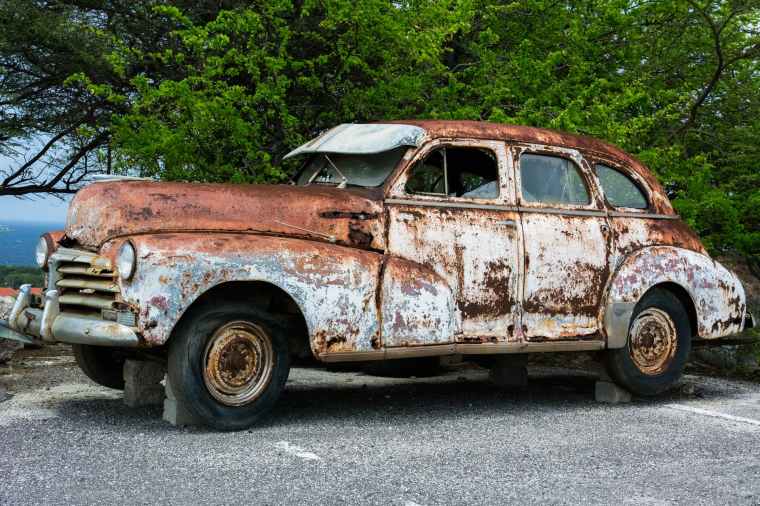
broken car vehicle vintage
Photo by Skitterphoto on Pexels.com

I saw a woman on television laughing about a dent in her car and philosophically shaking off her concern by exclaiming, “Another ding, another scratch, just another chapter in the story.” I had to laugh along with her because in truth she had summed up life quite brilliantly with that little utterance. It seems as though each of us carries dents and scars on both our bodies and our minds that ultimately contribute to becoming the persons who we are. In spite of our own efforts to take control of things, we are continually blindsided by accidents of nature and disappointments from relationships. As we travel through our individual stories we experience collisions with diseases and toxic people, along with all of the regular intersections and interactions that bring the wear and tear that is a normal part of being human.

Some of the things that happen to us are quite natural. As children we may skin our knees or break a bone or two. We form friendships and experience disappointments. We learn and dream and if we are truly lucky we get through our childhoods without too many traumas or losses and work on embracing adulthood. We search for loving friends and partners and attempt to fulfill the dreams and goals that push us to become better each day. We may choose wrong and have to rethink our plans or accept that someone that we loved has betrayed us or simply grown weary of us. If we are lucky our troubles are average, and our health is good so that we make it to our so-called golden years of retirement. We grow older and feel the aging of our bodies a bit more. We must say goodbye to departed friends and look a bit less toward the future and more at finding contentment in each day. Eventually every single one of us reaches an ending, and if we are lucky we will be able to look back on what we have accomplished and the relationships that we have fostered with a sense of contentment and maybe even a bit of pride.

The truth is that living is a bit more complex than that. We are faced with challenges at times that feel almost unbearable. It becomes difficult to write them off as just another ding or scratch. We feel as though our collision with some horrific force has totaled us out, reduced us to heaps of junk. Unless we are extraordinarily lucky each of us has faced a moment in which we might even ask God where He is because we feel so alone in our pain and suffering. I have had my own share of troubles that threatened to overwhelm me, events so terrible that they rendered me almost useless for a time. In those moments I had to rely heavily on faith, hope and love wherever I was able to find it. I was always humbled in learning who my most loyal angels were, because often they were not the people to whom I had given the biggest chunks of my heart, but instead unexpected souls who miraculously came to my aide. Of course there were also a handful of people so reliable that I was able to call on them time and again to rescue me from many difficult situations.

I recently watched a movie called Hostiles. I had not heard of it before, but it had a good cast with Christian Bale and Rosamund Pike, as well as a very decent Rotten Tomatoes rating. It is a western and thanks to my Uncle Jack I grew up loving those kinds of stories. This one reminded me a bit of the old John Wayne movie The Searchers, but with a more modern and philosophical twist. While there was plenty of adventure, the tale was mainly about people caught up in the kind of accident of life that transforms them and provides them with the answers that they have needed. It speaks to the idea that sometimes in our most tragic times we find the faith, hope and love for which we have been searching.

An event can be so unnerving that it causes us to reassess everything that we have believed about ourselves and the people around us. It rips us apart and threatens to destroy us, but we somehow find what we need to repair ourselves and come out whole again. The process of fixing our very souls can be gut wrenchingly painful and lonely. We may not even want to continue down the road because the darkness does not allow us to see what lies ahead. We may cry out and hear no response, lie down and wish it all to be over. That is when we somehow find the tiniest bit of encouragement as though the hand of God Himself is reaching down to rescue us.

We humans are fragile creatures who are nonetheless stronger than we realize. For centuries we have endured the dings and scratches and wrecks that mar our journeys, but also provide us with the character that makes our stories more real. Still there are those among us whose suffering is so intense that they cannot repair themselves alone. They need someone to help them to restore the faith and hope that they require to continue into the future. Love is the panacea that they seek. We need to be aware of them and be the person who gently demonstrates the compassion for which they have been searching.

We all have a ding here, a scratch there, and sometimes a big gaping hole. Some of our injuries are of our own making, but most come from out of nowhere like a speeding Mack truck driven by a drunken driver. We endure collisions that test us more than we believe that we are capable of handling. That is when we often feel the most alone, but in truth there is always someone who will miraculously help if only we allow them to hear our cries. As humans we have two duties. One is to humble ourselves just enough to ask for assistance, and another is to be ready to provide aide whenever someone calls. If we follow these guidelines we are less likely to wind up forgotten and alone in the junkyard of life. We have the power to rewrite our stories and those of the people around us. When we embrace our dings and scratches they take on a lovely patina that brings out the true beauty of life.

Civility

two person in formal attire doing shakehands
Photo by rawpixel.com on Pexels.com

I do my best to be “woke” as the modern vernacular calls someone who is up to date with regards to modern progressive thinking. I’ve done my share of using the big “F” word, and will admit to being quite imperfect more often than I like. I am fairly permissive in a number of ways and often accused of being too liberal by my conservative friends and family members. That being said, I find myself grappling with the growing incivility of current communication. I wince at the public commentaries that are so raw and mean. They bother me in a visceral way that I am unable to overlook.

I learned long ago that we have multiple ways of communicating that are generally governed by somewhat unspoken but understood rules. The language registers that we used operated one way in public and quite another in private. We generally agreed that in the workplace, schools, churches and such we should talk to one another in a more formal manner. We addressed people with a level of respect that was occasioned by the need to be able to work effectively with one another. The kind of honest speaking that leads to cursing and insults was thought to be inappropriate in the public sector.

We all realize that in the more relaxed domains of home and close friendships we are more often than not inclined to use phrases and expletives to express ourselves. The idea is that in good relationships we sense that it is okay to be more open and honest. Those who truly care about us are generally more forgiving of outbursts. It is less likely that we will be punished for a slip of the tongue.

These kinds of mores have mostly been in effect for most of my lifetime. Some may believe that they are somewhat hypocritical, and I suppose that there are arguments for that thinking. Mostly though we have tended to agree that we have to insist upon a certain level of decorum in public lest we devolve into a kind of linguistic anarchy. So it has been for the most part until recently, and sadly the tendency to express frustrations and anger in the vilest terms is gaining traction.

It would be easy to blame the current tendencies on media or even our president who has a very bad habit of tweeting and uttering whatever is on his mind regardless of how distasteful it is. There are many who applaud the so called honesty of such outbursts. Other become so incensed that they resort to fighting fire with fire. Thus we find ourselves watching an awards ceremony only to hear an actor shouting, “F—-“ the president and then he is given a standing ovation. As a society we have become less and less embarrassed by a form of verbal assault that would have been unacceptable in the past.

There are many arguments from both conservatives and liberals that we have been forced into a battle of words by political events. The cheerleaders for such incidents insist that the fight for justice requires that we speak as openly and honestly as possible. They note that those who have been polite have been unable to actually get things done, and that now is the time to be as forceful as needed. They claim that the uncivil war of words is a battle for the very heart of democracy, and so it must be.

Sadly I find the outbursts to be without merit. They are simply gross and violent expressions of anger that do little more than to incite even more rage, when what we need are solutions. Those will only come from a more rational approach to the many problems that we face. Right now all we are managing to do is create divisions that will remain unhealed until we return to a way of speaking to and about one another that demonstrates respect. An argument built only on emotions generally goes nowhere. Relationships are rent in two when the parties are only yelling at one another. Marriages end. Friendships die. Countries wage war.

Children often cry and scream and throw tantrums when they do not get their way. We have to teach them how to control such emotions, and how to properly express their hopes and desires. It is a huge part of becoming an adult, and our youngsters are constantly watching and learning from us. What are they to think when they hear political leaders and icons of art and industry ranting like spoiled brats? Why would they agree to change their own behaviors when they see so many examples of insults being hurled like school yard taunts by prominent adults?

It is time that we insist on a return to civility, and that will only be accomplished if we remain in our seats and refrain from applause whenever someone chooses to speak from the gutter. We need to make it clear that this is not who we wish to be, nor the kind of behavior that we wish our children to witness.

I once had a student who was attempting to defend the efficacy of violence and cursing. He insisted that the best way to get something done was to be the person with the loudest voice and the biggest gun. I debated him until I had reached a point of frustration and I wrote the word A N A R C H Y across the blackboard. I explained that such battles always lead to a state of lawlessness, chaos, disorder that rarely ends well. It is only when we are willing to honor one another and work together that we have accomplished great things. Sometimes that means defeating those who would resort to ugliness as a way of accomplishing goals. Hopefully we will be able to do that within the confines of civility, because history has shown that when we cannot horrible things happen. 

The Banquet Table of Anthony Bourdain

34758946_10155697429407061_7598478641969758208_o

(It’s taken me a bit to consider what I wanted to say about Anthony Bourdain. I suppose that is okay, because all too often we mourn the loss of someone and then seem to move on to other things. I think that he is someone worth remembering, and we would do well to model his approaches to learning about and loving people. His suicide will never define the incredible person that he was. Mental illness all too often steals some of the best among us away.)

When I think of good times with family and friends it almost always involves food. My grandmother Little was a country woman through and through whose dishes focused on things like fried chicken, fresh fish that she caught herself, pot roast and oodles of vegetables from her garden. Eating Sunday dinner with her was more than just a consumption of cuisine worthy of the Pioneer Woman. It was a communion of love that was special from the Happy Village dishes on which she served her recipes to the strawberries and cream that she spread on thin slices of cake. We understood that those gatherings were a gift from our grandma that we have never forgotten. Our senses somehow manage to recall the bounty that she spread on her mahogany dining table with clear detail. Even decades later we are able to recover the tastes, aromas, and sights from the memory banks of our brains. They serve as a the trademark of the wonderful moments that we shared with her. Those memories keep her alive in our minds decades after she was gone.

We so often associate food with our relationships. My mouth waters just a bit when I think of Ed’s “fancy” that included oysters Rockefeller, red beans and rice and conversation that I will never forget. I smile at the thought of Linda’s perennially delicious dishes over which we sat for hours raising our families together and building  lifelong relationships. Bieu’s pig roasts and crawfish boils always bring a diverse group of people together even when we sometimes have no idea what everyone is saying. Monica gives us a taste of Europe and a feeling of welcoming warmth. Michael grills his burgers as the children play and we reminisce about times past and celebrate those yet to come. Granny’s tea time was a backdrop for serious discussions. Uncle Paul’s  green eggs and ham were the stuff of our jokes that in truth were somehow strangely delicious. The tangerines and nuts that filled bowls at Christmas time reunions represented the bounty that our crazy immigrant family had achieved. Grandma Ulrich with her weak, milky, sugary cups of coffee taught us how to bring elegance and joy to the most simple fare. Food is most certainly intimately intertwined with family, friends, relationships.

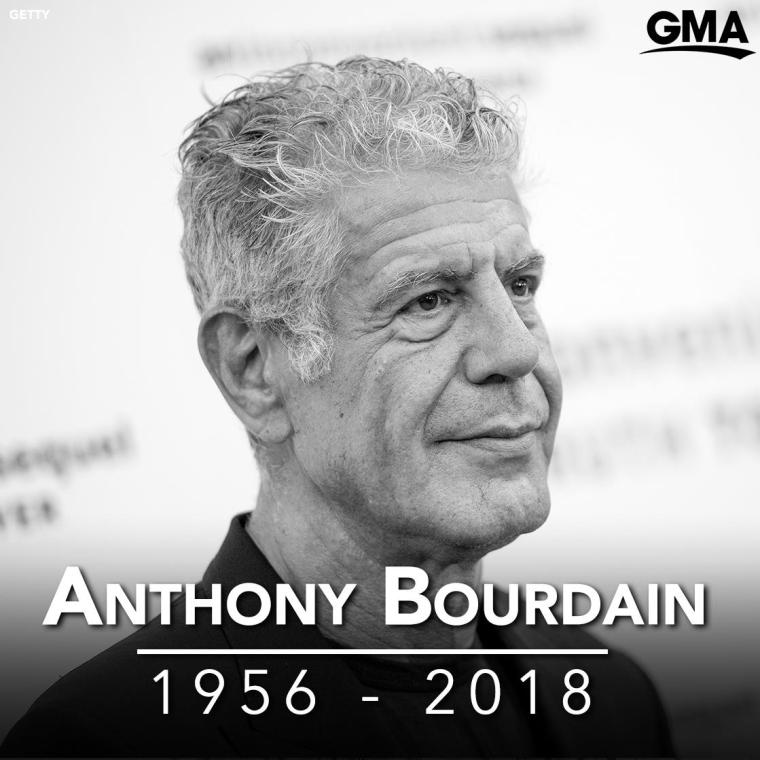
Anthony Bourdain was one of those people who understood the power and symbolism of sharing food. He traveled the world, breaking bread in places where many of us would not dare tread. He introduced us to the loveliness of our humanity and also taught us the importance of being respectful to all cultures. He truly loved people not for how he wanted them to be, but exactly the way they really were. His enthusiasm for the unusual was always apparent in his stories and interviews. He understood that there is not one right or wrong way of doing things or being. He was a beautiful man in that regard. There was a complexity of his intellect and ability to use words, but there was also a simplicity in his delight over very small joys.

We need more people like Anthony Bourdain, a man who appeared to be judgement free. One of my favorite stories of him was about his defense of an older woman who wrote a restaurant review column for a newspaper in North Dakota. She became the butt of snarky commentary and jokes after she published an earnest piece about the opening of an Olive Garden in her town. She was polite and complimentary of everything from the decor to the professionalism of the server. For her efforts she was virally ridiculed. It was Anthony Bourdain who came to her rescue by noting quite gallantly that she was providing us with a portrait of a part of our society that we sometimes don’t see, and doing it very well. He eventually invited her the New York City and encouraged her to publish her best work. He took the time to get to know her better over coffee in a moment that so special for her. Ultimately her book became a hit with his help, but what was most telling about this incident was his compassion and understanding that each of us has something to offer, something new that will enrich lives. This I believe was the key Anthony Bourdain’s success.

The best people, like Anthony Bourdain, not only regale us with good food and exciting stories. They also show us how to treat one another. My grandmothers and my mother both modeled the same kind of behavior for me, demonstrating how to find the beauty in every single person. They encouraged me to open my heart free of preconceived notions. I have been all of the better because of that and I have attempted to pass down that way of embracing the world to my children and grandsons.

I often recall a time when I took my eldest grandson to a small neighborhood grocery store that often attracted an odd assortment of characters. As we pushed our cart through the narrow aisles we heard a gaggle of languages and witnessed some rather odd forms of dress. All the while music sung in a multitude of foreign languages blared over the loud speakers. After we had been there for a few minutes my grandson beamed his most glorious smile at me and exclaimed, “I like dis place. It’s happy!” His comment swelled my heart with pride.

Anthony Bourdain continually challenged us to move out of our comfort zones so that we might find the enriching experiences that truly make life so much more interesting and enjoyable. He showed us that the way to do that is to sit down and enjoy a meal with strangers who in the exchange might even become friends. There’s a whole world of people out there who very likely would love to spend a few hours sharing their stories while supping on the stuff of life. Anthony Bourdain showed us how to do that and how to really live. May he now rest in peace with a special seat at the great heavenly banquet table.

Save the Children

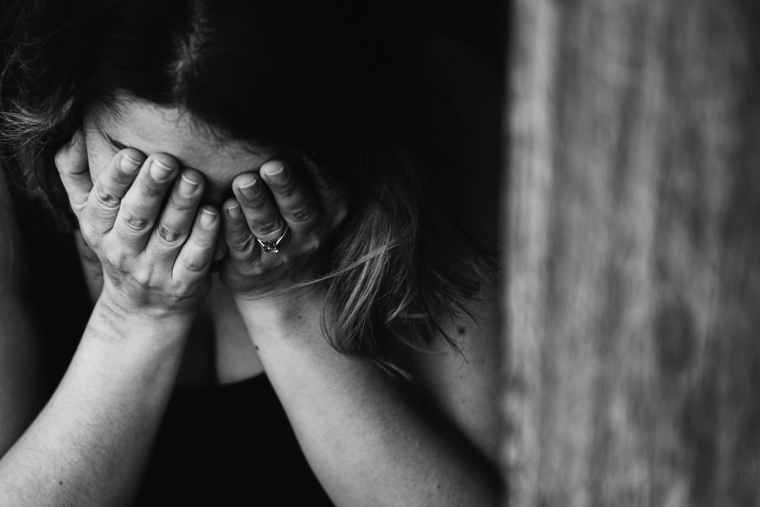
adult alone anxious black and white
Photo by Kat Jayne on Pexels.com

When my mother was only three or four years old her mother had a mental breakdown. The full details of the event are sketchy, but the certainty of what happened to my mom is very clear. The little tyke loved her mama and felt safe with her. When medical personal came to the house, restrained her mother, and then drove away in an ambulance the child that my mother was felt confused and betrayed. This event had a lasting impact on her that was so traumatic that it haunted her the rest of her life. She often spoke of the disdain that she felt for her father whom she held responsible for what she viewed as the imprisonment of her mom. She insisted that her mother had been a good woman who did not deserve the horrific treatment that befell her. Unlike her older siblings she was never able to accept that her mama had been very sick and in need of treatment. She had been so very young when she was torn from her mother’s loving care that it impacted the very essence of her thinking. The scars left by the separation never healed.

My youngest daughter endured a similar situation that was less dramatic but nonetheless frightening to her. When she was not yet three years old my husband contracted a fungal disease that required hospitalization and a long regimen of chemotherapy. Our family was thrown into a kind of chaotic state when we learned that the disease was often fatal. We spent months in a new routine of hospital visits and uncertainty. Years later my girl endured a bought with severe anxiety and depression. Her psychiatrist asked what had occurred at around the age of three that had seemingly caused the her to have an enduring sense of uncertainty and fear. He noted that something had so affected my daughter that she had buried deep seated emotions that were finally coming to the surface and causing her despondency. It was shocking to learn that something that had happened more than a decade earlier that was seemingly resolved had such a profound affect.

Young children see and hear and feel far more than we sometimes know. They are aware of what is happening around them to a larger extent than we imagine, but they do not always have the capacity to interpret the interchanges with their environment, particularly when the security represented by a parent is taken from them. They are unable to fully express the need for the warmth and love of a mother or father that is so essential to their healthy development. It is critical that they have all of their most basic needs addressed, and there is generally no better person to do that for them than a parent who genuinely cares for them. So much of the basic personality is formed during early childhood and every event plays an important role in development. As children we all cling to our parents and look to them to supply our most essential needs. When that relationship is suddenly severed children lose all sense of safety. Unless they are carefully counseled and loved the event will have a lifelong impact.

My father died when I was eight years old. People often marvel that my memories of the days following his death are so crystal clear. I am able to vividly recall people, conversations, the weather, and most of all my own jumbled feelings. I was far more aware of what was happening that the adults around me ever imagined. That being said, without the maturity of adulthood I am certain that I often misinterpreted my situation, and not in a good way. I became a fearful child, someone unwilling to take risks. I was afraid of people and life. It would take me twenty or more years to overcome the shock and awe of the sudden loss of someone that I so loved, and I became a somewhat neurotic and sad little girl. It was only through my study of childhood development and my association with truly caring people that I was able to eventually lay all of the demons that had so haunted me to rest.

For these reasons I am both appalled and concerned for the welfare of immigrant children who are currently being separated from their parents. I realize that we have laws, and the adults who come here illegally are breaking them. In that regard there are many needed discussions regarding the issues, but it seems certain to me that taking children away while their parents are being processed is deeply wrong. The consequences of such inhumane decisions will impact these little ones for decades. The trauma that our government is inflicting on them is morally untenable, as anyone familiar with children understands. In spite of efforts to provide food, beds, education, games and other such amenities to care for them the one thing that the little ones require is missing. They must have their parents to feel secure. What we are doing is so egregious that we simply cannot justify the actions with by quoting laws or even the Bible. We must know that we are bending the truth and God’s word when we attempt to do such things.

I love my country and believe in its innate goodness. It has of late been overtaken by an incivility that is toxic. There seems to be an attitude that winning is more important than being just. The good people in our midst are being pushed aside by bullies, and the ideals of honor and respect are all too often being eschewed by those who insist on all or nothing in their political dealings. As citizens we must join together in the common cause of decency, following the lead of heroes the world over who insist on standing for what is right rather than what will make them popular. We must end the ugliness by demonstrating our best natures. Now is the time for all good men and women to come to the aid of our country. We can no longer allow tactics that so scorch the earth. If we don’t save the children of the world regardless of the circumstances we are doomed to a dark future. Our best hope is in finding our natural goodness again and doing what we know to be right.

Take A Moment Today

art boy colors decoration
Photo by Jessica Lewis on Pexels.com

Let’s take a moment today to do something kind for 1. ourselves, 2. someone we know, 3. someone we have met, 4. someone we don’t know, 5. someone we need to build bridges with. Be and do well. —-Ryann Madden

I slept in just a bit this morning. The sounds of school children gathering for the early morning bus are gone for the summer and so that “alarm” did not alert me that it was time to rise. Things become slower at this time of year for more reasons than just the summer vacation for our little ones. It’s so hot outside that our bodies and brains are somehow programed to take it easier lest we overheat and dehydrate. We’ve become so accustomed to the glories of air conditioning that we become almost more insulated inside our homes and cars at this time of year than we do in the winter, at least here in Texas. It’s the season of relaxation and fun, especially for students and educators. Somehow the seasons of a school year have become so programmed into my brain that I still react to the summer the same way I did when I was working. I allow myself to be just a bit more inclined to take it easy.

I won’t be able to sustain my vacation mode for too long though because I am hardwired with all of the Type A Protestant ethics that push me to be productive and to measure my accomplishments each day. I am committed to making the most of my time and descend into guilt whenever my slacking begins to appear to be a regular life change. I am mentally and emotionally compelled to make good use of my life, even as I age. For that reason I was particularly taken by this post from Ryann Madden, a teacher friend. It spoke to me because I am on a mission to transform my use of my waking hours from concentration of unimportant things to truly making an effort to care for myself and others.

Ryann’s “to do” list seems rather easy on the surface, but in reality it is laden with challenges, particularly with regard to being kind to ourselves and building bridges with someone with whom we have broken our trust. All too often we put ourselves last in the division of a day’s labor, and never quite get around to the self care that we need. We also tend to avoid those situations and people with whom a breach has caused us to lose touch. Our neglect of both ourselves and people with whom we have differed can be toxic, and yet we all too often have an “I’ll think about that tomorrow” attitude about these very important parts of our lives.

A very dear friend who is a counselor posted a wonderful blog about self care recently. In it she detailed her own personal journey to health of body and mind. She spoke of living such a hurried and harried life that she was using food as a kind of medication and she justified her neglect of herself by noting how much she was doing for others. Ultimately she found herself in the middle of a health crisis at a very young age. She knew that she needed to do more than just pop another pill into her mouth and otherwise ignore her own needs. She began to slowly but surely make a complete lifestyle change that began with thirty minutes of aerobic exercise each day and a consultation with a nutritionist. Before long she was thriving and glowing with the radiance that comes from treating our bodies and minds with the same love that we offer to others. She had not forgotten the people around her, she had only taken the time to remember herself as well.

When my husband had a stroke last summer and the two of us embarked on our own journey to living our best lives I found it easy to care for him but much more difficult to remember myself. It was simple to rationalize lapses in my own habits and it took an aggressive demand from my primary care physician for me to realize that I needed to be kind to myself as well. My doctor insisted that I was mistreating my own body and ultimately would be of little use to anyone if I did not change my ways as well. He literally gave me a prescription for five days of exercise each week with no excuses for not meeting this goal. His insistence shocked me into doing what I should have done long ago, and now self care has become an integral part of each day.

Which leaves me to the building bridges aspect of Ryann’s suggestion. It requires a bit of eating crow, approaching someone who has very apparently felt the sting of neglect and lack of respect from me. That is a much tougher situation to face, but in my heart I know it must be done. The person of whom I am thinking is older than I am. She has been isolated by failing health and loss of loved ones. She has become more sensitive and worried. She has taken some of my comments and parsed them until she is certain that I have insulted her. I have been confused and sometimes angered by her reactions, and so I have generally chosen to ignore her. I suspect that instead it is time to reach out to her and plant the seeds of reconciliation. It will cost me nothing to do so, and it may heal a wound that doesn’t need to fester.

Today is a good day to follow Ryann’s sweet suggestions. In fact everyday is a wonderful time to weave care for self and others into our routines. Think of how great we will begin to feel if we do.