
 When I work in my yard I go all in. I usually end up with dirt smeared on my face and caked under my fingernails. Sweat runs downs my neck and my hair sticks up in all directions. There is nothing pretty about me in those times. The work is hard and often leaves my muscles aching and my back shouting at me in pain. The truth is that I overlook all of those things because I love being a weekend gardner so much. I can feel bursts of serotonin taking me to a happy place in my brain. Still, I think of my grandparents who themselves worked on farms day after back breaking day. I imagine how difficult it must have been for them to rise early and routinely toil in the sun. For me the labor is a hobby, one that I have the power to ignore anytime that I tire of the effort. For them it was the means of earning money to pay for a place to live and food on the table.
My grandparents’ descendants have done well. We generally have professional occupations that allow us to work in air conditioned buildings and bring home salaries good enough to pay others to do most of the back breaking work that we require if we so wish. We purchase our fruits and vegetables from Sprouts and have enough income for luxuries that they never even dreamed of owning. I feel their spirits when I am on my hands and knees caring for my plants while the sun beats down on my head. I frequently stop to savor a cold drink when I grow weary. I survey land that is my own, not the property of someone else. I remember and appreciate all of the things that they did so that one day all of us who came from their blood, sweat and tears would have a far better existence than they had.
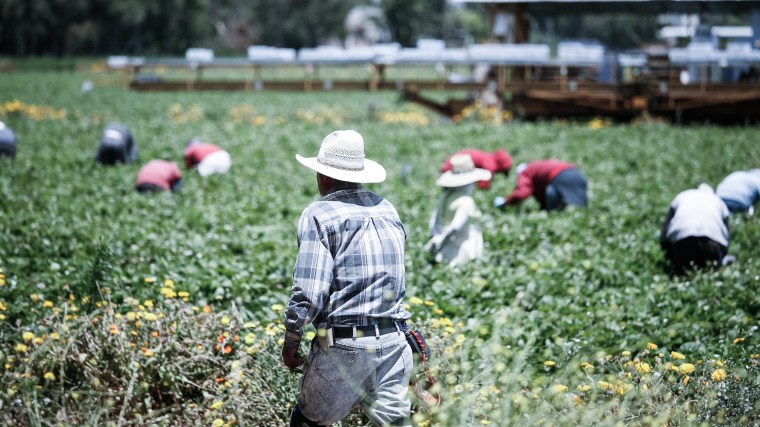
I see beauty in the tomatoes, oranges and other produce that lines the bins at HEB. I don’t take such delights for granted because I understand the drudgery that people endured to bring those items to the markets where I shop. There were individuals who picked the fruits and vegetables hour after hour, day after day as long as the sun was shining. They were paid little and only received monetary rewards for full bushel baskets and bins. Their work was routine and tough on both body and soul. They are the nameless men and women whose plight has almost always been ignored throughout history. At one time they may have been slaves or indentured servants. In other eras they were the poor like my grandparents. Today they are mostly immigrants who toil from farm to farm, season to season in search of jobs that few of us would want.
I once traveled to a small town school to work with teachers who were struggling with the Hispanic children in their classrooms. They complained that the sons and daughters of migrant workers were skewing the test scores used to appraise their effectiveness as educators. They referred to the parents “the tree cutters” and insisted that these uneducated people didn’t care enough about their kids to realize the importance of schooling. It didn’t seem to occur to the baffled teachers that the mothers and fathers who worked so hard were in fact incredibly dedicated to their children, so much so that they were willing to do even the dirtiest of jobs. I was saddened by the ignorance of people who should have known better than to treat a significant portion of their student body as stereotypes. Even after my partner and I had shown them how to reach their charges they appeared to be as adamant as ever that the children of these hard working people were an inconvenience that would have preferred to simply wish away.
Most of us who live in the United States of America enjoy a level of plenty that might have made our ancestors feel wealthy. We are provided educational opportunities that were not afforded them. It was not uncommon in my grandparents’ day for youngsters to rarely attend school after the third or fourth grade. Sadly in many parts of the world even today people struggle to meet their most basic needs and even to feel safe. They are chronically hungry and suffer from health problems that are rarely addressed. We on the other hand are a nation that has mostly forgotten what it is like to live the way so many of our grandparents and great grandparents actually did. The conditions under which they labored are now mostly deemed illegal.
I watched a group of students perform in the one act play, Gut Girls, not long ago. It addressed the working poor at the beginning of the twentieth century. It featured young women who worked in meat packing plants where the conditions were deplorable. I found myself imagining my grandfather who did a similar job for all of his working days. His legs became riddled with varicose veins and more often than not he was in pain but he never missed a single day of work. He boasted to his children that he had managed to feed them all the way through the Great Depression and keep a roof over their heads when others became homeless. He was proud to have regular work no matter how difficult it may have been and his children do not recall a single time when he complained. He endured his aches stoically.
There is great honor in hard work. We should celebrate anyone who is willing to devote time and effort to making an honest living. The person who collects our garbage is important just as the clerk behind the counter of a fast food restaurant is. The janitor is as indispensable as the manager, maybe even more so. We need our engineers and our electricians, our professors and our plumbers. The yard man who sculpts my lawn each weekend is always reliable and willing to do whatever is needed to make my home a lovely place to be. I truly don’t know what I would do without him.
After a day of manicuring my plants, my hands are shouting at me with the sting of cuts and scrapes and bruises. They remind me to be thankful for what I have. They tell me to appreciate all good people everywhere. They urge me to be more generous and kind. But for the grace of God I might just as well have been born in another place or time that would have demanded more of me than I have ever had to expend.
 I’ve seen a great deal of change during my life that I tend not to even think about most of the time. I am a Catholic and until I was a teenager there was an ironclad rule that none of us were to eat meat on Fridays. The idea behind that ruling was that Jesus died on that day of the week and in remembrance of his suffering we were to abstain from meat as a kind of penance and sacrifice. In 1966, the year that I graduated from high school, Vatican Council II amended that dictate to require only that Catholics avoid eating meat on Ash Wednesday, Good Friday and all Fridays during Lent. A council of bishops later clarified the church’s stance on the consumption of meat on Fridays by suggesting that all Catholics over the age of fourteen perform some type of penance on every Friday of the year with avoidance of meat being one of the suggested forms of meeting that goal. For all intents and purposes the vast majority of Catholics today are no longer concerned about whether or not to eat meat on Fridays. The times of worry about sinning by eating a hamburger are long gone for most who follow the Catholic faith.
 As a young Catholic girl I observed lent with earnestness but not much thought. I received ashes on the first Wednesday of the season, abstained from eating meat on Fridays and made the grand sacrifice of giving up sweets of all kinds. In reality it wasn’t that difficult to do because we never had sugary things around our house. Anything like a piece of chocolate or a bag of cookies was a rare treat. The truth was that I simply carried on as usual but gave myself a pat on the back for being good enough to totally insure that no sweets would pass through my lips during the forty days before Easter.
  I have written a book. It has essentially been finished for more than two years and yet it languishes in the memory of my computer and in a distant hard drive that is protecting it lest my laptop suddenly crashes. If I were to take the time to do so I might have it uploaded as a Kindle or Apple book in less than a week. I would be a published author albeit by dent of my own initiative rather than interest from a company. For some reason I have been reluctant to take the final risk of revealing my story to the public. Upon self reflection I realize that my procrastination comes from enormous fear. Even though I place my ideas on public view five days and week, when it comes to my most personal essay ever I feel anxious about being misunderstood.
 The first slaves were brought to North America in 1619, when the colony at Jamestown, Virginia was formed. It was not until 1863, that all slaves were freed by President Abraham Lincoln’s Emancipation Proclamation. If you quickly do the math you begin to realize that there were slaves on our soil for two hundred forty four years before that barbarous practice was finally outlawed. It is difficult to even consider how anyone might
 All It Takes Is A Little Love