God Is Not A Coke Machine

girl-praying-hands-eyelashes-41942.jpeg

I begin each morning with prayer and then have little talks with God all throughout the day until I end with a kind of good night affirmation of gratitude. My prayer life is rather ordinary and flawed. I know people who are inspiringly spiritual whose devotionals are profound, but mine are more akin to the kind that people utter from the bottom of foxholes as bullets are flying over their heads. I say a few thank you phrases acknowledging the Lord’s presence in my life, but all too often follow up with requests for this person or that. Of late my list of those in need has grown to the point that I sometimes can’t quite recall all of the names and causes. I simply suggest that God must indeed remember all of the situations and I ask that He care for each of them. I try to include some praises of His glory, but admittedly I often sound like a child begging a parent for goodies as I reel off my hopes and dreams in a rush of impatience. I sadly all too often grow anxious that the answers I seek are taking too long to materialize. I know, and so does God, that I still have a long way to go in my prayer life.

I’ve often laughed at how we humans pray. I’ve seen students silently pleading for a good grade as I am walking through the classroom returning the results of tests. Of course, by then it is a bit late to change the scores. The real intersessions should have come earlier and might have centered around guidance during the studying phase. By the time that the marks are being returned only an impossible miracle is going to change the number that I have already made on each person’s paper.

I suppose that many of us use prayer in ways that don’t make a great deal of sense. Instead of asking for strength to deal with the human challenges that we must all face, we all too often ask God to for very specific outcomes that would force Him to choose one person over another. We beg for a win in an athletic endeavor as if the Lord is wearing the same jersey as ours. We have a tendency to place time limits on our requests and wobble in our faith when the answers that we seek are slow in coming.

The best prayer warriors that I know have a completely different style of communicating with God that is based on trust. They do not presume to question the challenges that they face, but rather seek the courage and peace that they need to deal with realities. Instead of entreating a higher power to grant them favors they ask instead for the kind of character that they will need to withstand the buffeting winds of life’s difficult moments. They focus on becoming an instrument of peace, justice and love. They ask what they must do rather than imploring for gifts. It is definitely a better way, and the sign of a deep and abiding understanding of God.

Of course there are also those who think that the very idea of some all powerful force watching over us and guiding our way is absurd. To them prayer is a wasted effort that might better be served with action and effort. They cannot imagine that otherwise sensible people believe in some nebulous and unproven concept like God, or miracles. They see religion as a kind of fantastical crutch that we humans use to explain away our own frailties.

I have several friends who meditate daily. They read the Bible or find comfort in the writings of those who have somehow found wonderful ways of explaining how best to form a meaningful relationship with God. They emphasize the need for patience as our individual purposes unfold. They urge us to quiet our minds so that we might actually begin to understand what we must do to find contentment. Theirs is a beautiful spirituality that is elevated from the kind of babble that I seem to utter in my own haste to get on with the duties of the day. I suspect that I am not unlike many of my fellow humans in that that regard.

I was humbled during the recent floods in my city by a comment from a friend whose home had been inundated. She noted all of the people who were thanking God for not sending those waters into their own houses. She suggested that comments speaking of God’s goodness in saving them implied that those whose abodes were devastated were somehow not chosen for blessings as though they may not have had enough faith or goodness to deserve salvation. She suggested instead that those who were high and dry simply be thankful that they were lucky.

A priest once explained to me that God is not like a coke machine. We can’t just insert a coin of prayer and expect a certain outcome. He insisted that the object of prayer should be to praise the Lord and seek His guidance in navigating the arduous journey that is life. We become disappointed when our only goal is to achieve very specific outcomes. “He doesn’t work like that.” When we focus on wanting rather than asking what we must do we run the risk of losing faith and questioning the very existence of God if things don’t work out the way we had hoped. If we do it properly prayer can be a very beautiful thing with the power to bring us comfort. It helps us to find answers to the questions that concern us.

My mother lead a prayerful life. She never questioned the hardships that came her way. Instead she thanked God for living inside her heart and keeping her optimism alive. She saw the dawn of a new day as a great gift from her God. At the time of her death she almost appeared to wear a halo around her head as her eyes shone brightly with the confidence that she was heaven bound. There was no doubt in her mind that she was about to receive the only reward that really mattered. She had been a faithful servant her entire life. She had always understood how to pray.

I try to improve. I watch people like my mom and others whom I greatly admire. They teach me what I must do and tell me that it is okay to have feet of clay. I just have to keep trying to get it right. God knows that I try. 
The Legacy

Mary B. Ulrich & Sharron

We each possess a unique gift which we might give our children and our grandchildren. It is the story of who we are and from whence we have come. The links that we provide from one generation to the next form a foundation for the young. Sometimes to get where they are going they need to know where they have been. They learn this when we tell them about our family history. 

I grew up in two different worlds. The first was marked by refinement and a certain level of privilege. Before my father died we lived in homes that were newer and more spacious than those of the other members of our extended family. Our house was always beautifully furnished and filled with books and music. We went on yearly vacations, traveling all over the United States in fancy cars. I mostly took my good fortune for granted. I had little idea how much work it had taken my father to earn his college degree so that he might have a well paying job that supported our lifestyle. I did not then understand that our position in the middle class had been an enormous social leap for both of my parents. I had no idea that our situation was as fragile as it actually was.

Part two of my biography was one of great challenges. My father’s death changed our situation in palatable ways. Our economic status shrunk overnight. My mother had to use her intellect and resources to stretch our budget into almost impossible proportions. Every decision had to be weighed and measured with great care lest we find ourselves without the basics of living. Somehow she always managed to see us through each struggle that we faced, but I still find myself wondering how she performed so many miracles. We had just what we needed to survive and not a bit more. Vacations became a thing of the past other than visiting our grandparents’ farm. Somehow in spite of the rigidity of our budget we never felt deprived. Our mother put food on the table at every meal and kept our few articles of clothing clean and mended.

As children we were entertained by friendships with children in the neighborhood. We built forts out of Christmas trees or by hanging sheets and bedspreads on the clotheslines where our laundry dried on warm sunny days. We held games of Red Rover and Swing the Statue in the front yard and rode our bicycles down to the woods or the park. Someone was always inventing some adventurous way of spending the daylight hours, and everyone ran free in their shorts and bare feet so that we hardly noticed that we may not have had clothes as fine as theirs.

On Friday nights we always went to visit our Slovakian grandmother who welcomed us with  mugs of sugary coffee laced with so much milk that we hardly noticed the taste of the brew. She gave us slices of fresh rye bread from Weingarten’s grocery and on very special days fried up slices of round steak in her big iron skillet.

The most English we ever heard from her was her greeting of “Hello, pretty boy/girl.” She made us feel loved and special even though we never once were able to have a conversation with her. Most of the time she sat in her chair and in the corner of her tiny living room smiling at us while we ran around like a bunch of noisy hell cats. My aunts and uncles engaged in games of penny poker or argued as though they were still young children vying for their mother’s attention. We played “hide and find,” our own version of the childhood game that has been around for centuries. Sometimes we created our own family newspaper or watched episodes of “The Twilight Zone” or Friday night wrestling.

We often sat in our bachelor uncle’s bedroom talking and telling jokes within view of his loaded pistol which we would never have dared to touch. Sadly we did use his records as coasters for our drinks, but he didn’t seem to notice our disrespect for his prize collection of music from Louis Armstrong and other jazz greats. We knew that he worked for the Post Office and had once been a railroad man until he broke his leg in an accident. He had matchbooks from gambling spots in Galveston and there was a mysterious air about him. He was both a bit scary and a great big teddy bear at one and the same time and he loved us all.

We often wondered about our grandfather who had died before most of us were born. We knew little of him, but heard that he had worked at a meat packing plant all the way up until the time that he had a stroke from which he eventually died. He had built a huge library of books of all sorts that he brought home one at a time each Friday evening after he was paid. He owned a cow that provided milk for his eight children and cherished the goal of one day having a farm of his own. Each Sunday afternoon he gave his family lessons on morality and good citizenship and taught them to be proud of who they were. I would have like to have met him because I think he must have been a very interesting man.

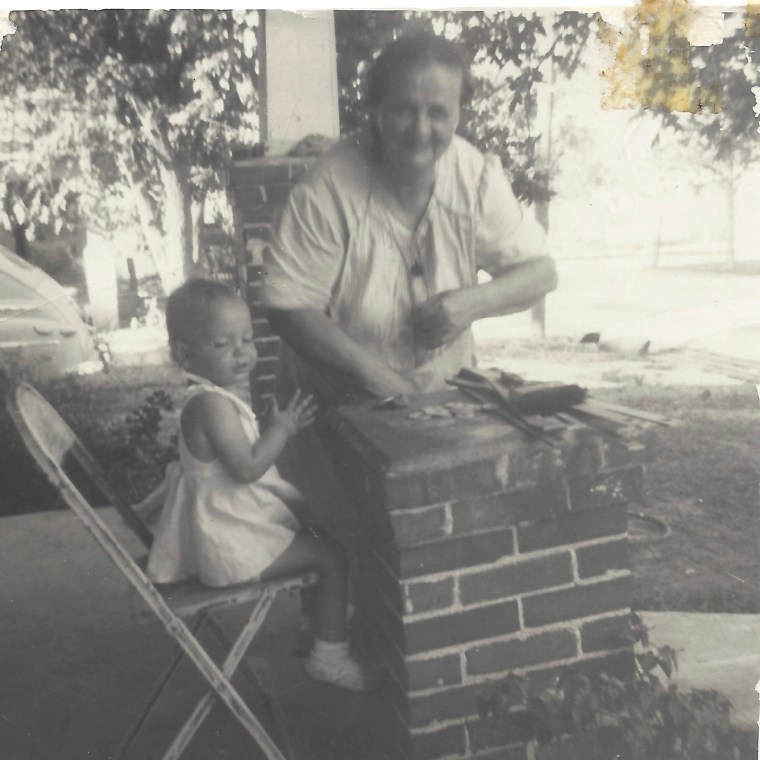
On Sundays we always went to see people from our father’s side of the family. Our mother thought that it was important for us to stay in contact with them. My paternal grandmother was a tiny woman who was famous for her cooking. Going to her house always meant that we would be treated to an extraordinary meal. When she wasn’t busy creating yummy dishes, she was either crocheting or embroidering or making quilts. Her sewing was like delicate works of art and her crooked old hands belied her ability to weave intricate stitches and knots. Her gardens were legendary and she even knew how to talk with birds. I always found it fascinating that her knowledge of the world was encyclopedic given that she was illiterate. I don’t have any recipes or instructions from her because she carried all that she knew inside her head.

My grandfather was a strong man with great big hands that he used to build things. He smoked a pipe and told the most delightful stories. He might have been a wonderful writer but for lack of time. He worked until he was eighty eight years old and only quit because his supervisor thought that his advanced age made him a liability. He read for hours every single day and was able to quote passages well into his nineties. He drove an old black Plymouth whose leather seats smelled of sweet tobacco. Life had always been hard for him, but he was a survivor of the highest order and insisted on maintaining optimism no matter how terrible things became.

I learned that I was from strong stock, people who were determined to live and love and carry on regardless of what befell them. They taught me the value of hard work, education and determination. They helped me to realize that I need not be held back by my circumstances. They encouraged me and my brothers to dream big and to believe in ourselves. They were always there in both the good and bad times. We knew that we were never alone, and still aren’t. This is who we were and what has made us who we are. Our children and grandchildren are part of the unending thread that traces back through the centuries. I hope that they always remember how grand and noble their heritage truly is. The legacy of their family is indeed rich.

Oh SNAP!

pexels-photo-890507.jpeg

Try to imagine living on a net monthly income of about one thousand dollars a month. It would create a constant struggle to meet even the most basic needs of food and housing. In the Houston area we have a lower cost of living than most places, but even here it’s difficult to find housing for less than seven or eight hundred dollars a month. Just paying rent alone takes a huge chunk from such a meager monthly budget, and when utilities are added to the bottom line there is very little left to take care of other basic needs.

Sadly there are very good people who work but still don’t manage to move past the level of poverty. Then, of course, there are the elderly who are no longer physically able to hold down jobs whose monthly checks provide them with ever diminishing spending power. To offset the hopelessness of living in such situations the federal government instituted the Supplementary Nutritional Assistance Program, otherwise known as SNAP.

Recipients of SNAP benefits must certify that they meet the standards of one hundred percent of the designated poverty income levels. They may have a home but no more than a few thousand dollars in savings and other assets. Once they have been verified they receive an EBT card that has been preloaded with funds that they may spend at designated grocery stores for the purchase of food. Eligible recipients are free to choose the items that they prefer but may not make nonfood purchases with the card, nor may they include certain products like beer or wine. SNAP requires individuals and families to continually certify their financial status to insure that eligibility requirements are being met.

While it is generally known is that many Americans are lacking proper nutrition in their diets, the SNAP program does not restrict particular food choices, even if those include soda, candy and other questionable snacks. Studies have shown that enforcing nutritional standards would make the program far too costly, as well as creating paperwork nightmares. Efforts to improve the delivery of wholesome foods to those needing assistance have been mostly unsuccessful. Recently President Donald Trump recommended a major change to the program that would take the element of choice from those receiving the benefits. He proposes a system that would send boxes of nonperishable food items to individuals and families each month rather than reloading funds into an EBT card. The suggestion has created a firestorm of criticism and concern.

Obviously the cost and logistics of delivering the food would be enormous. There are a number of nagging questions about how to make such a system effective, and many concerns about whether or not it is even possible. Take for example the situation of someone who is not home when the box arrives. Does the delivery person just leave the food hoping that it actually ends up where it is supposed to be, or does he notify the recipient to reschedule? How efficient would such a system be when deliveries have to be made to far flung rural areas? Who will be in charge of the distribution process? Will this kind of system require whole new staffs of people?

Of course the most obvious question literally becomes one of taste. Each of us has certain dietary preferences. I can’t imagine not having the freedom to decide what kinds of foods I might purchase, and I find it insensitive to think that the poor should not be allowed the same liberties that I enjoy. I also prefer fresh fruits and vegetables and the idea of only having canned varieties is a very unpleasant one.

My mom was a widow who never made a great deal of money. There was only a brief period of time in her life after my father died when she enjoyed a high standard of living. Most of the time, especially in her later years, she was only barely above the one hundred percent poverty level. At the time of her death she missed that standard by one hundred dollars a month. Even though she owned her home by then, she barely scraped by. She reached a point at which she was stretched to the maximum and yet she was not spending money frivolously. She rarely purchased new clothing or shoes. She did not own a car. Her house needed major repairs that had to wait. Much of her income went toward utilities, medical expenses, insurance costs, and food. She pinched every single penny, especially when it came to purchasing food, and yet she always managed to have a very healthy diet. Her secret was in choosing very carefully. Rarely did she buy canned items. Instead she bought seasonal vegetables and cuts of meat that were on sale.

My mom used the skills of meal planning and her knowledge of nutrition to prepare healthy meals. A carton of eggs lasted for a week and gave her a good breakfast to eat in six of the seven days. She searched for the stores that had the best prices and always bought her food for a bargain. She regularly chose meats that would provide her with multiple meals and vegetables that would be sides as well as ingredients for soups. She loved dried beans and there was rarely a week when she did not prepare a large pot of some kind of legume that would serve as lunch or dinner for many days.

I took my mother grocery shopping on Friday evenings and she would spend hours determining how to get the most bang from her buck. Rarely did she spend more than twenty five dollars and yet she managed to get bags and bags of items. She made it a kind of challenge to walk out of the store with a wonderful variety that she had purchased at a very low cost. In fact, she often urged me to join the competition and would raise an eyebrow at any extravagant purchases that I made, pointing out that the sale apples were just as good as the more expensive ones that I had chosen.

It was difficult for my mom to make it on her low income, and yet she did. She was profoundly independent and she was proud to be able to be the mistress of her own budget. She sometimes grumbled that she was just shy of receiving some assistance from the government, but she would not have taken anything away from those who did because she understood their plight. I suspect that she would have allowed more treats in her diet had she been given a bit more purchasing power. Mostly though she enjoyed the ability to choose. I think she would have found it distasteful to have someone insinuating that she was somehow ignorant or less than able to be her own mistress simply because her income was so sparse.

I understand all of the arguments from people who worry that the taxpayers’ money is often wasted on frivolous items that don’t seem to be necessary components of a healthy diet. What I find hypocritical is that some of the very same people complained loudly when First Lady Michelle Obama helped create nutrition rules for school lunches. They voiced their objections to being told what their children might eat. Many of them often insist that their private decisions should be their own, and I agree with that concept. I just don’t think that it is right to exclude the poor from the right to determine what will be on their tables at dinner time. It’s not up to us to make decisions for them even when they slip in a bag of cookies for their children. It’s good for the soul to have a treat here and there. Why would we want to deny them?

I am open to the concern that some of the SNAP funds are not being spent properly, but I just don’t believe that we need to be nannies or create programs that will become more complex than they need to be. Let’s think of better ways to help people bring nutritious meals to the tables of our fellow citizens without insinuating our own preferences on them. Let’s put ourselves in their shoes and demonstrate a bit of understanding. But for circumstances we might one day find ourselves in their shoes.

The Dialogue

28280054_10215824501665701_6479894520174864930_n

Teachers talk all of the time. They desperately want to do the right thing for their students. They literally take their worries and concerns home, sometimes keeping them awake in the dark of night. Their constant worry is whether or not they have done all that they possibly can. They wonder what is really most important for preparing their charges for life. Is a laundry list of knowledge and skills enough, or is there actually something more important than grades and test scores? What is the recipe, the correct ingredients, the proper method for putting a life together?

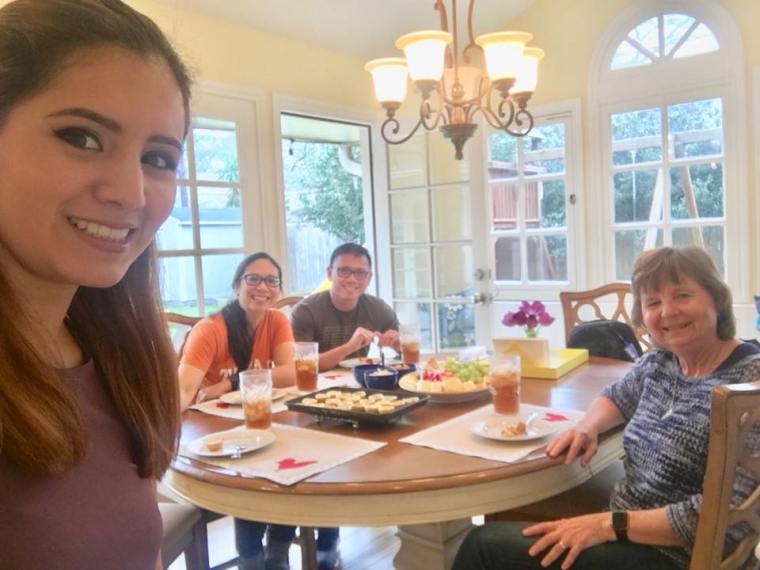
This past weekend I was with two extraordinary educators and a student who is on the brink of launching her career after spending most of her life learning. We spoke of our concerns about education and all agreed that what is too often missing is the opportunity to help young people develop a foundation of particular traits that will serve them well in any situation. The young lady who had once been our student is a stunning example of a process gone right. She earned a bachelors degree in psychology and immediately followed up by working toward a masters degree in clinical counseling. It has taken her almost eight years to reach her goals. In that time she has had to work as well as study. Somehow she understood the need to focus on the prize, often with great sacrifice. She adhered to an unwavering belief that God must always be first, family second and career third. All are important, but always in that order. She values life from birth until death and plans to work in palliative care at a hospital. Somehow she has made her journey appear to be easy, but we know that it was not. She had the same kind of stresses and problems that all humans have. perhaps even more, and yet she was able to overcome them and remain healthy, optimistic and kind. What we wondered gave her the courage and confidence that she must have needed on many different occasions? Why was she able to find joy and success when so many falter and fail?

One hint that she humbly provided was that her core of values guide her along the way, but mostly her faith. Her heart is strong and it is her foundation. She is willing to work, and always determined to make a difference in our society. She is less concerned with grades or scores or rankings, and more inclined toward finding purpose in the things that she wants to do. In other words, she has found a passion for people and good works that motivates her to keep going even when times become difficult.

As we explored many ideas we concurred with her philosophies and noted that as educators we have the power to help our young develop a sense of meaningfulness, but all too often our jobs force us to concentrate on areas that are far less important. We become distracted and fractured and unlikely to have either the time or the energy to encourage each and every one of our students. We want to help them on a deeper basis but know that other demands cause us to fall short. It is frustrating, maddening even. We are in the trenches with society’s most important resource and all too many times we are bombarded with so much bureaucratic minutiae that we have to ignore our own instincts about what is most important in the care and guidance of our young.

I recall a workshop from long ago criticizing the American tendency to teach a vast array of concepts in a shallow manner as opposed to going deeply into a few key concepts. As a mathematics teacher I always felt as though I was in a race to keep up with all of the topics. Too many times I was forced to move ahead even when I sensed that my students had not yet mastered what they needed to know. I wondered why I had to teach them how to create a stem and leaf plot when they lacked an understanding of fractions and decimals. I felt that I was somehow contributing to the slow destruction of their confidence, I wondered if they would one day be telling people that they were not good in math because I had made them feel inadequate by ignoring their need for just a bit more time to master certain ideas.

During my career I worked in a variety of schools. The best of them created situations that allowed our students to feel as though they were members of a caring family. There were adults watching over them and helping them to develop traits that would serve them well in any situation. We taught them to work hard and be nice. We reminded them to remember and appreciate kindnesses. We urged them to leave any place where they wandered in a better state than they had found it. We rewarded character as much as grades. We taught them about wisdom and honor. We joined hands with their parents in the work of caring for them. We showed them how to rise to great expectations even as they stumbled in the process. We encouraged them to demonstrate true grit, helping them to realize that those unwilling to give up will ultimately enjoy great accomplishment and happiness. Mostly we wanted them to know that they were never alone. There would always be someone on whom they might rely.

Dialogues such as the one I enjoyed with my colleagues and a former student are commonplace among teachers. We understand how critical our roles truly are. Educational reform is happening every day in small ways inside the classrooms of the majority of dedicated individuals on whom our future depends. Teachers are changing lives one student at a time, and when they witness the fruit of their labors in the form of an adult who is ready to commence the heavy lifting of important work, they know that their efforts have not been in vain. Such a realization is a teacher’s greatest reward.

The Soul of a New Venture

live edge table

Our world has been made more lovely by the work of creative people and the entrepreneurs who have introduced their innovations to us. Humans are always looking for better ways of doing and presenting things. Someone is surely considering ideas that may one day revolutionize our comfort or aesthetics even as we go about our daily routines. Philosophy, mathematics, art, medicine, technology have all been driven by those gifted and dedicated enough to produce things that we have never even thought about. A secretary came up with the concept of the Post-It note and became a wealthy woman. A failed artist conceived of a cast of characters and an animated world that became the foundation of an entertainment giant known as Disney. A couple of geeky students created a computer whose brand identified with a type of fruit would one day be synonymous with elegance of form and function. A guy frustrated by the stray plant life in his yard used some fishing line and a little motor to develop a weed eating monster. Every great success story began with an interesting idea and a determination to demonstrate that notion to the world.

We all know someone who stepped out of the box of corporate America or the grind of working for a big organization. It’s a frightening prospect to go it alone with no assurances that things will work out as planned. It takes courage and patience and the willingness to believe enough to go the distance. Small businesses come and go with the vagaries of the seasons. Only the best survive, so it takes a special kind of person to put forth the needed time, effort and resources to jumpstart and maintain the soul of a new enterprise. It is not for the weak of heart and I admire anyone who attempts to make things happen.

My brother spent decades working for the Houston Fire Department. Upon retiring he and his wife made a leap of faith and invested in a property near the Strand in Galveston, Texas where they decided to build a venture that would provide tourists to the area with an alternative to the usual beach centered activities. Escape The Island is their fun way of telling a bit of the area’s history while teams compete with the clock to unlock the clues that will allow them to exit a series of bolted rooms. They cleverly created puzzles and designed sets. They spent time publicizing their party and team building business. The work was as hard as their former day jobs had always been, but they believed that they had developed a form of entertainment that people would like. They never gave up even when the going was initially slow. They kept spreading the word and improving on their product until they began to see increased interest in what they had to offer. Today Escape the Island is a destination for families, businesses and college students. Located at 910 21st Street in Galveston, Texas they are ready to schedule fun at 409-443-5092 or http://www.escapetheisland, com

A former student of mine, Eric Guerra, went from high school to the University of Houston where he earned a degree that helped him land a job in the world of business. He was doing exceptionally well, but he felt that something was missing. He somehow knew that he had more to offer than adhering to a nine to five grind, but had little idea what that might be until he met an interesting fellow named Sebastian Martinez had quit is job to concentrate on creating furniture. He had made a table out of an old tree stump and a welded metal base and when Eric saw it his business acumen told him that the table was unique enough that it and items like it would be desired by those who want more than everyday design for their homes. The added bonus was that the furniture was made from recycled and repurposed wood that might otherwise have been burned or turned to sawdust. He envisioned a company much bigger than just a weekend way to earn some extra money, and he had the idea of forming a partnership to produce one of a kind furnishings on a grander scale.

Eric sought out advice from local businessmen who had once been in his situation and had turned small time ventures into mega successes. He convinced captains of local industries to provide him with guidance and some of them even made deals to feature his products in their stores. He set about building a business that has grown from sharing a garage with a lawn care company to purchasing a bigger warehouse near the Amazon fulfillment center west of Houston. He learned the techniques for creating the furniture so that he would be totally immersed in the process from the moment of finding the trees and the reclaimed lumber to creating the final product and then selling and distributing it. He has moved the company forward in a fairly short amount of time and its future looks promising as word of the lovely decorating ideas spreads from one satisfied customer to another.

Republic Creations pays homage to its Texas roots and the native materials that are used for the many products. The artistic builders and designers make live edge tables as small as a side accent and as large as a fifteen foot conference table. No wood is ever wasted as some of it enhances a wall or even becomes the planking for a floor. One of the most requested products is the wooden, live edge vanity for kitchens and bathrooms that provides a warmth and richness not possible with stone. Wooden kennels for pets become stunning pieces of furniture that blend in with the loveliest of environment and provide highly livable homes for pets at night or when the family is gone for the day. Everything is original and organic and environmentally friendly. Thanks to Eric Guerra and his acumen the business is quickly becoming a very popular and profitable venture. More photos and information are available on Facebook at Republic Creations and Designs or with a visit to the design center at 902 East Ave, Katy, TX 77493, 832-541-1840. Below are a few images of the designs that include the tables like the one featured at the top of this blog.

VanityKennelwall