Beautiful Peope

de50d6883e9caed5feb268cd8d4ddefdAt the St. Dominic’s Nursing Home there is a prominent display of photos of some of the elderly residents. They all sport thinning gray or white hair and wrinkled faces, but as the gallery title notes they are all quite beautiful. There is something about the unadulterated natural appearance of humans that is far more gorgeous and pleasing to the eye than that of stick thin models whose faces are recreated with makeup and whose eyes sometimes appear to be almost vacant. We humans possess a radiant loveliness that does not require artifice to be enchanting

I received my most recent copy of National Geographic Traveler magazine a few days ago and in between the covers were stories of people and places from all over the world. One woman’s photo struck me as being particularly lovely, and yet she was hardly what anyone might call a classic beauty. It was the delightful twinkle in her eyes that lit up her face and overshadowed any flaws in her appearance. Her smile was inviting and gorgeous and I found myself wanting to know her and her story. She was a truly beautiful person.

I remember being shocked one day when I heard one of my aunts proclaim that my grandmother had never been a beauty. I found myself totally disagreeing with her even though I had only seen my grandparent in the later years of her life. As far as I know there were no photographs of her as a young woman, only those in her later years when she had grown heavy with the weight of bearing ten children. By the time that I knew her she was wrinkled and her hair was frosted with gray. She never wore makeup and her preferred dress rarely included wearing shoes. Still I saw her as a stunning woman. Her face was classically Slavic and her blue eyes reflected a heart of pure gold. To me there were few women as gorgeous as she was.

It was much the same with my other grandmother, a tiny woman who was not quite five feet tall who never weighed much more than eighty pounds. She was an old lady by the time that I was born. She had long before replaced her teeth with dentures and her skin was soft and creased with age and hard work. She too had blue eyes that fairly danced with merriment and mischief. Her hair was thinning and the osteoporosis that afflicted her bowed her back into a quite noticeable hump. Still I thought of her as one of the prettiest ladies that I had ever seen. I  especially loved her hands which were capable of producing the most incredible meals and crafting clothing, quilts and crocheted items worthy of the finest homes.

They say that beauty is in the eyes of the beholder, but I maintain that all we need do is remove the scales from our eyes and we will begin to see and appreciate the true exquisiteness of those who might never find themselves on the cover of fashion magazines. Such people literally radiate loveliness not so much because they might win a beauty contest but because of their openness and generosity of heart. That is the true appeal that we often miss when we assess appearances. I am actually quite happy to note the current trend of demonstrating that beauty comes in all shapes, sizes, ages, races and genders. As a society we are growing more and more willing to accept that our uniqueness is actually the best of our features.

One of my favorite movies was Elephant Man, based on the true story of a man born with a genetic disorder that rendered him grotesquely riddled with tumors that made his face and skin resemble that of a pachyderm. He was savagely shunned from society and wound up being ridiculed as a sideshow freak in a carnival. Once he was saved from his dreadful existence by a doctor who hoped to help him, it became apparent that he was far more than his outward appearance. He was a gentle and beautiful soul who inspired those who befriended him. He somehow managed to see the best in people and life in spite of the mistreatment that he had so long endured. Those who knew him learned to see him with a new vision in which he was not a horror but rather a vessel of goodness.

I was shopping in Highland Village recently along with some of the loveliest people from many of the wealthiest parts of town. So many of the women that I observed had somehow hardened their looks with hair dye, a profusion of makeup and possibly even plastic surgery. There was something so artificial looking about them. Worse yet was the fact that many of them appeared to be very sad, as though they had not been able to find contentment in spite of their good fortune. True beauty comes from within and somehow it was missing in some of the people that I saw. It actually made me sad to realize that not even the ownership of a hundred thousand dollar automobile or designer clothing can mask unhappiness or a soul that has lost its way.

Don’t get me wrong. I paint myself up for special occasions and highlight my hair to keep it from looking dull. I find nothing wrong with attempting to be a bit more attractive but I have found that all of those efforts are for naught if one’s heart is not filled with love and compassion. Those qualities light up the face like no manmade product ever will.

As my mother lay dying she became ever more beautiful. There almost seemed to be an aura about her in her last moments on earth. She had always been an attractive woman but in the end it was her love of her family and her God that shone in her very eyes. She was experiencing a peace and joy in knowing that her life had been well lived. Her loveliness was stunning and comforted us all.

Our young want to be seen as being beautiful. They look in the mirror and study all of their flaws wondering how to become more alluring. They have yet to understand that it will be the content of their souls that determines their ultimate appearance to the world. Think of someone like Jimmy Carter who is so heart warming and giving. He is beautiful to almost everyone. Then consider someone like Adolf Hitler. His hideousness was derived from his actions. It was difficult to look past the horror of his deeds in assessing his looks.

The world is filled with beautiful people and their pulchritude has little or nothing to do with their physical features and everything to do with their character. This is the lesson that we should be teaching our children. Perhaps the story of Beauty and the Beast is the best fairytale of them all, for in that tale is the understanding that our external appearances have little to do with who we truly are.


There was a time when the world was a quieter place. There were fewer sounds, no cars, planes, trains, televisions, radios, telephones, complex machines. People heard each other, the calls of animals, the wind, the rustling of water. Lif was stiller, slower and in most ways more difficult. The very things that so often annoy us, cause us to feel stressed and steal the silence that we desire also make our lives easier than those of our ancestors. The conundrum that we face in the modern world is how to keep a balance between simplicity and over consumption. It is the tightrope that we walk in our pursuit of happiness and comfort.

I live in a southern climate. I might be happy to eschew using a great deal of energy in the winter because the days are mostly mild and even on an abnormally cold day a heavy coat and a pile of blankets make the chill go away. The summer presents me with a far greater challenge when temperatures linger in the mid nineties for weeks at a time. It is so hot that I take refuge in my air conditioned home and car during the middle of the day. The thought of being without the cool air is almost untenable and yet there was a time in the not so distant past when I lived through nineteen summers without air conditioning and never felt beset upon.

It was a normal and accepted way of life back then. We simply adjusted to our circumstances and carried on the way people had done for thousands of years before us. We led simpler lives that were still more modern than those that our grandparents had known. It never occurred to us that we may have been disadvantaged. We coped with what we had.

Somehow in spite of the multitude of improvements in American life our society seems to be more dissatisfied than ever. We tend to believe that we should all have more and more and more when just maybe we have reached a tipping point at which we should consider cutting back on some of the things that we do and take for granted. We often argue that each successive generation should do better than the last but what if that idea is flawed? What if our real goal should be to find ways to enjoy the best of our modern inventiveness without being so obsessed with accumulating wealth and things? Is it possible to live the good life while also being more frugal in our use of resources and capital? These are our modern day questions. Our dilemma is in finding the answers that will benefit the most people in the world, a gargantuan task at the very least.

I believe in the concept of liberty and as such I mostly disdain the idea of forcing a particular lifestyle on people. I prefer that we each decide on our own how to partake of the world’s benefits. Still I would like to encourage everyone to find their own personal ways of stepping back just a bit and considering how they might simplify and thereby save for the future. By that I mean in terms of both money and our precious resources. Small measures taken collectively often lead to great gains. Our ancestors knew this well and they pulled themselves out of a major depression and two world wars with determined effort and a great deal of patience.

When I describe the world of my youth it sounds absolutely antiquated. My family had one car, one phone, one television. Computers and cell phones were but dreams of inventive souls. Travel was by car for most people other than the wealthiest among us who had the means to fly from place to place. Eating out was a rare luxury. The books that we read mostly came from the library. I only knew one person who had a swimming pool in her backyard. The rest of us went to the city pool on hot afternoons. Air conditioning was a luxury that was only beginning to come into vogue and even then it was in the form of a unit set in a window. Homes usually had a single bathroom often shared by as many as six or seven people. Children bunked together in rooms. Most of us had two pairs of shoes, one for special occasions and the other to be worn for daily activities. We exercised by running and walking and riding our bicycles. It was a happy time and it never occurred to us that one day people would look back on how we lived and think it quaint and wonder how we were able to endure such seeming want.

The average household of old would appear to be more like a state of poverty today. We have improved things considerably but what have we lost in the process? Our desires seem almost insatiable. Our complaints would confound those who lived in another era. They would wonder at the luxuries of even an average person and ask why we still feel as though we need even more.

We argue over the state of our planet ad infinitum. Why would we risk being wrong? The simple answer is to always think about the consequences of our actions. Our golden rule should be to leave every place better than we found it. If that means recycling, planting trees, composting garbage, picking up trash, adjusting our thermostats, buying only what we really need, turning off lights, or finding our own ways of using less energy why would we complain? These are actions that our ancestors took for granted. It doesn’t matter who is wrong or right when it comes to climate change. We should all still want to be kinder to our world.

We probably will never receive the entire cake of benefits but we are certainly capable of sharing pieces of it with our fellow men and women. We will never be able to achieve perfection but surely we will find more contentment in working together just as our ancestors once did. They raised barns as a community and made certain that people experiencing hard times were cared for. My grandfather told countless stories of people coming together to insure that all members of the community were safe and secure and happy. It was understood that this was behavior expected of everyone. They had so much less than we have today but they willingly gave whatever they were able in times of need.

Sometimes it seems as though we have closed ourselves off inside our modern day castles. We have everything that we need inside and we may have anything that we want delivered to our front doors. We isolate and insulate ourselves from the problems outside our domains, often not even knowing the names of our neighbors or what challenges they are enduring. We come and go and rarely think of the difficulties that are ongoing all around us. We turn off bad news and idealize existence and quibble over issues that should have compromised solutions. We have lost our way on so many levels when we need look no farther than the examples of the past to know what to do.

Thoreau admonished us to simplify, simplify, simplify. Mother Theresa showed us how to share. Our grandparents demonstrated courage and a willingness to adapt to changing situations. Marshall rightly urged us to help our struggling European neighbors after World War II. Dr. Martin Luther King, Jr. taught us how to open our hearts to differences. The lessons to be learned tell us how to live without the worry and strife that exists in so many corners of our world today. If each person were to change just one way of doing things for the better perhaps we might all wake up to brighter days. It’s time to cease all of the grumbling and work together. Shall we begin?

Shall We Begin?

barn-raising-the-farm-at-walnut-creek-ohio-Large

There was a time when the world was a quieter place. There were fewer sounds, no cars, planes, trains, televisions, radios, telephones, complex machines. People heard each other, the calls of animals, the wind, the rustling of water. Life was stiller, slower and in most ways more difficult. The very things that so often annoy us, cause us to feel stressed and steal the silence that we often desire also make our lives easier than those of our ancestors. The conundrum that we face in the modern world is how to keep a balance between simplicity and over consumption. It is the tightrope that we walk in our pursuit of happiness and comfort.

I live in a southern climate. I might be happy to eschew using a great deal of energy in the winter because the days are mostly mild and even on an abnormally cold day a heavy coat and a pile of blankets make the chill go away. The summer presents me with a far greater challenge when temperatures linger in the mid nineties for weeks at a time. It is so hot that I take refuge in my air conditioned home and car during the middle of the day. The thought of being without the cool air is almost untenable and yet there was a time in the not so distant past when I lived through nineteen summers without air conditioning and never felt beset upon.

It was a normal and accepted way of life back then. We simply adjusted to our circumstances and carried on the way people had done for thousands of years before us. We led simpler lives that were still more modern than those that our grandparents had known. It never occurred to us that we may have been disadvantaged. We coped with what we had.

Somehow in spite of the multitude of improvements in American life our society seems to be more dissatisfied than ever. We tend to believe that we should all have more and more and more when just maybe we have reached a tipping point at which we should consider cutting back on some of the things that we do and take for granted. We often argue that each successive generation should do better than the last but what if that idea is flawed? What if our real goal should be to find ways to enjoy the best of our modern inventiveness without being so obsessed with accumulating wealth and things? Is it possible to live the good life while also being more frugal in our use of resources and capital? These are our modern day questions. Our dilemma is in finding the answers that will benefit the most people in the world, a gargantuan task at the very least.

I believe in the concept of liberty and as such I mostly disdain the idea of forcing a particular lifestyle on people. I prefer that we each decide on our own how to partake of the world’s benefits. Still I would like to encourage everyone to find their own personal ways of stepping back just a bit and considering how they might simplify and thereby save for the future. By that I mean in terms of both money and our precious resources. Small measures taken collectively often lead to great gains. Our ancestors knew this well and they pulled themselves out of a major depression and two world wars with determined effort and a great deal of patience.

When I describe the world of my youth it sounds absolutely antiquated. My family had one car, one phone, one television. Computers and cell phones were but dreams of inventive souls. Travel was by car for most people other than the wealthiest among us who had the means to fly from place to place. Eating out was a rare luxury. The books that we read mostly came from the library. I only knew one person who had a swimming pool in her backyard. The rest of us went to the city pool on hot afternoons. Air conditioning was a luxury that was only beginning to come into vogue and even then it was in the form of a unit set in a window. Homes usually had a single bathroom often shared by as many as six or seven people. Children bunked together in rooms. Most of us had two pairs of shoes, one for special occasions and the other to be worn for daily activities. We exercised by running and walking and riding our bicycles. It was a happy time and it never occurred to us that one day people would look back on how we lived and think it quaint and wonder how we were able to endure such seeming want.

The average household of old would appear to be more like a state of poverty today. We have improved things considerably but what have we lost in the process? Our desires seem almost insatiable. Our complaints would confound those who lived in another era. They would wonder at the luxuries of even an average person and ask why we still feel as though we need even more.

We argue over the state of our planet ad infinitum. Why would we risk being wrong? The simple answer is to always think about the consequences of our actions. Our golden rule should be to leave every place better than we found it. If that means recycling, planting trees, composting garbage, picking up trash, adjusting our thermostats, buying only what we really need, turning off lights, or finding our own ways of using less energy why would we complain? These are actions that our ancestors took for granted. It doesn’t matter who is wrong or right when it comes to climate change. We should all still want to be kinder to our world.

We probably will never receive the entire cake of benefits but we are certainly capable of sharing pieces of it with our fellow men and women. We will never be able to achieve perfection but surely we will find more contentment in working together just as our ancestors once did. They raised barns as a community and made certain that people experiencing hard times were cared for. My grandfather told countless stories of people coming together to insure that all members of the community were safe and secure and happy. It was understood that this was behavior expected of everyone. They had so much less than we have today but they willingly gave whatever they were able in times of need.

Sometimes it seems as though we have closed ourselves off inside our modern day castles. We have everything that we need inside and we may have anything that we want delivered to our front doors. We isolate and insulate ourselves from the problems outside our domains, often not even knowing the names of our neighbors or what challenges they are enduring. We come and go and rarely think of the difficulties that are ongoing all around us. We turn off bad news and idealize existence and quibble over issues that should have compromised solutions. We have lost our way on so many levels when we need look no farther than the examples of the past to know what to do.

Thoreau admonished us to simplify, simplify, simplify. Mother Theresa showed us how to share. Our grandparents demonstrated courage and a willingness to adapt to changing situations. Marshall rightly urged us to help our struggling European neighbors after World War II. Dr. Martin Luther King, Jr. taught us how to open our hearts to differences. The lessons to be learned tell us how to live without the worry and strife that exists in so many corners of our world today. If each person were to change just one way of doing things for the better perhaps we might all wake up to brighter days. It’s time to cease all of the grumbling and work together. Shall we begin?

Put the Fun In Dysfunctional

Jumping with balloonsI recently attended a Hans Zimmer concert (which would be a great topic for another day) and toward the end of the event he urged all of us to find the playfulness in everything that we do. He used the performances of his musicians as examples of how that might look. It wasn’t difficult at all to see that they were working hard but also having the time of their lives. They had taken their jobs to the ultimate level of fulfillment by actually finding happiness in the very act of executing their skills.
We often fail to find the fun in the tasks that we must do. So many people are stressed by jobs that seem to be a daily drudge, or they find themselves in situations that bear down on them unremittingly. It would be so nice if each of us were able to find ways to make the best of whatever we happen to be experiencing at any given moment. All of us have known individuals who appear to be  quite adept at doing so. We sometimes confuse their upbeat personalities as being a kind of innate trait that they were simply lucky enough to possess from birth. We rarely consider that they may have consciously worked to develop playful spirits that allow them to navigate even the roughest of waters.

The Italian movie Life Is Beautiful tells the story of a Jewish father and son who become imprisoned in a concentration camp during the German occupation of Italy. The loving parent finds ways to protect his child by using humor and turning their ordeal into a kind of game. It is a moving account of survival even under the most horrific conditions, and it showcases the power of the human spirit in dealing with evil. In fact, many Holocaust survivors often speak of having found ways to laugh as a means of dealing with the daily horrors that they witnessed. Psychologists have in turn suggested that the people who willed themselves to joke and smile were far more likely to make it in such inhumane conditions. It is in our playful natures that we often find the courage that we need to overcome our most critical challenges.

The first born cousin in our family is a man imbued with optimism. He recently underwent a serious treatment for his heart. When a nurse told him that he was going to receive the anesthetic propofol he remembered that this was the substance that Michael Jackson was using as a sleep aide when he died. My cousin jokingly inquired if he would wake up from the surgery with amazing abilities to sing and dance. In other words he transformed a tense moment into one in which everyone in the room no doubt laughed and then relaxed a bit. His antics demonstrated both his confidence in the team that was operating on him and his own belief that all would go well.

I used to love the television program M.A.S.H.. It was a situation comedy featuring characters who were part of a M.A.S.H. unit in South Korea during the Korean War. The doctors and nurses were charged with the responsibility of saving the lives of soldiers under almost impossible circumstances. To keep from going insane with the pressures under which they worked, the crew turned to humor in the form of sarcasm and practical jokes thereby easing the tension. While their humor was sometimes over the top, so were their responsibilities. It was in their playfulness that they found the courage to do their duties. The show was not just based on the imagination of some writer. In fact, an uncle of mine who also served in a M.A.S.H. unit in South Korea confirmed that the behaviors portrayed in the show were indeed based on reality. In fact, he noted that many surgeons even in modern day hospitals rely on fun to keep the seriousness of what they are doing in perspective.

I know that every teachers’ lounge in which I partook of my lunch was filled with lighthearted banter and laughter. Our lunch time antics were a relaxation technique that evolved naturally from the stressful nature of our jobs. We released so much of the tension that we were experiencing with the inanity of our conversations. Lunch with my peers was an almost sacred time for renewing our collective spirits. Luckily there always seemed to be at least one soul with an especial knack for making us chuckle. I’m certain that we would not have been nearly as effective had we not been allowed to behave as playfully as our students sometimes did. Even better was when we felt confident enough to banter humorously with our students as well. I often accomplished more after my pupils and I had laughed than when I was all seriousness.

My happiest times at work were often the craziest. I recall one school where the end of school year tradition was to hold water gun and balloon fights in the hallways after the students were all gone. We behaved like the teenagers whom we had taught all year. The building was filled with joyful screams and belly laughs while we hurled balloons at each other. It was a grand celebration of our accomplishments during what had sometimes been very difficult school years. It bound us together and brought out the best in all of us.

Life can become quite unbearable at times. There are even moments when laughing and joking would not be appropriate. Still we need to allow ourselves the gift of being light hearted now and again. I actually have signs in my home to remind me not to be too somber. One urges me to live, laugh and love. Another simply tells me to laugh. Still another says, “I put the fun in dysfunctional.” I have such impish reminders all over my home. Some might see them as kitsch, but I know that they are not so subtle hints that I often need to remember to lighten up.

There is a playful spirit inside all of us. It is there to help us to keep our perspectives properly aligned. Having fun and learning how to really laugh is actually quite healthy. As the old adage says “All work and no play makes Jack a dull boy.” It’s a platitude of which we all need to be mindful. It really does help to find the lighter side of life as often as we can. I sometimes wonder if many of the problems that we witness in today’s world are the product of being too darn serious all of the time. I fear that we have somewhat lost our societal sense of humor. Even our politicians can’t seem to take a joke in stride.

My father in law has a number of long playing albums from the sixties that are filled with hilarity. They mock the Kennedy family, the pope, and even the death penalty. Mostly they are satire that made us laugh at our human foibles. Luckily back when they were popular we all seemed to understand that they were not so much meant to hurt anyone as to point to our flaws in a very amusing way. I recommend that we all learn to laugh again or we will be doomed to buckets of tears.

Find the little bits of playfulness that abound in each and every day. It really is okay to use humor to struggle through the difficult times, and it can often be the best way to deal with our most serious problems. Smile. Be impish. Have fun. Don’t think of life as being short, nasty and brutish. Find ways to make it delightful and humane. It will make all of the difference in each of your days.

When Children Lose Hope

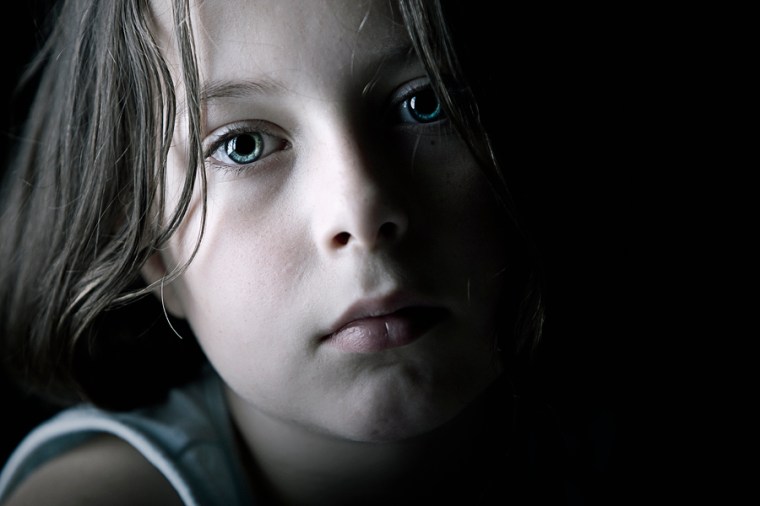
Sad ChildA recent study reported that for the first time ever more middle school students are dying from suicide than from car crashes. Not only that, but the number of suicides among children as young as eight, nine or ten years old is also increasing. Researchers are only guessing as to why so many of our children and teenagers are ending their lives in such record numbers. The trend has become an epidemic that is rarely mentioned and far too many parents are unaware of the signs that there is trouble.

There are a number of possibilities suggested as to why suicide has become such a problem. Young people today increasingly see the world as being a dangerous and violent place. News stories often make them feel as though they are living under constant threat of harm. In addition there has been a breakdown of healthy relationships in many families leading children to feel insecure and sometimes even unloved. Ours is a fast paced world that stresses hard work and excellence. Some kids feel unrelenting pressures to excel in every aspect of their lives. Television and movies all too often depict suicide as a good way to end problems. Of course there is also the specter of social media which sometimes serves as a catalyst for bullying and the creation of unrealistic expectations of beauty, luxury and unending happiness. There is also a problem with adults, particularly parents failing to acknowledge the signs of depression and its power to lead their children to suicide.

There have always been young people who decided to take their lives, but never in the numbers that are being recorded today. When I was young virtually everyone sat down together with members of the family to share dinner. We took that opportunity to talk about the days’ events and to reinforce the idea that we cared for one another. All too often today the tradition of gathering around the table has been replaced with meals quickly consumed in front of the television or on the go. Members of the family are often moving in so many different directions that opportunities to actually talk with one another are brief or rare, especially once children become teenagers.

Latch key kids are abundant and they spend their afternoons unsupervised. They may become isolated by hours of playing video games or may even find inappropriate television programs to watch. They spend hours texting friends with their parents rarely being privy to what kind of messages are being exchanged. They may be engaged in dangerous situations for which they do not have the maturity to react in a healthy manner. In a sense they often lead secret and disturbing lives apart from their parents without anyone knowing the extent of the treacherous paths down which they are travelling.

There are ways that adults should more closely monitor their children rather than just assuming that all is well. When my own daughters were teenagers a very good friend advised me to find out as much about what they were doing as possible. I did so in both overt and covert ways. I talked with my girls constantly and observed their behaviors, watching for even subtle changes. I also listened to their friends and the parents of their friends to find out more information about their habits. I enlisted the help of an army of caring people to make sure that all was well. Even then I missed cues now and again.

My youngest daughter suffers from depression just as my mother did. She began to exhibit more and more isolated behavior and seemed to be in a continual state of tears when she was in high school. I remember the night when I found her sitting in the dark in her bedroom rocking back and forth while crying. I sat on the floor with her and held her in my arms as though she was a toddler, coaxing her to tell me about her feelings and what was driving them until she finally admitted that she felt lost and confused. I made an appointment for her to see a doctor the next day and began to engage in more and more frank conversations with her. She made it past that valley of despair, but she often told me that ultimately it was her profound belief in God and the sanctity of life that had prevented her from harming herself. Ironically my mother had often told me the same thing about her own moments of mental distress. Needless to say I rejoiced in knowing that by providing my child with a religious foundation I may have saved her life.

If parents see dramatic changes in their children it is dangerous to simply assume that the new behaviors are hormonal or typical. Warning signs come in the form of falling grades, difficulties sleeping, headaches or other physical manifestations. Children who lose interest in hobbies or friends are sending signals that something is very wrong. Changes in personality are another clue. Frequent tears, outbursts of anger, long periods of isolation inside a darkened room may all be pointing to problems that must be addressed. While teenagers are infamous for their constant texting, if this habit also appears to be associated with aggression or a lack of self esteem there may be a need for getting to the bottom of what kind of information is being exchanged.

We’ve always had bullies but never to the twenty four seven extent that some kids now endure. Social media all too often becomes a minefield for attacking youngsters. Sometimes those participating in the emotional assaults don’t even know the people that they are intimidating. For them it is just a sick game, but for the teenager who is the butt of their commentaries it can become unbearable. There is nowhere to hide, no way to stop the misery. They all too often hide what is happening out of a feeling of shame. Being so alone bears heavily on them. They need help but don’t know how to find it. It is up to adults to be conscious of such situations and work to assist the victims in retrieving their sense of security and self respect.

It’s become popular for some adults to refer to youth who struggle to adjust to the many challenges that they face as “snowflakes” as though they are simply so delicate that they cannot adjust to the realities of life. This is akin to the people who would urge my mother to get control of herself when she was in the midst of a psychotic episode as part of her bipolar disorder. At the time the chemistry of her brain was so askew that she did not possess the power to stop the madness that engulfed her. She needed the help of caring family members, friends and medical professionals to get her life back on track. The lack of understanding that she continually faced made her challenges even more difficult than they needed to be. Such it is for youngsters who are in crisis. Shaming them for falling victim to depression so debilitating that they have suicidal thoughts is not an answer. Instead we all must be vigilant in assisting anyone whose ideation becomes dark and worrisome.

Teachers are often the first to notice problems with a young person. Instead of ignoring such concerns it is paramount that they contact the school counselor, the nurse, the parents or all of the above. Sometimes kids are so good at hiding their pain that their families are the last to know that there are difficulties. Honest conversations have to take place, always punctuated with love and concern. At the same time we should teach our kids to be good friends who are willing to let us know if someone is struggling more than normal. We must then either contact the school or the parents to alert them to what is happening. Those are difficult conversations, but they may save lives. 

Rescuing our children from thoughts of suicide should be of paramount concern to all of us. We need to spend more time talking with them and helping them to feel safe in confessing their problems. We need to watch for the warning signs and take aggressive and loving action before the worst happens. It is up to all of us to bring down the distressing suicide statistics among the youngest in our society. We need to begin some difficult discussions with ourselves, each other and our children. Nothing else that we do is more important.