When History Comes Alive

newellboyd

I’ve become fascinated by a series of classes at the Rice University Glasscock School of Continuing Education featuring the history of the kings and queens of England. Dr. Newell Boyd uses primary and secondary sources to bring the reigns of the British monarchs to life. His courses are exciting strolls through history that illustrate that human nature tends to be the same from one era to the next. The cast of characters may change but the themes echo over and over through time. His is a very personal look at history through the eyes of those who wrote commentaries about the people and events as they were happening.

The thing that has most struck me throughout the series of lectures is that so many of the problems that we humans face today were concerns hundreds of years ago. Those of us who are not royalty or “mighty barons” today may have a better quality of life than the common folk of yore, but questions of religious freedom, power, and economic equality remain essentially the same as they were when peasants’ lives were brutish and brief. The saga of mankind has been a story of wars and intrigue but it has also been one of slowly evolving equality and freedom and opportunity even for those not born into wealth and power. Much of that trend began in the rise and fall and ultimate decline of aristocracy and the belief in the Divine Right of Kings.

I’ve learned from the study of the Tudor kings that the audacious dealings of Henry VII in his quest for an heir had more to do with keeping peace in the empire than simply attempting to father a male child. Prior to Henry’s reign there had been years of warring between families to claim the throne. Henry desperately hoped to maintain a firm hold of legitimacy and continuity in the royal hierarchy. He believed that only a male heir would insure that there would be no challenges to the authority of his line. Of course we know in hindsight that his beliefs about biology were erroneous and that a woman would ultimately rise to the throne and do so successfully.

This semester Dr. Newell is outlining the story of the Stuart kings who descended from Mary Queen of Scots. Because Elizabeth never married and died without an heir there were many questions about who was the rightful heir to the throne. Untangling the family tree that lead to James I  is a story in itself but the gist of his troubled monarchy lies in the fact that he was raised in Scotland as a Presbyterian and as such was never fully accepted by the people of England. His reign and that of his descendants was continually marked by both political and religious intrigue that lead to unrest, civil war and revolution.

The Protestant Reformation had let the genie out of the bottle. While the Church of England was the official religion of the land there were still Catholics and Puritans determined to defy the dictates of the king who served as the head of the church. In his efforts to demonstrate his power and legitimacy James I was rigidly doctrinaire which lead to treasonous attempts to assassinate him by religious groups, perhaps the most famous of them being the plot to blow up Parliament when James was present by a group of Catholic revolutionaries that included Guy Fawkes.

James’ son Charles did little better than his father to earn the love and respect of the people. It was during Charles’ reign more seeds of revolution were sowed as Parliament became more and more powerful and the king became more dependent on their whims. It was also a time when grand new philosophies regarding the rights of ordinary people began to flourish. The world of royalty in England would never again be quite the same.

I have been particularly intrigued by this period of time in history because I can trace my own ancestry to the times. Charles was being plagued by warring forces in Scotland. People of the Puritan faith refused to bow to his demands that they adopt the beliefs of the Church of England. In an effort to rid him of those problems while also diluting the Catholic influence of the Irish Charles encouraged many Scots to relocate to northern Ireland. It was from that migration that my paternal grandfather’s people came. He always proudly boasted that he was Scots Irish, a strange mix of cultures that I never before clearly understood. Now I know that they were probably trouble makers searching for a place where they might think for themselves.

I am also learning more about Oliver Cromwell, a defiant member of Parliament who would lead England to revolutionary ways of thinking. From a woman in my paternal grandmother’s ancestral line I am a relative of Cromwell, all of which helps me to understand my own somewhat rebellious nature and unwillingness to simply follow the crowd.

I suppose that many of the folks who eventually came to the New World in search of opportunity and a new start were pesky Puritans, Scots Irish, people who had grown weary of being persecuted and limited by kings attempting to assert their authority. The philosophies and tyranny that had once been accepted as the Divine Right of kings began to unravel with the reign of the Stuart kings and it would end with a revolution unlike anything that they might ever have imagined. It’s fun to watch it all unfold while already knowing how it will end and it’s even more exciting to know that my kinfolk were part of it. Dr. Boyd surely knows how to make history come alive!

What If?

cleaning the ocean.jpg

What if the people of the world decided to quit relying on someone else to fix all of the problems and we started taking care of things on our own without being asked or paid or honored for our efforts? What if we started by greeting everyone that we pass, noticing what others need and then quietly taking care of them? What if we opened our hearts and our talents to making the world around us better?

What if it became a habit for each of us to keep the environment clean? What if we were always equipped to clean up garbage along the roadsides and in the oceans? What if we got everything looking good and none of us ever again littered the environment?

What if every person found someone to help on a daily basis? What if we understood that if doesn’t take much to make a difference? What if we began to use the power of our collective good will?

What if we really managed to be free of the negative aspects of our human natures? What if we were able to rethink our priorities and work together without being forced by guilt or laws? What if we changed the world without a single selfish desire?

I’m an admitted dreamer. I think of the possibilities of human interaction if only we were able to fully harness our most positive powers and negate those that create problems. I love to think of a time when our intelligence evolves to a point at which we instinctively know what we must do to help one another and to honor our earth. I see examples of the kind of behaviors that I long to see multiplied millions of times over and I imagine a more perfect world. I still believe that we have the power to be our best selves but that we all too often refuse to make the sacrifices and do the hard work that must be done.

I recently saw a group of people working at the ocean to eliminate garbage from the beaches and the water. They removed mountains of debris that had been thrown away by thoughtless people. I wondered why we can’t all agree to come together regularly to sweep our waters and their banks just as we clean our homes. I thought of how we should not have to pay people to do this work when so many of us are able bodied enough to form daily crews that labor all over the world to make the waterways pristine and then keep them that way. I can’t imagine why anyone would ever think it proper to throw paper or cans or bottles or balloons or any object into our precious resource of life. It seems logical and right and just for all of us to be participants in the efforts to once and for all rid our waters from the garbage with which we have so blithely and unthinkingly polluted two thirds of our world. I wonder what if…?

I constantly worry about our young and the way in which we educate them by moving them along a preconceived pathway to knowledge that makes learning feel harsh and unpleasant for so many. I see our society missing the mark by making the act of learning a project filled with stress and sometimes even punishment. We act as though every child is just alike with our scopes and sequences that drive them like cattle from one concept to another whether or not they have mastered the previous ones. We make them feel stupid. We cause them to question their worth. We make them anxious at a time when they should be experiencing the joy of exploring the world around them. I wonder how we might make the act of acquiring knowledge a happy endeavor by tailoring more individualized programs that take differences into account. I long for a kind and gentle kind of school experience that builds children up one by one rather than consigning them to a kind of conveyor belt style education. I wonder what if…?

I see and hear of people who are lonely, bullied, abandoned, feeling hopeless. I think of how they are often treated as though they are somehow less than human. I know that many of them even lose faith in themselves. They become lost souls who turn to drugs and alcohol to ease their pain. In the worst case scenarios they use anger and violence in a perverse way to feel better about themselves. I find myself wondering why we did not notice them earlier when they were still young and open to change. Who was it who beat them down? Why was there no one to counteract the harm being done to them? I think of a world in which we are each like guardian angels watching over even those who are strangers to us. I see wonderful people taking those who are abused under their wings. I consider how incredible it would be if we were to all make efforts to help save a life. I wonder what if…?

Such thoughts may sound naive when faced with the ugly realities of the world and yet there have always been individuals who left the fray and simply dug into the work of making a difference even if its impact was small. That one piece of garbage that we remove from the street becomes a clean sweep when multiplied millions of times over each day. That one child who feels the power of mastering a new skill becomes an army of confident people when multiplied a millions of times over each day. That frightened soul who heals by the touch of kindness becomes a member of a confident, happy and productive society when multiplied millions of times over each day. What if we finally decided to see what might happen if we all agreed to do such things every single day? What if, indeed?

Nothing More Special

img-3327509-2-Roast-dinner

When my father’s parents were living on Arlington Street in the Houston Heights we would go visit them every Sunday after church. My grandmother always prepared a lovely dinner for us and since she was a gifted cook it was invariably our most delicious meal of the week. What was most wonderful about it had little to do with the food, however, and everything to do with the joy of sitting around her big mahogany dining table laughing and talking while we filled our bellies with her beloved dishes.

My grandmother was a stickler for tradition. She covered the table with a crisply ironed cloth on which she placed her Sunday best china. She always waited for me to arrive to set the silverware next to the plates. It was from her that I learned the proper way of placing the knives and forks and spoons and folding the napkins.

In the meantime the aroma of chicken or roast beef tempted our tastebuds while Grandma put the finishing touches on potatoes, vegetables gravy and baked breads. I marveled at her ability to juggle so many culinary tasks at one time and still be so pleasantly patient. She reveled in the art of making us happy with her homegrown abilities that were all memorized in her head. Years of practice made every single item perfect and we waited with growing anticipation for her to finally announce that it was time to gather at our places to say grace before digging into all of the wondrous foods that she had prepared.

I loved the sameness of those Sunday afternoons and I missed them when my grandparents moved away to their farm in Arkansas. My mother did her best to reproduce the feel of those Sunday afternoon galas but I sorely missed the ceremonial nature of the tradition that my grandmother had brought to the table. After my father died my mom switched to going out for brunch after church which was quite a fun treat but was not nearly as wonderful as those formal gatherings at Grandma’s house.

I suppose the my wise mother knew that attempting to reproduce our once glorious Sunday tradition without my grandparents and my father would only serve to emphasize their absence in our lives. She redirected our thoughts of the old times to the adventures of eating yummy pancakes and waffles in restaurants filled with joy and laughter. Still, I would often think about how much I missed Sunday dinner with the family until I rediscovered the routine with my mother-in-law after I married.

To my great delight she was well versed in the art of entertaining on a Sunday afternoon. Like my grandmother she prepared her dining table with fine linens and her best china, silver and glassware. She was particularly well versed in the preparation of a Sunday roast in the grand tradition of England. She had learned how to perfectly roast the meat from her mother, always including potatoes and carrots and green peas. She was masterful at making a dark brown gravy to pour over the muffin-like Yorkshire pudding that was the highlight of the feast. My husband Mike always insisted that his mom never quite mastered the art of making Yorkshire pudding the way his grandmother had, but I never found any reason to fault it. It was gloriously delicious.

As my daughters grew older my mother-in-law taught them the art of setting a table just as my grandmother had done with me. They delighted in being helpful and being part of a routine that had been passed from one generation to the next. It was one of the best times of each week for all of us as we sat together being reminded of the loveliness of family and tradition.

Once the meal was finished the menfolk always went to another room to watch sporting programs or talk about the latest news. My mother-in-law brewed coffee for them and a big pot of tea for me and my girls. She always served it so elegantly along with a tray of cookies bought especially for the occasion. She showed us how to warm the pot before pouring the hot water over the tea and cautioned us in how to wait for the brew to steep. I still laugh because her very English mother who had been born in Newcastle, England had told her that Lipton tea bags made the very best brew.

We would sit and talk about wonderful things while we sipped on our tea and munched on little cookies. I so loved those times because they reminded me of the importance of family and tradition. I’d think of my grandmother who had died when I was fifteen and how she too would have enjoyed the time spent with just us women bonding over conversation and tea.

It’s been a long while since I sat down for a traditional Sunday dinner. My mother-in-law has been gone for sixteen years now. For a time I attempted to resurrect her routine for my children and grandchildren but the world was moving so quickly for everyone that it became more and more difficult to find a time when everyone was free. Sundays used to be more sacred but now weekend homework assignments and even athletic and club obligations pull children away. Everyone is moving at breakneck speed and spending three or four hours eating and relaxing is all too often a luxury that nobody can afford.

I miss those Sunday dinners and the love that they represented. Mostly I miss the people who gathered with us on the Lord’s Day. They have been gone for so long now but I still see them smiling and laughing and enjoying the biggest feast of the week. I’m so happy that I have those wonderfully joyous moments to remember. The memories are so vivid that I can almost smell the food and see my grandmother and my mother-in-law bustling about the kitchen preparing heaping mounds of love for us. There is nothing more special than that.

A Win for Everyone

Francesca_Cabrini

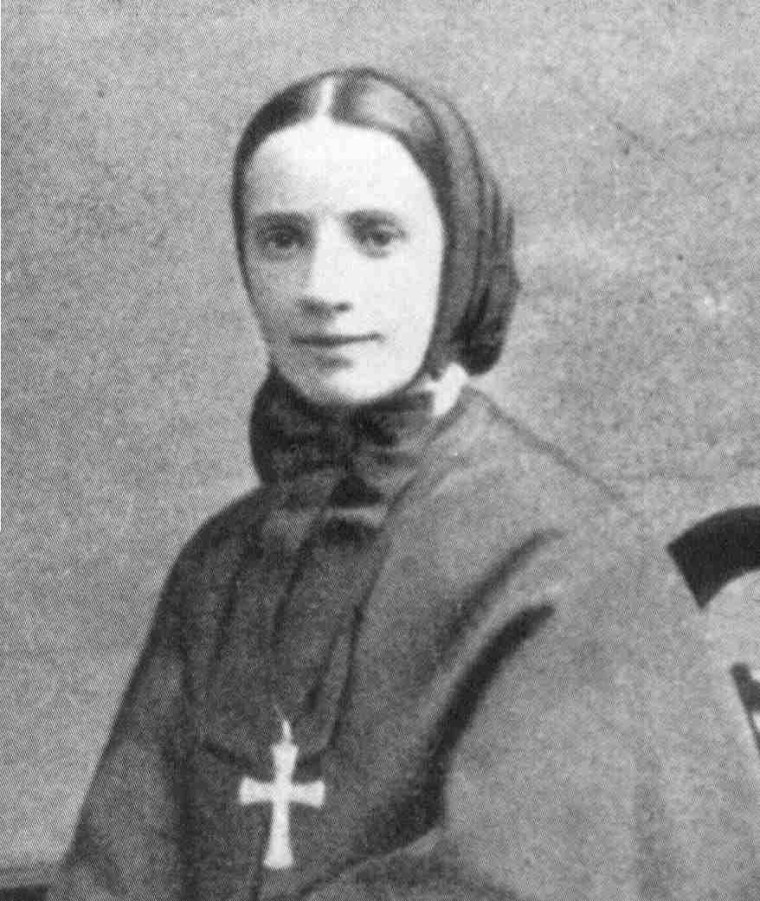
A few weeks ago I complained about a plan to erect statues of influential women who helped to build New York City as it is today. My beef was not with the idea of honoring outstanding females but rather with the fact that a vote was held to find potential candidates and Mother Frances Cabrini who received the most nominations and twice as many as the second place candidate was eliminated from consideration by the committee. I argued that Mother Cabrini’s contributions to immigrants not only in that great city but in others throughout the country were immeasurable. In fact she is known as the patron saint of immigrants everywhere in light of her work among the poor who came to New York City from all over the world.

I was not the only one who was upset by this slight even though the committee explained that the voting was only a way of garnering suggestions. I had nothing against the women who were finally chosen, but I felt that it to deny the incredible work and sacrifice of Mother Cabrini was unfair, especially in light of the difficulties that all immigrants to this country have and continue to endure even in the present day. Acknowledging her would have been a way of commemorating all immigrants and the positive impact that they have on our country. It seemed irrefutable to me that by leaving her from the final list a grave mistake had been made.

Ordinary citizens, celebrities and politicians took up the cause to right this wrong but received little leeway from the committee who stood firm on the choices they had made. After much criticism that Mayor Di Blasio called “manufactured,” the governor of New York, who is a descendent of an immigrant Italian family, announced that the state will finance a statue to be placed at some location in New York City to honor Mother Cabrini.

There has been much disagreement of late over the observance of Columbus Day. Many places in the United States have chosen to rename the national holiday, Indigenous Peoples’ Day. While there are indeed legitimate arguments that Christopher Columbus is not someone who should be heralded as a hero, the truth is that in many Italian communities Columbus Day has become a traditional way of celebrating Italian Americans in this country. Columbus Day parades and activities have become part of the celebratory fabric of cities like New York, Chicago and Boston where many Italian immigrants first lived after their treks across the Atlantic.

Christopher Columbus is honored in most places because of the heroism that it took for him to sail across the waters into an unknown world at a time when many still believed that the earth was flat. We now know that he was actually hoping to get to the far east but the Americas were in the way. He was not even the first European to explore the land either, and a kind of cultish set of beliefs grew up around his reputation that led to school children being taught questionable information about him for decades. Now that we are more informed there are many who just want to throw him in with a pile of deplorables.

I can think of arguments both for and against having a national holiday named for him, but I don’t see a great deal of harm in allowing Italian Americans to have their celebrations centering on him any more than I worry about Hispanic Americans enjoying Cinco de Mayo even though neither has much to do with the United States. Columbus never once set foot on north American soil nor did he interact with the indigenous people who lived here. On the other hand, Mother Cabrini did incredible work at great sacrifice to build hospitals, orphanages and schools. The appropriateness of celebrating her is so obvious to me.

Even though Mother Cabrini was a religious woman her work was never exclusively for those who shared her faith. She gave of her talents to anyone in need. While she worked in the name of God, what she did for immigrants was an equal opportunity gift to our nation, and one for which not just Italians or Catholics benefited, but all citizens of the United States.

It’s sometimes difficult to find perfect heroes. We tend to be quite critical of virtually everyone, finding fault even after someone changes. We are prone to tear down reputations and statues more than other countries do. When we have a chance to honor someone as wonderful as Mother Cabrini we need to jump at the chance.

I applaud Governor Cuomo and the people of New York who took a proactive stance and decided to do something other than merely complain. I love New York and can’t wait to visit one day so that I might see how the people ultimately decide to honor Mother Cabrini. She is a role model for all women and for all citizens of the United States. In fact our country would do well to have more like her in the craziness of today’s climate. This is a win for everyone.   

Our Hunter Gatherer Past Present and Future

evolution

Attempts to understand the many conflicts between people across the world can be rather confusing. Sadly most of them occur because of perceived religious or ethnic differences. Race is often seen as a dividing factor when in reality the genetic differences between one group of people and another are generally superficial. The reality is that when taken down to a biological level we homo sapiens are more alike than different. The things that divide groups generally have more to do with environment than biology. Mankind’s history is sadly one of creating alliances to maintain or grab power and using manmade concepts like ethnicity or religion as rationale for struggles to get a fair share of the world’s resources.

Survival has always lay at the heart of the human experience. Our ancestors moved from place to place in search of food and shelter for thousands of years before learning how to take control of nature through farming. Suddenly the idea of claiming the land and settling down became a way of life for much of the world’s population. Obviously  this new advance created unexpected problems that are still the focus of most of the problems that plague us today. Determining who gets what and how to divide resources is the stuff of politics and conflict particularly as the population grows. Over the course of history the concept of survival of the fittest has all too often meant the ones with the biggest clubs and the most stuff.

Our genetic ancestors were often a violent bunch not so much because of the DNA that they carried as for the need to fight for food and a place to sleep at night. Scientists have found the remains of people from tens of thousands of years ago that show signs of blunt force trauma. Life was often brutish and short for those from whom we descended. It’s likely impossible for any of us to truly understand what kind of daily challenges they faced. We judge them from a perspective of hindsight.

Wars between people still rage today. Most of the problems in the Middle East center on religious differences that take the form of political ideologies. All across the globe we humans argue over sociological concepts and their effects on the fair distribution of resources and justice. We create alliances and rant about differences when the reality is that what we all really want is a place to call home that is safe and filled with the comforts that we need to survive our time on this earth. We long for the freedom to be left alone even as we cling to relationships. We are living breathing contradictions and keeping us all happy seems to be an almost impossible task. Thus we can’t seem to all settle down into peaceful coexistence in spite of one valiant attempt after another throughout the long stretch of history.

There are only so many ways to tell a story. There are major themes that tie together the human search for peace and tranquillity. When all is said and done the king is not so different from his servant. The things that separate us from one another have very little to do with our natures, but everything to do with how we view each other. We create artificial structures and definitions in our attempts to explain things that we don’t understand. Sometimes that process leads us to false conclusions and grave misunderstandings.

In a sense we are all still hunter gatherers of a sort. From the time that we are young we begin the training that we will need to one day leave our homes in search of work that will provide us with the funds that we need to purchase our food and clothing and necessities. Our daily grind may be less dangerous than that of the primitive people from whence we descended, but the idea of finding a way to survive is still the basis of our endeavors.

The most remarkable thing about humans is that we long to for lives that are more than just an unending repetition of work. We are innovative and our creations have given us incredibly rich and remarkable existences that were unimaginable to our ancestors. History has not been just about our wars with one another. It has also included our better natures and the creation of arts and sciences. We have used our remarkable intellect to impose our will on medicine and music. We have civilized our barbaric ways so much that we are gravely appalled when we see evidence that we have not evolved as much as we would like to think that we have.

Our human past is filled with both horrendous mistakes and great advances. We often learn through trial and error. Our best efforts seem to occur whenever we set aside our differences and operate from a sense of concern for a common good. None of us are perfect and neither are our decisions, but it is possible to rise above anger and fear. Such moments created the Magna Carta, freed slaves, and eliminated murderous tyrants.

As I look around today I see a preponderance of alliances formed out of concern for a world that seems to be out of sync. It’s difficult to know how to think or feel. We are weary of the battles with one another because we instinctively understand that we should not be enemies. We want the same things but have different ideas about how to achieve them. Sadly the old ploy of dividing us into warring camps is being used rather effectively all across the globe. Our ethnicities, religions, socio economic statuses and political leanings are part of a grand power struggle that is in fact little different from all such maneuvering in the past. It’s a dangerous game that we should refuse to play.

I will continue to speak out against the death penalty but I will not turn my back on those who believe that it is an effective tool to fight crime. I believe in the tenets of my Catholic faith but I will not use them to hate those who think I am deluding myself with religion. I respect the human made differences in philosophies and ways of living because I understand that when all is said and done they are only superficial aspects of our most basic desires. People are breathtaking and the fact that they represent so much variety makes them all the better. Perhaps one day we may even learn how to hunt and gather in peace.