I Have No Idea What I Did

Photo by cottonbro on Pexels.com

I suppose that turning twenty one is supposed to be some kind of right of passage, a milestone worthy of a bit more celebration than usual. In truth I can’t even remember my twenty first birthday. I may have done something special but if I did, I have no memory of it. I had been hurdled into adulthood the previous summer when it fell on my shoulders to get help for my mom when she first presented symptoms of what would later be diagnosed as bipolar disorder. Without warning I was tasked with finding a doctor for her and making sure that my younger brothers were okay while she was in the hospital. I said goodbye to my youthful naïveté and shouldered responsibilities that threatened to overwhelm me. Somehow I found the courage and strength to rise to the occasion so well that when my twenty first birthday came several months later it was an underwhelming moment. 

I have no idea what I might have wanted to do had I been able to enjoy a normal celebration of being officially a legal adult with all of the privileges of purchasing and enjoying a glass of wine. I’ve never been drawn to social drinking because it takes very little to get me so lightheaded that I almost fall asleep. The one and only time that I did drink too much I hated how I felt the next morning and resolved to never dishonor my body in that way again. While I enjoy an occasional glass of wine or a really good margarita I have never felt really compelled to imbibe. I’m one of those people who can honestly say that I would be willing to live without alcohol for the rest of my life if someone offered me ten million dollars to do so. 

I must have had some kind of party because until the day she died my mother never let my day of birth go by without showering me with gifts, a cake and some ice cream. No doubt she had some kind of surprise for me on that special occasion because she was feeling quite being treated for her illness. I know that she was busy looking for a job and would soon land the one that she would keep until retirement at the University of Texas Health Science Center. She had been so discouraged in her hunt for work but I think the good Lord was just waiting to help her find employment with people who would be incredibly understanding of her mental illness. 

I had just learned that I was pregnant only a few weeks before and I suspect that knowing that my first child was on the way was much more important than turning twenty one. Back then nobody seemed to know not to drink while pregnant so it’s a good think thing that I had no inclination to do so. I just know that I felt emotionally much older than the age indicated by my year of birth. My baby face not withstanding, I had become very mature rather quickly as had many of my friends from that era. Those were the Vietnam War years and the nightly news programs reminded us daily how many of our peers were dying in that strange war in a faraway land. Somehow the silliness of a twenty first birthday party did not seem that important. 

I suppose that if I had been in a position to do anything I wished I might have traveled to some exciting place like New York City, or even London or Paris. The only time I’d been on a plane was for my honeymoon and then we had gone to New Orleans. When I think of how I married before reaching the age of twenty one I am stunned that I did so well because as a bride I was still such a child. It took the events of my mother’s illness the following summer to shock me into becoming an adult. 

I may not have had the experience of living on my own at college but I became strong and independent just from living in the school of hard knocks. I learned that I was a much more capable person than I ever thought I was and I set aside my shyness so that I might become an advocate for my mom. Later I would be a protector of my daughter and students as well. I was unafraid to do whatever I needed to do to make the world a little bit better place. I am still amazed at myself because not even I knew I had it in me.

In all honesty I never thought about my twenty first birthday until a group was reliving their youthfulness with stories of that auspicious occasion. They were stunned to learn that I have no memory of that day whatsoever. I think they may even have felt sorry for me but I was being totally honest when I told them that it did not matter at all to me that such a day was so lacking that I cannot remember it. 

People often laugh at the way I seem to have vivid recollections of virtually every aspect of my life. As my cousin often says everything with me is a story. Turning twenty one was not one of those times. I was far too busy adulting to think about celebrating a moment that had already come for me. I suppose that in many ways I became an old soul early on but I’ve never allowed myself to act or feel old. Becoming an adult for me was always about accepting challenges and responsibilities and in truth I don’t think I missed a thing by jumping ahead in my development. All I really remember is how good I felt about helping my mom and my brothers. No adult beverage has ever been capable of bringing so much joy.

Learning To Just Say No

Photo by Anete Lusina on Pexels.com

“No” is such a simple word, only two letters, one syllable, a common utterance from toddlers. Why is it often so difficult to say? I was taught to be kind and generous but not so much how to walk away from situations that feel toxic. During my lifetime I have more often than not been the peacemaker, the person who gives in to stubbornness. I try to get along and sometimes that has meant volunteering to take on projects which nobody else was willing to accept. I literally run from high pressure sales people because once they begin their spiels I am like a prisoner to them, unable to flee from their grasp. “No” is a word that I have had to literally practice using and even now it is one of the most uncomfortable utterances in my lexicon. 

I was an adult with two children and a great job as a teacher when I first learned how to really say, “No.” I was working with exceedingly troubled youngsters who had overwhelmed my mind with sorrow for the conditions that I saw them enduring. They were on my mind twenty four seven and I was doing everything possible to create positive change for them. I became so obsessed with my crusade to help them that I was exhausted and all too often emotionally fragile. It took my friends Pat and Bill Weimer to bring me to my senses and show me that sometimes saying, “No” was the best medicine for everyone. 

They showed up at my home one evening and commanded that I put on my shoes and go with them for a brief respite from my lesson planning and paper grading. Of course I did not know how to refuse even though I mentally considered how far behind I would be if I suddenly left my work. I meekly suggested that we just stay at my home where I might be able to do some tasks while still talking with them but they were adamant that I accompany them to a local restaurant and of course I did not yet know how to deal with adamant commands. 

After ordering margaritas and nachos they got down to business. They told me that they had watched me becoming so emotionally involved with my work that I appeared to be harming my own health. They worried that I was accepting too many responsibilities and getting too personally involved with the tragedies of my students. They urged me to back away just a bit both for my sake and that of my students and family. They reminded me that we give ourselves oxygen first in an emergency on a plane so that we will then be able to help others. If we reverse the order we may pass out and be of no use. 

Bill was a NASA engineer and he spoke of the crew members who had died on the Shuttle during take off. He asked me what I thought NASA would do about the loss of life and then bluntly informed me that every person with be replaced. He reminded me that if I made myself sick attempting to please everyone that someone would step in as a substitute for me. His words hit home in a profound way. 

We have to know our physical and mental limits, our personal situations. Sometimes that means having to turn down requests for our time, money or talents. We should no more stretch ourselves to the point of breaking than we would spend the baby’s milk money on something frivolous that a salesperson is urging us to purchase. Saying “No” can be the kindest thing we might do depending on the situation, particularly when it means being good to ourselves. If we are rested, relaxed and happy we are more likely to have the wherewithal to help others than if we are dragged down with too many responsibilities and worries. 

I’ve learned how to do my part in the ebb and flow of the world without running myself into the ditch. I’ve had to say “No” over and over again when my instincts told me that I was already doing more than enough. I learned to prioritize my time and talents based on the most immediate needs of those around me. Sometimes that meant having to choose where to place my energy and when to just walk away. 

I worked for a principal who literally changed my life by offering me incredible opportunities for growth in my career. He and I were an amazing team and the years that I worked for him were definitely my best. I would have walked over glass for him and I know that he would have gone to great lengths to support and defend me. Sadly we reached a point of going different ways because I knew that I had to say, “No” to one of his last requests of me.

My mother was in the throes of one of her all time worst cycles of bipolar disorder. My brothers and I had worried that she was so sick that we might lose the battle with her illness that we had waged for so many years. I was floundering at work and at home as I attempted to balance my responsibilities. Suddenly my boss asked me to move to a new school and new challenge with him. It would require a steep learning curve and lots of extra effort on my part at a moment when I barely had enough time to keep all of the balls in the air that I was juggling. My mother was in a psychotic state, a daughter was enduring some major physical problems and I was feeling as though the weight of the world was bearing down on me. 

I figuratively put on my oxygen mask and took a deep breath. Once the air filled my lungs I understood that it was not a good time for me to add a new and very different job to my resume. I turned town the principal’s plea that I follow him even as I saw that it hurt him. It was a “No” that I had to say but it was perhaps one of the most difficult decisions of my life. 

Ultimately it was the right thing to do. I had to put my family first and in doing so I ultimately had more and more time for my job. They became healthy again and so did I. If I had pushed myself to please the good man who had mentored me so well I suspect that I would have been ineffective in every phase of my life. I had finally learned the importance of that one little word that is often so powerful. 

We tell our children to just say “No” to temptations and toxic situations without admitting to them how difficult doing so can be. Perhaps in those moments when they are very little and exclaiming their unwillingness to do as they have been asked we might learn to give a little and find out what is making them reluctant. Teaching them how to listen to their instincts might one day save them just as my friends Pat and Bill did with me. “No” can sometimes be the kindest word that we ever use.   

Growing Up With Television

Photo by Anete Lusina on Pexels.com

I am officially a member of the first generation of children who had televisions in our lives. I vividly recall my fathering installing our family’s first t.v. in our home. He had purchased the typical version encased in a mahogany cabinet that he proudly set at one end of the room near a plug. My mother found two comfortable chairs for her and my father and I lay down on the floor on top of a soft rug. It was an amazing moment when the grainy black and white picture came into focus and we were able to both see and hear the sounds of entertainment in the privacy of our living room. Before that moment radio had been our source of music, comedies and mysteries that required us to imagine how the characters and performers looked. Now we suddenly had the thrill of using two of our senses at once and it was delightful. 

Back then the hours and variety of broadcasting were limited and most programs lasted no more than thirty minutes. Mornings often featured shows for children like Howdy Doody and Captain Kangaroo. My mother carefully screened my viewing habits and made sure that I rarely spent more than thirty minutes in front of the television before turning off the power and sending me to play. She herself rarely watched anything during the daytime hours. It was my father who seemed to rather quickly become addicted to this new technology. 

As soon as he came home each day Daddy liked to watch the evening news which was a quick thirty minute review of the day’s events featuring a reading of facts with virtually no commentary. After my father had learned about the happenings we would adjourn for dinner. My mother insisted that we eat at our kitchen table so we never indulged in eating frozen dinners from a tray while watching our favorite shows, a trend that slowly became popular as people become more and more enchanted with the entertainment. Once we had enjoyed some family time my father carefully selected mostly comedies to watch for an hour or so each evening. Depending on the content of the program I got to watch with him and my mother but not for too long because my mom did not want me to become obsessed with the new fangled invention like some of my uncles already had done. The viewing time ended for everyone each evening with the National Anthem followed by a stagnant test pattern that stayed on the screen until the following morning. 

The early televisions were built with all kinds of tubes that had a tendency to fail and so the job of t.v. repairman came into vogue. One of my father’s cousins made a small fortune traveling from home to home to fix screens that suddenly went black or began to flip continually. We had our own guy who came in a paneled truck filled with all of the parts that he might need to return a good picture to our television. My brothers and I enjoyed watching him do his magic as he examined the mysterious electronics of our machine to find burned out bulbs and loose wires. 

After my father died we were still watching programs on the model that he had purchased many years earlier but eventually that original could no longer be repaired so my mother purchased a new version with a much bigger screen. By that time programming was much more interesting than it had been in the early days. There were even shows that lasted an hour and the quality of the writing and acting had greatly improved. My mother had also become more and more willing to allow me and my brothers to spend more time watching our favorite programs as long as our homework and chores were done. She even made Saturday nights extra special by serving dinner and snacks as we watched shows until late in the evening. 

Some of our friends and relatives began to purchase televisions that featured color. It was a marvel that was as stunning as that first moment when my father brought television into our lives. It would be awhile before our family actually owned a color television but visits to my cousins’ homes were delightful because we got to see westerns and dramas with all the hues of the spectrum. I remember being so fascinated that I spent more time sitting next to my uncles than visiting and playing with the kids.

Of course we all know the rest of the story. Televisions are bigger and more reliable than ever before. There are hundreds of channels and streaming services that provide choices twenty four hours a day. There is never a moment when someone somewhere is not reporting the news, even in the middle of the night. Huge screens hang over our mantles like paintings and portraits once did. Sound systems give the feel of a movie theater. Many families gather around their favorite programs for dinner rather than conversing at a table. People lie in their beds watching shows late into the night. Children have their own televisions inside their rooms. The novelty and wonder of it all is gone. We take our televisions for granted as though they have always been an integral part of life. 

When I think back over time I remember the Saturday mornings when my brothers and I quietly went to the living room in our pajamas to watch shows designed just for us. I recall the joy I felt watching The Mickey Mouse Club with my friend Lynda each afternoon and then dreaming of becoming a Mouseketeer. I loved the old comedies like I Love Lucy and Red Skelton but mostly enjoyed the westerns and still love James Garner as Maverick. I felt a kinship with the Cartwright family on Bonanza and longed to be grown up enough to watch late night television. 

Eventually I would have my own family and our viewing habits would center on programs like The Carol Burnett Show, Little House on the Prairie, and The Waltons. Then came cable television and it felt as though our worldview changed with channels like CNN and MTV. In spite of all the possibilities I still most enjoy the kind of thirty minute comedies that I once watched with my father. I always feel a bit sad when my favorites run their course and go away. 

I suppose that as television has evolved over my lifetime so have I. That marvel has been both a blessing and a curse for society. I suspect that we have all too often allowed its influence to dominate and manipulate how we feel about things. I’ve had to turn it off much like my mother once did just to allow my thoughts to be my own. I have learned how to keep a balance and to understand that it is a business with an agenda that may or may not jibe with who I am and what I believe. As long as I view it as entertainment rather than truth I think I will be okay. If I want facts rather than soundbites I know that I have to do my own research but if I’m just looking for a great story and a bit of escape the wonders of television are at my fingertips and a whole world of imagination is waiting for me to enjoy on a big screen that would have made my father smile with delight. 

Step On the Train

Photo by Gabriela Palai on Pexels.com

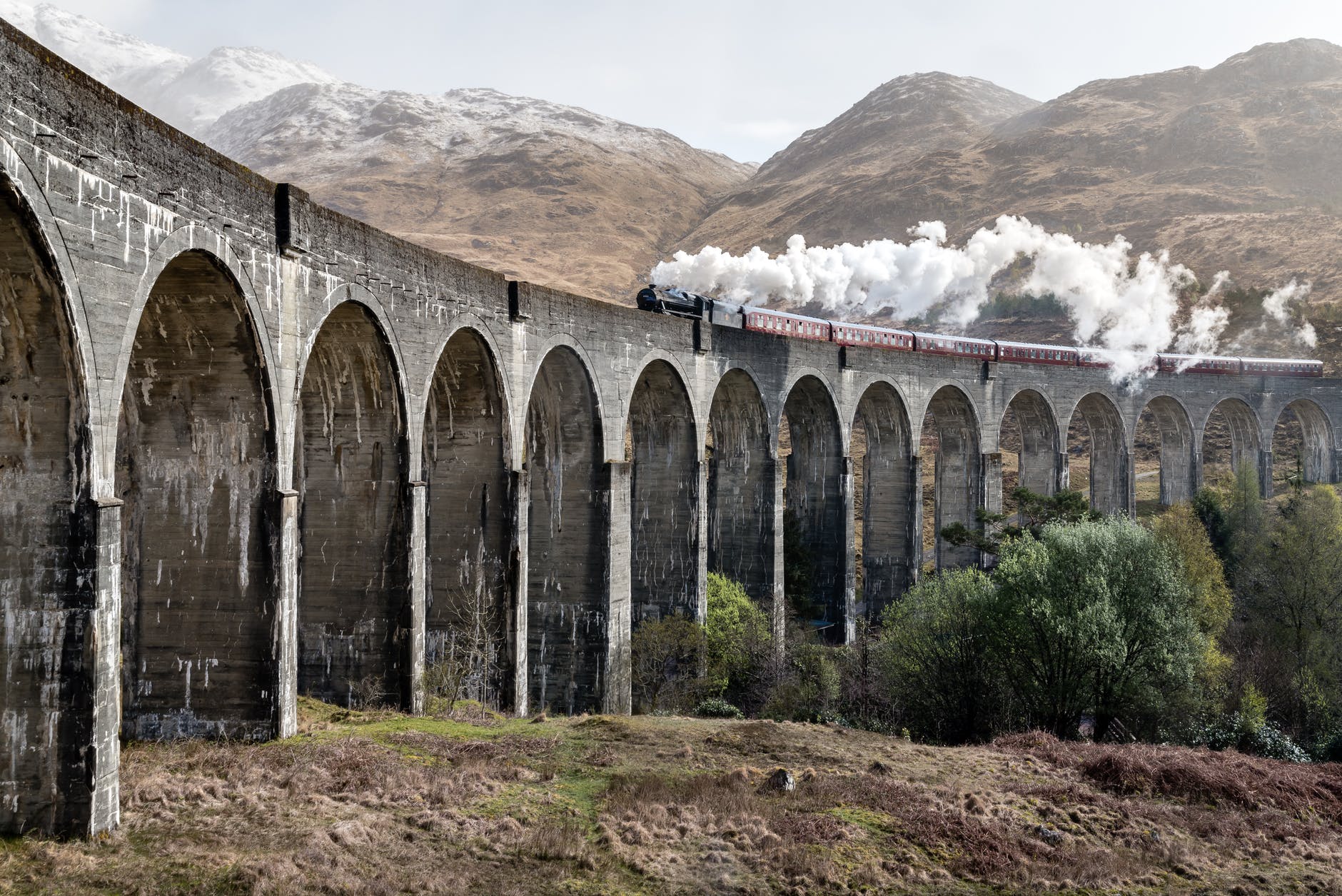
I read a post from Heather Cox Richardson this morning in which she told the story of Frederick Douglass’ escape to freedom. She described how Mr. Douglass had been bought and sold by a number of slave owners, sometimes somewhat kind and sometimes almost murderously brutal. At the time of his attempt to head north to a life of his own choosing he had a job that was perhaps easier than those of most slaves but he was still the property of someone and subject to the whims of his master. At any moment he might have been sold down the river to a life of working in the fields or worse. He fully understood the consequences of attempting to run away in pursuit of freedom but the lure of being his own man outweighed his fears. He stepped on a train with forged papers and headed north. The rest, of course, is history. 

In some ways each of us face moments of truth in which we must decide to take enormous risks. Most of our decisions are not nearly as serious as the possibilities that Douglass faced nor are the consequences of failure. Nonetheless we find ourselves hesitant to change the direction of our lives rather than continue to follow familiar routines that are crushing our souls. It is a normal reaction to stay with the status quo rather than wander into the unknown. 

My own journey through life, even though often difficult, was never once as horrific as that of Frederick Douglass who was born a slave. My crossroads were never life threatening but they were life changing. I had to decide who I wanted to be, what I thought my true purpose was. Many well meaning people had ideas of how they thought my life should unfold but I sometimes felt sick at the thought of following their advice. I understood that I had the capability of being a doctor or an engineer but those careers did not hold interest for me even as those who loved me insisted that I should consider them. I instead wanted to be a teacher, a role that I had played even as a child. When I thought of educating others I felt excited even as I realized that such a job would not bring me the kind of status or income that being a lawyer or business woman would. I knew that I might be anything that I wished, but I only wished in my heart to be a teacher and the people around me saw that as settling for something less than I had the potential to be. I became so confused that I dropped out of college and took time to think things through. I disappointed many who had worked hard to provide me with opportunities that I appeared to be throwing away.

While I was deciding which direction to pursue I had to work and the jobs I accepted should have told me what I really wanted to do. I accepted a position in a daycare center watching over little ones in an after school program. I landed a spot as a pre-school teacher that made me so happy that I still smile when I think of my time there. The leaders at my church asked me to be a director of religious education for children from age three through age five and I pioneered the transition from nuns to lay people. I watched five children in my home while their mothers worked. The hints of what I really wanted to do were loud and clear but I continued to worry that those urging me to do something more exciting and lucrative were right and so I was thirty years old before I re-enrolled in college and chose education as my major. 

By then I was no longer afraid. I let the advice and concerns that I was throwing away my abilities and talents whoosh right over my head. I threw myself into my classes with abandon and joy. I stepped on my own train and never once looked back at what might have been. I found my own personal freedom in being the person that I felt I had been destined to be and never have I regretted my decision to follow my own heart and not the good intentions of others. Even as I knew I had disappointed them, I was true to myself. 

I can honestly say that I went to work happy almost every single day of my career. Of course there were tense times when a new principal came into my world and I knew I had to find a different school because our philosophies did not mesh. I sometimes had students that I struggled to reach and grave feelings of failure when I knew I had not managed to help them. I was almost always exhausted as I worked sixty plus hours a week while also raising a family. When my salary was stagnant and I watched my peers in other fields rising to levels of great economic comfort I sometimes worried that I would never enjoy their status or monetary comforts. Still, no challenge tempted me to step away from being an educator. It was baked into my DNA. 

In the last few years of my career a former principal recruited me to follow him to a public charter school, a place with longer hours, no protective contract, and a work ethic that was demanding. My final risk would be to accept his offer little knowing how much my choice would change my life. It was at KIPP Houston High School that I found my stride and truly realized the impact and importance of my lifetime of work with young students. I knew there that the true joy of my work was to be found in having a meaningful purpose, not a title or an impressive salary. I realized that one student at a time for decades I had made my mark on this world, sometimes in very small ways and sometimes in a manner that changed lives. 

Our hearts tell us what we need to do. They cry out to us to be free to be ourselves. Sometimes they ask us to risk everything in pursuit of a way of life that nobody else will understand. There may be hardships and even danger in following our instincts but it is almost always worth the effort. It is freeing to be able to show the world who we really are. For Frederick Douglass it was a matter of life and death. For me it was of lesser consequence but still a life changing evolution of my soul. Each of us must find the courage to determine how we wish to live and then step on the train that takes us to where we were meant to be.

Weathering the Storm

Photo by Frank Cone on Pexels.com

It had rained all week and she had grown weary of the dark skies and dampness in the air. Even the plants were beginning to yellow from too much water. She had wondered why everything was so extreme, floods in her part of the world and drought in others. Even politics had left the middle of the road and divided everyone into abnormally divisive camps. There seemed no halfway and she was exhausted from the stress of it all. 

She had tried to cope, diplomatically explain why it was important to cooperate, develop ideas together but few had seemed interested in an amicable approach. The Palestinians had fought with the Israelis as though there was no viable solution for their ongoing battles. The people had argued over how to deal with the spread of the virus, whether to wear masks or become vaccinated. Warring divisions, continual disasters, lies and propaganda is how it had begun and it had seemed as though there would be no end to the dreariness that dominated her thoughts each day. “Is this how it will forevermore be?” she had asked herself, hoping that the answer that she so negatively felt in her heart was wrong.

Then she had stumbled upon a conversation with a group of young people. They had seemed so innocent, so likely to be naive and filled with the kind of silly impractical ideas that will never solve a single problem, but she decided to listen anyway. They were passionate in their assessments of what was happening and what we must do to save our planet, our democratic republic and ourselves. They had a grasp of facts, statistics, research. These were not people touting hoaxes as reality. They did not echo the soundbites that dominated most political discourse. They were reasoned, honest, willing to sacrifice at whatever cost to do what needed to happen even if it was difficult. As she listened she felt a smile creeping into her heart and across her face. This was as hopeful as she had felt in a very long time. 

She left the group feeling a tinge of optimism from their energy. She saw that they were far wiser than their ages might have indicated they would be. She realized that those who had criticized such youth as spoiled and unconcerned were wrong. They were looking to the future, creating a plan to forestall problems, not just deal with them as they arose. They did not long for the past but they used lessons from former times to draw conclusions, see patterns, create solutions. She was inspired by the level of critical thinking she had heard from them. It had been so long since anyone had sounded logical or free of bias. 

The rain had fallen in buckets as she drove home but her thoughts had become brighter. She heaved a contented sigh even as she wondered how to transmit the good news of her discovery to the people who had warned her to beware of the younger generation. She wanted to report what she had learned but worried that she would not be able to convince anyone of her pleasant discovery.

She wrote an essay and posted it on Facebook and Twitter. The usual suspects had either liked or argued with her thesis. She wondered if she had changed anybody’s mind and she felt disappointment and a kind of darkening of her spirit as the rain continued unabated. Her cynical mood only felt reinforced as she read that the lawmakers in her state were bickering as usual rather than having conciliatory discussions like the young people who had so fascinated her. The lights in her house had flickered then gone out leaving her once again in the shadows, wondering why so few could see what those young folks had seen. 

The streets had flooded once again. Homes had filled with murky waters while neighbors to the west were fleeing from fires that consumed their homes, their lifetimes. It had been a horrible era that lasted until she was very old and endlessly sad. Then came new leaders who looked so familiar to her. She wondered where she had seen them before and then it came to her. Their hair may have been tinged with gray but they were all those “kids” who had inspired her so many years before. It was their turn to try to clean the mess that had lingered far too long. She knew they had an almost impossible task but somehow she believed in them and once again hope sprung alive in her heart. 

The day had arrived when the future became the present, the present became the past. Now everyone had become as weary as she had always been. They were so tired of the tragedies and disasters and mostly the fighting. They were ready to finally listen and even get something done. Those young people were now in charge and their ideas sounded not just feasible but grand. The sun came out and her face happily glowed with a huge grin. She realized that hope had finally arrived.