Our Town

https-blueprint-api-production.s3.amazonaws.comuploadscardimage5747069ae45d95-fc22-47dd-b5f7-0426894a2201 (1)

Where to begin? Normally writing comes so easily to me. My words usually flow like a river, but right now thoughts of real moving water, not words, are occupying my mind. My beloved Houston metropolitan area is under siege. The invader can’t be contained or rendered ineffective, for it is nature whose fury is inflicting painful wounds on the people and the places that I love. The after rains of hurricane Harvey have pounded neighborhood after neighborhood with an intensity that feels unrelenting. Innocent people minding their own business have had everything that they ever owned ripped away by waters that rise without mercy inside their homes. Those of us who have not yet been affected by the floods watch helplessly as our neighbors ride from their water logged homes in boats and on helicopters. Our levels of anxiety rise and fall as the rains start and then stop. We run back and forth to bathrooms and closets each time a tornado warning sounds. All we can do is wait and hope and pray, but the predictions are so dire. Surely we will be fine, or maybe we too will become members of the wet, confused and homeless crowd whose faces break our hearts.

I have lived in Houston, Texas or one of its suburbs for all of my sixty eight years. I have always been so proud to call myself a citizen of this wonderful place. The people here are quite special, friendly and helpful. I overlook the heat and mosquitoes and other irritations because there just isn’t a better place that I have ever found in which to raise a family or live a life. It’s a vibrant and diverse city that is just as comfortable at the opera as at the rodeo. We boast rocket scientists and refinery workers. Everyone regardless of background or ethnicity is a” good ole boy” or “gal.” We love to help those in need, and when New Orleans was devastated by hurricane Katrina we opened our hearts, our homes and our wallets to the people who had suddenly become homeless. It’s who we are. It’s what we do.

Now our own city is undergoing an historic flood unlike anything that any of us have ever seen. We have ordinary citizens hauling their fishing boats to areas where our people are trapped by the flood waters. Nobody asked them to stay awake all night long ferrying one group after another to safety. They just understood that this was something they had to do because they are Houstonians. We are the city that rolls up its sleeves and takes care of one another whether or not we get paid or receive praise. We are good kind people which is why we ignore the flatness of the land and the lack of enchanting landscapes. We find beauty in the ribbons of bayous that dot our neighborhoods. We love our gulf which is muddied by the silt from the Mississippi River. We make do with what we have and find the joy in even the ordinariness of life.

I am quite sad today. I see the gashing wound that runs from stem to stern on the place I call home. I worry and wonder when the sun will finally choose to return. I’ll gladly take the sizzling temperatures as long as the skies are blue and there is no longer a threat of deluge on my home and those of my family and friends and neighbors. I pray with every fiber of my being that we have already seen the worst and that the rains will somehow miraculously go away so that we might begin to rebuild the homes and the lives that have been so mistreated by Mother Nature.

I know not what the next couple of days will bring. I desperately want to believe that it will only get better. I am weary of rain and fear. I am ready to rally around my fellow citizens and make my city even more wonderful than before. I wish more than anything to be able to reposition my rose colored glasses, but the whispers of reality make me think thoughts that are not happy at all. I have to be prepared for more horrors. I have to be strong for whatever comes. Still I know that I will be okay mostly because I live in Houston. The people here will not let me down, not even when the night grows dark and new terrors tempt me to lose faith in this glorious city.

This is Houston, the place where I was born and have chosen to be. I don’t have any idea how we will bounce back from this, but I know we will. Until the storm has gone away and the skies clear once again I pray that God will be with us and hold us in the palm of His hand. He knows of our goodness. Surely He will provide.

Total Eclipse of the Sun

eclipse

This happened for a few hours on August 21, 2017. Much of the United States of America was profoundly united by the majesty and mystery of a total eclipse of the sun. I wasn’t lucky enough to be in the path of totality, but the images of a 66% eclipse that I saw in the sky were breathtaking nonetheless. Somehow I was reminded of how infinite and mind-blowing our universe truly is, and how small we are when we consider its expanse. Still, the fact that we have unlocked so many secrets of the cosmos with our mathematics and science is humbling to realize. We were all ready to witness this historic event because astronomers have mastered the tools to make such predictions. We saw images streamed from NASA and wore glasses that allowed us to look heavenward without doing damage to our retinas. Later we shared our experiences with people in distant places using technology that is as amazing as nature itself. Somehow this incredible moment left me in awe of not only the heavens, but also the intellect of mankind.

One of my favorite all time books is The Ascent of Man by Abraham Bronowski. It is a chronicle of the leaps of human knowledge that have brought us to the advances that we often take for granted today. The miracles of farming, construction, astronomy, physics medicine and technology that we enjoy are abundant, and provide us with a standard of living unimagined even two generations ago. Nonetheless we must be careful of relying on our hubris. Just as gazing at the sun during an eclipse without protective eyewear may cause us to go blind, so too will thinking that we unequivocally have all of the answers cause our downfall. We would do well to consider that our place in the universe is but a tiny speck. There is so much that we have yet to learn, but happily there are minds of geniuses working to continue to expand our knowledge just as they always have. I marvel at the thought of what is yet to come.

I sometimes like to consider what developments I would like to see. It would be so wonderful to be able to eliminate mental illnesses, or at least control them effectively. How nice would it be to have an injection or a pill to eliminate addictions to drugs, alcohol or food? I dream of a time when we are able to produce forms of energy that do no harm to our environment and are readily available to anyone anywhere. I’d love to see advances in food production that would eliminate hunger in all corners of the world. The possibilities are endless, and often the most humble sounding discoveries are the ones that have the greatest impact on society.

We still have so much to do with regard to bringing peace and synergy to our world. I often feel that the best possible human advances may one day come in the way we live together in harmony. We still have so much work to do in that arena, but if we can come together to watch the moon blot out the sun, then maybe the potential for humanity to ascend to a higher level of integration is truly there. I’d like to believe that this is not just an idealistic pipe dream.

At the moment in which the eclipse in my town reached its apogee I felt a kinship with the universe and its people. After all it seemed as though we are all more alike than we are different. I viewed the event in a park surrounded by hundreds of fellow amateur astronomers. Everyone on that day in that place was smiling. Somehow there was no room for jealousies or comparisons of one another. There was a definite feeling of unity and a spirit of cooperation. Everyone cheered the passing of the moon in front of the sun and declared that it was a remarkable sight that they will never forget.

We all agreed that we can’t wait for the next big event that will take place in the USA in 2024. That time the totality will happen right in my home state, and I plan to watch it with my children and grandchildren, By then they will be either in college or all grown up  with jobs and maybe even families of their own. The sun will have risen in the east, the moon will have illuminated the nighttime sky and the earth will have rotated on its axis for over two thousand days. So many changes will have taken place, but our fascination with the sun and the moon and the stars will not have waned. Somehow those celestial bodies still rule over our hearts and our minds. We are as fascinated by them as primitive man was. In their presence we realize both our potential and our limitations. We long to totally understand them and we marvel at their power, or at least we should.

Our planet is but one infinitesimal part of a universe so vast that we cannot truly imagine it. We measure our history with the rising and falling of the sun.

Everything

Turns,

Rotates,

Spins,

Circles,

Loops,

Resonates,

And

Repeats.

Circles

Of life,

Born from

Pulses

Of light,

Vibrate

To

Breathe,

While

Spiraling

Outwards

For Infinity

Through

The lens

Of time,

And into

A sea

Of stars

and Lucid

Dreams.

—- A poem from Suzy Kassem

What Did You Do This Summer?

summer-vacation

“What did you did this summer?” It’s a question that will no doubt be repeated many times in the coming weeks as schools open and students return to classrooms once again. I’ve answered that query countless times, but only once has my answer held as much transformative impact as it does for this particular summer.

The last time that I felt as changed by events was when I entered the fourth grade after my father died. I wasn’t doing very well then. I was still quite afraid of what the future might hold for my family.. Everything was so uncertain and my faith that all would eventually get better was severely shaken. Our family would prove to be up to the task of moving forward with only one parent, and I would learn how truly strong we actually were, but it would take a great deal of time for me to realize that. This year’s ringing of the school bells marks another moment when I have been severely tested, but this time I have enough confidence and wisdom from experience to understand not only that I will be alright, but also that I have found a newfound contentment that comes from the certainty of knowing what is most important.

I am the first to admit that I am a planner and control freak. I’ve already placed appointments on my calendar for December. I like to have routines and keep things flowing smoothly. Deciding how I was going to spend my summer was no exception. I wanted to take my grandson to New Orleans in June because he had never been there. Our trip was indeed quite successful, but it was only the beginning of all the wondrous things that I was prepared to do, including experiencing a grand adventure traveling to Cancun and attending the wedding of a very dear friend. That particular journey was so incredibly exciting and made even better by the pleasant emotions that I shared with others who attended the ceremony who also happen to be quite important to me. I returned from my trip filled with joy and so many stories. After such a remarkable excursion I might have been content to spend the rest of my summer at home, but I had planned for so much more to come.

After spending the Fourth of July holiday with all of my children and grandchildren I was slated to relax for a week in a lovely Texas state park with friends Monica and Franz. Then I was traveling to Colorado to meet up with my brother and his family so that we might drive together to Wyoming to observe the total eclipse of the sun. I already had purchased the special glasses that I would need for the viewing, and I was beyond excited about that once in a lifetime event. I had no idea just how radically everything that I had scheduled would change, but it all did.

On July 3, my husband had a stroke as many of you who regularly read my blog already know. The thing is that as soon as I saw him lying on the floor unable to get up, with his mouth and eye drooping, nothing else mattered to me but the fact that he was still alive. If I had been required to give up every single material item that I own to keep him with me, I would surely have agreed to do so. As it was his symptoms disappeared within minutes and he is doing well these days even though he is not yet out of the woods. We’ve been mostly tied down to the house and our days have been rather quiet and uneventful. Because there is an increased chance that he will have another stroke within the first ninety days after the one that occurred in July we have cancelled all of our out of town plans, and it doesn’t bother me at all.

What I did this summer is change. I don’t want anything other than to enjoy the moment that I happen to be experiencing. I am finding happiness in the most ordinary activities, and I am so filled with love that my heart is fairly bursting. I have had the time to take stock of my blessings and they are many. I feel like a newlywed with my husband. After almost forty nine years of marriage I admit that I had been taking him for granted, but now I treasure every second that we are together. I like to hear the sound of his voice, and things that sometimes irritated me before now seem quite adorable.

I have also learned to appreciate the challenges and struggles that my friends endure. I find myself thinking about the shut-ins and the widows, those fighting illnesses and those who are afraid and uncertain. I am no longer as ignorant of their feelings, nor as cavalier about how brave they are. I have a new found respect for those who are wounded are marginalized. I have realized in a very spiritual way that nothing on the face of this earth is ever more important that its people.

I have enjoyed my interactions with friends and family as never before, and in the process I have remembered and appreciated those who helped me to become who I am today. I have had many thoughts of my departed mother and mother-in-law, and my only regret is that I never truly thanked them enough for the love that they showered on me. Now I understand how important it is to let people know exactly how much I care about them, not tomorrow but today.

I am like a whole new person, and it feels so very good to be me. I have found a contentment that is peaceful and fulfilling. I know that God is with me and that I have never been alone nor ever will be. I may be tested again, and my worst fears may come to pass, but I will be okay. This is what I learned this summer, and what a glorious time I have had reaching this destination! 

When In The Course

228935-room-where-the-declaration-of-independence-was-signed-at-independence-hall-in-philadelphia-pa-philadelphia-united-states

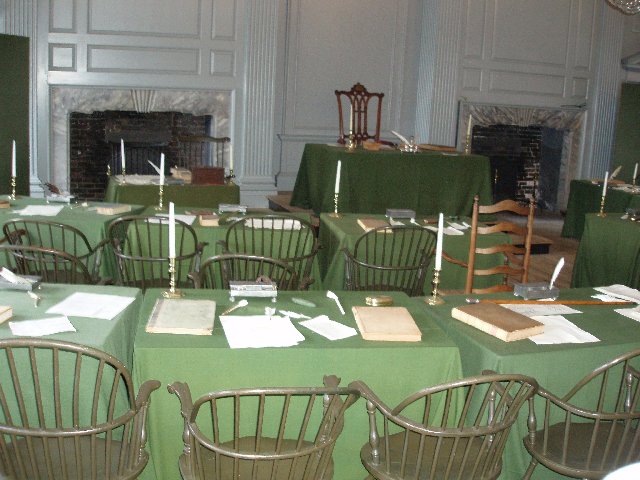
It always amazes me how we humans generally follow the rules. On any given day millions of people adhere to speed limits, stop at red lights even if there is nobody around, stay inside their designated lanes. There is always an implied threat of being caught and given a citation for breaking the law, but mostly people do what they are supposed to do because they realize that the statutes have been set in place for safety and the common good. We innately understand the value of working together for the benefit of all even if it is sometimes a bit inconvenient.

There are thousands of examples of how most of us know, understand and appreciate conformity to the directives that keep our society running smoothly. Now and again, however, we encounter situations in which it becomes uncomfortable to simply sit back and adhere to the status quo. In those moments we feel a grip in our stomaches and ask ourselves what our role should be. Do we sit back and quietly watch or do we rise up to voice our concerns? When is it best to avoid the fray, and when must we say something lest we no longer be able to gaze at ourselves in the mirror? How do we decide which aspect of a complex disagreement is the most right and just?

Since I am a huge fan of history I tend to be a documentary fangirl. Netflix is all too aware of my viewing preferences, and they continuously alert me to any new features that are available for my viewing pleasure. Recently they suggested that I might enjoy a program about Winston Churchill and his role during World War II. The story began at a time when much of the world was doing its best to ignore the warning signs that Adolf Hitler was a maniacal and dangerous dictator. Churchill was one of the few who consistently voiced concerns about the direction in which Germany was heading, in part because he was so vocal, Churchill’s views were initially thought to be a bit kooky. Nobody wanted to engage in controversy, and doing so was thought to be risky. Thus most of the world donned rose colored glasses and went about their routines hoping that the shenanigans in Germany would at worst be little more than an annoyance. Of course we know that such was not the case and Churchill was proven to be the right voice at the right time. His analysis of Adolf Hitler was insightful and he never quelled his criticisms of the dangers that he saw unfolding in Europe. If not for his steadfast diligence, Britain might have endured the same fate as Czechoslovakia, Poland and France.

Churchill somehow sensed that quietly accepting Adolf Hitler and hoping that he would simply fade away was an untenable stance. He raised his voice at a moment in time when it was unpopular to do so. People were tired. They had lost much in World War I. They worried that becoming divisive might shatter the peace that was precarious at best. it felt better to just ignore the craziness, keep the boat from rocking. Eventually the entire world would be forced to take a stand, choose a side, something that most had hoped to avoid. The question that lingers to this day is what people might have done from the very beginning to prevent the carnage that ensued. How different would that phase of history have been if Hitler had been defied not just by other nations, but by the German people from the moment that his ideas began to appear unhinged? 

The problem with such wishful thinking is that it is utterly useless after the fact. It is only in the moment that each of us has an opportunity to be heard and to do what we believe to be right. The trick is in unravelling the complexities of a situation and reaching the heart of the matter. To be willing to stand on a mountain top warning our fellow human beings of danger, we must first believe with all of our hearts that we will not be viewed as just another boy crying wolf. We must sense that what we have to say is so important that to secret it away in our hearts would be morally wrong. In such instances we sense that we must bend or even fracture the mores and rules that confine us so that our warnings might be heard.

My Facebook wall has been filled with impassioned pleas for love and understanding of late. Mothers worry about the contentious world in which their children must grow into adults. It feels as though hate is festering in the most unexpected places. We can’t even get a sense of well being from listening to our president, because he is more concerned with defending himself than being a beacon of hope. It feels as though we are being torn apart as a nation and within our relationships. So many are choosing to lock themselves away from it all. Only a few brave souls are willing to take the heat of criticism by voicing their concerns. The rest try to pretend that the unrest will soon all just go away, but even recent history has shown us all too clearly that the issues that trouble us only become more and more complex when we ignore them. Furthermore, they are rarely resolved when we are unable to find ways of working together.

I truly believe that the evil of this world represents a small minority, but it is nonetheless up to all good people to keep it in check. The hate that we see must always be called out for what it is. There can be no excuses, no watering down of our contempt. We cannot just look the other way when we see it, for it is when the good people join forces that they transform into an immovable power. They cannot be stopped until the depravity is eradicated. This truth has been demonstrated time and time again, so I wonder why we are so often reluctant to use it.

The fact is that there are groups of people in our country today who advocate the most detestable ideas possible. Under the guise of protecting an object, a statue, such groups held an abhorrent rally in Charlottesville that ultimately resulted in the death of an innocent young woman and the injury of others. Their only intent was to spread their poisonous ideas, not to somehow save the history of the south. They travel from venue to venue hoping to gain attention and new followers. They besmirch the legacy of the generation who defeated Hitler and all for which he stood when they parade through towns imitating the one of the most vile regimes that the world has seen. They are petty and lost souls who fester in anger, blaming imagined  slights for their own inconsequential lives. Any good thinking person should shun them and their despicable ideas, not find excuses for their behavior and thereby fuel their momentum. In other words, this is a watershed moment in which decent people must stand together to let such groups know that we will not accept their torches, their Nazi salutes, or their philosophies of hate. We will not allow them to enlist us in their misdirected causes. We will not find ways to mitigate their responsibility for spreading a disease of prejudice. We will make them the pariahs that they deserve to be.

Don’t turn away. Don’t tune out. Sometimes we have to make noise. Sometimes we have to demonstrate our courage. Our children are watching. Let’s show them what to do when in the course of human events we have no other choice than to stand firmly, proudly and publicly for what is right.

Let It Go

12-_00168v

I grew up in Houston, Texas in the south. As a child I remember hearing Dixie being played and sung now and again. When I was young I actually believed that I had descended from Confederate Rebels and it was only later that I found out how wrong I had been. Of course my mom’s ancestors were busy chafing under the rule of Hungarians while the Civil War raged here. It was from my father’s side that I assumed that I had come from bonafide Johnny Reb stock. Imagine my shock, and maybe even a bit of relief, when my genealogical searches revealed that my great grandfather, John William Seth Smith, was a Lieutenant in the Kentucky Volunteers and that he fought for the Union. In fact, he participated in a number of crucial battles and was around to bury the dead at Shiloh. It ends up that the inclement weather and horror of that event badly affected his health in later years and after the war he seemed rather intent on putting his days of fighting behind him. I suppose that those of us who are still arguing over the aftermath of that terrible conflict might be wise to follow his lead.

I’ve always had a fascination for history and so I have read a number of biographies and historical texts. Robert E. Lee was someone about whom I wanted to know more. In so many ways he was an enigma. He graduated from West Point and for a time was one of the most highly respected generals in the Army of the United States. He sometimes questioned the morality of slavery, but nonetheless held the odd belief that it served a purpose in helping the enslaved humans to learn the necessary skills to be full fledged members of society. He loved his country but felt a higher allegiance to his state. He saw secession as treason, but agreed to join the Confederate cause nonetheless. In other words he was a highly conflicted man who wanted to be honorable but often demonstrated profound confusion about how one should live. In the end he actually felt that the long war should never have happened, and he spent much of his later years attempting to free his soul from guilt. 

The aftermath of most wars becomes a time for trying and punishing those guilty of crimes or treason, while the rest of the population goes on to live ordinary and quiet lives like my grandfather. The days after the Civil War were different. Both Abraham Lincoln and Ulysses S. Grant felt that no purpose would be served in meting out vengeance against their fellow countrymen who had gone astray. There were no trials in which Robert E. Lee and other Confederate leaders were held accountable or punished. Instead they were allowed to live with only their own self reflection to determine the final chronicle of what they had done. For Robert E. Lee it was a bitter pill to ruminate on the utter folly of the war and its impact on the entire country. He must have asked himself time and again why he had gone against his own beliefs that secession would be a fools errand.

Time has a way of glossing over the ugly realities of history. As the years passed people from the south often found ways to excuse the actions of their ancestors who had believed that destroying the country was actually the only way to deal with political conflicts. They saw the war as being noble and courageous, but the truth is that it was a horror that need never have happened. To celebrate those who led their fellowmen into the very jaws of hell seems to be a rather ridiculous idea, and yet that is what happened in cities and towns all across the south where monuments and statues were erected to honor men who in many ways had been fools. Perhaps it was a way of ignoring the truth of how incredibly wrong the entire conflict had been.

It would be one thing to mourn the lost souls who died in those terrible battles that pitted American brother against American brother, but it is quite another to glorify those who had took the common people so far astray. It would be akin to building monuments in honor of Adolf Hitler all over Germany. We would surely see the inappropriateness of such memorials, but somehow we fail to realize how ludicrous it is to honor men who literally performed treasonous acts against the United States when they chose to go to war against the government. Perhaps Robert E. Lee said it best. “I think it wiser not to keep open the sores of war, but to follow the example of nations who endeavored to obliterate the marks of civil strife and to commit to oblivion the feelings it engendered.”

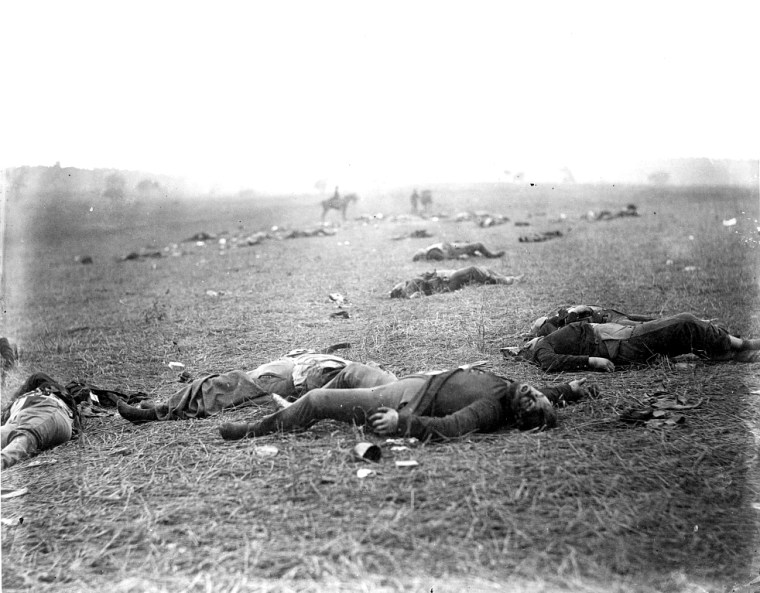
We have harbored the feelings of separation and divisiveness far too long. Walking through the Shiloh battlefield I felt no glory, but only a deep sadness that people were unable to find ways to settle their differences through any means other than fighting and killing. There is no magnificence at Gettysburg, only despair that man’s anger overwhelmed his ability to find common solutions. War is always hell. Slavery was wrong. We all know in our hearts that these are truths. Why then do we continue to quibble over hunks of stone and metal that remind us of a past that was horrific by anyone’s standards? We can remember all of those who lost their lives with compassion, but we need not attempt to honor those who were responsible for the carnage. Taking down the troublesome statues does not erase the history, for we can never forget how terrible it was. Instead it focuses on understanding and a willingness to move on and let go of feelings that seem to have festered long after they should have been set aside.

I suspect that if Robert E. Lee were to hear of the battles that now ensue over the appropriateness of monuments to in his honor he would remind us of his own words and respectfully ask us to take the monoliths down. We should do so not out of a sense of political correctness, but because it is time for healing that will never fully happen until we are willing to admit to the wrongness of that terrible chapter of our history. We can place those images on battlefields or inside museums where the story of that time might be told, but it is no longer necessary to glorify the mistakes of our past. We must move ever forward and remember the words of another contemporary of Robert E. Lee.

As the war neared its end and President Abraham Lincoln delivered his second inaugural address his mood was melancholy and compassionate. He pointed to the horrific waste of the war but also its necessity in bringing justice to our land. Still he wanted all of us to come together as brothers “with malice toward none, with charity for all, with firmness in the right as God gives us to see the right, let us strive on to finish the work we are in, to bind up the nation’s wounds, to care for him who shall have born the battle and for his widow and his orphan, to do all which may achieve and cherish a just and lasting peace among ourselves and all nations.”

This is our challenge as the American people. In the name of all 600,000 men who lost their lives as well as those who were forever altered, it is time for us to heed the words of our great president who himself became a martyr to his noble dedication to the proposition that all men are created equal. It is far past time to stop the fighting and to let it go.