And So I Worry

WorryI sit at home during this time of self isolation and I worry. Let me make it perfectly clear that I do not worry about myself. I will either get the virus or I will not. If I get it I will either survive or not. I am seventy one years old and my journey on this earth has been good. I feel very close to God and that belief brings me great comfort. My anxieties and concerns center on other people whose lives are being upended or may be upended by what is unfolding at warp speed. I am one of those individuals who wants our president to know that I am very scared of the repercussions of this pandemic and how they will affect the entire world, not just my little corner of it. I am most especially concerned for the young who stand to inherit a situation that will forever impact their lives in ways that few of us are even considering because nothing of this magnitude has ever before happened.

I am fearful for the medical community, people who understand what protocols they need to stay safe and keep their patients safe. They are on the front line and their pleas for our attention and help are real. They are not children crying wolf. They are highly educated, highly qualified individuals who are trained to stay calm. When they are afraid I know that the rest of us should also be afraid and that our job is to insist that immediate measures be taken to assist them in any way possible. If that means that we all stay in our homes avoiding contact with others, so be it. We need to listen to them, not a man whose claim to expertise in science and medicine is his relationship with a very bright uncle from M.I.T. The medical community tells us that this is serious and I believe them and so I worry about them.

I am anxious about the people who are already losing their jobs and their businesses. I know who they are and how vulnerable they are feeling. Nothing about their situation is typical. They have no guarantees that our economy will quickly return to a normal enough state to provide them with secure employment when all of this is over. My own city is the oil capital of the United States and that industry is collapsing almost as quickly as the virus is spreading Already there have been furloughs and layoffs. Sadly if the general outline of the Senate’s plan to stimulate the economy comes to pass many who have been most affected by economic loss will receive no relief even though they are the ones who need it the most. The proposed bill would only send checks to people at or below a certain income level based on 2018 tax returns. These people were working and doing well back then, but now they have no income and their retirement investments are in a shambles. Thus I am anxious for them.

I see a political game of back and forth insults playing out on social media even as we should be working together to achieve the common goal of defeating this virus. If there ever was a time when we should set our differences aside it should be now and yet I see so many instances of the quarreling only intensifying. Blame and finger pointing is on the rise as though it must surely be the fault of some nation other than our own or some group that does not believe in God or those who voted for a certain person in the last presidential election. The political paranoia and poison is operating at full tilt when we should instead be working together. Covid 19 is apolitical, a virus that randomly chooses its victims, and so I worry because I keep hearing accusations and excuses instead of a united front from those in charge of guiding us through this battle. I would be far more calm if the press conferences included members of both of our major political parties. I would be relieved to hear that plans were being made in a bipartisan way for the good of the country. I would feel less anxious if we were able to heal the wounds and divisions of our nation and the world even as we fight the virus. Since I don’t see as much of that as I think we need I am ill at ease.

The  millennials are more like those of us who are Baby Boomers than either demographic may think. We Boomers were a rebellious group that was often misunderstood by our elders. We looked honestly at the world as it was and were unafraid to point out its problems. We witnessed racism that made no sense and we stood up to our elders and spoke out against the ways things had always been done. We worried that the war in Vietnam was not being waged in an honest and legitimate manner and we voiced those concerns. Our parents and grandparents thought we were rude and too inexperienced to have valid points of view.  They disapproved of our audacity. So too are today’s young people taking note of things that bother them. Surely we should remember how demeaning it felt to have our concerns silenced when our intentions were so sincere. It’s time we listened to our young because they are about to step into an adult world that will be riddled with residual problems created by this pandemic. We are handing off immense challenges without acknowledging them and supporting them as much as we should. I worry about the future not because I don’t think they can handle it but because so many of us are not willing to consider that the millenials have a bigger stake in making things right than us older folk do. It would serve us all well to remember that aside from people like Benjamin Franklin most of the revolutionary men who forged the independence of this nation were very young.

I am an admitted worrier. I do not need anyone to tell me to set aside my worries and be happy. I am already happy, but I think about things and fret over solutions for problems. I do not need anybody to suggest that if I only trust in God all will be well. God and I have a beautiful relationship and I know that He/She does not play favorites nor smite people in spite. What I do believe is that God gave us wondrous minds and imaginations with which to tackle our challenges. I worry because we don’t always use that precious gift as well as we should. I worry because even in a pandemic we sometimes forget that the most important commandment of all is to love one another.

I hope that I am wrong in all of my fears. I pray that we will rise up and become better for all of the difficulties that lie before us. We may be in for a hard road ahead. We have everything we need to do well but I fear that we will be so busy chiding and advising anyone who does not think exactly as we do that we will miss opportunities to find the way forward without a world of pain…and so I worry. 

Explorations of Our Being

mind-thoughts-warp_1024

What is this mind that we humans have? How does it work and how much of it goes unused because we have yet to tap into the totality of its power? Why is there a disconnect between how I see myself from the point of view of my thoughts and how I really appear in my physical reality? What causes some of our memories to remain vividly intact for all time and others to fade into oblivion? What happens when a mind becomes muddled, filled with extreme sadness, fears or paranoid thoughts? These are questions that have confounded me for years. They are the kind of queries that have guided the thoughts of brilliant individuals and ordinary souls for centuries. Somehow we have obtained more and more of a grasp on our physical being over time but clear knowledge of the complexities of our brains still remains somewhat elusive.

We humans don’t simply react to the world around us. We contemplate it sometimes to the point of obsession. We have an innate desire to dream, analyze and restructure. There is no reason for us to enhance the world beyond our most basic physical needs and yet we do. We don’t simply endure the unfolding of our lives but instead reflect on all that has happened to us, sometimes with joy in such remembrance and sometimes with great sorrow.

Memories are a remarkable aspect of our humanity. We quite often retain vivid pictures of things that we have experienced even decades after they occurred. Ironically the very incidents that we would most like to forget because of the pain that they brought us are sometimes the ones that remain the clearest in our minds. What is it about trauma that etches it so deeply in our psyches?

On the day of my father’s death I was only eight years old and yet I can recall details about every aspect of that horrific event from the time that I awoke to hear my mother weeping until the end of the evening when she and I cried in each other’s arms. I can see colors and hear sounds as though all of my senses were somehow heightened in a way that I had never before experienced. Even more than sixty years later thoughts of that day bring feelings so visceral that they still cause pain.

So too it has been with more generalized occurrences that impacted the whole of society with profound consequences. I know exactly where I was sitting and what I was doing when I first heard of the assassination of President Kennedy. I do not know if we had a Thanksgiving dinner that year but I can tell you where I was and what went through my mind when I watched the president’s funeral procession and witnessed the murder of Lee Harvey Oswald.

I still catch my breath when I think of the planes flying through the twin towers of the World Trade Center. I literally get a flutter of anxiety in my heart when I picture their dramatic collapse. I hear the screams and feel the terror that filled my thoughts in the split second in which I realized the reality of what was happening.

Over the years it has been the most horrific moments that have stayed permanently embossed on my psyche. I am filled with grief when I think of the first time that I truly understood the extent of my mother’s mental illness. It coincided with the first landing on the moon which is only a blur in my mind compared to the recollections that I retain of her pain.

I am haunted by images of the flooding from hurricane Harvey in my beloved city and the aftermath of destruction in the homes of family members and friends. I still get a catch in my throat when I think of how I felt when I saw what had happened after hurricane Katrina in New Orleans, a place I think of as a sister city.

So it goes with my memories. I barely recall the details of my college graduation or even my carefully planned wedding but I can describe the tiniest of particulars on the last days of my mother’s life. I wonder what it is about my mind that clings so tenaciously to thoughts of events that I would prefer to forget. What kind of chemical or physical reactions occur in our brains that causes such impressions to stay with us? What is it about our very humanity that stirs us to contemplate such things?

I try not to become too obsessive about such ideas. I purposely busy myself when my ruminating ventures into territory that is too dark and yet I am fascinated by the mere possibilities of unlocking the inner workings of our complex being. Understanding the mind was at one time forbidden fruit. Now we have discovered so much about how it all works and yet there is still so much mystery when it comes to comprehending the most spiritual aspect of our being. Exploring the territory of our very being has been the quest of philosophers, physicians, scientists and theologians and still we are in the dark when it comes to the how and why of our deepest thoughts.


Loss

Man-on-Suitcase

“Loss” is a four letter word not meant to be a pejorative like the infamous ones that sometimes get us into trouble, but with a meaning so profound that it has the power to leave us unable to function in any normal way. Like the layers of an onion loss takes on deeper and deeper significance as we get closer to its core, and like that same onion it sometimes makes us cry. For me, loss is the ultimate trigger for stress whether it is directly affecting me or someone that I love.

Loss can appear to be superficial as in the inability to find something important, a receipt, a jacket, a favorite book, a prized heirloom. I grow anxious whenever I can’t find something that I treasure.

Somewhere in the move from my house of over thirty years to the one where I now reside I lost a gold charm bracelet that my husband had given me when we were dating. A heart dangled from the forged links and engraved on it were the numbers signifying our first date with the words “Now and Forever” reminding me of our infinite bond of love. My stressors went into high gear when I ultimately accepted the fact that it was gone and I grieved that I would never see it again, but it was in the final analysis only the loss of an object, a symbol of something far deeper than the thing itself. Still, I know that when we lose something special it saddens us and justifiably so.

When the walls and ceilings of my rooms were flooded by the sudden rush of hot liquid from my hot water heater I became a messy gooey ball of stress. My imagination became a fertile ground for turning this inconvenient bit of loss into a major event. I worried that mold would grow in the nooks and crannies of my walls rendering my house unlivable and unsaleable. I could not rest until I had ripped carpet and sheetrock from the the wettest areas. My impatience in finding someone who would quickly repair the damage grew into full blown anger. The situation consumed the thoughts of my days and nights. I had to remind myself that it was only a temporary loss, one that would eventually be set right. I calmed the beast roaring inside my mind with the truth that I had only lost things, replaceable stuff.

The greatest loss is the death of loved ones. Nothing ever really fixes that. Time superficially heals but the pain but grief lives inside the heart. Such tragic loss is the most difficult aspect of our human experience, even when we actually believe in a more glorious afterlife. We soldier on without the people who have gone before us but we never really forget them and in moments that come and go we remember how much it hurts to accept that we will never see them again. Such is loss that produces more than just stress. It tears at our very souls.

Loss is all around us. Even when it happens to someone else we feel the pain and stress that comes with it. We know that it engenders powerful emotions whether it is the loss of something seemingly insignificant or of a living being. We instinctively empathize with the person who is undergoing distress over loss because we too have felt such emotions and we understand.

Loss is such a small word and yet it stalks us like a powerful monster. We lose hope, confidence, reputation, control. We struggle with fears of loss. Like the nightmare that it sometimes is, loss creates anxieties and worries. It is a trigger that has the power to temporarily or permanently undo us, but our nature is to fight against its inclinations. We do our best to deal with it until the next time that it returns.

January presented itself with loss. I was unable to find the mate to a set of earrings. That was annoying but not the worst situation. When both a beloved aunt and a magical cousin died within days of one another I felt the weight of true loss. I grieved for myself but mostly for those closest to these incredible women, their immediate families who are struggling with the enormity of their losses. I felt the horror of those who lost their homes in a freak explosion that occurred early one morning. I saw a long road of repair and possibly even momentous change ahead for them. I awoke to the terrible news that two of my most wonderful friends had lost the use of their own bodies when they had strokes. I cried with the nation over the untimely death of Kobe Bryant and the eight souls who perished with him.

I suppose that loss is perhaps the greatest trigger for stress in our lives. When it piles on us we lose our sense of direction. We find it difficult to find the way out and yet we also know from experience that we need not be defeated. It may take time and great patience but we can find escape the darkness that has descended upon us. The loss may be forever but the way that we react to it can and does become more bearable.

Winter came in January, a time when some among us endured losses both great and small. We take a deep breath. We embrace one another. We find ways to soothe our souls. The cycle continues and we continue down the road of life knowing that we will eventually find the peace and tranquility that will set us in the right direction once again.  Loss challenges but we need not allow it to defeat.

The Best of the Best

rough-collie-dog-names

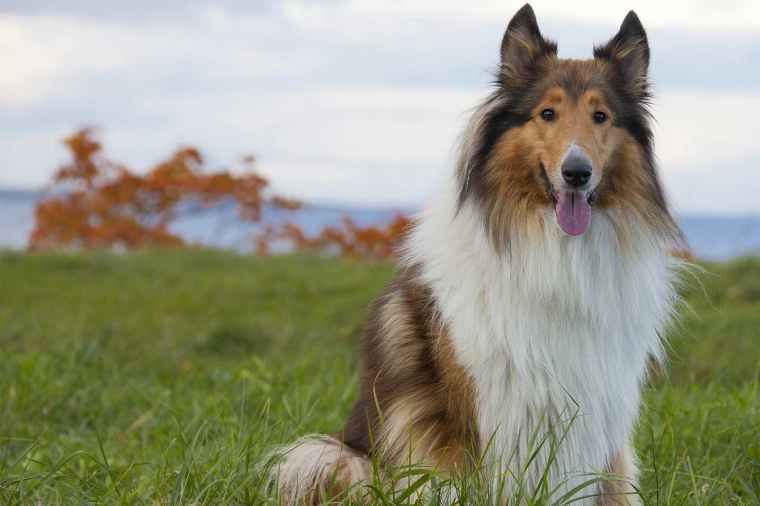
When I was a child we had exactly one dog. His name was Buddy and he was one of the finest pets ever.  Buddy was a beautiful collie that we rescued from the local animal shelter. He was still rather young when we decided to make him a member of our family. He already had his name and we decided not to change it lest he be confused. We saw that he was already a bit nervous about coming home with us and we wanted to let him know that he was going to be safe.

Buddy was smart and always gentle. Even though he was a very big dog we sensed that we did not need to be afraid that he might harm us. Back in those days most animals lived outside all of the time and so it was with Buddy. We let him inside the house for short visits but mostly his domain was inside the fence that marked the extent of our property behind the house. Because he was an energetic dog from a breed known for herding sheep he enjoyed running around the perimeter as though he was a sentinel watching over us. Before long he had created a grassless pathway marking his exercise track.

We always felt quite safe with Buddy acting as our security system. While we understood that he was as mild    as a lamb, outsiders were afraid of his ferocious bark and his tenacious insistence that nobody that he did not know should get past him or dare to enter the yard. We never worried about marauders intruding into our home when Buddy was on guard.

It did not take Buddy long to learn how to climb the chain link fence so that he might explore the neighborhood. In the beginning we worried that he might never return when he wandered away but he always found his way back home before dark, waiting patiently at the gate until we let him back inside his province. After a time Buddy became a celebrity of sorts in the neighborhood. Everyone seemed to know and love him. They watched over him when he took his strolls and guided him back in our direction when he appeared to be a bit confused about how to get back to his little empire.

Our garage was attached to the house but we had to cross under a little covered porch to actually get to an entry door that went directly into the kitchen. Our mom kept Buddy’s food and water under the roof of the porch and always left the side door to the garage ajar so that Buddy would be able to find shelter from rain or cold weather conditions. Mama kept a quilt in there for Buddy to use when he was sleeping but he generally slumbered right in front of the back door to the house as though he was our protector.

My brothers taught Buddy a few tricks but mostly he was just a good fellow who loved us with every fiber of his being. When our friends came around he was as sweet to them as he was to us. I recall a time when I found a little neighbor boy of no more than about three years old hitting Buddy with a thin board that had a nail on the end. Amazingly Buddy endured the pain that the boy was inflicting on him as though he realized that the child was too young to understand what he was doing. Buddy was always like that. He loved all of the kids in our neighborhood.

In the summers my mother had Buddy’s hair cut so that he would not be too hot. He always looked a bit like a lion because the groomer left his mane intact and kept a little ball of hair on the end of his tail. Years later I would learn that he was probably better off with his coat intact but so much was different then and people didn’t possess as much knowledge about how best to care for dogs. They thought that dogs were simply animals who belonged in the great outdoors. I don’t think I knew a single person who kept a pet inside the house unless it was a hamster, a fish or a snake.

Eventually my brothers and I grew older and so too did Buddy. His coat that had once gleamed with a healthy sheen became mostly gray and white, especially around his muzzle. He walked rather than ran and his fence climbing adventures ceased. He spent most of his time sleeping under a big fig tree. He ate less and less and had to make more and more visits to see the veterinarian for little problems. Still he defied the odds of having an exceptionally long life by easing into his twelfth year of faithful service to our family and fourteenth year of life. One day when I was about nineteen I noticed that he had not touched his morning meal. I found him panting under the fig tree and he was unable to even lift his head to acknowledge my presence. It looked dire for him and I knew he needed medical attention quickly. Since nobody else was home and I did not drive I called on help from a friend who quickly came to the rescue.

We drove Buddy to see the vet who had always cared for him with a sense of deep sorrow and foreboding. His breathing was shallow and he seemed unable to move. An aide had to carry him inside for us and the face of the doctor was grim as he surveyed Buddy’s condition. I suppose I knew all along that Buddy was dying but I kept hoping that some miracle might cure his condition. Sadly it was not meant to be. I stood in a state of shock as the kindly veterinarian announced that the only compassionate thing to do would be to put Buddy to sleep.

That was the first time that I had to let go of a beloved pet. Even knowing that it was the most humane thing to do it tore at my heart. Buddy was so good, so faithful, so innocent and I could not imagine our family without him. He was our animal brother who loved more deeply and loyally than any human is capable of doing. I hated being the one who had to end his beautiful life.

My brothers and I would have other dogs over the years. They were wonderful in their own right but somehow they never quite gained the status that we reserved for Buddy. He was our childhood pet at a time when our family needed stability and love, two qualities that Buddy gave us without reservation. He was the best of the best, our most beloved and beautiful pet ever. 

Real Heroes

superheroes

I tend to be ever the stoic, quietly taking whatever life throws at me. I adjust to circumstances as needed. I’ve learned how to survive over the years without drawing attention to myself. I let emotions run free in the quiet of night inside the privacy of my own mind and then I appear to bravely carry on. It’s a routine that I adopted as a child whenever fears or sorrows threatened to overcome me. It’s not exactly a perfect way of adapting but so far it has worked for me. Still, there have been moments when I had to cry, “Uncle!” or literally lose every sense of calm that I possessed. I learned that it is not just okay to admit to hitting a wall, but quite necessary for survival to know when enough is enough.

The conclusion of 2019 and beginning of 2020 turned into a kind of nightmare beginning with the death of a dear cousin and an aunt and concluding with news that two longtime friends had suffered very serious strokes. During that time I also grieved for a special and dear woman whose favorite aunt lost a battle with cancer. As I pushed on in my usual fashion I watched those closest to my departed family members struggling with the reality of loss while juggling demands from jobs and irritating challenges like broken appliances and even sickness. I observed the loved ones of my hospitalized friends spending long hours at the hospital attempting to keep a spirit of optimism in full view. I witnessed their suffering with a sense of frustration because I had no magic words to soothe their hearts or heal their wounds. Nonetheless I continued moving forward one step at a time.

I put away my Christmas decorations and attempted to find a bit of normalcy in the raging sea around me. I brushed up on some Pre-Calculus so that I might help my grandsons master concepts of trigonometry. I kept writing and writing, one of my favorite forms of therapy. I invited my niece over for tea and went to visit my ninety year old father-in-law and mother-in-law. I found solace at church and falsely began to feel as though I had weathered the emotional storm without no scars. Fortunately my body had other ideas. It set me straight by falling apart quite suddenly and forcing me to stop long enough to consider all that had happened.

My tongue and my lips broke out in sores. My throat and my chest hurt as my sinuses filled with congestion. My head felt as though it would crack open and my teeth seemed on the verge of falling out of my mouth. My knees ached to the point of forcing me to lie down. That’s when I finally faced the pain that had been slowly building in my heart and admitted to myself that I was not made of steel. I was as ordinary as any other human.

Our heroes are all too often characters with superhuman strength. They save lives, are supremely virtuous and seem capable of acts that defy our own abilities. We walk around with wooden smiles in times of distress and pretend that all is well when in reality we want to let out primal screams. If we are truly lucky we find a more real kind of hero, someone willing to admit to their weaknesses and ask for help.

My sweet cousin who had spent weeks watching her mother die was willing to publicly acknowledge her own breaking point. She was not whining but simply stating the fact of her exhaustion, frustration and sadness. Her truth was a kind of gift to the rest of us because she is generally so perfectly put together. Knowing that even an icon like her has moments of profound distress reminded us that being human is a complex venture.

When my friend who lost her aunt proclaimed the depth of her emotional pain it was difficult to hear, but also a beautiful form of trust that those of us who love her would not turn away. She was able to vocalize the feelings that each of us endure at one time or another in the most loving and beautiful way. It was as though she was helping us to know how to react to her loss.

I suppose that there is nothing innately wrong with putting up a brave front when we are in reality ready to fall apart and sometimes it is the only sensible thing to do, but for our own sake and those around us we also need to know when we have to surrender to the feelings bearing down on us. Being brave often means admitting that we are not as unbreakable as we may have thought. Like fine glass each of us has a point of fragility. Knowing when we are approaching that moment and pausing to mend our bodies and minds is a very good thing.

Just as we must put on our own oxygen masks in an emergency on a plane before attempting to help others, so too should we know when we need a break, a hug, a moment to let out our feelings. Sometimes the very bravest thing we might do is to openly face our weaknesses and our fears. That’s what real heroes do.