One Hundred Years

art blur bright candlelight
Photo by Hakan Erenler on Pexels.com

When I think of my Aunt Valeria I think of her raisin and pecan cookies that she called “hermits” and her carrot cake that was the best that I have ever tasted. She was is a woman with simple tastes, not needing much in the way of luxuries to be content. She was born in April of 1919, the first daughter of Paul and Mary Ulrich, two recent immigrants from the Slovakian region of Austria Hungry. Of course, if you do the math, you realize that she is turning one hundred years old, a milestone that few of us ever reach, but I’ll talk about that later.

Aunt Valeria was a good child who dutifully helped her mother as the family grew and grew. She was there to watch the birth of most of her siblings and to help her mother care for them. By the time she was sixteen she was already well schooled in household duties and the intricacies of raising children, for she had been a source of great assistance to every one of her eight brothers and sisters, often setting aside her own needs to care for them. She was the essence of the responsible eldest daughter, but she had fallen in love and was hoping that her father would be amenable to the proposal of marriage that her boyfriend, Dale, had delivered to her. She waited expectantly as Dale asked for her hand in a deep conversation in which his true intentions were being assessed by her dad.

Dale passed muster and before long he and Valeria were married. They settled down in a bungalow on the East end of Houston where he would be close to his work at one of the refineries that were popping up along the Ship Channel. He was as good a man as ever there had been, and he was quite handsome to boot. Valeria loved him with all of her heart and wanted little more than a quiet and steady life with him. Before long they had a baby boy whom they named Leonard who was followed by another named Delbert Dale who quickly earned the nickname D.D.

The boys went to St. Christopher’s Catholic School and attended mass each Sunday with their mom who was devoted to her faith. They were already teenagers who had matriculated to St. Thomas High School when Valeria surprisingly learned that she was again pregnant, this time with a little girl. Valeria gave the gorgeous child the name Ingrid after the beautiful movie star Ingrid Bergman who had so impressed her in The Bells of St. Mary’s.

The family squeezed into the house that had been Valeria’s home since the earliest days of her marriage and made do with the tight fit, adding a little bed to the dining room to accommodate everyone. Dale often suggested that they purchase a bigger home, but being a practical woman Valeria never felt the need to expand. She was happy in knowing that the house was paid for, free and clear. She had grown up in a much smaller place with more people, and she had seen the hardships of the Great Depression. She was not willing to take financial risks that to her seemed unnecessary.

I remember visits to my Aunt Valeria’s house. My mother loved and admired her older sister so much. The two of them called each other on the phone every single day, and my mama often spoke of the wise advice that she received from her sister. Aunt Valeria represented stability and no nonsense to me. She was the first person to come to my mother’s aid in the middle of the night when my father died. When a kid at my school insisted that I would be sent to an orphanage if my mother also died, I was able to protest that I knew that my Aunt Valeria would take care of me even though I had never asked her if that was true. I simply assumed that the extra little bed in her dining room was there for me if I ever needed it.

Aunt Valeria liked to watch Nat King Cole and Bing Crosby on television. I recall sitting on her sofa, which was perennially covered with a sheet to make it last longer, while the two crooners enchanted her. She had copies of movie magazines on her coffee table with tantalizing headlines about scandals and such. I always wanted to read them or at least sneak a peek at what was inside, but children didn’t dare do such things back then.

Aunt Valeria was very religious, devoted to her faith. She often tuned in to hear Bishop Fulton Sheen preach. When I had to sit quietly while she and my mother listened to his homilies I silently squirmed inside wishing that I were watching my father’s comedies or my uncle’s westerns. Nonetheless I was always deeply respectful of my Aunt Valeria because my mother was so in awe of her. I felt that I was in the presence of someone quite special and I truly was.

When I think of my Aunt Valeria I immediately hear her little giggle and see her face with an impish smile. She has always been responsible, but also a bit girlish with her joy for music and movie stars. Some of my all time favorite moments were spent seeing musicals like Oklahoma with her in gilded movie theaters that we attended in our finest regalia. I liked being with her because she always made me feel special, happy and so relaxed. I knew that she loved me and hoped that she understood how much I loved her.

Somehow my Aunt Valeria was always the person who showed up whenever I needed someone on whom to lean, but the years went by and she and her beautiful first love, Dale, grew older. One day he died quite peacefully just as she was serving lunch to him in the house that they had purchased decades before. She was bereft and alone, so she called my mother more and more often, the two of them sharing their widowhood and all of the love that they had for each other. Eventually Aunt Valeria became disabled and moved to St. Dominic’s Village where she would receive the kind of care that she had always given others. My mom and I often visited her, bringing her a burger from Burger King or potato salad from Pappa’s Barbecue. Always we snuck in a coke and a snickers bar and Aunt Valeria was as delighted as a child with our presence.

When my mother spent her last year of life in my home I grew to look forward to taking her to see Aunt Valeria for those visits. It seemed that my aunt was ageless and her magical effect on my mother and I was a constant in our lives that we dearly needed. After my mother died there was a kind of sadness in my aunt that I had never before seen. I suppose that she was slowly watching one loved one after another pass away while she still remained. Now there are only two of her siblings left and they are no longer healthy enough to make the journey to visit her. Even her children are growing old and becoming less and less able to be as devoted as they once were. She spends her days in a never ending routine, but whenever any of us visit that same beautiful smile lights up her face and we know that we have made her happy.

One hundred years of service to everyone that she ever encountered is my Aunt Valeria’s legacy. She asked for little, but has given so much. She has been her mother’s helper, her husband’s partner, her children’s devoted caretaker, her sister’s lifeline, my rock in a world that was so confusing and frightening, a faithful servant to her God. Her one hundred years have been well spent. There is no feminist or member of Pantsuit Nation who is as phenomenal as my aunt. Hers has been a life well lived.

Happy Birthday, Aunt Valeria!


Negativity in a World of Plenty

newly make high rise building
Photo by Pixabay on Pexels.com

I’ll be visiting London in may. In preparation for my tour I’ve been immersing myself in films, television programs, and history from Britain. I’ve learned about the Victorian era and the age of the Tudors. One unmistakable thing that I have learned is that even for kings life back in the day was often short, ugly and brutish. While we may romanticize life before our time, the reality is that the average person had a really tough time.

When Henry VII was king in the fifteenth century people slept on straw along with the dogs and livestock. They didn’t take many baths and there was no such thing as shampoo. They were no doubt a rather rangy bunch who hardly dreamed of reaching ages that are commonplace these days. They were unlikely to do a great deal of smiling for portraits even if they were royalty because their teeth were probably rotten and black, when they weren’t missing completely. Medicine was built more on superstitions and old wives’ tales than any real knowledge of disease and how to combat it. Times were hard for most people with little sanitation and a looming threat of starvation. Small wonder that many people chose to risk the uncertainty of traveling to the new world once news of its so called discovery reached their ears. The chance of finding something different must have been tantalizing.

The Victorian era was not a great deal better if one were born without wealth. It was a hard life for the average soul both in Great Britain and here in their rebellious cousin, the  United States. Homes without electricity or indoor plumbing were still very much the norm, and work was often dirty and mind numbing. Forty hour weeks with benefits were still dreams of the future with most folks working themselves into states of bad health with little concern about either their safety or their welfare.

The twentieth century eventually led to modernization, but not before people had endured two world wars, a devastating depression, and a flu epidemic that killed millions. It saw revolutions that placed countries under the rule of communist despots, and the murder of untold innocents by Hitler, Stalin, Mao, and Pol Pot, among others. Somehow the people of the world soldiered on and slowly began to develop economies and political systems that allowed greater numbers of individuals to live with opportunities and modern conveniences that not even kings might have imagined.

Today here in the United States and many European countries and other rapidly developing parts of the world advancements have been so great that we live in relative comfort with our food, appliances, cars, medical care, educations, and ways of life. We take our beds and our shampoos for granted. Our daily showers are just part of an under appreciated routine. Even our dogs live in greater comfort than people did five hundred years ago.

While we have made such great advances for virtually everyone, we still seem to spend far too much time complaining about what we do not have. We envy those who have more and plot to find legal ways of taking what they have earned and so that we might have a share of it. Instead of appreciating what we already own we moan about what we are yet to have, rarely sacrificing our visits to restaurants or the small luxuries that were unheard of for any but royalty in another time. I wonder why we spend more energy listing our grievances than counting our blessings.

There is certainly nothing wrong with improving the world, making progress, but we have become a world filled with gripes and jealousy. We see far too many people wanting to take rather than give. We forget that the great strides forward in history have had their costs in hard work and innovative thinking. We seem to believe that if we simply legislate equality of living standard it will miraculously overtake society and all will live blissfully. History tells us that such thinking has no basis in fact. Lenin did not create a society that built better lives for the Russian peasants than they had experienced under the czar. Such a dream must be built on the ingenuity and drive of individuals, not the dictums of a government whose chief goal is to maintain power.

Having a purpose and a feeling of contributing to the greater good of family, neighborhood, village, and society is what makes us happy with our states in life. It is not what we own or how much capital we store in a bank that brings the contentment that we desire, although it doesn’t hurt to have those things. In the end it is how we feel about ourselves in relation to those around us that brings us happiness. Each of us has many talents that we may use to keep the engines of a society roaring. There is great satisfaction to be found in contributing love, ideas, work, service. When we are engaged outside of ourselves we don’t have time to nurse anger or hard feelings. Going to bed tired but filled with a sense of doing something meaningful brings restful slumber and contentment.

I used to do a daily exercise as a teacher to keep from being discouraged by minor problems in my classroom. At the end of the day I listed all of the things that appeared to have gone right as well as the experiences that made me smile. I made sure to go minute by minute, period by period so that I would not miss anything. Then I would write down my grievances and mistakes. There was never one day when the bad happenings outweighed the good. It taught me to be conscious of what I had working for me that would help me to improve what was going wrong. My perspective was centered on the positive and thus my solutions tended to be optimistic as well. I was honestly able to exclaim that being an educator was a joyful experience because I was consciously looking for the good.

We have much. All of us do, even those with very little still have more than their ancestors. We must build on the progress that we have made and ask ourselves what got us here and what we have changed along the way. We can make things better, but not if all we do is grumble.

Ripper Street

administration architecture attractions big ben
Photo by Pixabay on Pexels.com

Mike and I just finished binge watching five seasons of Ripper Street on Netflix. It was one of the most well written and intriguing series that I have followed since Breaking Bad. The story begins in 1889, right after one of Jack the Ripper’s last victims was found, but it is not just a story of that killer’s crimes. In fact the title is more of a metaphor than an indication of the way the plots will unfold. More than anything it is a look into the gritty world of Victorian England in Whitechapel and the horrific conditions there that troubled otherwise hard working and hopeful people. It centers on four characters associated with the H Street Police Station, one of the roughest law enforcement assignments in all of London at the time. The lead investigator is Edmund Reid, an man tied to his job by memories of the horrific murder of a possible Jack the Ripper victim. He is nobly assisted by Detective Bennet Drake, a man filled with tragic demons whose heart yearns only for goodness and love. Captain Jackson is an American expatriate with a murky past who reluctantly serves as a medical examiner for the police. His wife “Long” Susan Hart is the madame of a Whitechapel brothel with a questionable story as intriguing as her husband’s.

The series features beautiful phrasings and word pictures from the characters who use language to communicate the intricacies of their minds and hearts. As the five seasons unfold we learn of the tragedies that have haunted each of the very real people who inhabit the stories. It is a kind of Shakespearean tribute to the difficulties of living during that era told through the eyes of sympathetic but imperfect people. It grips the viewer with both compassion and revulsion. Much like Breaking Bad almost everyone is neither all good nor all bad, but simply doing whatever it takes to survive. The stories challenge us to think out of the box with regard to human nature and individual worth. It is a fascinating look at both history and the complexities of the people who live it.

There is a kind of gritty realism to the stories, but in the end it is in the relationships and their complicated intertwining that the best of the writing takes place. Each role is so beautifully acted that by the series end there is a sense that we have known and loved such people. The writer is realistic in his portrayals of the times and the characters, so much so that even the most outlandish storylines seem plausible. Everything in Ripper Street is a metaphor for life and death and the challenges that people faced in a time that is almost unimaginable to those of us who live in the modern days of plenty.

The series originally aired on BBC but was canceled after only two seasons. Netflix picked up the option to continue it for three more seasons and it has proven to be one of the most popular offerings ever. It actually ended in 2016, but has garnered such a faithful following that it continues to rank high on both Rotten Tomatoes and Netflix viewership. It is the kind of series that bores an ear worm in the brain, causing one to think about the times and the people long after watching one of the episodes.

Mike and I discovered the series after we had enjoyed a number of BBC and Netflix detective shows. We joked that the title was perfect for me because I have always had a morbid fascination with the Jack the Ripper cases. We soon enough found that the title was somewhat misleading, but we had almost immediately fallen in love with the story and the amazing characters. Soon we were sitting down in the evenings watching one or two episodes each night. Sometimes we spoke of the plots and the people during the day wondering what would happen next as though we were following the adventures of dear friends.

If you enjoy a good detective story, tightly described characters, the allure of Victorian England, and a brilliant use of the English language Ripper Street will most certainly delight you. It has elements of all the best and most popular series of our times. There is a bit of Boardwalk Empire, House of Cards, and Breaking Bad in the evolution of the stories and characters. As with those brilliant classics, saver perhaps House of Cards, the writing stays amazing until the very end.

So many writers begin to lose their mojo as the years on the air take their toll on originality and believability. The plots jump the shark and the players become caricatures rather than believable individuals. Ripper Street sometimes flirts with such disappointments but always finds a way to redeem itself. It is well worth a watch, especially for those who are fans of good old fashioned sleuthing with a touch of the exotic.

I’ve been chasing after mysteries from the time I was a girl poring over my Nancy Drew mysteries. I devoured Sherlock Holmes and graduated to Agatha Christi, eventually moving on to the more modern authors of brilliant detective work. Ripper Street has won a top spot in my list of favorites. I only wish that somehow the stories of Reid, Drake, Jackson and Hart might somehow be resurrected for a prequel perhaps. I still long to know more about them and dream of the kind of reincarnation that Sir Arthur Conan Doyle pulled off when the demands of fans urged him to bring Sherlock back to life after his seeming demise. I guess I’ll have to find solace in Better Call Saul until something  akin to Ripper Street come along.

A State of Mind

woman taking selfie
Photo by Edu Carvalho on Pexels.com

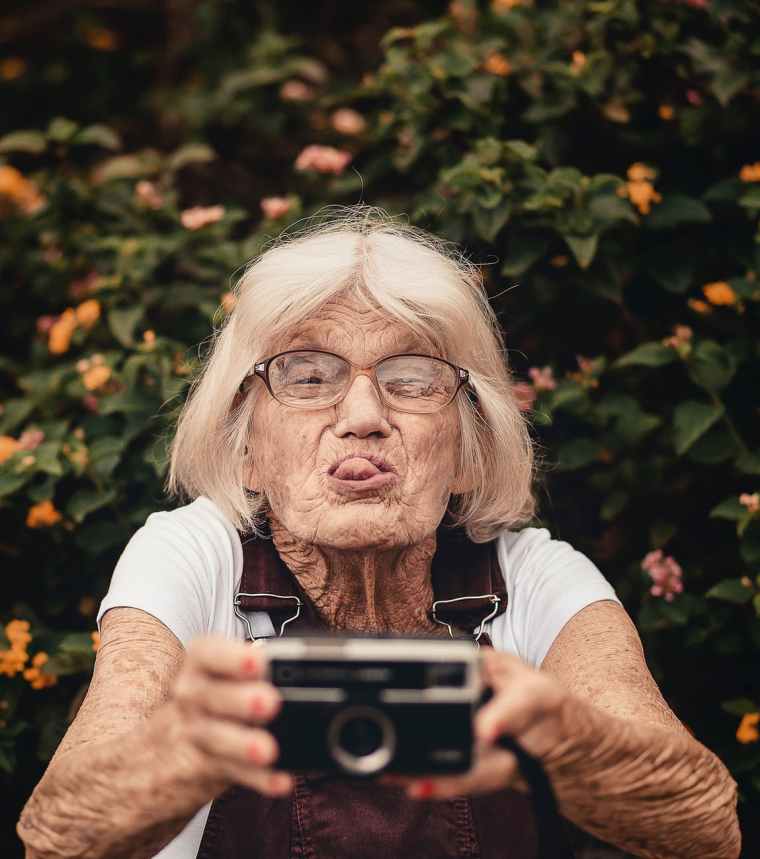
A couple of little girls were trying to guess my age and gingerly asked if I was over fifty. My response was a vague, “Sure,” which seemed to satisfy them and made me wonder how I actually appear to the world, not that it really matters. Getting older puts an all new meaning into the concept of making plans. There is always a somewhat higher probability that a sudden illness or some other change may alter a schedule. More and more often setting a calendar is a tentative affair barring undue circumstance. It makes for a bit of anxiety and uncertainty.

Last year hubby and I had tickets to go see Joe Bonamassa play his masterful guitar licks, but we had relied on memory rather than putting the date on a calendar, and memory failed us. We actually showed up a week too late. I understand that the performance was incredible, but we were not there to see it because we now know that our own minds are no longer as reliable as they once were. I should have realized that fact every time that I walked to another room to do something and then just stood there wondering what it was that I had set out to do.

This year we excitedly purchased tickets to see the Rolling Stones in what was supposed to be their final tour. Taking no chances, we recorded the date on a number of calendars and on all of our devices. We were confident that Google, Alexa, and our phones would provide us with enough reminders to get us there without a hitch this time. We were taking no chances on reliance of our “feeble” minds. Who knew that Mick Jagger would suddenly need heart surgery and have to cancel the tour? This is the man who at seventy five seemed ageless with his healthy lifestyle. If he is being called a septuagenarian in the press what hope is there for the rest of us? The irony is that Keith Richards who has ignored all of the conventional platitudes about clean living appears to be in relatively good health even as he chain smokes and ingests enough alcohol (among other things) to pickle his brain.

The fact is that we can do our best to take good care of ourselves but none of us are immortal or will miss the unavoidable signs of aging. I know people young enough to be my children who are scheduled for procedures like hip replacement, heart surgery, and chemotherapy. We may be able to stall the inevitable if we work hard to maintain our health, but nobody yet has found away to live forever. Such a realization can be depressing, or it can be an incentive to squeeze as much out of whatever time we each have as possible. It should prompt us to do that thing that we have always wanted to do, or to be that person that we have dreamed of being. The clock is ticking, but it isn’t holding us back.

I am in awe of friends my age who are still accomplishing wondrous things. They are learning how to paint, recording songs, writing novels. They go birding in the early morning hours and photograph the beautiful creatures that they see. They never miss a game or activity that involves their grandchildren. They are active in politics. Sometimes they work their adventures around doctors’ appointments and exercise regimens, but they are actively pushing themselves to enjoy each day and to continue to be part of the vibrancy of the world. They optimistically make plans, and when life throws them a curve they tackle the challenge and then get right back into the saddle.

I remember a time when a friend was caring for his mother who was not a great deal older than I am now. He often remarked that she had given up on herself and rarely left the confines of her home. She spent countless hours watching the news and becoming more and more depressed about the future. He felt that by isolating herself and giving up on the possibility of still finding meaning in each day she had condemned herself to a very dreary existence. In spite of his continual efforts to pull her from her self inflicted doom, she insisted that she just was just deferring to her age and the way life was supposed to be. She actually lived well into her late eighties with a kind of anger that drove her to complain about how long she had felt useless to the world.

I always felt sorry for both my friend and his mother because I had seen the example of my grandfather who never gave up squeezing the most out of life even as one challenge after another came along to defy his optimism. He lived to the ripe old age of one hundred eight and with the exception of the last few months he was clear headed and happy. The key to his joy filled longevity was certainly a bit of good DNA, but also his determination to greet each day with joy and gratitude. He loved the world and the people in it. He was fascinated by those who remained strong regardless of what they had to endure. He focused on actively treating his body and his brain with respect, and he believed that our best days are continually unfolding.

We’ve been told to hang on to our Rolling Stones tickets. Mick is vowing to recover quickly and reschedule the tour beginning in July. His surgery went well and he is determined to rock us once again.  He appears to be a believer that his story isn’t over until it is over, and so do I. I’ll keep making plans, taking new risks, learning new things, and getting out of my head and my house. I don’t feel thirty anymore, but that fifty that the little girls suggested as my age is about right. There is still way too much fun to be had to lock myself away with worry. Age really is a state of mind.

A Lost Tradition

abundance agriculture bananas batch
Photo by Pixabay on Pexels.com

At my stage in life change is inevitable. Very little that we experience stays exactly the same, and in most cases that is a good thing. Sometimes, however, we become accustomed to certain aspects of doing things that they become a kind of tradition, something that we take for granted. In my case going to Canino’s Farmers’ Market on Airline Drive was one of those things. For sixty years the Canino Family offered fresh local produce at incredibly good prices in an open air market that literally hummed with life. It’s mounds of tomatoes, greens of every variety, oranges and apples were alluring enough to me that I traveled there from the other side of town, braving the traffic on Interstate 45 in the knowledge that my long drive would be rewarded with a glorious shopping experience.

I depended on Canino’s for items that I might otherwise have never found in my local stores. One area of the market featured bulk bags of beans of every possible variety, including the yellow split peas that I cook into a golden soup each New Year’s Day according to the family recipe that my mother-in-law shared with me. Most stores sell the green variety, but not the yellow ones. I never worried because I was always able to find a fresh bag of yellow split peas at Canino’s.

I have associated tangerines with fall and my birthday for all of my life. My grandmother Ulrich used to bring out big enamel bowls of them and they always seemed to be available at the local grocery stores. Suddenly a few years back they became almost a gourmet item that had been replaced by those little mandarin oranges known as Cuties. I insisted on having my traditional tangerines and luckily I never failed to find them at Canino’s.

There was a time when Canino’s even sold fresh eggs. They had every size and color imaginable along with great prices. At Easter time I would purchase dozens and dozens for the Easter Bunny egg coloring and to use in preparing the feast for my extended family on Easter Sunday. The jumbo eggs at Canino’s were larger than any that I found elsewhere and looked so beautiful after I applied brilliant colors to their shells.

For a time we owned a piece of property that had a grove of native pecan trees. In the fall we traveled there with bags and boxes which we filled with the precious nuts. Shelling them was a tedious job because they tended to be very small. My fingers would become raw from the process and sometimes even bleed. I did not worry, however, because Canino’s had a row of nut crackers that broke off just enough of the shell to make the process incredibly easy. For just a few cents per pound the machines would whir away and do a job that would have otherwise taken hours of hand numbing labor. Even after we sold the land and no longer had need of the nut cracking machines the sound of them at work always enchanted us when we went to visit the market on cool fall days. They were a constant like the rising of the sun and the changing of the seasons.

What I loved most about Canino’s is that it did not resemble the typical produce department of a grocery store. Everything was offered in bins mounded with a particular kind of fruit or vegetable. The items were as fresh as if they had been picked on minutes before. Most of the fun was in selecting just the right pieces that I wanted. I would leave with actual brown paper bags filled with wondrous and healthy produce. Going there was a joyful event, a happy adventure.

Sadly the Canino family vendors closed their business at the end of December when the brothers decided to retire. Thirty long time employees lost their jobs and the market itself changed names. An effort to enhance and modernize the concept has left it resembling an ordinary grocery store produce department save for the stalls in the back. The nut crackers are gone. The huge bins mounded with a particular kind of fruit or vegetable are no more. There are bulk bags of beans but the yellow split peas are not to be found. The new employees seem not to understand how much regular customers like me liked the old ways. At least for now most of the magic is gone.

There are plans by developers to turn the area into a destination for Houstonians and travelers to the city much like the markets in New Orleans and Seattle. Sadly their first efforts are leaving me wanting. The charm of Canino’s is gone and with a nearby Sprouts and a huge HEB market within less than five minutes of my house I now have little incentive to drive thirty to forty minutes to the newly styled market. If I’m going to travel that far I would prefer Central Market with its admittedly higher prices, but much better variety.

The new market on Airline is in transition. Perhaps they will yet find their way to my heart. I want to give them a chance to make me as happy and excited as Canino’s always did. I’d like to think that one day in the future I’ll again feel that warm sense of being at a very special place that the old market always gave me. I suggest that the new vendors consider setting up some nut cracking machines, adding yellow split peas to their bulk bean section, and making sure that when fall comes around there will be plenty of tangerines. Some things should never change.