
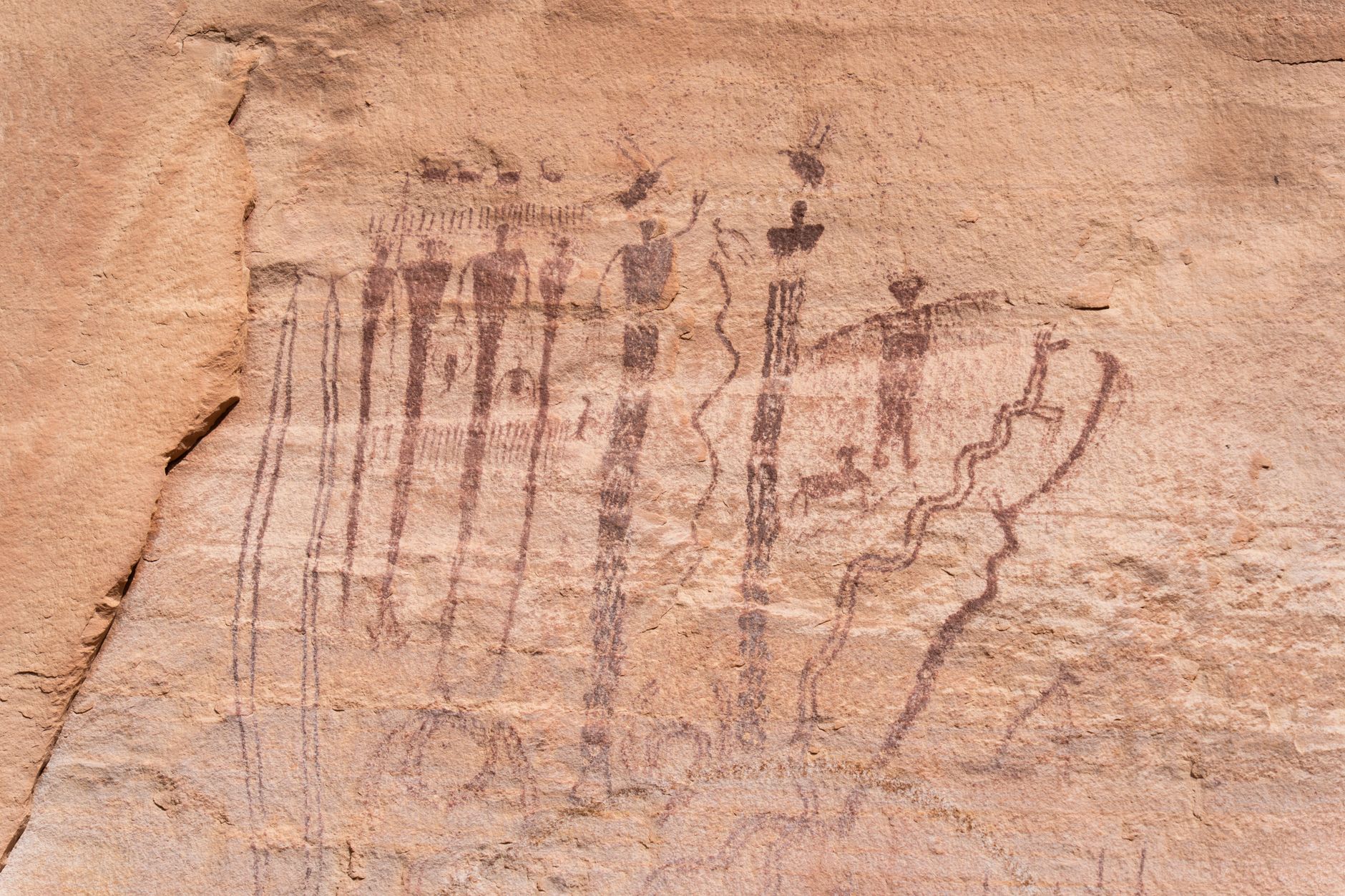
Back in the late nineteen eighties my eldest daughter was enrolled in an Astronomy class at the University of Texas. One of her assignments was to create a project using information that she had garnered in the class. Somehow she had heard about a remote National Heritage Park and UNESCO World Heritage Site in New Mexico called Chaco Canyon. Native Americans lived there long before Christopher Columbus crossed the Atlantic to land in the Americas. In fact there was a pueblo culture there in the eight hundreds that lasted until it mysteriously ended around 1250 CE.
The people sometimes known as the Anasazi built a thriving culture in Chaco Canyon that included indications that they understood many astronomical ideas including how to predict the autumn and spring equinoxes. as well as the winter solstice. Even the structures of the ruins suggest that they were built with astronomical alignments. Evidence indicates that the ancient citizens of Chaco tracked and marked the cycles of the moon. For that reason the site is a mecca for astronomers and archeologists.
My daughter and my husband traveled to the site during her spring break so that she might take measurements of the remains of the buildings and learn more about how the native people used astronomy so far back in human history. She and her father nearly froze in the tent where they spent each night but they also became enchanted with the knowledge that the ancients seemed to have understood. Her paper was a success but more than that the visit changed her life in many respects.
We have returned to Chaco Canyon many times after that. It is a place that is seemingly in the middle of nowhere. One has to really want to visit there. The road is long and far from being smooth and the environment is cruel in summer and winter with extremes of temperatures that challenge the idea that people actually lived and thrived there. The reward of walking among the ruins and climbing up vertical trails is worth all of the effort. This is a spiritual place that is quiet and reverent and filled with the ghosts of a past culture that was remarkable.
On one occasion I was able to bring the members of the KIPP Class of 2010 there. I suspect that even the other chaperones wondered why I had so enthusiastically pushed to include Chaco Canyon in their tour of New Mexico. During the ride there were grumblings that I ignored. Somehow I knew that the haunting spirit of Chaco Canyon would entrance my students once they roamed in the ruins. Just as I had predicted it became a highlight of the entire trip that was made even more spectacular when the rangers called a couple of astronauts who were in the area to come speak to the group.
Another time we came with a granddaughter and grandson. On that trip the temperatures rose past one hundred degrees. The sun beat brutally down on us but the importance of Chaco Canyon was not lost on any of us. Just as with every other time we left with a reverence for the people who once lived and worked there so long ago. Chaco Canyon helped us to understand the significance of our place in the universe and in the sweep of history.
Now the solemnity of Chaco Canyon is about to be destroyed as the Trump administration has struck a deal with BMI to drill for oil and water in the confines of the site. I can’t even imagine that anyone would consider the desecration that this will surely represent. Sadly Chaco Canyon is not the only national treasure that is being threatened with the invasion of businesses wanting to harness natural resources. Many of our nation’s parks and sites will be darkened with destructive practices that were never intended to happen as former presidents created a string of precious places throughout the United States that have been preserved up to this point.
My husband and I took our children to our nation’s parks and historic areas on our vacations. We slept in nearby tents and walked along paths that led us to spectacular views. We heard about how and why such places became part of our national heritage from forward thinking presidents who understood how closely our history and the history of our earth are intertwined. The very idea of commercializing such places is grotesque and yet little by little bit by bit President Trump is shifting funding from our national parks and in some places using them for profiteers. It is a travesty that garners little publicity but endangers the balance of nature itself.
I grieve for what is happening I wonder if Trump himself has ever even experienced the unmitigated wonder of visiting such places. Does he not understand why predecessors like Teddy Roosevelt realized that we must protect such places? How can Trump think that the denuding of forests and the trashing of mountains and historical places by those only interested in growing richer than they already are is a good thing? Some of these places will never again be the same when the invaders come and yet the plans to move ahead have barely been questioned. I hope that somehow we can stop this travesty before it is too late. The damage that will be done is a mortal sin.

