The Caretaker

Photo by Karolina Grabowska on Pexels.com

I awoke to a chilly morning, one of those times when it is a bit more difficult to jump out of bed and get on with the day. There was comfort under the blankets and a sense that leaving the warm nest was not as desirable as staying there. As I lay in that place of comfort and security I realized how fortunate I am to live in a home secure from the elements and dangers of the world. I thought of how far I had come from my humble beginnings and remembered the first apartment I shared with my husband when I was still a quite young twenty year old. We had a tiny one bedroom accomodation that overlooked one of Houston’s many bayous and we thought of it as a mansion. We squeezed our bed against one wall and crammed our belongings into a dresser and a small closet. We were as happy as any millionaire has ever been and filled with dreams of adventures that lay ahead. 

I had little idea in the first idyllic months how much I would be forced to grow in a very short time. My head was still filled with ideas and ideals of how things were supposed to be. I was naive about the ways of the world and my innocence about life was the product of ignorance and inexperience. My bliss seemed infinite because it had mostly been tested in a bubble. I had gone directly from the care of my mother to the guidance of my husband who seemed worldly to me but was really still as much of a boy as I was a giddy little girl. 

We were married on an October evening and determined to make our way on a wing and a prayer. Mike was a teaching assistant in graduate school and I had landed a job as a teacher’s aide at a local elementary school. Our combined monthly income only barely covered our rent, the food we ate and the gasoline we needed to get to our jobs in the one car we had. Our plans would only work if everything went perfectly but we soon learned that living without glitches is generally impossible. We struggled to stay afloat but generous offerings of food disguised as gifts from our parents helped us to get through our first months of wedded bliss. 

The summer of 1969 came and with it the big push at NASA to send the first human to the moon. Mike’s uncle headed a crew of electricians there and he offered Mike a job as a helper pulling cable under the floors of various buildings for a salary that was heaven sent. Mike left before dawn each day with his uncle who swung by our apartment to give him a ride so that I might have the car. They would not return until late in the evening which translated to lots of overtime and more money than either of us had ever seen imprinted on a paycheck. It was a good time that would keep us solvent as we both continued our educations.

When July came and the whole world was fixed on watching the American astronauts land on the moon things had gone badly wrong with my mother. She was acting in strange ways that I had never before seen. By the end of the month it was apparent even to a naive girl like me that she was experiencing a mental breakdown and needed immediate help. I begged all of the adults I knew to help me but in the end the responsibility fell solely on my shoulders. At the age of twenty I became the caretaker for my mother, a task that nearly broke me in the beginning even as I thought that it would be only a temporary thing. I had no idea that I would spend the next forty three years of my life making certain that my mother had the doctors, therapies and medications that she needed to keep her bipolar disorder under control. 

Sometimes caring for my mother meant taking time off from work and bringing her to my home until she was well again. Most of the time it meant checking on her each day, spending time with her in her home to be certain that she was taking her medications and visiting regularly with her psychiatrists. Her illness was chronic and so it ruled her life and in many ways it also ruled mine. 

When she was compliant with directions from her doctors things went smoothly and we settled into a comfortable routine. When she decided to do things her own way rather than theirs, which was more often than it should have been, we sparred with one another and both of our lives became difficult and tense. Over the years a seasonal pattern developed with my mother becoming very ill in early spring, recovering by Easter and then becoming sick again in July followed by increased vigilance on my part. The trend would occur each October as well with Mama returning to her happy healthy self in time for Christmas each year. And so went our lives as I more and more left the girl child I had been far into a past that often felt more like a dream than the reality that my mother and I faced together.

Over the years my mother’s symptoms became worse and worse because she played with her medications rather than taking them as prescribed. She frustrated her doctors and angered me because I knew that if she had only followed directions implicitly her life would have been so much more normal instead of being continually disrupted by psychotic episodes of dark depression, extreme mania and paranoia. Eventually she became so unreliable in living independently that my brother and I took turns caring for her in our homes. 

Ours was a love/hate situation that depended on her mood swings. She fought me constantly over visiting her psychiatrist and taking her medications. She insisted that I was a control freak who wanted to assume her role as head of the family. She had little idea that I had often longed to be free of all responsibility and that I had dreamed of running over and over again. Still, I felt enormous compassion for her because it seemed so cruel for her to have to endure the hideous disease that had invaded her magnificent brain. I hated what it had done to her and felt determined to keep her as safe as possible. My brothers, who had grown into the role that I had followed from the time that I was twenty, joined me in the lifelong battle for the sanity of our mom. 

I have the deepest empathy and compassion for those who are longterm caretakers but also for those with chronic illnesses that incapacitate them for years. It is difficult to be in either situation. The person who is sick longs to be normal and the person who cares for them longs to find rest. It is only love that keeps either person going.

When my mother’s final days had become more and more difficult. I was weary and wondered if I would ever find respite while she was tired of being viewed as someone who was abnormal. We both wanted better for ourselves and for each other and kept searching for some miracle that would make it so. Life intervened once again and Mama developed lung cancer that took her very quickly. In the end she was clear headed and ready to be with the God who had sustained her through it all. I miss her terribly and would take her back in a heartbeat even if it meant engaging in those sporadic battles over her health. As hard as it was to care for her for forty three years it was also an honor, one that actually made me a better person than I might otherwise have been. In retrospect I know that I enjoyed a closeness to my mom that was borne from her illness. What I learned about her and about myself in those sometime tortuous days ultimately helped me to view the world through clearer eyes. Eventually I learned the importance of being a caretaker for all of mankind and even the planet. It’s a tough but ultimately rewarding job.
A Gift of Love

Photo by Karolina Grabowska on Pexels.com

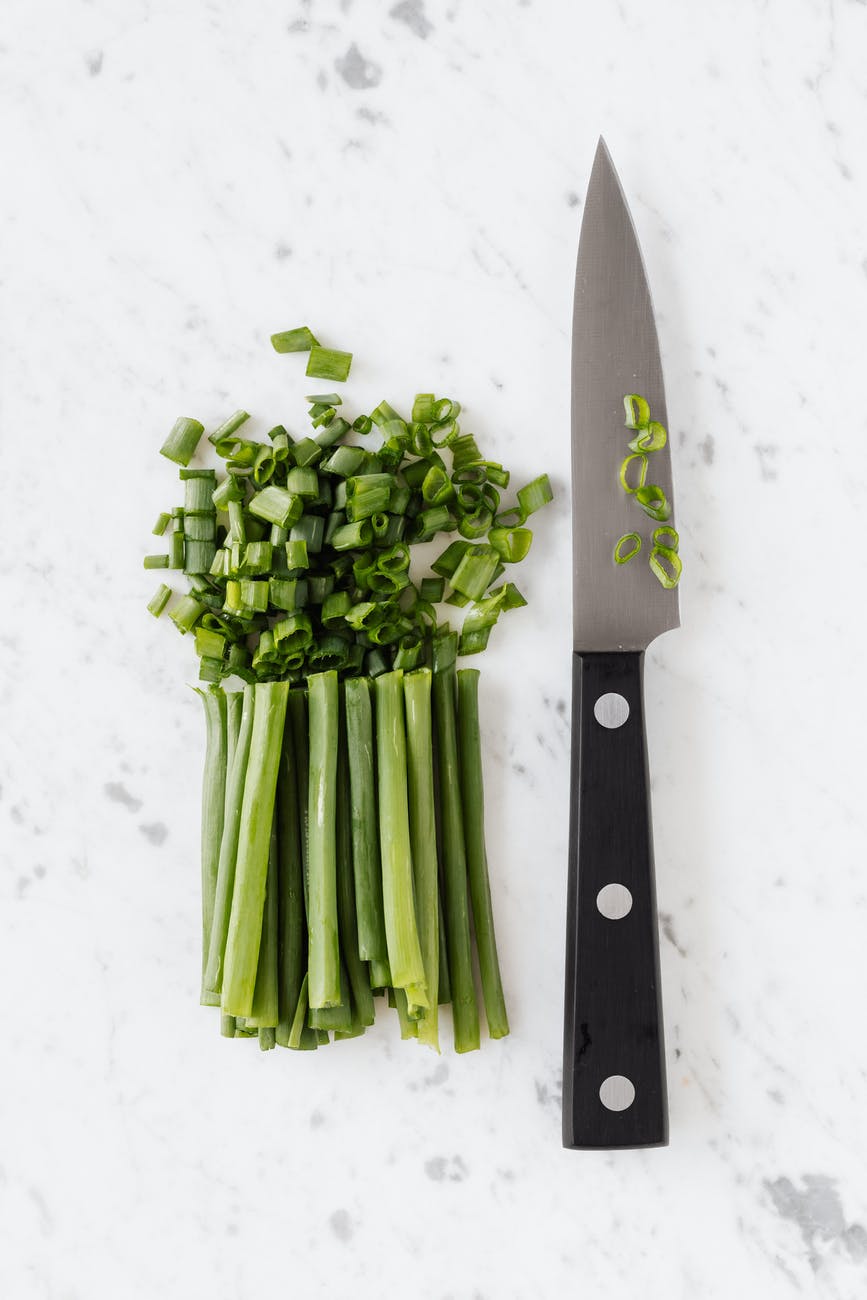
I enjoy cooking but admit that I am spoiled by having some of the best tools of the culinary trade. It was not always so. I began with a set of Farberware stainless steel cookware that was a wedding gift from my mother and Mrs. Gracey, the mother of my dear friend Nancy. Those pots and pans have served me well for over fifty years but in the early years I was sadly lacking in decent cutlery or other important implements. Over time my husband gave me top of the line gear to use whenever I entered my kitchen, including a set of knives that would make a world class chef smile. I have enjoyed the cutlery greatly since so many recipes call for ingredients that must be diced or chopped into various sizes. There is really nothing better than a sharp knife designed for a specific task. 

Whenever I cook in other homes I sometimes find myself silently stewing over having to use cheap cutting tools that make it difficult to slice without great effort. Generally when I encounter such situations I consider purchasing better cutlery for the individual whose kitchen is so lacking. Sadly few people understand that a great knife might cost hundreds of dollars. Such a gift might appear to be inexpensive to the uninitiated. Still, once someone receives their first beautifully crafted knife they never want to turn back to those created with little effort or skill. 

A nephew of mine got married recently in the midst of the pandemic. He already has a nice house that is filled with all sorts of things so I did not know exactly what he might appreciate as a gift. I decided to send him a knife block filled with good knives even though some say that giving cutlery as a wedding gift is bad luck. I can’t imagine any worse luck that what the entire world has been enduring in the past few months but I know that having good knives for cooking is a joy. I decided to send him and his lovely new bride the one tool that I think is essential for making the art of cooking a pleasant task. I included a cutting board to insure that his countertops are not damaged as he slices and dices and chops. 

I hope he enjoys creating yummy food as much as I do and hopefully he and his wife will use the times when they are preparing ingredients to talk and laugh and grow even closer to one another. Cooking can be as much of a shared adventure as traveling and it costs very little to do. I suspect that so many are using the time of Covid to prepare dinners and desserts because it is a way to celebrate our creativity and to bring families together. The very image of a table is a metaphor for community and love. Gathering for a meal is basic to our natures but also an opportunity for sharing and communicating both our hopes and our fears. If those knives make it easier to have a lovely meal then I cannot imagine how they could ever be a symbol of bad luck. They will not cut the ties that bind the newly weds, but instead become instruments for keeping them together always as they work together to feed their love.

This is a season of gifting. Sometimes we don’t quite know what to give the people we love. My husband asked me for a gift list and it was difficult to think of what I might want given that I have essentially spent ten months mostly in isolation due to the virus. I asked for some very basic things like a journal and a book of writing prompts. I also wanted new dish towels and an apron for using in the kitchen which has become the center of my world these days. 

I find that Covid 19 has made me feel a deeper and deeper connection with my grandmothers.  My memory of them is in their kitchens. That room was their domain and the work they did in there was focused on love for their families. I’ve thought of how both of them must have witnessed the pandemic of 1918. My paternal grandmother’s first husband died in 1918 and he was a very young man. I have often wondered if he caught the flu and it killed him. Grandma never spoke of either her first husband or the worldwide tragedy of 1918. She ended up working as a cook in a boarding house shortly thereafter where she and her daughter lived and toiled just to keep a roof over her head. Eventually my grandfather ended up there as well and their love began over the delicious meal that she had prepared for him and other boarders. 

My maternal grandmother managed to feed a family of ten on a wing and a prayer during the Great Depression. My mother often boasted that they never missed a meal. She said that Grandma found ways to stretch the limited ingredients that she had into filling delights that kept their tummies satisfied. Even years later Grandma would take great pride in having a fresh loaf of rye bread to offer guests along with a warm cup of coffee. I can still see the loaf sitting on a board with a butcher knife sitting ready to cut a slice. I suppose that if I had been allowed to ask for one thing that had belonged to my grandmother I would have wanted to have that knife because to me it was always a symbol of her concern for her family. 

I hope that my gift to my nephew and my new niece will bring them great happiness. One day I would like to tell them the stories of their great grandmothers who used cooking to keep their families satisfied and happy. Their kitchens were delightful havens of generosity and love. That’s why I thought that a set of knives would be a wonderful gift for starting a long life together. It was a gift of love.

How Bout, No!

The commercial begins with a montage of movie scenes with characters saying, “No!” in a variety of ways, something that some of us have a difficult time doing. Whether turning down a request that we really don’t want to fulfill or just saying, “no”, to some bad habit that we’d like to overcome it’s an attitude that we too often associate with negativity or lack of compassion but which can actually be one of our best mental health allies. 

I have to admit that I am the very worst when it comes to saying, “No!” It is as though there is something in my DNA that makes me feel uncomfortable asserting myself by stating my true feelings. I literally run from aggressive sales people because if they manage to corner me I will soon be agreeing to purchase something that I do not need or want. Those creatures who lurk at kiosks in malls particularly terrify me. I once made the mistake of responding to a smile from one of them and practically had to pull out a can of mace to get away from her. She kept piling goop on my face and arguing with me about whether or not I should purchase hundreds of dollars worth of it. Luckily I was more worried about what my husband would say if I spent three hundred dollars on a tiny jar of cream that was supposed to perform miracles on my eyes than the obstinate creature who refused to let me go. I finally concocted a lame story that so confused her that I was momentarily able to flee. 

I admittedly disliked myself in that moment because I realized that all I really needed to do was utter that one little word, “No!” I would have been instantly free to walk away and have a good day but somehow I was never able to muster the courage. I was all too concerned about the feelings of a complete stranger whose goal was to strip me of my good sense and my money. I knew that, but allowed myself to be manipulated for way longer than I should have. It reminded me of the time in my youth when I signed up for a thousand dollars worth of knives from a college friend attempting to earn his way through an education by hawking overpriced blades. After a guilt filled and sleepless night I was able to cancel the order but I suffered from feelings of anxiety each time I encountered my acquaintance. It became the incident that neither of us ever spoke of again. I realized that none of it would have happened if only I had said, “No way!” from the beginning. 

So many troubles begin with someone hawking an idea that makes us uncomfortable but we nonetheless agree to accept because we fear hurting his/her feelings or losing the relationship entirely. Far too many innocents have ended up in grave financial trouble or even encounters with the law simply because they lacked the courage to voice their true feelings by refusing to participate. “No” is such a powerful word that protects us from harm when we use it wisely in conjunction with our gut feelings. Those who have learned how to express themselves honestly and kindly by refusing to do uncomfortable or overly risky or morally wrong things are the true adults among us. 

Always standing up for what we believe is right can be tough. We humans generally dislike conflict and so we turn our heads  and walk silently away from situations that look like trouble. When confronted we often use weaselly words to describe how we feel rather than diving directly into the situation. We rely on others to say the obvious, to stop the madness by insisting that, “No, this is wrong and it must stop now.” 

John McCain was a man who proved his mettle time and again. He stood up to his captors in Vietnam and later followed his conscience in the United States Senate. He followed a moral code combined with bravery that allowed him to give a thumbs down to anything that he believed was wrong. So too was Abraham Lincoln unwilling to bow to pressure in following a path of uncomfortable truths. 

We honor the courageous among us who are willing to voice a “No” when we need it because most of us are reluctant to say what is in our hearts. The saddest aspect of our society today is that so few have enough moral honesty to speak up and just say what needs to be said. Of course when the brave are ostracized or even threatened with harm or death it is easy to understand why most shy away from being the one person in the room willing to curb bad actors with a demanding, “No!”

I’m growing, getting better. I am becoming more and more immune to pressure. I have begun to use the word “No’ more and more often. I have learned that “no” is not actually negative. In fact it is sometimes the most positive word that I might use. When it comes to protecting my finances, my family or my country from harm’s way my new mantra has become, “How bout, No!”  

Small Sacrifices

Photo by Any Lane on Pexels.com

I am convinced that children and teens are super spreaders of disease. When I was still teaching I came down with a horrific cold every November or December. I would be so congested that it was difficult to swallow and I’d go through multiple boxes of tissue. Generally it all devolved into a croupy cough that hurt when I tried to expel air from my lungs. I almost always had a slight fever with my colds and ended up nursing my symptoms in bed for days. I found Nyquil to be a godsend, allowing me to sleep without waking up from my nasal passages becoming stuffed with a rapid drip from my sinuses. To say that my head hurt is an understatement because even my teeth were affected. Sometimes it felt as though every single one of my pearly whites were going to fall from my mouth. Only rest and lots of chicken soup seemed capable of bringing me back to life. 

Once I retired from teaching I rarely had those annual bouts with a cold. I still get allergies each fall but they are nothing compared to the symptoms I experienced from the disease I no doubt picked up from my students. It was a welcome relief to no longer wait for my winter illness to arrive. I felt almost bullet proof without exposure to young ones. 

The sickest I ever felt was when I contracted the swine flu from my students. I am not exaggerating when I say that there were moments when I literally wondered if I was going to die from the virus. I reached a temperature of one hundred three degrees, something I do not recall happening at any other time in my life. I slept for hours and lost track of day and night and even time itself. Only when I had hepatitis and measles did I even come close to the kind of symptoms brought on by that horrific flu. 

For these reasons I honestly feel unimaginable empathy for those who contract Covid-19. This virus has the potential to become more deadly than anything I have ever experienced and can lead to unimaginable symptoms. I’ve read accounts from survivors who said that they actually felt as though they were drowning as they fought to catch a breath of air. As someone who has a real phobia of confined spaces that make it difficult to get enough oxygen there may be no greater fear. In fact my worst nightmare is to either drown in a car that has gone off of a bridge or to be inside a burning building gasping for air. 

I realize that the vast majority of people who get Covid-19 are sick for a time and then recover nicely without having the most serious complications or dying, but to dismiss the virus and flaunt its impact is incredibly unfeeling and disrespectful towards the millions across the globe who have suffered and even died from this horrific disease. Those fortunate enough to have few negative outcomes should be thankful, not boastful. Our humanity demands that we never forget those for whom this pandemic has been an indescribable tragedy. It would be outrageous for any of us to simply scoff at the impact of the virus on society. 

As far as I can see we are one world in the battle to get Covid-19 under control. It matters not who started the chain of events nor where someone who dies is living. We are all brothers and sisters right now, or at least we should be. Our efforts should not focus on only ourselves and our personal needs but on the good of all humankind. Each of us should be willing to do whatever is deemed necessary to bring a halt to the destruction, death and disruption that the pandemic has caused. If that means staying and home and foregoing an old fashioned family Christmas, then so be it. If it means wearing masks wherever we go, then we should consider it our patriotic and religious duty to comply. If it means thinking of those in need and sacrificing some of our own wants to help, then we should all be happy to do our parts.

If Covid 19 has not affected your family or friends count your blessings, but do not deny that it exists. If you have been able to carry on as though there is no danger, think of how lucky you have been and start being more cautious today. I keep hearing people insisting that we just need to live life and let God take care of us, and yet the leader of the Catholic Church, Pope Francis, is urging us to demonstrate compassion and understanding for all of those who are suffering from the effects of Covid-19. He tells us that it is our Christian duty to do whatever is necessary to help our fellow men and women. This, he says, must be our top religious priority right now. 

Maybe we want to keep that nice restaurant down the street in business. We don’t have to go sit inside and run the risk of catching and then spreading the virus. We can regularly pick up food instead. Maybe we feel the importance of religion right now, but we can pray in our homes and watch services online so that we do not risk the health of ourselves, our families, or those around us. Maybe we miss those Christmas parties that we have always enjoyed, but we can settle instead for a Zoom conference just for one year. 

Let us get out of ourselves and into the hearts and minds of others. Keeping Christ in Christmas this year may actually mean following his example of unconditional love and sacrifice. He was willing to die to save us. Perhaps He now expects us to demonstrate our love and a willingness to make small, sacrifices for the good of all. Maybe this is what Christmas was always supposed to be.

The Red Plaid Jacket

Photo by Anete Lusina on Pexels.com

I was excited about going into fifth grade and more than happy to be free from my fourth grade teacher who had traumatized me to the point of giving me nightmares to this very day. I hoped that I would end up with a teacher like the sweet and fun educator that most of my friends had enjoyed in grade four while I had spent every day of the previous school year with the most notoriously strict and unforgiving nun that ever commanded a classroom. As I anxiously scanned the class rosters to determine who would be instructing me for the next many months I was stunned to find that I had been assigned to Mrs. Powers whose name said all I needed to know about her classroom management style. I was terrified at the prospect of spending yet another school year with a woman whose reputation for no nonsense preceded her. In my childlike brain I believed that all of us who had only recently endured the scariest teacher ever should have been delivered to the hands of an angel, but there it was in black on white. I was somehow a chosen one who would no doubt live once again in a state of constant terror. 

Mrs. Powers was a commanding figure with a no nonsense way of doing things. Everything was orderly in her classroom even on the first day of school when chaos was often the rule of the day. She showed us quickly to our assigned seats and once the bell rang began a recitation of her hard and fast rules even before beginning the ritual of introductions and stories of what we had done all summer. She had a steady voice that seemed worthy of a drill sergeant save for the fact that she did not yell. In fact she spoke rather softly but in a manner that told us that she meant every word that she said. While I was nervous I believed her when she insisted that she would always be fair and that her only demand was that we comport ourselves like ladies and gentlemen.

Like Charlie Brown I soon found myself relaxing enough to drift off into my own mind as Mrs. Powers continued her speech. I was distracted by the very formal read plaid jacket that she wore over her dress. It was a lovely piece that seemed out of place in the warm Houston September weather, especially given that there was no air conditioning in the school. I imagined how hot she must have been and yet she did not so much as break a sweat. In my mind she appeared to be a woman who had absolute control over her environment and instead of scaring me it inspired confidence. 

I would learn over the ensuing days and weeks and months that Mrs. Powers was an orderly woman whose classroom was structured but always calm. It became a place where I enjoyed being because her routines were unfailing and I knew exactly what to expect from her each day. She doled out a kind of measured warmth and approval to those of us who followed her dictates which in the end felt logical and just and kept the troublemakers from spoiling the good vibrations of our learning. I began to like her more and more. 

There was nonetheless one very odd thing about Mrs. Powers. She wore that red plaid jacket virtually every single day. It was as much of a fixture on her body as our school uniforms were on ours. I wondered if it was an article of clothing that she especially liked or if she was just too poor to afford alternative pieces. There were moments when I imagined all sorts of silly reasons why she was so attached to that jacket. 

I learned over time that Mrs. Powers had a very large family and that one of her children was my age although our paths had not yet passed. I went to a Catholic school at the height of the baby boom when most Catholic women had children numbered in the half dozens and beyond. I knew that my own family was small mostly because my father had died and my mother remained single. I once saw Mrs. Powers loading her crew into her car after school and they all looked like male and female clones of one another. Watching her with the large group made me realize why she had to keep her world organized at all costs. Losing control would have brought chaos raining down on her. 

By the second semester of my fifth grade year I was reveling in the environment of Mrs. Power’s teaching. I felt more comfortable with mathematics than ever before and she made American History fascinating to me. I still had been afraid to exchange more than answers to questions with her but I ranked her in my mind as the very best teacher I had encountered since first grade. I had to admit that I had also grown quite fond of her red plaid jacket as well. Seeing her in it each day provided me with a sense that the world was proceeding as it was meant to be. 

Then one day Mrs. Powers was not school, an occurrence so unusual that I became alarmed. I went into a kind of fog until she returned in what had felt like more time than it should have been. I worried that she must have had some horrid disease She looked beautiful and rested but her red plaid jacket was missing. I felt as though everything that I had loved about fifth grade was being upended. I did not understand at all what had happened. 

I finally confessed my concerns to my mother in a tearful moment when she was tucking me into bed for the night and bussing my forehead with a goodnight kiss. She listened intently and respectfully as I spoke of my worry that the missing red plaid jacket must be a sign of something terrible happening to Mrs. Powers. Then she gently smiled and explained that Mrs. Powers had worn the jacket to hide the fact that she was pregnant with yet another child. She had been absent to give birth to a healthy baby. All was well according to my mom and Mrs. Powers no longer needed to wear her jacket each day so I would probably not see it again. 

Things soon enough went back to normal under Mrs. Powers’ guidance. I became relaxed once again but I never quite got over the absence of her red plaid jacket. I missed seeing her in the uniform that seemed so fitting for her. The fitted cotton dresses that she now wore each day felt out of sync with her military bearing even as she carried on as though nothing had changed. 

I would always remember Mrs. Powers and the excellence in teaching that she provided us. Mostly though I would think about that red plaid jacket and how it had come to represent consistency and fairness and calm to me. It was symbolic of gentle order and respect. Just thinking about it makes me smile.