The Right Skill Sets

low angle photo of people doing huddle up
Photo by rawpixel.com on Pexels.com

One of my favorite anecdotes comes from one of my brothers. He is a brilliant mathematician and engineer who designed the software for the navigation system of the International Space Station. To reward him for his exceptional work his company thought it would be a good idea to promote him to a managerial position. He had not been doing that type of work for very long when it became apparent to everyone, including him, that his skill set did not include directing and motivating people. He was more than happy to step back into his original position when all parties agreed that the best way to use his talents was in research and innovation, not dealing with people. To the company’s credit they decided to link his improved salary to his actual talents rather than trying to fit him into a one size fits all mold of promotion.

While there are indeed brilliant individuals who seem capable of succeeding at almost any level, most of us are best suited for rather specific types of work. All too often because we are particularly good at one thing, we are encouraged to climb the promotion ladder to test our abilities in other ways. As the Peter Principle notes we often find ourselves in a place where we are somewhat incompetent. This is because, as with my brother, we simply do not possess the needed skills.

In the world of education I knew phenomenal teachers who became rather ordinary administrators and somewhat mediocre teachers who found their niches in administration. The two areas are not mutually exclusive but they do indeed require different kinds of talents, and not everyone has the ability to succeed in both arenas. Sadly not even advanced degrees and training insures that a person will be a great leader.

My mom used to speak glowingly of her boss at the University of Texas Health Science Center. Ironically her department went through a series of managers all of whom flopped. They came in highly touted with doctorates and years of experience, but they had not before attempted to lead and inspire a group of workers. One after another they failed, until finally someone thought to promote from within. The woman who was chosen possessed only an associates degree from a local junior college. What she did have that the previous bosses did not, was a clear understanding of how to encourage people to work to their highest potential. Within weeks she had turned around the morale and the production of the department. She not only outlasted her predecessors, but remained at the helm for years sharing the honors that were bestowed on the group.

I have thought about the phenomenon of finding the best fit for people’s skills with regard to the office of the President of the United States. There is a huge difference between someone who is able to garner votes by dent of personality and someone who actually knows how to be a chief executive. President Trump, for example, has been wildly successful in the world of real estate, but he is not necessarily an exceptional manager. His work has relied on salesmanship, not the quiet day to day process of guiding the ship of a business. A CEO, CFO, head of HR and marketing manager each have very different jobs that require highly specialized skills and talents. So too, the President of our country should be someone with true executive skills, not just someone with great ideas or a charismatic personality. Sometimes that person may not appear to be as dazzling as many of the contenders for that office have been, but in the end they know how to balance all of the moving parts quite well. President Dwight Eisenhower is an excellent example of such a person.

What I’m also quite sure of is that we all too often give far too much credit and blame to our presidents. The fact is that every single situation is complex and subject to so many factors that to lay either congratulations or complaints at the feet of one individual is simplistic. The economy is a great example. For the most part what is happening at any one moment in time is the culmination of many years of particular policies, and yet we blithely blame a president if things go awry and celebrate that person if all is well. In truth what we are witnessing probably resulted more from predecessors than the person in charge of a particular era.

We are also inclined to credit the outcomes of natural disasters to a single president. The very idea of doing so borders on the absurd. Most of the time the damage is determined by the intensity of the natural event as well as the reliability of the infrastructures that local governments have put into place. By the same token the response to such disasters varies from place to place mostly due to how the state and local governments have prepared as well as what kind of attitudes the people in the area have. Hurricane Katrina, for example, was a tragedy waiting to happen not because of President Bush, but because of a long history of corruption in the New Orleans government as well as a neglect of infrastructures long in need of repair. What happened there was a travesty having little to do with the national response.

So too was the aftermath of hurricane Harvey a more positive event because the state and local authorities worked together along with the media and the citizens. It was an outpouring of support from thousands upon thousands of citizens that cemented the rebuilding process. It was a can do spirit among the people that made headlines. The fact that President Trump came to town was of little consequence other than his promises of pushing for funding for the victims. Ultimately it was Congress that passed bills to send relief to the city, and even there some lawmakers voted against the efforts but did not receive the bad press that is all too often attributed to a president.

I don’t think any president should either take credit or blame for most of the things that happen in the country. The truth is that there is a long history behind every calamity or success. There is also a reality that the best outcomes derive from sending the people with the appropriate skill sets to do each of the necessary jobs. The president should be someone capable of guiding the ship of state, and encouraging and supporting the individuals and groups who have the know how to get things done well. That’s how it supposed to be.
What’s In A Name?

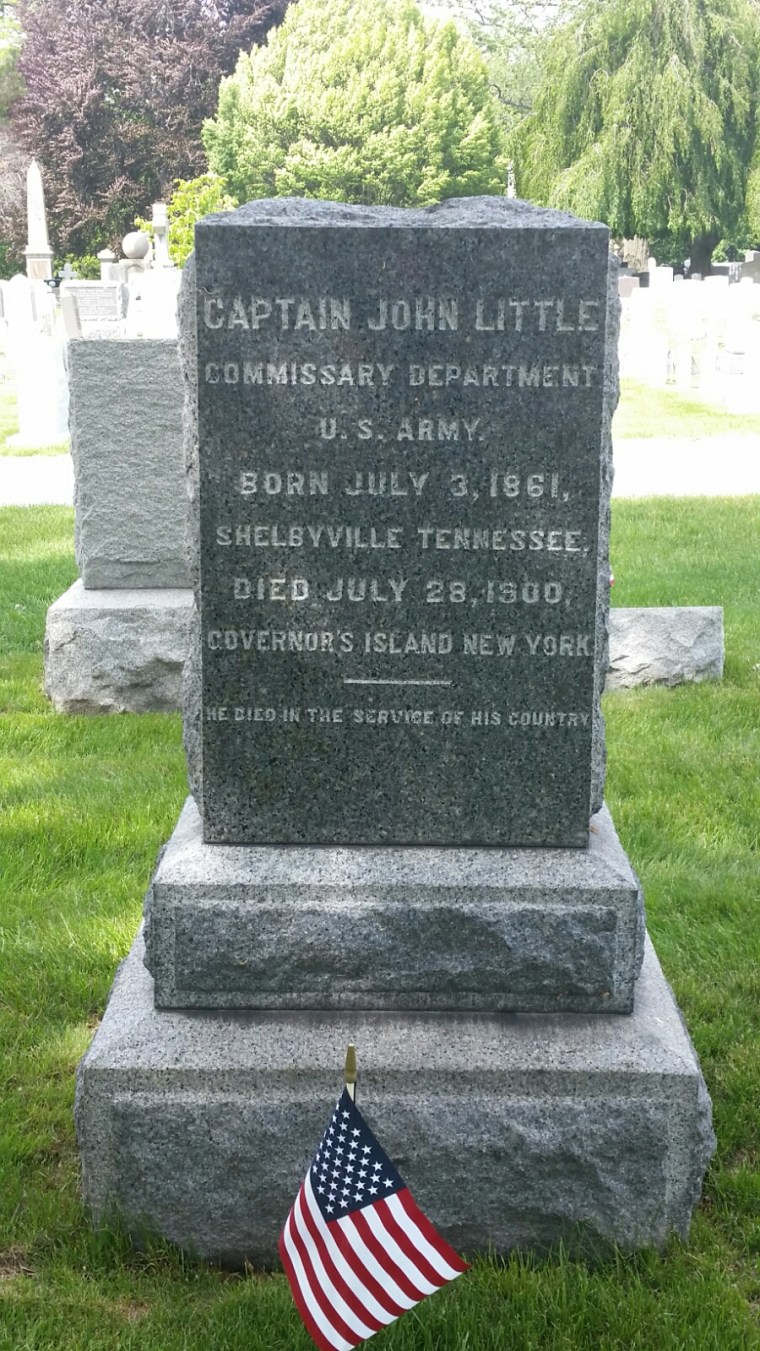
Screen Shot 2017-12-28 at 7.15.29 PM

My maiden name was Little, a moniker that I milked for a very long time because I was under five feet tall until my junior year in high school. I’d tell people that they would remember my name just from looking at me. It was a bit of humor that actually worked and made me a somewhat unique. It was not until I was an adult that I learned from my grandfather how our family actually got the handle.

My paternal grandfather was born William Mack. His mother died within days of his birth and his father decided that fatherhood was not a good fit, and so Grandpa went to live with his grandmother. Sadly she was advanced in age and when he was thirteen she died leaving him orphaned for all intents and purposes. She left him a small amount of money that required a guardian, and so he ended up in family court choosing the person whom he believed would do the best job of protecting his interests. Since his father had shown given little or no attention to my grandfather’s welfare up until that point, it was decided that an uncle would assume responsibility for both my grandfather and his inheritance.

Grandpa told me that his uncle was an honorable man who graduated from West Point. His name was John Little and he had a grand if short lived military career. In the early 1900’s there was a devastating hurricane in Puerto Rico and Captain Little was sent to head the recovery efforts. He was doing a yeoman’s job until he contracted typhus which unfortunately was fatal. By then my grandfather was a full fledged twenty one year old adult so he no longer required his uncle’s guidance, but he still felt a strong sense of gratitude toward the man who had helped him to reach the age independence. To honor the good man Grandpa had his name officially changed to William Mack Little.

I haven’t been able to find any information about my grandfather on ancestry.com, but I have learned that John Little was born in Tennessee. After attending West Point he married a niece of General Sherman of Civil War fame. The two of them had a daughter but their happy life together was brief. I’ve contacted members of his family to see if anyone ever heard of his guardianship of my grandfather, but nobody knows of any such thing. I suppose the history of his relationship to me has somehow been lost, a reality that pains me. It also saddens even more me to think of how many losses my grandfather had to endure before he was even fully launched into the adult world. He never knew his mother. He was abandoned by his father. His beloved grandmother died when he was just entering adolescence, and the man that he most admired died far too early. 

John Little’s obituary outlines his service to his country. It mentions that his career was promising before his sudden demise. He is buried at Governor’s Island New York on the ground of the West Point Military Academy. I would very much like one day to visit the grave of the man who so impressed my grandfather that we ended up carrying his name.

We’ve struggled a bit to keep our last name going, because only one of the youngest male descendants has married and had children, three of whom are girls. There is a lone boy who will continue forward as a Little and I would like very much to one day be able to tell him how he came to have that name. I think he would bear it even more proudly if he knew of the honor bestowed upon it by my grandfather’s uncle.

There must be other Littles out there who are distantly related to me and my brothers and our children and grandchildren. They don’t know us and we don’t know them. Our connections are lost to unfortunate circumstances and time. Still, it would be fun to find out who they are and to speak of the gratitude that my grandfather had for a long ago member of their family.

A name is little more than a string of letters unless it is attached to someone that we can identify. I feel a sense of pride in knowing what I do about John Little. I can imagine him toiling in the tropical heat of Puerto Rico to help the people of the devastated island. There is something particularly noble about that, much more so than fighting on a battlefield. I’m sure that he saved many lives before he became ill. His was an enormous sacrifice that makes me proud to continue to use his name as the middle part of my own. I somehow feel as though I know and understand him.

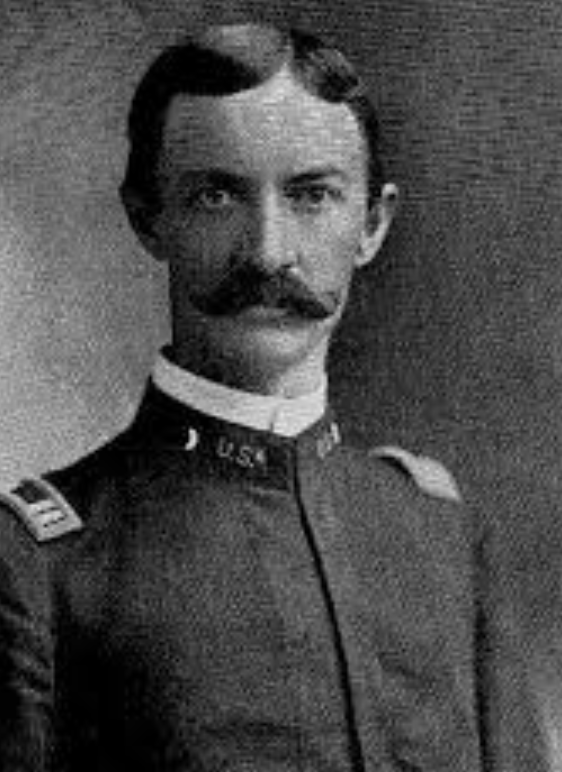
His photo shows a handsome, serious individual, but I suspect that he also had a sense of humor and enjoyed a good laugh now and again. How good of him it was to agree to be the guardian of an orphaned boy. Little wonder that my grandfather admired him so. I’d like to think that somehow, some way he knows that I too appreciate all that he did.

I now understand that Little is a grand name, the name of a hero, a compassionate man. It makes me hold my head a bit higher. It tells me why my own grandfather was such an honest and hard working man. In a brief moment he learned the qualities of an exceptional person from an uncle who was there when he was most needed. Thank you, John Little. We will never forget you. 

John Little

All Is Well


13087603_1020944261000783378435728497498852_n

It’s an amazing thing when someone you knew as a baby becomes a peer and a dear friend. Watching a youngster grow into a remarkable adult is one the the best aspects of life. It warms the heart and instills a strong sense of hope for our future. Thus it is with Scott Scheffler, an energetic, hard working and kind hearted young man who also happens to be the son of long time friends that I have known since elementary school.

Scott was an adorable child with his blonde hair and ready smile., He and my daughters became playmates as toddlers along with his younger brother, Bryan. I’ve got photos of Scott dressed in Halloween costumes and wearing Houston Cougar red regalia when he was still just a little boy. My family spent many a glorious time with his family cheering for our favorite sports teams or just chilling while the kids played all sorts of creative games. In the summers Scott took swim lessons with my girls and the best part of those hot days was visiting the shaved ice snow cone stand on Old Galveston road, and trying out all of the flavors.

Scott was a Boy Scout who eventually earned his Eagle Scout badge. Shortly after that he and his family moved out to California and I missed them so much that I went to visit only months afterward. He was in high school by then and he was the consummate host and guide along with his parents. Always a hard worker he was soon holding down very responsible positions at Magic Mountain and then The Cheesecake Factory. He was and still is a very charming soul, but it has always been hard work that defined him. With a seemingly endless supply of energy, he threw himself into whatever task his employers ask him to do.

Eventually Scott and his family returned to Texas and he enrolled in classes at the University of Houston. As always he worked part time while earning his degree. He’s always had many irons in the fire, including continuing his relationship with the Boy Scouts of America. Perhaps the best aspect of Scott’s personality is his sense of humor. He finds a way to laugh at almost anything that happens, lightening everyone else’s spirits in the process. He liked to joke that the University of Houston was going to erect a memorial bench in his name because he had spent so many years there. The reality is that if they did so it would be because of the successful man that he has become. He took the lessons that he learned there and melded them with his charismatic presence and diligence becoming well regarded in his profession.

Never one to waste precious time, Scott got a real estate license in addition to all of the other things that he does. That turned out to be quite fortunate for me and my husband when we needed to sell some property. With his usual enthusiasm Scott threw himself into the process which turned out to be far more complex than any of us had ever imagined it might be. He went out of his way to keep us informed of developments and to walk us through the minefield of regulations and annoyances. He even spent an entire Saturday helping my husband clear out a garage and yard full of junk from one of the houses. He provided my husband with a sanctuary of sanity during the grueling process. I don’t think anyone else would have been as successful at keeping everyone happy. His calm demeanor and sincere interest in our welfare lead my husband to exclaim one day, “I love that young man!”

Each Christmas we gather with Scott and his family and parents along with our daughters. We have dinner and share stories and laughs. Then we exchange Christmas ornaments, a tradition that we have followed since Scott and our children were quite young. We usually close down whatever restaurant we have chosen and then spend another thirty minutes or so saying our goodbyes in the parking lot. I suppose that it would not be too far fetched to say that in many ways Scott is like the son that I never had. I am as proud of him and the person that he is as his own parents most surely are.

It doesn’t surprise me that Scott is such a fine man. His parents are the salt of the earth, people with generous and kind hearts of their own. They taught him not so much with rules and lectures but by example. He emulates the behaviors that he saw from them, and does so magnificently. It makes my heart my heart sing to see that the key to parenting is being the role model that one wants the children to become. It is a simple concept that is often difficult to follow, but it is clear that in Scott’s case the method worked magnificently.

My husband says that he wants to shout from the rooftops that Scott Scheffler is the best real estate agent in the state, but the truth is that he is so because he is the best kind of individual that any of us would ever hope to see our children grow up to be. We do indeed love him and smile when we see others recognizing him as well.

There is still much of that sweet and innocent little boy in Scott, but there is also a strength and determination and a sense of service that truly makes him special. He is my friend and I am all the better because I am lucky enough to be able to say that. The next time I become worried about the future of our world I need only think of him and my soul will rest, assured that all will be well.

Our Fallen Unity

flag of america
Photo by Sharefaith on Pexels.com


When I was growing up my mom became emotional every December 7. With tears welling in her eyes she would attempt to describe the fear that she felt upon learning of the attack on Pearl Harbor, and the confidence that the nation gleaned from President Roosevelt’s address to the nation. In all honesty I was hard pressed to understand why she remembered that event each year with such great reverence. I’d listen to the repetition of her story and view it through the lens of ancient history rather than that of the life changing event that it was for her. It was not until I experienced the assassination of President John Kennedy that I began to have a fuller appreciation of why it was so important to her to never forget what had happened in her own youth.

When the horrific events of 9/11 unfolded in real time as I was getting ready to go to work seventeen years ago, I realized for the first time just how soul searing a violent act against our country felt. In that moment I knew how my mother had felt on December 7, and why she was never able to forget the shock of what had happened. Like her, I now find myself reliving the horror of September 11, and it never fails to leave me untouched by a kind of grief and longing for the world as it had appeared to be before that fateful day.

Of course, I like most of my fellow Americans had been far too blissfully ignorant of the undercurrent that had been building toward that brazen act of terrorism that might as well have been called an act of war. I was enjoying my life as never before, having reached a peak in my career, and measuring my contentment with a host of friends and the arrivasl of my first grandchildren. The times were so good, almost perfect, and my worries were few. I was far too busy living the good life to worry about signs that things were not as right as I thought. Suddenly on that September day I felt my confidence and even my trademark optimism collapse along with the twin towers. A kind of fear that I had rarely known invaded my psyche, strangling the fairytale world that I had created for myself.

I remember wondering if our country would ever again be the same, and in many ways that concern was well founded. I tend to believe that most of the political problems that our country faces today rose to the forefront on that day. In the ensuing seventeen years they have become more and more complex because of the divides in the way the citizenry viewed the event. Literally one fourth of the present population was not even born on September 11, 2017. Another significant portion was to young to really understand what was happening. Then there are those who watched the attack unfold forming the differing reactions that are inevitable given our human complexities.

I tend to believe that those who are of a more conservative bent are not really racist or any of the other isms that are bandied about so frequently. Instead they were simply shaken to the very core of their beings on that day. They see progress as being a way to reinstate the sense of security that they felt before that day. Others have a perspective of hoping to defeat terrorism by providing a sense of contentment and justice to more people. They truly believe that if we try to be understanding and make life better for everyone that we will finally be able to live in peace. Then there are the youngest among us who have moved on to other issues that seem far more important than dealing with terrosism. It is the friction, the push and the pull, between contrasting solutions that is causing the rancor and distrust between us.

In many ways the events of September 11, 2001, did so much more than take down two buildings and kill thousands of innocent people. It damaged all of the citizenry. We are scarred and our wounds still have not healed. The terrorists accomplished the unthinkable in turning us on one another. I doubt that even they ever thought that the ultimate result of their attack would create a psychological battlefield within families, friendships, cities, states and the nation. Essentially we have yet to come to terms with our biggest fears therefore everything that we touch is tinged with distrust.

I am reminded of my teaching days whenever I witness the misunderstandings between individuals with differing opinions that are now so commonplace, and often filled with hatefulness. It occurs to me that everyone is chattering, but nobody is taking the time to quiet the scene and make a genuine effort to hear and understand what each person is trying to voice. We can’t get to the heart of the issues because there is so much confusion about what people actually believe.

I suppose that if we were to really learn anything from 9/11 it would be that we are far more vulnerable than we ever thought we were. We all suffered in some way on that day. We internalized our emotions and considered ways to move forward, but we weren’t willing enough to share what we were thinking. As our pain grew we allied ourselves with those who appeared to be like minded and turned our backs on those whose beliefs differed. Over time we fell into the trap of justifying ourselves by vilifying anyone with whom we did not agree. The battle lines were drawn, and few among us have the courage to admit that in many ways we have all been wrong and in many ways we have all been right. Our real enemies have won, while we bicker among ourselves.

I had a more difficult time thinking about 9/11 this year than ever because our nation is so fractured. I even attempted to push it from my mind until my granddaughter interviewed me for a school project. All of my old emotions came rushing back into my mind. It was as though I was watching those terrible images all over again. Then on the anniversary of the event I cried as I heard the national anthem being played at the 9/11 memorial site. My chest heaved as I watched a New York City firefighter ring a bell for the fallen. I was reminded of how united we had been for a brief moment. I thought of President George W. Bush climbing onto a pile of rubble and assuring the rescue teams and all of New York City that we heard their plaintive cries. We were the United States of America, the united people ready to do whatever it took to restore a sense of well being.

Somewhere along the way we forgot what we had set out to do. We lost our way. Now is the time to open our hearts and our minds and to remember who we really are as people. We should not fight with each other anymore. If we are to honor those who lost their lives, then we must find ways to get along or the very foundations of what we most cherish will fall. 

The Benefit of Learning

close up of woman working
Photo by Pixabay on Pexels.com

An investment in knowledge pays the best interest. —-Benjamin Franklin

I’ve always believed that education is the most powerful way to combat poverty. I used to tell my students that knowledge is power, and that it is a great gift to each of us that the first twelve years of it is free from the government. Sometimes they pushed back on my enthusiasm interpreting mandatory attendance at school as an onerous thing. Many spoke eagerly of reaching the age at which they would be able to drop out and get on with living the way they so desired. I usually confronted them with arguments designed to convince them that learning is a great privilege that is often denied by authoritarian governments.

In my own lifetime I have heard of grievous examples of governments that persecuted and even executed teachers, leaving entire generations of children without even the most basic educations. This was done, of course, to eradicate thinking and the ability to discover truths. Dictators want to be in charge of the dispensing of information so that it benefits their causes. Sometimes when I explained such things I would challenge my students to never ever allow anyone to take away their rights to schooling. When I put it that way, many of them suddenly became far more eager to partake in the lessons that I and my fellow teachers presented to them.

Unfortunately there always seemed to be a few who were not the least bit interested in pursuing knowledge under any circumstances. Instead they wanted to get out of the need to attend school as soon as possible. They had big plans that did not include what they considered to be a waste of their time. Some also had to deal with poverty. Their parents wanted them to get to work as soon as possible. Extended schooling did not appear to be an option for them. Sadly by following this pathway they generally only managed to keep the grinding cycle of economic disadvantage continuing for one more generation.

I truly enjoyed being part of the KIPP Charter schools because above all were the ideas that there could be no excuses for not taking full advantage of all educational opportunities, and each day at school was focused on hard work. Our promise as teachers was that we would support our students in their journey to and eventually through college. The attitude that we all believed was that together we would be to provide our KIPPsters the necessary tools and attitudes for living better lives.

I have happily witnessed extraordinary results among so many of my former students. I have watched them earning multiple degrees and landing extraordinary jobs. I see photos of them standing in front of the beautiful homes that they have purchased and vicariously enjoyed their travels all over the world. Most of them have broken the crushing routines of grinding poverty that had sometimes stalked their families. Not only are their own lives more prosperous, but they have also been able to help their parents, It is so gratifying to see them using the skills, knowledge, and values that they learned first from all of us who are known as Big KIPPsters and later from their professors at universities and their mentors at work.

I recently became involved in a situation that brought home the sadness that I have always felt when I see young folks eschewing the marvelous opportunities that education provides. I was helping a very sweet woman move from one place to another. As we worked side by side for days I realized how bright she was, but also how her lack of resources had made her life so incredibly difficult. She had no savings, but rather had to rely on one paycheck to another just to provide the most basic standard of living. This meant that she was unable to scrape together enough money for the kind of deposits and down payments that are so often required in today’s real estate market. Unfortunately nobody in her family was able to help her either. In fact, she was quite distraught that so help was forthcoming from either her brothers or her adult children. She was on her own, and realizing that she had no way out my husband and I helped her.

Once we gave her the funds to secure a place to rent she realized that she was also alone in having to move her belongings and those of her elderly mother who lived with her. My husband and I spent a very long nine hours loading furniture and other items into and out of a moving van that we rented for her. While we worked side by side she reflected on her life and admitted that if she had been more attuned to becoming better educated, then perhaps her children might also have been inspired to stay in school and even earn degrees. Everyone’s lives might have been better in the long run instead of being so difficult.

I felt quite saddened by the woman’s situation because I know that her circumstances are repeated many times over in our country. Not all schools take the time or expend the effort to help young people and their parents understand the true value of education. They do not provide the unwavering support that is necessary to help those with few resources to navigate the treacherous waters of being admitted to college and then being able to earn a diploma. It takes money and relationships with people who care to help our poorest citizens to better themselves. 

The key to so many of the social problems faced by our society is to teach our young the importance of a lifetime of learning. Knowledge earns interest indeed. The more we all invest in it, the less we will have to spend on welfare programs in the future. Our bipartisan goal should be to insure that the greatest possible numbers of today’s children embrace and appreciate the value of schooling. When they learn, they earn, and we all benefit.