Shifting Responsibility

multicolored sequin lot
Photo by Amber Elizabeth on Pexels.com

Our country was founded by rebellious people, many of whom were descendants of folk who were having a difficult time in Europe. They were people that might be referred to today as “deplorables” from religious sects that had been persecuted, poor who came as indentured servants, youngest sons who would never inherit land, adventurers who wanted to try something new, troubled souls who barely escaped jail or a hangman’s noose, fatherless boys and girls called bastards. Each and every person who came here was looking for opportunity, a chance to reboot and make something of themselves. What they found was a harsh environment very unlike the places from whence they had come, but they carved out a place for themselves and many times made good on their desire to make something of themselves in a way that would not have been allowed in their homelands. By the time of the revolution that created the whole experiment called the United States of America many generations of people had only known life in the colonies. They bore the independent characteristics of their ancestors who had long ago settled there. They had been taught to be wary of infringements on their rights, and so when the king of England pushed harder and harder to get them to finance wars with untold taxes, they pushed back and eventually chose to break completely.

It’s important that we note the characteristics of our beginnings whenever we attempt to understand the political thinking of today. We were a nation of people who were very consciously concerned that too much interference from the government might lead to the same kinds of prohibitions and problems that had driven many of their ancestors here in the first place. The Constitution itself along with the Bill of Rights were designed to keep governmental interference as much at bay as possible. Because of the very nature of the people who began this experiment in democracy, it is difficult and maybe even a bit ridiculous to compare our nation to others. We are quite simply put very different from them.

Admittedly there were glaring flaws in the first iteration of our laws. The fact that women were not given the vote and slavery was legal were egregious mistakes that haunt us to this day. Still, creating unity among so many disparate voices and ideas took compromise without which we might still be part of the British commonwealth and only a fraction of the size that we are today. It’s been an uphill battle to set thing right, particularly with regard to the souls that we enslaved and their descendants. The incremental tendencies built into our Constitution can be frustrating, but they are also a bulwark against hasty legislation that has the power to dilute our freedoms.

We are a young country compared to our European counterpoints and more diverse in every possible way. Pulling all of us together in a common cause is not easy, especially as we deal with problems that our forefathers could not have foreseen. Still beneath all of the quibbling and unwillingness to work together that rises up again and again, there is a belief that somehow we will ultimately find a way to mend the injustices and grievances that have been part of every government that has existed since the beginning of time. There is no perfect ideology, nor is there a sin free group of people. As humans our flaws create problems that we sometimes allow to fester until we grow weary and realize the necessity of finding solutions. Thus we engaged in a revolution that freed us from the greedy grasp of the crown, and then later fought each other over the question of slavery that should never have taken so long to address.

Today we are a global nation as are all places on earth. It is virtually impossible to be isolated from the symbiotic nature of our world. We must take part in discussions and resolutions dealing with places seemingly so far away that they have little to do with us. Additionally we have questions specific to our own country that need to be answered. Juggling all of the modern day political responsibilities is a balancing act indeed, and it plays out against a backdrop of considerable numbers of people who share the same fears of losing freedom as the people who long ago shoved King George out of their lives. On the other side is a growing group that wants government to take more responsibility. The debates over which type of political system is best is seemingly a reiteration of questions that created the glorious cause so long ago.

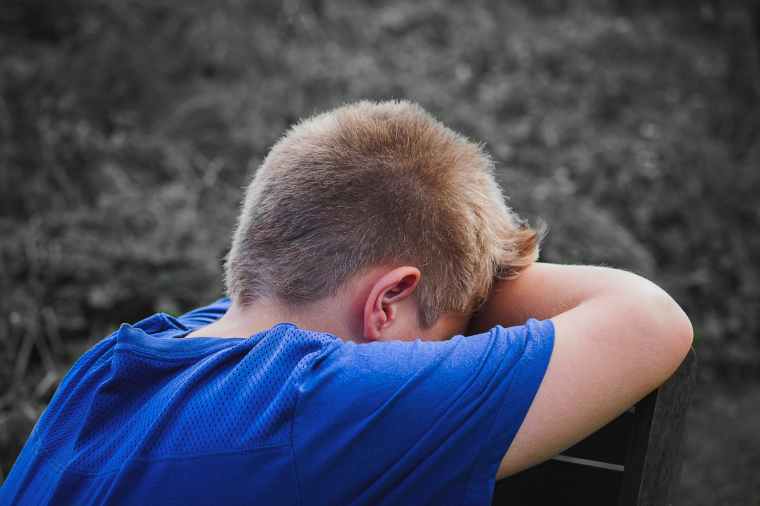
Front and center of our national angst is the growing trend of violence in our schools. There are so many layers to this issue that believing that any one thing will solve the problem is little more than wishful thinking. That being said we all have a sense that something, and perhaps many things must be done sooner rather than later. We know that we cannot live in the fear that is overtaking us nor can we allow the murderous copycats to continue their ways.

Among the many ideas making the rounds these days is to hold parents liable if their children use guns that they have left unsecured. This idea ranges from giving them monetary punishments to actually charging them as accessories to murder. As someone whose ancestor fought in the American Revolution I find myself shuddering at the very thought of such an invasion of freedoms. I also base my belief on the decades long relationships that I have had with teenagers as an educator. One thing that I know for certain is that young people can be quite shocking in the things that they do, even when they are being carefully monitored by loving and caring adults. There is almost a kind of secret life in the years of adolescence when young people are experimenting and involving themselves in pursuits that would in no way be reflective of the lessons they have been taught at home and in schools. Most of us if we are honest would attest to doing things that now cause us both regret and a modicum of shame. We would not have told our parents what we were doing and are thankful that we made it through our experimental stages without getting into serious trouble.

What I am saying is that even with locked gun cabinets and responsible training there will always be teenagers who find ways to break the rules. Holding parents legally responsible is a very slippery slope unless it can be proven beyond a reasonable doubt that the parents were so lax that they actually encouraged the bad behaviors. There is a huge difference between giving a teen alcohol to drink and then allowing him/her to drive and having that same teen stealthily take a family gun from a closet to do harm to others. It might be argued that the gun should have been locked away, but even then how is it possible to prove that the gun was just lying around so cavalierly that it was an open invitation to disaster? Teens never fail to amaze me. They watch adults using combinations and memorize the numbers. They find keys to unlock forbidden doors. Unless the parent is alert twenty four hours a day and essentially following a teen’s every single move, there will be times when they lose control.

In most cases the parents of shooters are as shocked and overwhelmed with grief as anyone. They must truly wonder what they did nor did not do to be such failures. I can’t even imagine having to walk in the shoes of a parent whose child has become a monster. To further their own anguish by insisting in a court of law that they also be held accountable seems to be a violation of all of the freedoms that we want our country to represent.

There are bad seeds among us. We need to deal directly with them. We can create laws that restrict their access to weapons and public places, but surely we do not want to be so vindictive as to send their parents to jail as well. Unless it is certain that adults actively contributed to perpetrating violence punishing them further has no place. We must attack this issue from other angles that are in keeping with the intent of our forefathers. Our fears must not allow us to be unjust or to shift responsibility. 
It Takes A Village

close up of teenage girl
Photo by Pixabay on Pexels.com

Fit pitching seems to run in my family. If you’re not sure what that means, it refers to over the top defiant behavior by a child between the ages of two and five. My eldest daughter was quite adept at creating embarrassing scenes both at home and in public. One summer she wore fur lined reindeer slippers everywhere because she refused to put any other type of shoe on her feet. Not even two of us were able to hog tie her so that we might force a more appropriate type of footwear onto her tiny feet. I used to marvel at her strength and wonder if perhaps I had given birth to a superhero. I finally gave up deciding that once her little toes got sweaty enough she would surely eschew the footwear designed in Norway for harshly cold winters. With a mind of her own that is evident to this very day she persisted, and I endured shaming looks and unwanted advice wherever I went.

My niece was not to be outdone. She is the child of an Anglo father and an Asian mother, a beautiful girl who very much resembles my eldest, but has definite Asian features. My mother, my more grown up and matured daughter, this niece and I were once on a shopping adventure together. My niece was still a toddler, but with three of us to help keep her happy we were certain that there would be no problems. I don’t recall what set her off, but something did and she began carrying on like a demon possessed. Her cries and screams became exponentially more insistent with each passing second until my mom wisely decided that we had no recourse but to leave the shopping behind and get her home for a nap. My niece had other ideas and resisted our efforts to move from the spot where she was entertaining a crowd of critics with reproving faces. Picking her up was a bust because she wiggled from our grasp each time we tried that maneuver. When we attempted to get her to walk she lay down on the ground challenging us to drag her if we wished to move forward. Somehow we ultimately got her to the car but not without worrying that we were going to end up in jail for kidnapping as she yelled, “You’re not my Mama! You’re not my Mama! Go away!”

My eldest grandson was not to be outdone by the ladies in the family. On one particular outing he repeated his mother’s propensity for footwear after he saw a pair of very expensive tennis shoes that he wanted to take home. When we denied his request he went into an act of rebellion that outdid anything I had ever seen. It got so bad that I actually whispered to my daughter that I would spring for the shoes if she didn’t mind. Thankfully she stood firm because she was a good mother, insisting that he had to learn that we would not be moved by a tantrum. Having grown weak as a grandmother I wasn’t as sure of her reasoning in that moment, but I ultimately felt proud of her strength of character.

The good news is that all three of these children turned out to be quite remarkable. They did exceedingly well in school and were often complimented by their teachers and other adults for being exemplary young people. My daughter graduated from the University of Texas with a business degree and now balances an accounting job with caring for a household of four young men. My niece is a Pediatrician and works at Texas Children’s Hospital while mothering three boys of her own. My grandson was an honors graduate of his high school and is studying at Texas A&M University and serving as head coach of his neighborhood swim team. All three outgrew the behaviors that had once made them appear to strangers as spawn of the devil.

I have more often than not found that very inquisitive children sometimes become intractable, especially when they are tired. They want to freely explore the world and learn for themselves without barriers. Since we adults have to guide and protect them we sometimes have to inhibit their native curiosities and desires for their own good. We find ourselves locked in a battle of wills that is exhausting and might even make us look bad to passersby.

I feel great compassion for a parent who is attempting to deal with an angry child. Sometimes the struggle becomes so public because the little one does not care that he/she is creating a disturbance. It is apparent that the adult is doing everything possible to quell the situation all to no avail. I always want to help but know that my interference will undoubtedly make things worse. All I can do is quietly send signals of support to the harried adult.

There is a hilarious video circulating on Facebook in which a quite funny woman tackles the issue that mom’s everywhere have endured. She vividly describes the scene of a mother dealing with an uncooperative child in a public place. She wonders why there always seems to be someone in the crowd who signals unrelenting disapproval for the mama, even though we all know that sometimes these things happen. She notes that our inconvenience is temporary while the parent will continue dealing with the problem at home. She wonders why we can’t all be more supportive, especially given that this is supposed to be the era of solidarity with our sisters from all over the world.

In the age of Pantsuit Nation women are doing their utmost to break glass ceilings and join one another in #MeToo moments. Why can’t we also demonstrate a bit of understanding and compassion for anyone who is dealing with a difficult toddler moment? Why do we so often become judgmental rather than helpful, when anyone who has been a parent honestly knows that there are many times when we feel totally inept and defeated by the tiny creatures that we are working so hard to raise.

I always loved my mother-in-law because whenever either of my daughters behaved badly in front of her she would smile impishly and suggest that maybe they had taken after her. She would then recall multiple stories that her elegant mother had told her about her own childhood missteps. One involved a scene in front of a downtown department store which became so heated that her mother had to give her a little swat on the fanny to get her back in line. When my mother-in-law shouted that her mother was embarrassing her the reply from her mom was, “If you embarrass me, I will embarrass you.” My mother-in-law repeated this tale rather proudly as if it conveyed the strength and conviction of her mother that she believe inspired her to become a great woman in her own right.

Next time you see a parent dealing with a seemingly bratty child, try not to judge. Instead send a vibe that let’s the weary individual know that everything will one day be amazingly good if they just hang in there and do what is right. Show that we are all in this parenting thing together. Hillary was right. It takes a village.

Love For All Time

adult affection baby casual
Photo by Pixabay on Pexels.com

Prince Harry has been quite open about the intense trauma that he endured from the death of his mother. He has admitted to undergoing therapy after struggling with debilitating feelings in the aftermath of his loss. He was twelve when Diana died, so he vividly remembers the shock of that moment, but also treasures his recollections of the wonderful mother that she was. Her influence on him is quite apparent and his feelings for her are as strong as ever. Her spirit permeates his life and the choices that he has made.

The death of a parent is difficult regardless of whether it happens when we are adults or children. A sense of being without the very essence of who we are lingers long after the beloved is gone. For a child the suffering often goes unnoticed and untreated because young ones have difficulty expressing the hurt they are feeling. The emotions become internalized in so many varying ways that they are not always apparent. Harry acted out by being a goof ball and sometimes bad boy. He appeared to simply be a silly and rebellious young man, but he was actually reacting to the fears and hurt that he was enduring. Luckily he eventually found the help that he needed and channeled his angst into purposeful pursuits by emulating his mother’s example.

I find myself feeling a kind of spiritual connection with Harry because of our shared experience of losing a parent at a young age. There are many parallels between our stories. His mother died, and for me it was my father. Both of our parents were in car accidents. Both events occurred around the time of a holiday. Harry was twelve and I was eight. We both endured emotions that we didn’t quite understand after the tragedies. Harry became rowdy, and I became shy and withdrawn. Eventually we managed to come to grips with the what had happened and to better understand ourselves and the frightening feelings that had plagued us. Ours were successful journeys that ultimately lead to happiness and dedication to causes that help people, but for so many things do not turn out so well.

I think of my father quite often, and particularly on the anniversary of his death, May 31. I find myself wanting to know him and talk with him as an adult. Instead I have to rely on tidbits of childish conversations that I had with him. I borrow stories from adults who knew him as well. I have painted a picture of him that is admittedly idealized. I know that he had many flaws and I have wondered about them and how they might have impacted me without my ever realizing. I also recall the wonder of him, and know without a doubt that I am very much his daughter. He lives in me, and I see him in my brothers, and children, and grandchildren as well. Through him my ancestry reaches far back into the history of Great Britain just as Harry’s does, although mine is not quite as illustrious. I am an amalgam of many genes and influences, but his reign over me as much as if he had lived to walk me down the aisle and celebrate all of my milestones. I was old enough when he died to know with certainty how he might have reacted to the continuation of my history.

It is the knowledge of my father’s goodness and his love for me that has sustained me whenever I have felt a bit shaky. I suspect that Harry would say the same about his mother. We made it in spite of the horror of losing our parents because they had already undeniably imprinted their undying devotion on us. Once the love of a parent is imparted it becomes a fountain of strength whose healing waters stay with us. It is our shield from all of the terrors of the world. Like Simba in The Lion King we grow to understand that our parent never truly leaves us. Through some cosmic force they become our spiritual guides. We feel their presence, not in a supernatural way, but in our hearts.

The remaining parent and family members also play a critical role in raising a healthy and happy child. My mother filled our home with a strong sense of safety and  comfortable routine. She went out of her way to surround us with caring family and friends. She religiously kept us in touch with our paternal grandparents. She often told us tales of our father and remarked whenever we did something that reminded her of him. She kept him very much alive in our minds, so that it sometimes felt as though he had merely gone on a very long journey from which he would soon return. Of course we understood that he was gone forever, but it helped to be able to speak openly of him and sometimes even to cry about him.

A child instinctively responds in a vigorous and healthy way when surrounded by the unselfish love of good parents. While losing one of them leaves a ghastly scar that hurts from time to time, with good memories and the care of those who remain things will ultimately turn out fine. Harry and I are both happy people because we were lucky enough to have a beautiful start in life that did not end with our horrific losses. His mom and my dad had already given us tools and examples that were ours to keep for all time. Theirs was love for all time.

Being Leonard

10246301_10205604543090004_3263112611847433681_nIt’s graduation time, and when it rolls around each year I can’t help thinking of my own commencements from junior high, high school and college. So much hard work, angst and happy memories lay behind those glorious moments, and so much hard work, angst and happy memories lay ahead. Graduation day itself was somewhat like a wedding, a blur of people and speeches and congratulations that went by so fast. It somehow didn’t seem right for the culmination of so much effort to come and go so quickly, but that’s the way good times always seem to be. What strikes me most as I think back to those glorious moments of achievement is that each time I was surrounded by a core of my friends and family who took the time out of their busy lives to celebrate with me. While so many variables have challenged me in my life, such people have been a constant source of stability and love.

Graduations always make me think of my cousin Leonard. He’s the elder statesmen of our raucous bunch of cousins who is almost as close in age to our parents as he is to those of us who played Hide and Find each Friday night at our grandmother’s house. He was married and raising children while I was still happily engaged in the loveliness that was my childhood. When we saw him, he was far more interested in conversing with my mother and father than getting on the floor to entertain me. I always looked up to him not just because he was the first of our long line of cousins, but because he always appeared to be so happy and wise and confident.

Anyway, Leonard became known as the one person who never missed a single graduation. No matter what the timing was, or how bad the weather had become, Leonard would represent the whole family with his presence at one commencement after another. It almost became a game for us to scan the crowd at such events to find our own “Waldo” in the crowd. We always knew that we could count on seeing him just so long as we had sent him an invitation. While we joked about his perennial presence, I suppose that we never really took the time to think of how remarkable his devotion to family actually has been over the years. Little wonder that his own brood that has grown to gargantuan proportions is such a loving and tight knit group. With a kind of superhuman energy Leonard has managed to quietly take the helm and demonstrate to us the importance of finding time to honor members of the family as they pass through the milestones of life.

We Americans are a chronically busy and productive bunch. It doesn’t seem to be in our DNA to slow down even after we retire. There is nothing quite as shocking to us as someone who chooses to chill for a bit too long. We join organizations and volunteer and fill the nooks and crannies of our calendars so tightly that when we receive heartfelt invitations we quite often have to beg off, send our regrets. We’d love to be with family, but there is just so much to do that forces us to decline. Such has never been so with Leonard, a man who worked hard at his career, raised four delightful children, helped at his church and within his community, and still found ways to pause just enough to demonstrate his love for his us time and again. He has been as dependable as they come.

I suppose that if I were to give one single bit of advice to graduates it would be to follow Leonard’s example. As I look back on my life a sea of faces and experiences fill my head. Jobs and honors have come and gone. People entered my life and exited never to be heard from again. Many of the things that I labored to purchase have broken or gone out of style. The one aspect of my life that has continued to sustain and support me has been family and a circle of special friends who have stayed by my side. I have learned that when someone is as continually faithful as Leonard has been, it is due to great sacrifice and genuine concern. It is not easy to be as responsible and dependable as he is, but somehow he has made it his mission to be so. He is a rare gift in a day and age when behavior such as his is becoming less and less common. He has not allowed the rat race to become the focus of his pursuits. He has found balance and purpose in a life well lived.

There are so many stories of people on their deathbeds voicing regrets, being alone, realizing that they in their quests for riches, power, glory they forgot to remember the people who might have loved and remembered them most. When we hear such tales we marvel that someone who seemed to have it all actually had so little, and yet we also have tendencies to expend all of our energies chasing people and things that may ultimately leave us lonely and forgotten. Leonard on the other hand is a man who is beloved because little that he does is only about himself.

I attempt to emulate Leonard. He has demonstrated to me the importance of showing up again and again. He may not be able stay long but he always manages to demonstrate that he cares enough to be part of our most important milestones. That is all that we need to see. He has been our immutable constant in a world that seems ever less dependable, but he is growing older and time is taking its toll on his health. He won’t be able to carry the family banner forever, so its up to the younger generation to accept and honor his lead. He has shown us how its done. It would be a terrible shame to forget the importance of his efforts. It’s time for all of us to be more like Leonard.

When We Open Our Minds

fire wallpaper
Photo by Pixabay on Pexels.com

If you have not yet read Fahrenheit 451 you should put it on your summer reading list. It is a dystopian tale written by Ray Bradbury in the early nineteen fifties. As with most classics it is still worthy of discussion today, and maybe even more so than back then. Bradbury managed to predict a number of pursuits that have almost become an addiction in today’s world long before such things had even been invented. The main idea of his masterful work is that books have been banned in the future world and firemen do not extinguish blazes, but instead burn any remaining volumes that they find. It is all supposedly done to make people feel better along with providing them with mind altering drugs and a daily diet of numbing entertainment.

The main character is a man named Montag who is quite a rockstar when it comes to carrying out his book destruction duties, at least until he begins to question the the process of turning the masses into unquestioning sheep. Ultimately his desire to find the truth becomes his compass.

The book itself is extraordinary and it translates well to film. The first effort was a movie from the nineteen sixties, and most recently HBO took a turn bringing the story to life. The latest offering changes many aspects of the original story, but not the main idea. It shows us an America that has endured a second Civil War in which millions of people died. Books are now contraband and Montag is one of the best at eliminating them. The HBO version is visually stunning particularly in its portrayal of the masses being instantly gratified by watching the firemen in action and tweeting comments as their work unfolds. It is a frightening look into what might happen when the members of a society are no longer able to accept differing ideas. To the victor belong the spoils, and that can result in a total refusal to allow critical thinking of any kind.

I found myself drawing so many parallels with our present day environment that seems to only grow worse. There is a kind of group think within the dominant political parties that actually worries me greatly. Even at universities that used to be centers for open discussion, certain people and ideas are denied a platform. It is so different from when I was at the University of Houston, and part of the excitement was being able to hear every possible kind of belief. Nothing was considered too out of bounds and we were taught to weigh philosophies heavily and ask relevant questions before accepting theories. Now people are judged by public opinion, often without any facts to back up the arguments. It truly worries me that we shut down public debate even before it has happened. How are we to know what different platforms actually are if we never find out about them?

There is a wave of concern that is being voiced by those courageous enough to point out that our political discourse has gone very wrong. We are asked to choose sides and give one hundred per cent agreement or bear the consequences. The militancy that both ultra progressives and ultra conservatives demonstrate is more and more becoming the norm, crowding out those of us in the middle. Few of us have been willing to hold out for individualism and truth rather than blindly accepting the noise of the crowd. It doesn’t take a grand leap to imagine a schism in our country growing so bad that violence ensues.

I suspect that some of my historical heroes would be deemed losers in today’s atmosphere. Imagine Dr. Martin Luther King, Jr. insisting on peaceful demonstrations or Republicans providing the needed votes for Lyndon Johnson to get the Civil Rights Act passed in Congress. We are no longer willing to give credit when it is due if the person is not in tune with our way of thinking on every issue. Today’s feminists refuse to consider a conservative woman who is pro life as a success even if she holds a powerful position. They certainly scoff at a woman who chooses to stay home to raise her children. When a conservative like John McCain valiantly votes in the name of honor, he is spurned as being wishy washy if his stance is not in tandem with the president and some mysterious base. We see so much hatefulness coming from all quarters, and we wonder why our teens are turning to violence to solve their problems.

Fahrenheit 451 asks us to imagine taking our anger just a few steps forward until we answer all of our problems by preventing freedom of thought. It is a world in which sadness and disagreements are not allowed in the ridiculous hope that if we simply avoid confrontations and free speech we will all be happier. Instead I maintain that such a world imprisons us. We should all push back at any attempts to treat us like mindless children. We need to be wary of electronic hypnotizers that are stealing away our individualism.

I used to tell my students that the most priceless thing in their lives was education and the freedom to learn about anything that interested them. It is true that the first thing that autocrats do is kill the educators and destroy the books of which they do not approve. That is the exact opposite of how a free nation should be. Over time I have read painfully horrific books so that I might better understand even the minds of evil. I plowed through Mein Kampf because I wanted to see for myself just how twisted Adolf Hitler’s mind actually was. I find the exercise of reading and seriously studying all forms of thought to be an important exercise. I find that I rarely am able to align myself totally with anyone because I am a free spirit, and I love that being that way is still allowed. Nonetheless, I see signs that being so are often misunderstood, and I have had my share of ugly criticism, Still, I will fight for my right to my own thoughts and I will continue to do so for others as well, even those with whom I vehemently disagree.

I sometimes wonder if we have become too prone to victimization. It seems that almost everyone has something to complain about rather than focusing on progress and all that is good. If we are continuously seeing half full glasses we change, and not for the better. It’s time for real dialogue, and lots of research and reading. We should beware of soundbites and slogans and ideas that bully us. There is no greater right than the ability to read and discuss even difficult tracts. We should be eager to hear from everyone, even when the words disturb us, perhaps even more so in such cases. We cannot allow ourselves to be drugged by the opium of mass media and entertainment. Like Montag we will find ourselves when we open our minds.