Finding Marion

shamrocksThere is a theory that most people will be completely forgotten within three generations. After that time nobody still living will have heard the sound of their voices or felt the impact of their personalities. They may leave behind photographs or documents attesting to their presence on this earth but essentially they are defined not by memories but by images. Of course the modern era is rectifying this with digital footprints that might include recordings and moving pictures. Such used to be the purview of only the wealthy but now even common folk have access to technology. This is not the case for most of those who came before us and so they are slowly but surely being forgotten.

I have a great grandmother who is a mystery. I think that her name was Marion Rourke but of that I am not certain. She was the mother of my grandfather, William Mack Little. He told us that she died three days after he was born. There is no record of any of this. In spite of my relentless searches, Marion remains a cipher, as though she never even existed.

Of course there has to have been such a person because William was not just found in a cabbage patch. He had a father named James Mack who took him to live with a woman that he called his grandmother known as Sarah Reynolds. Sadly I have been unable to find any records for these individuals. They walked on this earth as though they were ghosts, phantoms of my grandfather’s imagination.

William never knew Marion but he thought enough of her to name his first born daughter after her. It was his touching way of honoring her. I suspect that he always wondered who Marion was and what she was like, just as I do. It saddens me to think that she died at what should have been one of the happiest moments of her life. She had a good strong son who would ironically live to be one hundred eight years old. He was a very kind and intelligent man who treated women with the highest regard. He no doubt would have been a dutiful son to the woman who brought him into the world.

Marion’s last name indicates a connection of some kind with Ireland. My grandfather always claimed to be half Scottish and half Irish and I have verified such roots with a DNA test that I once took. I wonder if she was born in the Emerald Isle or if she was a descendent of someone who originally came from there. She had a beautiful name and was someone’s daughter, but who might that have been? She was obviously quite poor according to what little my grandfather knew of her. He was her first child and I wonder what happened that made her so ill that she died.

When I had my first daughter my labor was long and hard. There were complications and my doctor later told me that in the old days I might have lost the baby or even died myself. I wonder if I somehow inherited the same genetic disposition for difficult birthing that Marion had. Do I have an idea of what she might have endured? Was she alone and frightened as things went awry? Did she realize that she would not live long enough to see her son grow into a man? Such thoughts haunt me as I attempt to remember her without any facts to steer me in the right direction.

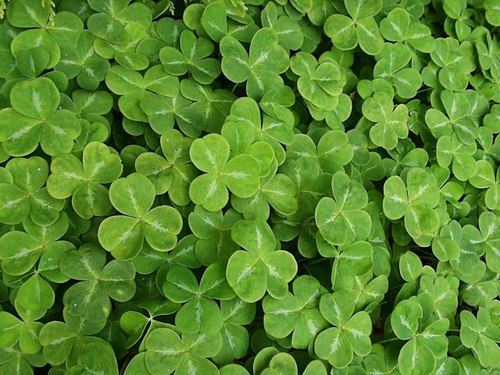
I try not to forget Marion. Someone has to think of her. Each St. Patrick’s Day I celebrate the Irish in me and attempt to imagine my great grandmother. I cook corned beef and cabbage and celebrate my own life that would not exist were it not for the sacrifice of her own. I so want to know her and probably never really will.

My grandfather is not quite sure where he was born nor where he spent his childhood. It was somewhere in Virginia where he was able to see hills in the distance. By the age of thirteen he was orphaned again when his grandmother died and he became a ward of the state. He chose John Little as his guardian because he was an honorable man, a graduate of West Point. Grandpa took “Little” as his last name in honor of the individual who helped him to complete his journey into adulthood. Sadly John Little died of typhus when he was in his early thirties leaving my grandfather all alone again. Grandpa had to fight hard to find reasons to to stay alive, and somehow he always did. He had an optimism that was inspiring. I wonder if he inherited that trait from Marion? Would she have been proud to see him overcoming one challenge after another?

I feel a kinship with Marion both as a woman and as her great granddaughter. I know that she lives somewhere in me. I would love to know where she was born, what she did as a child, how she met James and where she was finally buried. It has been a kind of holy grail for me to find out who she really was and I am not yet ready to give up even though I have spent years searching for someone who seems not to have even existed. She deserves to be known and loved and treasured.

On St. Patrick’s Day I will once again prepare my traditional meal and think of her. It is possible that I will be the last person to do so. She will one day become forgotten just as the countless individuals who came before her. I am determined to tell her story even if I have to fill in the blanks to describe the details. I know from the scant information regarding her untimely death that she had been loved enough by James to bring forth a child and that hers was a difficult existence devoid of the medical help that might have insured her survival.  I know that her son was a strong, bright and healthy man who would have been a joy to her. I know enough about genetics to realize that she must have been an intelligent woman. Her DNA has helped to produce some quite outstanding descendants.

Marion is a name said to have derived from the Hebrew “Miryam” which means “sea of sorrow.” I hope that this is not an accurate description of hurt and pain that my great grandmother may have endured. I would like to believe that she found peace and that somehow she knows how well things turned out for her son and his son and finally for me.

Howdy

1d230bcc4636998c02292d3ef09b2982I’ll never forget the feeling of disappointment that Texans felt when Alaska became a state. The home of the Alamo known as the Lone Star state had reigned as the largest in the nation, a distinction that it not so secretly enjoyed, only to be toppled by a faraway newcomer. Suddenly our second place status stole some of our bragging rights and mostly silenced our boasts about the enormity of our home. Still, anyone who has ever travelled from El Paso to Orange not only understands the daunting distance of such a drive but has seen the dramatic changes in the landscape that lie along the highway. Texas is a place of incredible diversity and describing it in a few words is almost impossible.

I’ve been as far west and as far east as one might go in Texas. I’ve seen the plains of the north and the deserts of the south. I’ve observed the people in both small towns and large cities. I’ve come to realize that there is no one size fits all representation of the diversity of my state which in some ways is a microcosm of the world at large. I would be hard pressed to choose one place or area that might serve as the essence of all that is Texan.

The hill country around San Antonio and Austin certainly might be the heart of Texas. Those cities after all are fairly close to being at the center of the state and as the home of the Alamo and the capitol they can lay claim to historical and political importance. Both places also lie a rather lovely area of the state with majestic vistas and an old west feel. They are in the part of the state that most closely complies with the imagery of Texas and Texans that most outsiders have when they conjure thoughts of this far more complex place. Certainly the progressives, intellectuals and artisans of Austin are a great deal different from the refinery workers of the blue collar town of Port Arthur, but they both call themselves Texans. 

I suspect that if I were to ask citizens in all of the other forty nine states to name one Texas city, they most often would mention Dallas. If I were to require them to describe Dallas they might speak of wealthy cattle and oil barons living on ranches with names like South Fork. Television has a way of fixing ideas in our mind that often wander far from actual reality. The real Dallas is a modern metropolitan wonder with congested freeways, skyscrapers and malls filled with everyday people who look and act little differently than their counterparts in Los Angeles.

The Gulf Coast of Texas is yet another area unlike the stereotypical visions of the state. It is a place of worldwide commerce, meandering bayous, rapidly changing weather and an amalgam of cultures and cuisine. It is a magnet for beach bums and innovators alike. It has evolved over time from a strange mix of ideas that created a kind of crazy quilt that can’t be easily defined. It is friendly and welcoming and generally nonjudgemental, a place where it seems possible to accomplish the impossible and where rocket scientists dream big alongside welders.

Then there is the far west of Texas that is home to miles and miles of farms and ranches that stretch so far into the distance that they appear to be endless. It is a lonely place of wide open spaces, an area where one might find solace in getting away from the rat race of the modern world. It is wild and requires toughness to withstand. Out west humans compete with the harshness of nature under a sky perennially filled with stars. It is one of the last outposts of a way of life that pioneered the expansion of the United States. It is mankind in competition with the elements and in tune with the wonders of the earth. It is a place of both harmony and dissonance, verdant farms and drought ridden ghost towns. It is a place of peacefulness and one that requires toughness and determination to survive. 

Texas is a grand state of unimaginable size and diversity and each March with the regularity of the clock it bursts alive with the colors of wildflowers, most notably the bluebonnets. Near Chappell Hill and Brenham the lovely indigo colored blooms create beautiful carpets in fields and along the sides of the roads. The people of Houston drive from the business of the city to enjoy the sight of the lovely buds that seem to embody all that is best about Texas. I wonder if there is any other state in which its citizens are so taken by the annual flowering of the countryside. For those of us in Texas venturing forth to observe the bluebonnets in all of their glory is a pilgrimage that must not be missed in the spring.

The small towns that host the visitors fire up their pits and roast briskets and sausages that have a distinctly Texas flavor. They offer blueberry pies and fruit kolaches for the hungry travelers, made from recipes handed down from one generation of Texans to another. In a beloved creamery there is ice cream unlike any that is made in other parts of the world. It melts sweetly on the tongue and says, “I am in Texas,” in a sensory way that must be experienced to understand. There are crafts and antiques to view along with Mother Nature’s finery. It is a festival of Texas culture that warms the heart and brings out smiles on even the grumpiest faces. It is a not to be missed tradition.

I’m a Texan through and through, but I am only one variety of the remarkable citizens of our state. Our ancestors came here from the world over, all hoping for an opportunity to live better lives than in the places from whence they came. Many dreams have been realized here and even today Texas is growing in population by leaps and bounds simply because even the commonest person has a chance to succeed with just a bit of imagination and a willingness to work hard.

Texas still has relatively inexpensive land and a variety of jobs. It lives up to its name as a welcoming place. Its monicker comes from the Spanish word “tejas” which means “friend.” We do our best to be an inviting host and we don’t mind at all if someone decides that they would like to tarry long enough to make our state a home. My husband’s kin came from Georgia and England. Mine were from Virginia, Kentucky and Slovakia. We embrace neighbors from Mexico, South America, Vietnam, Germany, Russia, Nigeria, and all across the globe. Texas is a regular United Nations  with a distinctly open and friendly nature. It is a one of a kind creation of many minds and ways of living. It is a place quick to shout, “Howdy!” It is my home.

An Ode to Red

Sun-and-Clouds-Images-of-the-Kingdom-DollarphotoclubRed was a beautiful girl, no doubt because of her striking ginger colored hair. She was always a lady who often loved to wander aimlessly for hours just enjoying the sights and sounds of the world around her. She was a very good friend, loyal beyond imagination and her gentleness was such that every member of my family loved her. When she was with me I felt special. She hung on my every word like nobody I had ever known. I was enchanted with her. Heck, even my neighbors got to know her and they too fell for her magnetic personality.
I remember a time when I was quite ill with the flu, dizzy from a high fever that seemed to be burning my very brain. Red sat right next to me all day long, keeping watch as I went in and out of sleep. It was comforting to see her there attempting to conceal her worry with a weak smile. Somehow I felt that her vigilance was more than enough to pull me through. She was like that, ever faithful and devoted.

On another occasion Red lost one of her long time friends. Her grief was so all consuming that she could barely eat. She moped listlessly for weeks and all I could do to comfort her was to hug her and assure her that everything would eventually be okay. It pained me to see her hurting but it also convinced me that she was quite special and that her feelings were incredibly selfless and real.

Red loved my two girls. She was as protective of them as I was but she also loved to frolic with them, disregarding all notions of dignified behavior. She rolled and wrestled with them on the floor causing them to laugh with unabashed glee. She raced them through the yard and played catch anytime that they wished. She was totally at their beck and call and when they had bored of playing with her she would smooth her hair and revert to the magnificently genteel ladylike behavior that so defined her and sit quietly listening to my rambling conversations.

Still there were aspects of Red that seemed almost contradictory to the cultured image that she generally portrayed. She was always up for a swim and she could hunt with the best of them. It seemed to be part of her DNA to be swift of foot and unusually alert to the comings and goings of nature’s creatures.

As Red got older her scarlet colored hair became more and more tinged with white. She moved slowly and the old energy that had always marked her spirit had faded. Arthritis plagued her joints and I suspected that her hearing was going away rather rapidly. It saddened me to see her in such a state but she continued to attempt to be her old self. Most of the time though she was just too weary to run or play with children as she once did and sadly she often drifted off into an old person’s kind of sleep even in the middle of the day.

It was only when my daughter Catherine brought a child named Maggie to visit that Red found some of her old verve. She was captivated by the little one and seemed intent on forcing herself to rollick as she might have done when she was so magnificent. Maggie didn’t realize that Red was struggling to keep up with her. She only felt the gentle love that Red always exuded and she delighted in the attention from her new older friend.

One day I learned that Red had cancer that was incurable. I was devastated and filled with emotions and memories of all of the good times that we had shared. Our whole family was engulfed in sadness as we so helplessly watched her grow weaker and weaker. It embarrassed her to be in such a state. She didn’t want us to see her like that but I was determined to be there for her just as she had always been for me.

I was with her on her final night. I held her has she moaned in pain and her breathing became more and more shallow. Now and again I grew so tired that I momentarily fell asleep. If my arms slipped from embracing her, she would begin to cry and that frightened and plaintive sound awakened me to take proper watch once again. At some point during that long and horrific night I fell into a deep exhausted slumber. When I awoke Red was perfectly still. Her chest no longer rose and fell. The color was gone from her face. She had died.

I sobbed uncontrollably as I realized that I would never again have those wonderful moments of unconditional trust and love that I had shared with Red for so long. As I gave the terrible news to each member of my family they in turn were devastated. It is never easy to lose such a great companion. Our grief would hang over the household for weeks.

At Christmastime that year I threw my emotions into decorating my home and preparing for the annual celebrations but I was still thinking of Red. Catherine was there with Maggie helping me to complete the chore of trimming the tree that had always been such a delight but was difficult that year because of Red’s passing. As we placed one ornament after another on the branches Catherine came across a trinket that she had made as a child. It was created from an old Christmas card and it featured a lovely photograph of Red back in the days when she was still vibrant and beautiful. Catherine burst into tears as she clutched the worn and tattered memento. When she held it up for me to see, I too lost my composure and cried. The two of us released the pain that we had been trying so fruitlessly to conceal while little Maggie looked on in wonder.

Our hearts eventually healed but we never forget how much Red had meant to us. I still gently place the old paper ornament with her picture on my Christmas tree each year and I remember what a great lady she truly was. Red was as fine a pet as any family ever had. She was a sweet golden retriever who was our friend, our protector, our playmate and a member of our family. She was a wonderful dog. 

The Death of Fairytales

QVcoronationWhen I was a little girl women’s roles were still mostly traditional. Few of the women that I knew worked full time outside of the home. My mother was forced into such a situation when she became a widow, otherwise I doubt that she would have been anything other than a homemaker. I had a couple of aunts who were trailblazers in terms of having careers and some of my neighbors were employed in very interesting jobs. One was a commercial artist who wore exotic clothing and furnished her house with ultra modern furniture. Another was a lawyer who sometimes cried when speaking of her inability to have children but seemed to truly enjoy her work. She often invited me over for tea and to play cards or checkers, all the while encouraging me to do something remarkable with my life just as she had. All in all though not many women were yet ready for the feminist revolution that would eventually off like a rocket when I became a teenager.

As a very young child I dreamed of being a princess or a queen. Fairytales had me convinced that women lucky enough to live in castles and bear titles were the most fortunate maidens on the planet. I recall my disappointment the first time that I realized that I was never going to be discovered at a formal ball by a handsome prince. I was not born of noble blood and therefore would always be deemed unworthy of the notice of a monarch. I would lead the life of an ordinary soul without benefit of riches and fame unless I earned such things myself.

I got over my sadness rather quickly and made my own way in the world. I haven’t been showered with wealth but I have had a great life all in all. I have always found time for my favorite hobby which is reading. Biographies have fascinated me for as long as I can remember and among those that I enjoy learning about are women who became queens. For that reason I have been particularly excited about watching Victoria on PBS and The Crown on Netflix. The stories about Queen Victoria and Queen Elizabeth respectively have been quite fascinating while also convincing me that I am rather lucky not to have to wear their shoes.

Both women spent the majority of their lives locked into responsibilities that were thrust upon them at very young ages. While there were jewels, lovely clothing, expansive gatherings and adventurous trips to keep them entertained, they also had to adhere to rigid traditions and rules that impinged on their freedoms far more than I would ever be willing to endure. They had to be careful of every utterance and action lest they do irreparable harm to the monarchy or the country. They were expected to select their spouses from a very limited field of candidates, most often from a band of royal cousins. They were in the public eye continuously and criticized readily for any perceived missteps. To me the lifestyles that they were forced to accept were akin to living in a cage in a zoo.

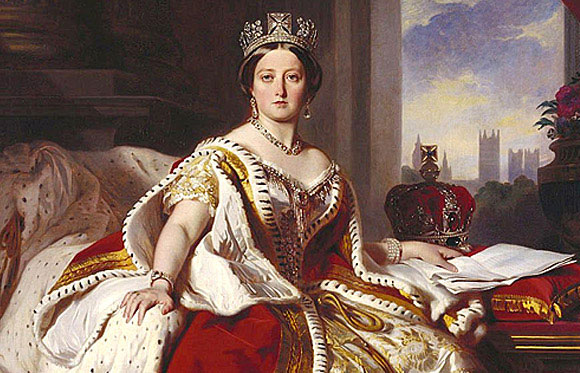
Victoria quite unexpectedly ascended to the throne and because she was quite young there were those who felt that their claims to office were far more reasonable than hers, making her first forays into ruling much like walking through a minefield. Nonetheless she did her best to rise to the occasion only to be criticized when she chose to marry her first cousin, Albert, a man of Germanic heritage deemed unworthy of the position. As it happened, Victoria and Albert had quite a love affair and together created a very large family of children whose influence would spread across all of Europe and ultimately lead to a world war. Sadly Victoria was a rather uninvolved but highly critical mother who made life very difficult for her offspring. Albert was the better parent but he died fairly young leaving Victoria in a state of depression that lead to a total breakdown. She would wear her dark widow’s weeds for the rest of her days and for the most part lose interest in both her country and her children. She ultimately became known for her melancholy and nagging nature, hardly the possessor of happiness that I had imagined a queen to be.

Years later on of her descendants, Elizabeth, would be entrusted with the same role that might not have been hers had her uncle Edward not abdicated the throne to marry a twice divorced American woman whom he passionately loved. Elizabeth was barely in her twenties when her father, the king, died from lung cancer. Like Victoria she had also wed a cousin, Phillip, whose lineage was traceable back to the same Victoria from whence she garnered her birthright. She had to learn how to put the crown before all else in her life and as we have all witnessed over the years that role has placed her in difficult situations again and again. Even though she is the monarch she has no say in the politics of her nation and she must be incredibly discreet in both her commentaries and actions.

As the head of the Anglican Church Elizabeth was forced to rule against her sister who wanted to marry a divorced man. The resulting feelings of betrayal and unhappiness that her sibling experienced would blight the two women’s relationship for years to come. A similar scandal played out decades later when Elizabeth’s own children found themselves in unhappy marriages that publicly broke apart. I have often wondered if the idealistic Princess Diana had imagined that her life would be as magical as a fairytale only to find that the reality of royalty is routine, dreary and devoid of the most basic freedoms that the rest of us enjoy. The moment when she felt trapped in a nightmare must have been devastating and her dutifully trained mother-in-law would not have been able to empathize to ease some of her concerns.

The more I learn about being a royal personage, the less I am inclined to want to have anything even remotely resembling such a way of life. I am the one who is fortunate in being able to go wherever I wish without worry that someone is stalking me or judging my every move. The only restrictions on whom I would marry were the qualifications that I had deemed important to a good relationship. I have been able to choose my career pathway and determine how many children to bear. The fact that I had no male heirs matters not at all. I can openly utter my political views and chart my daily course. If I want to disappear for a day or a week, I am free to do so. My anonymity is a grand gift that allows me to be myself.

If I were to rewrite fairytales for modern girls, I would create heroines who spurn the trappings of a princess in lieu of liberty. Snow White would divide the household duties among each of the dwarfs and go to work with them as the forewoman of the mine. Cinderella would create a professional chimney cleaning service with offices worldwide and a reputation for paying her employees well above the minimum wage. Beauty would write a best selling book and marry the Beast as an equal partner. None of these brilliant women would have the goal of becoming a monarch or a regent. They would understand the pitfalls of being trapped in such occupations and create lives of their own.

I put my girlish beliefs away long ago. I no longer envy the lifestyles of royal personages who must become figureheads for a nation. I believe that I have found far greater satisfaction and meaning in the humble life that I have lived. I suspect that there have been times when those who must endure the titles of monarchies may agree with me.

Fish Sticks

vp-sticks-beauty-shotI’ve seen a great deal of change during my life that I tend not to even think about most of the time. I am a Catholic and until I was a teenager there was an ironclad rule that none of us were to eat meat on Fridays. The idea behind that ruling was that Jesus died on that day of the week and in remembrance of his suffering we were to abstain from meat as a kind of penance and sacrifice. In 1966, the year that I graduated from high school, Vatican Council II amended that dictate to require only that Catholics avoid eating meat on Ash Wednesday, Good Friday and all Fridays during Lent. A council of bishops later clarified the church’s stance on the consumption of meat on Fridays by suggesting that all Catholics over the age of fourteen perform some type of penance on every Friday of the year with avoidance of meat being one of the suggested forms of meeting that goal. For all intents and purposes the vast majority of Catholics today are no longer concerned about whether or not to eat meat on Fridays. The times of worry about sinning by eating a hamburger are long gone for most who follow the Catholic faith.

I remember the old days when my mother did her best to create menus that did not contain any form of animal flesh. We’d often have tuna fish salad or pimento cheese sandwiches and sometimes she would prepare my favorite grilled cheese. Old standbys were tomato or cream of mushroom soup with slices of bread. We never had access to nice varieties of fish after my father died so the chief version of seafood that hit our family table was in the form of fish sticks, a staple that American Catholics kept afloat for years. Sometimes Mama would use butter rather than bacon to prepare scrambled eggs or she would boil the fruit from chickens and make egg salad. Shrimp was too rich for our budget and we rarely went out to eat but when we did it was usually to a cafeteria and on Fridays our entree was always fried fish.

Some of my aunts and mothers of my friends attempted to become a bit more creative by putting together tuna casseroles and topping cheese pizza with tuna as well. I tended to prefer my mom’s less ambitious Friday efforts that made no bones about eating simply at the end of the work week. Somehow she made those tuna sandwiches and stacks of pancakes seem more exotic and delicious than the pot roasts that she sometimes prepared on Sundays.

When meatless Fridays became a thing of the past for most of us we often joked about the people who had cheated by enjoying a thick steak when they were supposed to be dining on chicken from the sea, and wondered if they were going to stay in hell for their transgressions or if there had suddenly been a release of centuries of Friday meat eaters into heaven. We also watched our liturgies and ways of doing things change rather dramatically in one fell swoop as our mass was finally recited in English rather than Latin, and the priest faced us rather than showing us his back. It was all so democratic and inviting. Suddenly we began to imagine a Jesus who walked among people rather than elevating Himself as someone more special than the rest of mankind.

One of the traditions that had always irked me was that women were required to wear a head covering inside the church. For that reason our school uniforms included little brown beanies for use whenever we attended mass or other religious ceremonies. As we grew older we were allowed to exchange the ugly headgear for chapel veils that perched lightly on our bouffant hairdos without destroying the effect of the coiffures we had created. I vividly recall the silliness of women placing sheets of Kleenex on their heads whenever they arrived at church without the requisite hats or veils. It was commonplace to see the thin white paper hurriedly pinned tightly to strands of hair in an attempt to show respect for the occasion. I had to stifle my laughter at the ridiculousness of the whole idea. Somehow I didn’t think that God cared a wit whether or not a woman was showing her beautiful hair and eventually the church leaders agreed with me and dropped the archaic requirement.

Of course the changing of the rules was not always met with complete agreement. There were those who were horrified that the old traditions were going the way of the buggy whip. They bemoaned the use of English in the mass and declared it to be almost profane. They continued to wear their hats and kept up the practice of avoiding meat on Fridays. They could hardly bear to look at the face of the priest smiling down at them during the mass, preferring to view his backside instead. It took a bit of convincing to get the naysayers to calm down but at the same time there were also those like me who began to question more of the ideas that seemed to have little or nothing to do with the message of love that Jesus so eloquently preached. We insisted that our church become ever more inclusive and less rigid in its dictates. That lead to a great deal of rebellion particularly in the United States where even the most faithful Catholics now sometimes debate the need for many controversial practices.

Still there are those who tend to be nostalgic regarding the old ways. The conservative versus liberal dichotomy is alive and well in the religious world. I remember listening to a man of my age who regaled us with memories of how much he enjoyed the old fish stick days, and how he wished with all of his heart that they would return. He thought the women looked nice with their long sleeved dresses and pretty bonnets on their heads. He longed to return to a past that seems rather quaint and perhaps even a bit unfair today, but I can’t concur. I think of the fact that none of those old fangled rules were created by Jesus but by men who simply came up with ideas that over time that may have once made sense but not so much today.

Now we are allowed to go to church wearing slacks and some even go so far as to show up in shorts, which may be pushing the envelope a bit too far. Few women wear hats and luckily they no longer have to worry that some over zealous cleric will pass over them at communion for the sin of wearing a dress without sleeves. Eating a burger on Friday is no longer a condemnation to hell, if it ever actually was. The edicts concentrate more on ways of living than dress and what is consumed for dinner. Still there are many questions that for now remain unanswered for those of us who see remnants of laws that seem to be out of touch with the compassion that Jesus always demonstrated so freely. Perhaps the time will come when they too are deemed to be unfair and even unnecessary.

I am a woman of great faith but I have trouble with most organized religions that cite edicts that are manmade interpretations of the word of God. I believe that religion is at its best when it is kept as simple as possible. Over and over again Jesus defied many canons that he found to be without merit. He healed the sick on the Sabbath. He befriended individuals who were deemed to be undeserving outcasts. He walked among the lepers, the poor and the suffering. His message seems very clear to me and it is not one of exclusion of anyone. Instead it is one of unconditional love. I believe that as long as we follow His example as best we can, we are on the right track. Sometimes we sadly get so caught up in attempting to judge that we actually lose our way. Instead of worrying about how we look or what we eat we are on the right track when we welcome all.