Getting Serious About the Future

Photo by Pixabay on Pexels.com

Last summer I was in Sacramento,  California for a Junior Olympics track meet. The event is held each July in venues considered to be generally cooler than most parts of the United States at that time of year. Sadly the young people were running their races in heat nearing the one hundred degree mark. While the short sprint events were not too bad, the longer distance races felt unbearable for both the runners and the spectators alike. By the end of many of the runs the contestants were vomiting and collapsing from heat exhaustion. Those of us in the stands were sweating and feeling faint even under the protection of umbrellas and canopies. The myth of milder weather in northern California exploded under the reality of climate change. 

While we were visiting there fires along the roadways were a common sight. The vegetation was dry and brittle like kindling and it occurred to me that it would not take much for the whole place to go up in flames. I found myself thinking of what I would do if I were suddenly caught in a flash fire, a feeling that I had also felt a few years earlier when we traveled to southern California in our trailer. Ironically only a couple of weeks after we had returned from that vacation the area where we had been camping went up in flames. 

It is apparent from droughts, hurricanes, typhoons, and other freakish natural disasters that Mother Nature is unleashing a fury unlike any in my lifetime. When I lived in San Jose, California as an eight year old the landscape was lush and green, not parched. I have watched as the forces of weather have become more and more extreme as in the destructive winds of hurricane Laura which recently devastated Lake Charles, Louisiana. I would be remiss if I simply ignored the warnings that we have been hearing from scientists about the human impact on our planet. For decades now they have insisted that we must curb the habits that are wreaking havoc on our atmosphere. 

There are many among us who would decry the evidence and data regarding the heating up of the earth as just another hoax like the furor over Covid-19. They insist that we are being fooled by individuals who are crying wolf when all that is happening is a kind of adjustment that the earth has always experienced from time to time. Their arguments sound somewhat convincing until I read information and see time lapse photos from NASA scientists insisting the climate change caused by humans is real. Even my skeptical brother who is the epitome of rational thought has agreed that climate change is indeed certain. He is a man who would make doubting Thomas look like someone easily fooled with his insistence on having mathematical and scientific proof for any phenomenon and yet he tells me that we will have to find some solutions for our dilemma or face increasingly more difficult weather events in the future. 

The biggest challenge that we face is the possibility of having to drastically change the way we live and behave. That does not come easily for most of us. We become accustomed to a routine of doing things and push back on the idea of having to sacrifice in some way. Just look at how many people refuse to wear masks to help prevent the spread of Covid-19 because they are uncomfortable and restricting. Asking people to raise temperature settings, convert to new forms of energy, waste less, consider new ways of living appears to be a step back in the evolution of progress. We humans like to move forward and we enjoy our cool homes and those flights to exciting places. We like our plastic water bottles and the packaging of our convenient foods even as we notice how much trash we are producing. It’s too hard to have to expend more effort on creating an all new lifestyle but it’s not so difficult to insist that we really do not need to change.

My grandparents were born about one hundred forty years ago in the nineteenth century when the Industrial Revolution was just beginning. Their early lives were hard by today’s standards. My grandfather often described his childhood noting that there was no glass in the windows of his home nor were there screens to keep insects and dust from finding their way inside. They used oil cloth tacked to the inside wall to cover the windows during the cold winters. They relied on ice blocks and underground cellars to store food in the summer. His job as a young boy was to chop wood for cooking and keeping warm. Candles and oil lamps were the only forms of light. 

I doubt that we need to go back to such draconian lifestyles but certainly we can begin to think about ways to conserve our resources that taken together will have a cumulative effect. We should also be investing in scientific endeavors to create new less destructive ways of powering the world. There are many ideas out there that have the potential to revolutionize the way we live just as my grandparents witnessed over their lifetimes. We should be encouraging the inventiveness of humankind with a nod toward the future, not holding tightly to our old ways out of doubt and fear. 

Our future can be bright and hopeful if we simply admit that we have a problem that must be addressed. We went to the moon because we were willing to focus on unlocking our ability to travel in space. We made incredible medical advances because we invested in research. If we have the will we can meet the challenges of climate change to make our world more inviting. Accepting that we have to do something now is not evidence of defeat but rather the kind of thinking that has moved us forward throughout history. We may not like the idea of being chided by a young girl in pigtails about the urgency of our problems but we would do well to hear what she has to say. Doing things the same way again and again even as we see evidence that we are hurting the earth is foolish. Surely we can see that it’s time to get serious about our future.   

The Power of Critical Thinking

Photo by Pixabay on Pexels.com

Now that so many lessons from teachers are streaming into homes parents are eavesdropping and becoming agitated at times by what they are hearing, particularly when it comes to Social Studies classes. I have witnessed a few adults asserting that some teachers are indoctrinating their children rather than simply teaching the facts. The question becomes what the most appropriate way of presenting history and politics and other subject matter should be. Are some of the methods being used a means of introducing critical thinking or do they indeed represent a kind of indoctrination of our young?

Many years ago I spent Saturdays attending lectures on how to teach students to think critically. The idea behind the movement was to provide students with the tools for looking at information from differing points of view before drawing conclusions based solely on emotions or allegiances. For example we considered accounts of what happened on the village green in Lexington where the first shots of the American Revolution were fired. As part of the discussion we read primary and secondary accounts from both the British and Patriot points of view. We were asked to consider what biases may have entered into each account and then compare and contrast what we had read. 

It became immediately apparent that each summation of that historic event was affected by both the political views of the writers and whether are not they had been actual participants in the melee. As expected I discovered that we each see a particular event through somewhat prejudiced eyes. Critical thinkers attempt to unravel all of the emotional aspects of history and get to the bare bones of what seems to have actually happened. In the case of Lexington Green it appeared that tensions were already high with lots of rumors and a bit of drink at the tavern fueling suspicions and anger. To this day nobody is totally certain who fired the first shot but once it rang out everyone took action believing that each side was acting in self defense. Both the British sympathizers and the revolutionaries used the shootings as a reason for taking action. 

The first hand accounts of the “shot heard round the world” were the most radical regardless of whether they came from loyalists or revolutionaries. Later historical tracts made more of an attempt to tone down the rhetoric and appear to be stating only facts but most of them still contained leanings toward one side over the other. Parsing the information and the rhetoric was an interesting task that demonstrated the need to be wary of accepting ideas as truth without research. 

Most social studies teachers today have been well grounded in critical thinking skills and they intentionally instruct their students with multiple sources that often contain divergent ideas and philosophies. Their purpose is not to indoctrinate but to teach students to be circumspect in accepting something as absolute truth without considering the motives and leanings of the authors. They also focus on simply presenting historical and political philosophies as means of understanding how beliefs influence how people behave. The idea is to help students to open their own minds to the process of asking questions and exploring the reasons behind the ways people and cultures believe and behave. 

I attended an International Conference on Critical Thinking sponsored by M.I.T. one summer and I heard from speakers from around the globe and from virtually every kind of organization. I became more and more certain that isolation and blind loyalty to any person or group is not only dangerous but detrimental to the vibrancy of human interactions. Critical thinking saves corporations and governments. Even our Founding Fathers understood that our nation would grow and evolve. Many who allowed slavery to be part of our country’s beginnings believed that it would be outlawed given time. They created mechanisms for creating change when situations demanded them and rules for making certain that those changes were well thought out. They warned us that following political cults was dangerous to the health of our country which is why George Washington was so insistent about stepping down from the presidency as quickly as possible. They were great thinkers who gazed into the future while shying away from radical ideas that they believed would nonetheless ultimately come to pass.

We should not condemn teachers who open students’ eyes to a way of critically assessing any historical event, idea or decision. It is essential to democracy that we proceed with honesty and attempts to justly and fairly provide the ideals of the Declaration of Independence to all regardless of race, religion, sexual identity or philosophical views. Our Constitution was designed to protect every single one of us and to change when any of us are left out of that calculation. It takes critical thinking and open discussion to reach rational conclusions for the good of all. Many of our younger citizens are better at that than those of us who are older who only memorized facts in the classes of old. We should be happy that we are helping our young to really think rather than simply react. 

I would urge parents to go ahead and listen to their children’s lessons and then engage in additional research and honest discussions as a family. There is never anything wrong with learning more about the world around us and seeking answers to the many questions we have. Open your mind and find the long thread of history and discovery that has led us to this moment in time. It is not indoctrination. It is a precious gift that unravels the mysteries of our human natures. 

I Am Strong But I Am Tired

Photo by Daria Shevtsova on Pexels.com

Once in awhile I see a post the speaks to me. Thus it was today when I saw these words on my Facebook wall, I am strong but I am tired. There was no lovely image to go with the message, only those seven words but that made them even more powerful to me. I suppose that my journey to exhaustion began long long ago when my father died. I knew that my mother had more than her share of challenges so I literally dedicated myself to being responsible and mature even at the age of eight. I studied hard and did my best not to create trouble of any sort. It wasn’t always easy because the little girl in me was always calling out but I got through my childhood and teen years being a model of perfection. 

I married young but already felt as though I was thirty years old. I knew that I had chosen the right man with whom to partner and I had developed incredible skills for managing a home and myself. I lived in a delightful bubble of pure joy from my wedding day in October to the following July when my mother had her first psychotic break. I fell apart initially but before long I had taken a deep breath and returned to courageous mode so that I might care for my mom and for my younger brothers. I made a number of mistakes but my intentions were always pristine. I hoped that once she was well I would never again have to deal with such a horridly emotional situation but that was not to be. 

For the remainder of my mother’s life, a period of over forty years, I would become her caretaker again and again whenever she reached the brink of insanity. The task never became easy but I got better and better at making wise decisions on her behalf In the meantime I was raising a family of my own and working as a teacher. Sometimes I was so weary that I had to take a mental health day just to revive my strength. Somehow I always found a way to put on my big girl pants and do whatever needed doing. 

I taught a number of minority students over time, many of whom lived in unimaginably difficult situations. My own experiences helped me to have empathy when they fell apart. I often teased my pupils by telling them that the entry to my classroom was a magic door and that anyone passing through would be able to miraculously set aside whatever was worrying them and focus on learning. Of course there were days when even I was experiencing so much personal trauma that the door did not work as I had promised. Luckily I knew my subject matter so well that I was able to fake it. 

I suppose that each of us have many moments that test our wills and push us to simply give up. Over and over again we have to fight back the inclination just to retire from the world. We find a strength that we never imagined having and carry on. 

I know that I am strong but I am tired. The last many months have left me feeling great sadness for my fellowman. While I have always found a way to solve life’s problems, right now I am puzzled and disappointed by so much that I witness in the world that it is exhausting. 

  • I am tired of the division in our country.
  • I am tired of those who are unwilling to hear the pleas and the hurt of Black Americans. 
  • I am tired of hearing more concern over things than the lives of people.
  • I am tired of insinuations that segments of our society hate America simply because they are working to mend its flaws.
  • I am tired of the self-righteousness of some religious people who forget the command from Jesus to love thy neighbor as thyself and to judge not lest they be judged. 
  • I am tired of hearing about people’s freedom to walk among us without masks while many of those same people complain about Black Americans protesting to ensure their freedom.
  • I am tired of hearing excuses being made for the gross behavior of our president when it should be roundly condemned. I would not have allowed my children or my students to treat people with the kind of insulting malice that is applauded by his followers.
  • I am tired of lies, lies and more lies from so many corners of society.
  • I am tired of the inhumanity being inflicted on far too many with impunity.
  • I am tired of our unwillingness to stop, quiet our minds and listen to one another without thinking of how we are going to refute what people are thinking.
  • I am tired of national obsessions with guns and money and always being the best.
  • I am tired of tired of our president attempting to make us afraid of one another and succeeding to the point of inciting militias and vigilantes.
  • I am tired of watching people and leaders ignore science, especially when we are in the midst of a worldwide pandemic and are reeling from the effects of climate change.
  • I am tired of smoke and mirrors and buzzwords that distort reality in an effort to trick us into suspending our ability to think. 

I know who I am. I know that I love America no matter whom I support in an election. I know that I have a very personal, private and meaningful relationship with God. I know that I have a mind of my own that I have used to overcome daunting challenges. I am strong but I am tired of ugliness and I will do whatever I can to call it out. I may be tired but I am ever strong.

We Can Have It All

Photo by Lucas Andrade on Pexels.com

I do not watch football, not high school football, not college football, not pro football. It is a game that holds little interest for me. I catch the Superbowl each year and sometimes purchase a ticket to watch my Houston Cougars play a game, but mostly I do not invest much time or money in the sport. Before Covid-19 I often went shopping or joined friends for lunch on game days so that my husband Mike would have the freedom to cheer and curse his favorite teams. I get all the information that I care to have about the state of football from Mike, so I tend to know which teams are doing, which players are stars, and the general state of the game. Beyond that my interests lie elsewhere.

I don’t begrudge anyone enjoying football or anything else for that matter. We each have different interests and different ideas of how to spend our free time and our money. I think nothing of dropping almost three hundred dollars on a continuing education course at Rice University so I completely understand the reasoning for those who purchase season tickets to some sport, even football. We entertain ourselves in different ways and those choices are a delightful luxury that comes from our freedoms both political and financial.

I am a bit puzzled by the number of people that I see demanding that we put prayer and religion back into schools, political gatherings, and even entertainment events but dislike the idea of athletes or celebrities expressing their personal views at similar venues. I hear so many insisting that these well known individuals should just stick to entertaining us and be quiet even as they themselves continually voice their own beliefs. It seems to me that there is a bit of a double standard as to who is allowed to use their rights to let their concerns be known. 

Of course when it comes to football the difficulties started when a Black quarterback chose to take a knee during the singing of the National Anthem. He made it very clear that his intent was only to draw attention to the brutal ways that Black citizens are often treated. He insisted that he was not insulting veterans nor did he hate the country. He simply felt that taking a knee was a peaceful way to demonstrate his belief that there are systemic injustices being leveled toward Black Americans. 

It did not take long for false interpretations to be applied to his action or for accusations of his lack of patriotism to become accepted as truth. Soon enough he was being dismissed as a trouble maker, socialist, hater and dozens of other epithets that had no real connection to what he had done. His peaceful attempt at drawing attention to a problem was rejected by a large swath of Americans and so was he. 

Most recently there have been marches and protests by the Black Lives Matter movement in virtually every corner of the United States. Most of them have been peaceful but admittedly a handful of them resulted in looting and destruction of property. Those incidents have tended to be the only ones that garnered the notice of the media and the citizenry. The focus has been on the extreme situations like Seattle, Portland, Washington D.C, Minneapolis and Kenosha. Again all of the positivity of peaceful marches has been buried under the hyperbole surrounding the exceptions, not the rule. With the encouragement of the President large numbers of the citizenry have written off the entire movement and ascribed behaviors and intentions that are not universally true.

So once again professional athletes decided to attempt to draw attention to the real issues of the Black Lives Matter movement in the hopes of making it clear that there are specific problems that should be addressed. They have been united in their efforts to keep the focus on what is actually true and not on the false narratives that have degraded the movement. Most recently the Kansas City Chiefs and the Houston Texans appeared on the field before the game had started to link arms in unison to demonstrate their support for the true essence of the movement which is to understand and accept that there is often a more stringent set of rules for Black Americans that too often places them in harms ways, not to indict all police officers or to demean the flag or veterans. 

Once again people missed the point. The players were booed. People threatened to never again watch another game or support them. They were accused of being unAmerican when there probably is nothing more American than protesting perceived wrongs. It’s been done since before our country’s revolution and in virtually every era since then. Our ancestors have dumped tea, gone on strike, blocked the way to businesses, engaged in hunger strikes, embarked on long marches to Washington D.C., and staged sit-ins at businesses. It is a glorious freedom that we should embrace, not just when the protests reflect our own thinking but even when they ask us to consider a differing beliefs. 

An actor once went too far in the demonstration of his dissatisfaction by assassinating Abraham Lincoln. That was not freedom of speech but murder and he was fittingly hung for his crime. While we do not want to encourage mayhem it would befit us to applaud those who find a way to express themselves peacefully. It does none of us any harm if football players quietly attempt to make a point. We also have the freedom to simply accept or reject their ideas but we should not attempt to force them into silence. Let them demonstrate and then play ball. Nobody is hurt in such a scenario. They get to have a voice and the fans get to see a good game. The two are not mutually exclusive. We really can and should be able to have it all.

Choosing Character


Photo by Pixabay on Pexels.com

My father was born in Skiatook, Oklahoma in September of 1923. Skiatook, a town with a funny name, is about twenty miles north and a bit west of Tulsa, Oklahoma. It was founded by a chief of the Osage tribe when he opened a trading post there. By 1923, oil had been discovered in the area which is no doubt why my grandparents were living there when my father was born. My grandmother had been working as a cook in a boarding house when my grandfather met her sometime around 1919. Grandma was a widow whose former husband had died in 1918. I have often wondered if he had been a victim of the Spanish flu pandemic of that era but my grandmother never spoke of him one way or another.

Anyway my grandparents were both in their forties when they married and started a family together. They seemed to enjoy living in Oklahoma but my grandfather frequently spoke of the horrific treatment of the native Osage tribe members by most of the whites who had flocked to the area in search of oil. It bothered him that people took advantage of the native people, sometimes purchasing land for the price of a car battery. He would never quite forget how angry it made him feel to see such egregious actions but he generally understood that the world has always had its share of scoundrels and outright evil people. He tended to be rather philosophic about the inevitability of man’s inhumanity to man but insisted that each of us had a duty to be better than those who lacked ethics.

He told lots of stories many of which carried the same theme of character overcoming greed or violence. I suppose that when all was said and done he thought that the world was moving slowly but surely to a better place in spite of its imperfections. He pointed to ordinary heroes who had impacted his life, like the uncle from West Point whom he chose for his guardian when he was essentially orphaned at the age of thirteen. Grandpa picked the military man because he “was honorable.” High moral character along with compassion for others was incredibly important to my grandfather and throughout his lifetime he always strove to model the traits that he so admired in others. I suppose that many of my own philosophies were greatly influenced by my Grandpa’s example.

My grandfather told me about a terrible depression at the end of the nineteenth century and how a man named Coxey protested by traveling across the United States on his way to Washington D.C. Along his march he was joined by hundred of people suffering from unemployment, homelessness and hunger. Coxey and his “army” passed through Grandpa’s childhood town and he remembered how thin and careworn they looked. He wanted to go with them but he was just a boy and his grandmother insisted that he stay home. 

Grandpa often told stories of people who lived in poverty and the folks who helped them. He spoke of the smallpox epidemic that almost killed his relatives. He remembered Teddy Roosevelt and the Spanish American War. Many of his most often told tales was about how he had learned to be frugal and adapt to difficulties. Virtually every life event that he described involved an individual who was remarkably devoted to understanding and helping others. 

He had many heroes both famous and ordinary and he urged me to learn from them just as he had. When I graduated from the eighth grade he gave me a book entitled Great Lives, Great Deeds suggesting that I pattern my own life after people who were generous of spirit and determination. I don’t think he ever knew that he was the hero who would most impact the way I think and live. 

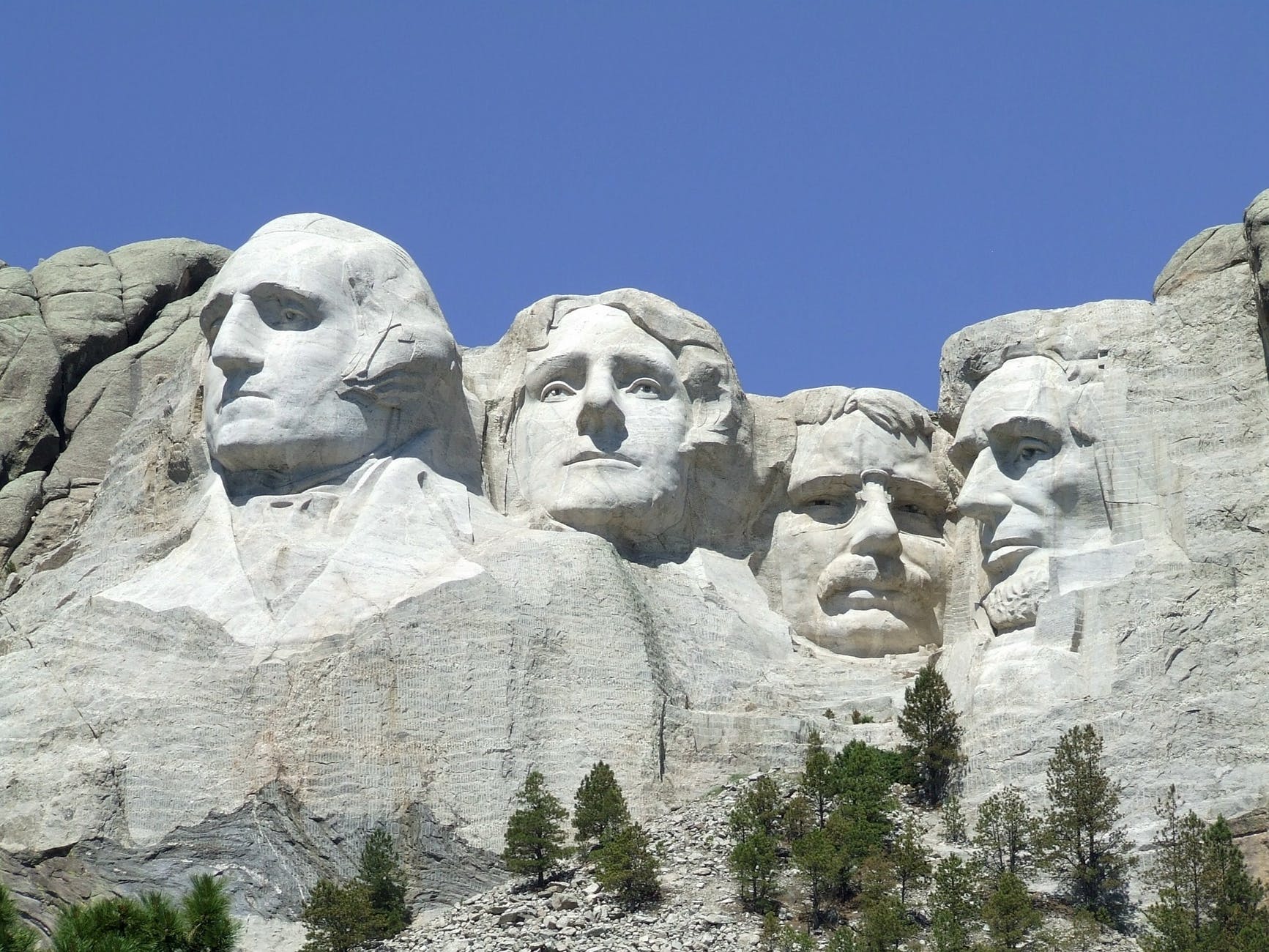
Grandpa walked to the polls to vote in every election even after he turned a hundred years old. He had given his car away years earlier because he felt that old people driving around after a certain age were dangerous. He liked walking because it gave him an opportunity to exercise and he never missed an opportunity to vote. His measuring stick for choosing one candidate over another had as much to do with moral character as stances on issues. He insisted that a man or woman who was boastful or unkind was not the sort to whom we should give power. He voted for the best man mostly on his observations of how he treated others. Grandpa could not abide with anyone like those he had seen taking advantage of the members of the Osage tribe in Skiatook and he said that far too often such scalawags ended up in positions of power that were dangerous to the rest of us. He voted from candidates as diverse as Franklin Delano Roosevelt and Ronald Reagan both of whom he admired for their compassionate natures. His heroes were Abraham Lincoln and Teddy Roosevelt both men who were unafraid to do what was right and just.

My grandfather and grandmother were good folk. Neither of them ever had much money or many possessions but they were happy with their lives. They were loving parents who raised good children. They were particularly proud of my father who not only graduated from high school but also earned a college degree. My daddy read as voraciously as Grandpa and devoured historical tracts with relish that he would then discuss with his father. They were a remarkable team and their impact on me has been immeasurable. 

As I make an important decision regarding how I will vote in the next election I clearly hear my grandfather’s voice. I believe that he would lean toward the man who is modest and genuine which in my mind is Joe Biden. As a matter of fact Biden is much like my grandfather. He is rather humble and unassuming, quietly compassionate. Grandpa would no doubt think that Biden is a fine young man. My grandfather’s folksy lessons taught me so much and his nuggets of wisdom have never steered me wrong. I feel confident that he continues to guide me to choose character.