
The Angst

Seal of Mt. Carmel

I saw a long letter from a man who was still hurting from being an “outsider” at the high school that I attended. It was painful to read about his experience and how awful it had made him feel. He called himself a member of the “fringe” class, and even indicated that he was bullied from time to time. It saddened me to think that such things were happening while I was a student there, mostly because I was unaware of them. I suspect that I missed much of the drama because I was rather shy at the time and kept quietly in tandem with a group of loyal friends with whom I have kept in contact over the five decades since I graduated. I suppose that I was lucky to find them although I have to admit to feeling a great deal of angst and emotional turmoil during those teenage years when I and my classmates were engaged in the age old struggle to find ourselves.

If I learned anything in my years as a teacher of teenagers it is that virtually every young person is riddled with self doubts and bouts of confusion, loneliness and even some depression. The years of transitioning from being a child to attempting to be an adult are wrought with a kind of terror that some manage better than others, but everyone endures. Over the years I learned that even the seemingly beautiful people of the high school world have their moments of darkness. They may smile and collect their awards for leadership, academics and popularity but they too wonder and worry if they will be able to find their way through all of the confusion of launching their lives. There are massive amounts of hormones, immaturity and untethered feelings floating through most high school ecosystems. They have the power of inflicting pain on any given day.

I vividly recall my own struggle with growing up. I felt awkward and unattractive even though photos of me at the time prove that I was not the hideous person that I sometimes thought myself to be. I struggled to hold conversations with the more popular kids which is actually quite amusing because anyone who knows me now might be thinking that once I engage in a conversation it’s difficult to get me to stop talking. I was embarrassed that I did not have a father and that our family struggled financially. My hair seemed then as now to have a will of its own that didn’t include bending to the accepted styles. I was my own worst critic, and in the end it was mostly my own self absorption that prevented me from following my mother’s advice to quit thinking about myself and try reaching out to the other students instead. In other words, I was not so different from most of my peers, but I did not yet realize that all of us were suffering in one way or another.

Getting back with old classmates as well as working with today’s teenagers and having children and grandchildren of my own has shown me that high school is both a glorious and an horrific time in human development. None of us know exactly how to behave when we are teenagers because critical components of our brains are still in the process of forming. We make ourselves a bit crazy and at the same time inadvertently hurt others because we are in a state of uncertainty. Being a teenager is hard work and sometimes leaves scars on our psyches.

I remember all of the questions that swirled through my brain during that awful time. I worried that I would never find love, land a satisfying career, have children, make enough money to support myself, be happy most of the time. Every academic test made me question my intelligence. Every social event made me wonder if I was normal or a freak. If only I had known what I know now I might have made less of a mess of those years, but in reality we can never go back. We just keep moving forward hopefully growing in wisdom.

When I attended my fiftieth high school reunion I saw just how alike all of us had been. I was happy to see that most of us had managed to muddle through life with some success. None of those old high school parameters mattered. We didn’t really care how anybody looked or how much money they had made. It was just great to see everyone, great to be alive. There were no cliques or popular groups that night, only folks now enjoying retirement, grandchildren and all of the really important things in life. Since that evening we continue to get together now and again just to celebrate each other and to hear about the roads we have traveled.

I was somewhat surprised to hear comments from my classmates regarding how they had perceived me back when we all went to school together. Of course there were the reminders that I was a smart girl. I suppose that being valedictorian of the class branded me in a certain way, but I learned over time that it is a fleeting honor that says little about who a person actually will become. It is in a lifetime of learning that we all demonstrate our intellect, and we do so in many different ways. What struck me most was how often people recalled me as someone who was always nice. That was a true compliment, and one of which I have tried very hard to be worthy. Some even thought that I was one of the popular people, a tag that made me laugh and reinforced my belief that none of us really feel entirely comfortable with being a teenager because I never once had seen myself as well liked. As young fold we simply muddle through a trying time and one day hopefully overcome all of the anguish that stalked us and made us feel uncertain about ourselves.

I eventually found someone to love and who loved me. I had children and now brag about grandchildren. I enjoyed a career that provided me with deep insights into human nature and gave me profound purpose and meaning in my life. I have kept many of those same loyal friends who helped me stay sane in high school. I have learned just how wonderful those with whom I had little contact back then have always been as well. All in all I’ve had an extraordinary life that is actually rather ordinary in that it is very much like those of my peers. We have grown in wisdom and age. We are good people who always were that way even when we were confused teenagers. The difference now is that we are no longer afraid of being just who we are, and accepting each other without judgement. 

I’m sorry that the man who wrote of how horrid his high school years had been has continued to suffer from the pain of those memories. I wish him well. I also hope that he might understand that we were all in a difficult state of mind, but thankfully we have managed to outgrow our fears and desperations. Overcoming angst is the worst part of growing up. Thankfully most of us find a way to move past it.
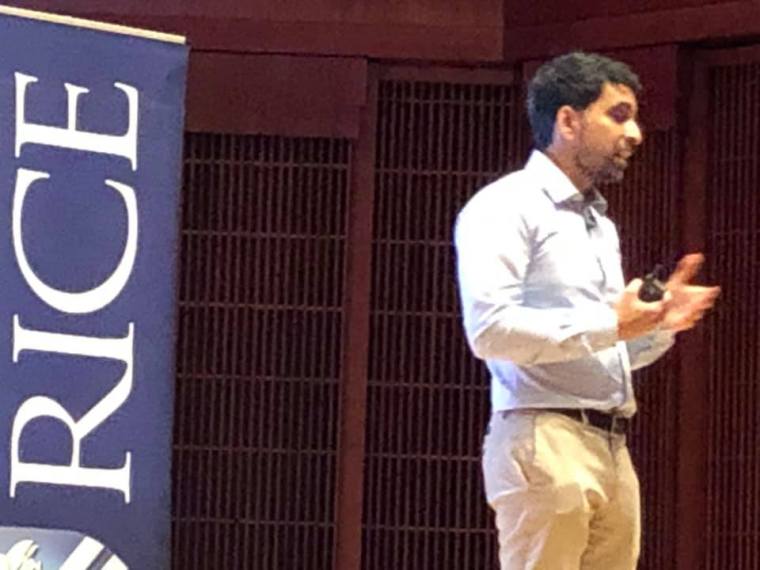
Reimagining Education

Kahn

Salman Kahn is a brilliant man with three degrees from MIT and an MBA from Harvard.  In 2004, he worked for a hedge fund firm in Boston, using his knowledge and skills to make money for his customers, his company and himself. He was rather good at both his job and the mathematics that it used so when his cousin Nadia asked for some tutoring he obliged even though it all had to be done long distance. Before long other family members were requesting his help so he made a few Youtube videos  to walk them through some of the basic concepts. It was a fun hobby that gave him a purpose beyond his career.

Along the way people that he didn’t even know began to watch his lessons and leave messages of gratitude for the help. He began to sense that perhaps those little tutoring films were more important than his professional work. In the fall of 2010, after consulting with his wife he began to invest the family savings into making his mathematics lessons into a not for profit business. He called it Kahn Academy, and it’s mission was to provide “a free world class education for anyone anywhere.” Since that time with donations from individuals and corporations his dream has grown into a world wide phenomenon with over 71,000,000 registered users in 190 countries and at least thirty languages.

There is hardly a mathematics teacher or student who has not used the services of Kahn Academy at one time or another. Now the site offers lessons in other disciplines as well. It has revolutionized education so much that incredible stories of its success abound. There are orphans in Mongolia who have become proficient in all aspects of mathematics and science simply from using the sequenced lessons. Perhaps one the most touching stories came from a young girl living in Afghanistan who was denied an education by the Taliban. In the privacy of her home she logged into the Khan Academy site and slowly worked her way through hundreds of hours of lessons, eventually earning admission to Arizona State University where she graduated with a degree in theoretical physics.

There is also the story a high school dropout who caught up on the classes he had missed, passed proficiency tests and returned to become the valedictorian of his high school all by using the lessons from Khan Academy. He ultimately went to Princeton University where he graduated with honors, and today he works for Khan Academy coding lessons so that other students like himself will have the opportunity to reclaim their lives all in their own homes and at their own paces. It’s a remarkable way of reimagining education.

Salman Kahn believes that learning at a fixed pace is a flawed methodology, one that most of us unfortunately endured. For decades we have followed the approach of subjecting large groups of students to a fixed schedule of coursework, moving along in tandem whether or not they are ready to move more quickly or struggling to keep up with the predetermined speed. The end result is a hodgepodge of understanding among the learners and a great deal of frustration for everyone. Kahn rightly believes that the sequencing and pace of learning should be based on mastery rather than a preconceived calendar and student age.

When we ignore the idea of individualized pacing with a goal of mastering concepts before moving forward small gaps in understanding often occur that over time lead to huge holes that give the impression that a student is incapable of learning certain things. When the curriculum is tailored for individual needs problems are addressed before going to the next concept, and research has shown that students actually begin to accelerate their learning curves as they build strong foundations and improved confidence.

The idea of individualizing pacing is not new. Educational psychologists have made attempts to find ways to move from a fixed schedule for decades. It is only with the technology that we now possess that such dreams seem to be within the grasp of reality. We can now teach anyone anything anywhere just as Kahn insists he will eventually do. The biggest hurdles that we must overcome are those that adhere too closely to traditional ways of teaching. Large schools filled with students all working at the same pace regardless of whether or not that is working for them are truly outdated, and yet it is the model that we insist on keeping simply because it is familiar.

We still need flesh and blood teachers. Our students must to be able to hear from humans and find inspiration in their skills as educators, but those who run classrooms of the future will need to be flexible and see themselves more has guides than the center of the schooling universe. Even our grading systems and the ways in which we quantify student progress will need to be retooled.

We are at the frontier of such innovations. We still have many who are unwilling to accept ideas like teaching for mastery rather than explaining concepts to a group, testing, and then moving forward regardless of results. We have to adapt to a growth concept of learning rather than one that is fixed, a supportive learning system whose emphasis is not on competition but rather on success for all. Technology will be a critical component of such thinking and innovators like Salman Kahn will be the Lewis and Clarks of the education frontiers. It’s an exciting thing to imagine, and we should be unafraid to take the first steps to make it happen.

Working Out the Kinks

person writing on white book
Photo by rawpixel.com on Pexels.com

There was a time when neighborhoods were filled with moms whose life work centered around home and children. When I was growing up working women were the exception rather than the rule. I knew a lady who was a commercial artist until she had her first child and then she dedicated herself to being a mother. That was the way most situations played out. My own mother had been a secretary in the early years of her marriage, but retired from work outside the home when I was born. She eventually had to straddle two different worlds after my father died, choosing initially to be a teacher to support our single parent family mostly because the job allowed her to have the same hours and holidays as we did. When we were home so was she, and so things worked out rather well. Once we were grown and she became ill more and more often due to her bipolar disorder she switched to a job with the University of Texas Health Science Center that was less fulfilling than teaching, but ultimately more forgiving of her frequent absences.

Hers was a balancing act in the early days of the women’s movement for equality in the workforce that she would rather not have had to attempt if only my father had not died. Even after years of bowing to the grind of working day after day her salary barely met her needs, and she longed for the life at home that had once been her greatest joy and accomplishment. Without my father’s earning power she had to learn how to juggle so many responsibilities that it wore her down. She often commented that she felt as though she only had the energy to do each of her necessary tasks at the bare minimum rather than excelling at any one thing as she had done when her entire focus was on running a household and raising children. She lamented the fact that as more and more women entered the workforce they were in essence making it less and less possible for their “sisters” to choose the traditional role that women had held for most of history. She longed for the days when she had run our household like a CEO, with precision, efficiency and much thought.

By the time I was an adult just as my mother had predicted it had become almost necessary for the economic health of our family that both my husband and I have jobs. I desperately wanted to spend time with my children during their early years of development so I chose to sacrifice luxuries and stay at home. I supplemented our budget by working as a teacher at a pre-school that my children also attended. It was a part time gig that was fun for all of us but added a bit to our family coffers. When that proved to be insufficient I took care of some of the neighborhood children during the day while their mothers worked. Since they provided playmates for my daughters and were little trouble to watch I still managed to keep the lifestyle that I wanted. Once both of my girls were in school each day I followed the example that I had seen from my mother by working as a teacher. For the most part I followed the same schedule as the children, and with the help of my mother-in-law I did not have to worry about after school childcare. It did not occur to me until years later that if my mother-in-law had been working full time I would have had to spend a lion’s share of my teaching salary for after school child care. The fact that she was a more old school woman was a saving grace for me.

To be successful at my work I had to spend more and more time away from my family. During the typical school year I rarely arrived home before five or six each evening and then I hurried through the tasks of preparing dinner, helping my children with their homework and studies, and getting them tucked into bed for the night so that I might grade papers and plan lessons until the late hours. I arose early and often had to leave while the kids were still at home. I consoled myself by noting that my girls were very responsible and the bus stop for getting to school was at the corner of our street where they met up with other children who were their friends. Still I felt a tinge of guilt for being somewhat neglectful.

As I became more and more involved with my career my daughters moved into their high school and college years and my attention to my work consumed most of my time. I had to adhere to a strict regimen to keep things running well, and I sometimes felt as though I was spending more and more time on the job and less and less with my family. As my mother’s illnesses forced her to accept more care from me and my brothers I tended to focus on hours at work, helping her and barely giving thought to home life. There were times when it felt as though my husband and I were two souls briefly passing each other on any given day. The lure of retirement loomed large as I grew weary of rushing to my job before the sun had risen and coming home after dark. I hated that in instances where I had to choose between my career and my family, I often had to opt for my job.

I know young women with careers that allow them to employ nannies and housekeepers inside their homes, luxuries that I was never able to afford. Their work is such that when they leave their offices they are finished for the day. They have time to devote to their families on a regular basis, and in spite of this seemingly rewarding situation they too feel as torn as I did by concerns that somehow they are doing everything with mediocrity. The very idea of leaning into their careers is frightening because the process of devoting their energy to proving their equality to male counterparts often means having to surrender the responsibilities for their homes and their children to others. There is such a fine line that allows them to balance their home and work lives that one small misstep can lead to disaster on all fronts.

My mother was right in noting that we women were painting ourselves into a corner that we may or may not ultimately enjoy. The economic realities of today’s world make it almost impossible for families to operate with only one source of income. Women may want to stay home with their children but doing so will make life very difficult financially. As a result most neighborhoods today are almost deserted during work hours as women troop to their jobs alongside the men. If they are to have equal opportunities they must meet ever expanding expectations from their bosses that reduce the time that they have for home. They feel as though they are operating in a constant cycle of chaos as they rush from one duty to the next. We have a huge population of women who are stressed and exhausted and worried that they will not be able to keep up with the emotional and physical demands of “having it all.”

Now that I am retired and have my “going to work” years behind me I am able to reflect on the past the present and the future. I would like to think that we as a society would continue to honor both those woman who choose to work hard to create a warm and nurturing life for the members of their family by staying at home and those who want or need to spend their days in a workplace. Both “professions” can be noble but each requires our support. We need to think of how best to grease the wheels that make our home force and our workforce less anxious and more rewarding. The choices that we make as women (and also men) should not relegate us to states of guilt and stress. “Having it all” should mean being able to live well whatever we ultimately choose to do.

We seem to still be working out the kinks of the changing roles of women and their effect on all of society. As we strive to solve the problems we cannot focus on only one type of situation. We cannot favor one lifestyle over another. True choice for women is not as much about reproduction as it is about how to live from one day to the next. No one way should be deemed better than another. 

The Goodness of Strangers

baby s standing on gray floor rug
Photo by rawpixel.com on Pexels.com

There are times when we unexpectedly meet someone who finds a place in our hearts. So it was when we were in the process of repairing the damage done to our home by a faulty hot water heater last spring. The flow of heated liquid that literally rained down through the ceilings of two floors wiped out sheetrock, door frames and carpet. We had to employ dry wall specialists, carpenters and painters to repair the damage. Then it was time to think about replacing the carpet that had become sodden. For that we chose a local flooring store that came highly recommended.

From the moment that we met him we knew that the salesman who helped us was a knowledgeable and honest man who was going to take care of us without breaking our bank account. His name was Curtis and he looked as though he had seen a bit more of life than most of us ever do. His craggy face was lined with the wrinkles of experience and his eyes spoke of a man who always uttered what he thought to be the truth. With little fanfare he listened to our dilemma and showed us samples of carpet, wood flooring and ceramic tile giving us the specifications and costs of each. It soon enough became apparent that changing out the entire house with ceramic tiles that I had hoped to get would be enormously expensive and beyond the budget that we had after factoring in the other repairs. Furthermore replacing most of the carpet with wood would require literally rebuilding parts of the infrastructure. Curtis let us know that carpet was probably our best alternative and would come at an affordable price because there were still many sales in effect in the aftermath of hurricane Harvey.

Curtis helped us select a carpet that had a twenty year warranty and he made suggestions for cleaning our tile and brightening the wood flooring that we already have. He made an appointment to come measure our rooms with the promise of being at our home at exactly the time that we chose. True to his word he arrived exactly at the appointed hour and carefully inspected and measured each room. While he guided us through the process of redoing over half of the rooms in our home he told us about his life and the many directions it had taken. He was interesting to say the least.

Curtis was a jovial fellow who had endured both good and bad times and somehow kept up his optimism in the process. He literally seemed like someone we might like to invite for dinner and maybe a few drinks. His gravelly voice and lanky frame attested to his smoking habit in which he did not indulge in our presence but which had left its mark on his health.

Both my husband Mike and I really liked Curtis and the great job that he did for us at a time when we were feeling a bit overwhelmed. He had such a personal touch that we swore that if we ever decided to change out our current tile and wood flooring for something new we would undoubtedly go back to see Curtis. I vowed to send people to him if they were in the market for flooring renovations.

Time flies and it has been almost a year now that we have been enjoying the carpet that Curtis helped us to find. We knew that we were nearing the moment when it needed to be cleaned so we stopped by the store where Curtis worked this week to get a recommendation from him on which company to employ. It was a grey rainy day and we looked forward to sharing a few stories and laughs with Curtis for we knew that he was a man who brought a bit of sunshine into even the dreariest situation. We were quite disappointed when we saw that he was not working that day, so we had to make our inquiry to the young woman who was there.

She was quite friendly and open and took the time to provide us with brochures and coupons for the carpet cleaning company that she views as the best. While she was creating a nice packet of information for us Mike happened to glance at a framed photo of Curtis that sat on the counter. Shockingly it was a memorial for him, announcing and lamenting his death last summer. We were both immediately saddened and expressed our dismay out loud. The young woman informed us that Curtis’ death had been sudden and unexpected. In fact he had died in his sleep.

We left feeling let down and thinking about how this man that we had only encountered a few times had made such a lasting impression on us. A profound sense of grief washed over us as well as regret that we had not told him just how great he had made us feel. We never applauded his warm nature the way that we should have. We simply kept our thoughts to ourselves, and now we knew that he would never know how much we had appreciated him. All we could do is relay those feelings to the young woman who was working in his place.

We each have opportunities to make someone’s life just a bit more pleasant. Curtis had a way of doing that. He did not need to give the extra time and consideration that was his trademark, but he chose to be just a bit more helpful, a bit more prescient in understanding our particular needs. He was a good man, a cheerful man, a man who perhaps had not always been so lucky in life himself. He was someone who took the cards he was dealt and crafted a good hand out of them. We liked him very much as I’m certain his other customers did as well. We are sorry that he is no longer with us for he could not have been more than about fifty six or seven years old. Our consolation is that he did not suffer. He simply went to bed one night and never again awoke.

Curtis will be missed. He was a unique character, someone with a big heart and a smile to match. I’m glad we got to meet him. He reinforced our belief in the goodness of even strangers. May he rest in peace.

Fifty Shades of Grey

background blur clean clear
Photo by Pixabay on Pexels.com

It was one of those days when the skies were grey, the streets were slick and the air was heavy with fog. It might have been a great day to stay home with a good book, but we had appointments to keep and errands to run. The traffic was stacked up and moving slower than normal so I had ample opportunity to see things that might otherwise have passed by without notice. Some of what I viewed made me sad, others made me laugh.

There was a billboard advertising a Brazilian butt lift with prices starting as low as $35,000. I chuckled at the very idea, but mostly I wondered why anyone would be willing to pay that much money for something so silly. Surely everyone has better ways of investing or spending such a large amount. Even a very wealthy person would be better served by giving it to charity or providing a valued worker with a bonus. Somehow making one’s fanny more appealing seems as wasteful as one gets, so I began thinking of literally hundreds of alternative ways to use the cash more wisely, not the least of which was to save it or provide some worthy college student with a scholarship. Even tossing it into the bucket of one of the many homeless people begging on street corners has more merit, but who am I to judge?

Next we went to an office filled with the nauseating bouquet of room fresheners. It seems that a rodent had died somewhere on the premises and the foul odor was sickening the employees. An exterminating company had come out to set traps but refused to go hunting for the creature’s carcass. I suppose it will be some time before the blended aroma of rotting flesh and artificial scents will be gone from the premises. I truly feel for the workers because my own reaction was to get away as quickly as possible.

Speaking of rats I suppose that they are only behaving normally in light of all of the rain that we have had this winter. It’s predicted that wildflowers will be better than ever, but our lawns are as soggy as sponges and mud seems to be coating everything and everyone. Little wonder that the rats are attempting to find refuge. I’ve heard more than one story of those pests invading homes and businesses. You really know that there has been too much rain when the animals run for cover. I suspect that mosquitoes will be as abundant as the bluebonnets because of the wet season that has marked most of our January and February days this year. Now that’s something to think about that gives me the shudders!

Eventually I found myself sitting in a waiting room at an imaging center feeling increasingly uncomfortable as others around me reacted to the appearance of President Trumps former attorney Michael Cohen speaking before Congress. The level of anger being expressed by the people around me without even a small attempt to filter  what they were saying made me worry about the state of our country. I found myself sinking quietly into my little corner of the room burying my thoughts in a crossword game on my phone lest I too become involved in an outburst of emotions. I silently worried about the future in ways that I never before have.

As we were leaving the medical facility a Code Blue was announced on the PA system. I was both amazed and quite impressed by the rapid response of the nurses and doctors. They quickly found the woman who had fainted and brought her back to an alert state. I realized how professional and dedicated they are and felt that if anything like that ever happens to me I will be in very good hands. It ended up that the woman had come for a blood transfusion and had become dizzy while in transit to her doctor. All ended well but it was like a scene out of one of the many hospital series that I watch on television. It made for a bit of unexpected excitement to go along with the crazy tone of the day.

As if the my journey needed to become a bit stranger we were getting close to home when a woman turned in front of our truck going the wrong way on a one way street. The look on her face when she realized what she had done said it all. Her features were marked with sheer terror. Luckily we were the only other auto on the street at the time so she was able to make a quick u-turn and drive away. A few minutes later and a fleet of fast moving vehicles would have made her escape almost impossible and who knows what kind of accident might have ensued.

I’m normally a person who enjoys rain and prefers colder weather, but I have to say that the weeks and weeks of damp dreary days have grown old. I think we all need a few sunny days to dry things out and lighten our moods. We’ve been stuck indoors for too long and the ugliness that hangs over us like a shroud is causing us to act a bit strangely. Old man sun needs to come back to bring smiles to our faces again.

I really don’t know how folks survive in places known for more rainy days than not. I suppose that they somehow adapt, but it’s not something that I would like to have to do. I say bring on the warmth and let us play outside. I’m done with the fifty shades of grey that have been the norm for way too long, and I suspect that everyone else is as well.