Store Closing

pexels-photo-449559.jpeg

There was a time when my Saturdays were spent shopping in downtown Houston. Back then we would dress in our best duds and ride a bus to the center of the city. We spent most of our time in Foley’s department store, a multistory affair with the best buys down in the basement. We’d look at clothing, furniture, and household items hoping to find great bargains. It would take hours to peruse all of the items, but once in a while we had time to check out other stores along Main Street and even take in a movie at one of the theaters. It was always great fun, but it wasn’t long before malls were opening in the suburbs taking away much of the business from the old city establishments. Slowly the places downtown closed one by one for lack of customers and our focus turned to the centers near our neighborhoods.

By the time I was a teenager I was frequenting Gulfgate Mall almost every single Saturday. I would start at one end of the complex and browse through every store until I had reached the last store. It was a kind of gathering place for everyone, and I often encountered neighbors and friends from school while I was there. As the suburbs moved farther and farther from downtown Houston newer shopping areas opened like Almeda Mall and then Baybrook. We adjusted to the changes as they came enjoying the weekend adventures at our favorite stores and restaurants.

The time came when Gulfgate Mall was torn down and rebuilt on a smaller scale with none of the retailers who had once been there. Almeda Mall also changed bit by bit until the only original merchant was Palais Royal. Only Baybrook remains as a somewhat viable shopping center in our end of the suburbs, but the hometown feeling that was once part of the experience of going there is diminished. Somehow the old weekend activity of haunting the local mall is going the way of the dinosaur just as downtown did.

It seems that hardly a week passes that we don’t hear of yet another store closing its doors. Sears is gone, leaving only memories of exciting features like a full service candy counter and aisles and aisles of tools and appliances. I first sat on Santa’s lap in a Sears store that used to be located on the corner of South Wayside and Harrisburg Boulevard. We purchased plants for our yard in the garden area there and bought our school clothes each August. It was torn down years ago and the other big Sears stores followed one by one. There are no more Sear’s catalogs or Christmas wish lists, nothing to remind us of the grand old days when the company even sold kits for building homes.

Toys R Us is in the process of shuttering its entrances, leaving behind hulking empty spaces and parking lots. I have so many memories of following my grandchildren up and down the rows and rows of toys while they carefully chose a special item. I delightedly watched two of them enjoying the huge store on Times Square in New York City when we visited not long ago. Such stores dedicated to only toys have become few and far between.

I find myself checking off so many of my favorite places that are no more. Where are Casual Corner, Coldwater Creek, Baker’s Shoes, Woolworth’s, Foley’s, Joske’s, Grant’s, B Dalton Bookseller? They have disappeared from the landscape leaving behind places that have little interest for me, and sadly there are signs of trouble for so many more that I actually enjoy. I worry about Penny’s and Macy’s all of the time because I still visit both of those places, but I hear that they are struggling to stay in business. I wonder what will become of the malls and where I will be able to go to purchase shoes and clothing. I certainly can’t do such things online.

I’m not easy to fit. I have to try on eight pairs of shoes to find one that works. Double that number for dresses. I can’t just look at a photo online and determine if it is going to be right for my body or have the quality that I expect. I find it alarming to think that my sources of basic items are evaporating before my very eyes. Target and Walmart are fine, but they don’t have all of the things that I need, nor do I get the same joy out of shopping at such places as I do when leisurely strolling through a mall. Somehow the passing of the mall tradition makes me as sad as when the downtown area withered away. Changes are fine, but sometimes I actually feel victimized by some of them.

I recall visiting Los Angeles more than twenty five years ago. At the time I was stunned to learn that so many of the banks there were little more than ATM machines. The personal aspect of having people to help with financial matters was stunningly absent and it never occurred to me that this was a trend that would ultimately make its way to my own town. The changes that are happening in retail may be making more money for the various companies, but they seem to be doing little for the customers or the people who used to have jobs in those places. Everything is moving faster and faster and we don’t seem to be willing to slow down just to walk in the town squares greeting our neighbors and friends as we purchase our goods. Instead we order online or drive through pick up stations and hurry on our way. Something rather refined is ending and we just don’t appear to have much time for others anymore. It’s become a rush, rush, rush way of life with the personalized touches fading away.

There was a time when we knew the man who fitted our shoes personally. He would take half an hour to make certain that our feet would be caressed by the leather that we put on them. He talked with us about our lives and knew about our ups and downs. Now we look through boxes trying to find our sizes and then walk around hoping that the shoes will feel okay after we have taken them home. Nobody helps us until we walk through a long queue line and get to the cash register. The idea of customer service is almost a thing of the past, and it saddens me. I miss those wonderful days of elegant window displays and retailers who really cared. I truly hope that we don’t throw it all away.
The Art Of The Deal

pexels-photo-185933.jpeg

My brothers and I were discussing our family heritage the other day. We are all too aware that the untimely death of our father changed the trajectory of our lives dramatically. We often wonder what things might have been like if…

Our daddy had an unstoppable sense of humor. His book collection included volumes filled with jokes. His favorite television programs featured comedians. He was a great storyteller and peppered his tales with yarns that made his friends laugh. He found something funny in the darnedest places and when they happened to be from real life, that was even better.

The first house that my parents purchased was in southeast Houston on Kingsbury Street in a new housing development like many that were springing up all across America in the years after World War II. My father had finally earned a degree in Mechanical Engineering and he landed a job in downtown Houston. The location of the house was perfect for starting a new career and raising a family. Most of our neighbors were young like my parents and the men were college graduates engaged in all sorts of interesting professions. They had children in the same age groups as my brothers and I so there was always lots of fun to be had. 

Most of our moms stayed home back then while our fathers went to work each day. The women had routines that they carefully followed for the care of  their children and homes. I remember that my mother washed clothes on Mondays, which was a bigger deal than it might seem because dryers were still a dream of the future, and so she had to hang her wet items on a clothesline to dry in the sun. 

Tuesdays were for ironing and as I recall my mother had a bottle with a perforated lid that she would fill with water to shake on the clothes that needed a bit of steam from the iron. On Wednesdays our mother dusted and cleaned and mopped the wooden floors and linoleum until they gleamed. Sometimes she even used floor wax to achieve a better shine. Thursdays were reserved for her sewing and mending. She made all of my clothing and most  of hers. Friday brought meal planning, dusting and changing the linens on the bed. Saturdays meant shopping trips and Sundays were for church and visiting grandparents.

While all of this activity was happening I was mostly a free range kid which meant that I roamed the neighborhood with my friends, but never without checking in frequently with my mom. Bear in mind I was only around six years old when I began to assert my independence, but things were quite different back then. All of the ladies kept their doors and windows wide open and provided a kind of community watchfulness over the children. At any given moment an adult was checking on us without drawing attention to that fact.

I generally just went up and down the street playing with whichever kid was available. Most of the time my favorite partner was a girl named Merrily, but sometimes she was busy so I would hang out with a boy who was about my age. His dad was a very successful businessman according to the rumors that floated around the area. His family owned two very luxurious cars and his mom even employed a maid. His house was furnished with exquisite furniture and art work. I enjoyed visiting with him and vicariously living in style.

I had earned a number of holy cards as prizes for good grades and exemplary behavior in my first grade class at St. Peter’s Catholic School. They were beautifully illustrated so I thought that an art connoisseur like my friend might enjoy seeing them. I took them with me on one of my forays to his home, and just as I had thought he marveled at how exquisite they were. He was not a Catholic so he had never before seen such things and he begged me to give him some of them. Instead I struck a financial deal with him, asking for one dollar for each of the lovely images. Without hesitating he broke open his piggy bank and presented a five dollar bill for the lot. I was happy to oblige because I figured that I would earn more of them if I tried really hard at school. It was a win win situation.

All seemed well until the phone rang as I was eating dinner with my family that evening. My mom was a bit irritated by the interruption but answered the phone nonetheless. When she returned she gave me a foreboding look and told my dad that I had sold holy cards to the kid down the street. She explained that his mother was quite upset because they did not believe in such things. Besides, the woman had argued, the price I had charged was prohibitive. She wanted me to return the five dollars immediately and reclaim my holy cards.

I could tell that my mother was not pleased with me but before I even had a chance to explain myself my father burst into uncontrollable laughter, leaving me and my mother quite confused. He smiled and winked at me as he stood to remove his wallet from his back pocket and then he removed a five dollar bill and handed it to my mother. “Use this to pay for the holy cards,” he told her. “Let Sharron keep her profit. It’s worth it to know that my little girl outsmarted the financial wizard’s son. I love it,” he bragged with a huge grin on his face. With that pronouncement I breathed a sigh of relief and smiled with pride at my wonderful daddy who had who seemed to understand the importance of my first foray into the art of the deal. My mom on the other hand simply shook her head while attempting to hide her own amusement with the situation.

I always loved the way my father appreciated the ingeniousness of me and my brothers. He often laughed at antics that might have driven other parents wild. When my little brother took things apart Daddy almost always defended him by asserting that he was only attempting to understand how things work. My dad encouraged us to have an adventurous spirit that would guide us as we explored the world. He believed that life was meant to be lived without fear and I suppose that he went out in a blaze of glory following his own credo.

After my father died I became more cautious. It would be years before I was willing to leave my comfort zone and try things, but I always remembered those moments when he encouraged me to use my imagination and intellect. Mostly though I loved that he knew how to laugh whenever we were just being kids. In some ways he was the man who never quite grew up, a kind of Peter Pan who left this earth for Never Never Land far too soon. Somehow in the brief time that he was around he taught me the importance of viewing the world through humorous eyes. Knowing when to laugh rather than cry has made things so much better than they might otherwise have been. 

The Legacy

Mary B. Ulrich & Sharron

We each possess a unique gift which we might give our children and our grandchildren. It is the story of who we are and from whence we have come. The links that we provide from one generation to the next form a foundation for the young. Sometimes to get where they are going they need to know where they have been. They learn this when we tell them about our family history. 

I grew up in two different worlds. The first was marked by refinement and a certain level of privilege. Before my father died we lived in homes that were newer and more spacious than those of the other members of our extended family. Our house was always beautifully furnished and filled with books and music. We went on yearly vacations, traveling all over the United States in fancy cars. I mostly took my good fortune for granted. I had little idea how much work it had taken my father to earn his college degree so that he might have a well paying job that supported our lifestyle. I did not then understand that our position in the middle class had been an enormous social leap for both of my parents. I had no idea that our situation was as fragile as it actually was.

Part two of my biography was one of great challenges. My father’s death changed our situation in palatable ways. Our economic status shrunk overnight. My mother had to use her intellect and resources to stretch our budget into almost impossible proportions. Every decision had to be weighed and measured with great care lest we find ourselves without the basics of living. Somehow she always managed to see us through each struggle that we faced, but I still find myself wondering how she performed so many miracles. We had just what we needed to survive and not a bit more. Vacations became a thing of the past other than visiting our grandparents’ farm. Somehow in spite of the rigidity of our budget we never felt deprived. Our mother put food on the table at every meal and kept our few articles of clothing clean and mended.

As children we were entertained by friendships with children in the neighborhood. We built forts out of Christmas trees or by hanging sheets and bedspreads on the clotheslines where our laundry dried on warm sunny days. We held games of Red Rover and Swing the Statue in the front yard and rode our bicycles down to the woods or the park. Someone was always inventing some adventurous way of spending the daylight hours, and everyone ran free in their shorts and bare feet so that we hardly noticed that we may not have had clothes as fine as theirs.

On Friday nights we always went to visit our Slovakian grandmother who welcomed us with  mugs of sugary coffee laced with so much milk that we hardly noticed the taste of the brew. She gave us slices of fresh rye bread from Weingarten’s grocery and on very special days fried up slices of round steak in her big iron skillet.

The most English we ever heard from her was her greeting of “Hello, pretty boy/girl.” She made us feel loved and special even though we never once were able to have a conversation with her. Most of the time she sat in her chair and in the corner of her tiny living room smiling at us while we ran around like a bunch of noisy hell cats. My aunts and uncles engaged in games of penny poker or argued as though they were still young children vying for their mother’s attention. We played “hide and find,” our own version of the childhood game that has been around for centuries. Sometimes we created our own family newspaper or watched episodes of “The Twilight Zone” or Friday night wrestling.

We often sat in our bachelor uncle’s bedroom talking and telling jokes within view of his loaded pistol which we would never have dared to touch. Sadly we did use his records as coasters for our drinks, but he didn’t seem to notice our disrespect for his prize collection of music from Louis Armstrong and other jazz greats. We knew that he worked for the Post Office and had once been a railroad man until he broke his leg in an accident. He had matchbooks from gambling spots in Galveston and there was a mysterious air about him. He was both a bit scary and a great big teddy bear at one and the same time and he loved us all.

We often wondered about our grandfather who had died before most of us were born. We knew little of him, but heard that he had worked at a meat packing plant all the way up until the time that he had a stroke from which he eventually died. He had built a huge library of books of all sorts that he brought home one at a time each Friday evening after he was paid. He owned a cow that provided milk for his eight children and cherished the goal of one day having a farm of his own. Each Sunday afternoon he gave his family lessons on morality and good citizenship and taught them to be proud of who they were. I would have like to have met him because I think he must have been a very interesting man.

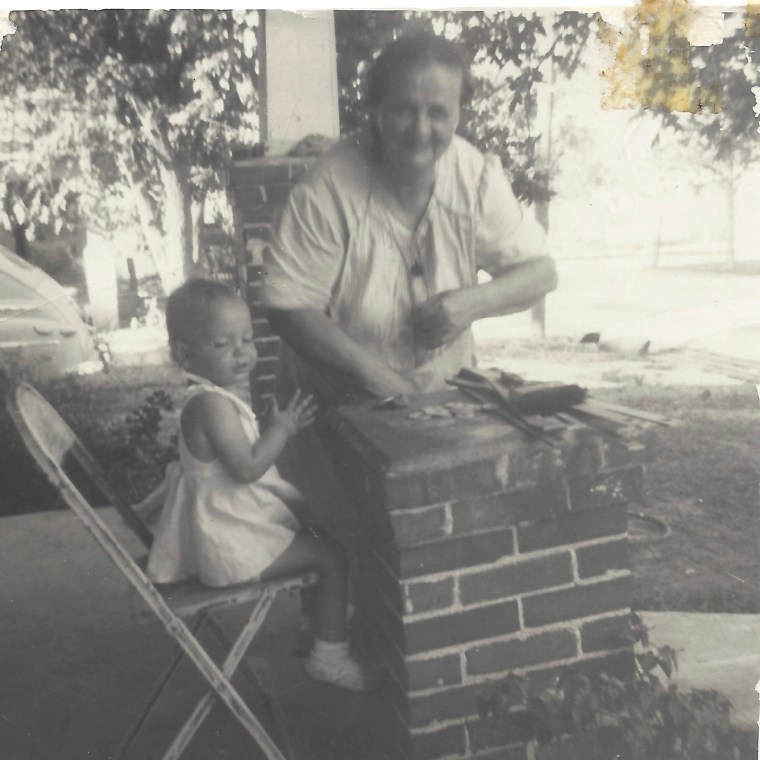
On Sundays we always went to see people from our father’s side of the family. Our mother thought that it was important for us to stay in contact with them. My paternal grandmother was a tiny woman who was famous for her cooking. Going to her house always meant that we would be treated to an extraordinary meal. When she wasn’t busy creating yummy dishes, she was either crocheting or embroidering or making quilts. Her sewing was like delicate works of art and her crooked old hands belied her ability to weave intricate stitches and knots. Her gardens were legendary and she even knew how to talk with birds. I always found it fascinating that her knowledge of the world was encyclopedic given that she was illiterate. I don’t have any recipes or instructions from her because she carried all that she knew inside her head.

My grandfather was a strong man with great big hands that he used to build things. He smoked a pipe and told the most delightful stories. He might have been a wonderful writer but for lack of time. He worked until he was eighty eight years old and only quit because his supervisor thought that his advanced age made him a liability. He read for hours every single day and was able to quote passages well into his nineties. He drove an old black Plymouth whose leather seats smelled of sweet tobacco. Life had always been hard for him, but he was a survivor of the highest order and insisted on maintaining optimism no matter how terrible things became.

I learned that I was from strong stock, people who were determined to live and love and carry on regardless of what befell them. They taught me the value of hard work, education and determination. They helped me to realize that I need not be held back by my circumstances. They encouraged me and my brothers to dream big and to believe in ourselves. They were always there in both the good and bad times. We knew that we were never alone, and still aren’t. This is who we were and what has made us who we are. Our children and grandchildren are part of the unending thread that traces back through the centuries. I hope that they always remember how grand and noble their heritage truly is. The legacy of their family is indeed rich.

The Car

pexels-photo-681335.jpeg

The stories on the television series This Is Us are so heartwarming and real that rarely a week goes by that I do not identify with some aspect of an episode. They have a universal appeal that reaches into the heart and soul of who we are as members of a family. I have duly noted the kinship that I have with the characters depicted on the show. As with my own situation there are three siblings, a girl and two boys, who continue to struggle with the impact of their beloved father’s death. I have known the pain of their loss of their father all too well, and like them I have never quite come to grips with the reality of the situation even years later. The writers of the series are certainly gifted to make each of us feel as though they have somehow tapped into our own personal memories. The title itself hints that we are all part of a great big family of mankind that endures the same types of struggles. The characters are us. Their history is ours.

A recent episode of This Is Us was titled The Car, a brilliant look at how an inanimate object becomes a symbol for a father’s love and all that is good about a family. The storyline was particularly touching for me because it was one car that devastated my family and another that brought us a new day of hope.

My father was a Pontiac man. He loved the sporty nature of that brand and insisted on getting a new one almost as soon as the last payment was made on the one he was driving. He had proudly purchased a brand new Pontiac with all of the bells and whistles for our move from Houston, Texas to San Jose California. It was an automobile boasting the kind of luxury that earned second glances as we drove down the road. It carried us in grand style and comfort thousands of miles to our new home. When things didn’t work out there it brought us back to Houston and the promise of a fresh start in familiar surroundings. We used it to visit friends and family whom we had missed while we were gone. We drove it to inspect houses that we might purchase to set up a household. We were planning to take it to the beach on Memorial Day to launch a summer on the Gulf Coast. We loved that car and the sight of our daddy sitting so happily behind the wheel. How could we have known that it would become the instrument of his death?

He died in that car on a lonely stretch of road when he accidentally drove into a deep ditch that was unmarked and laying in wait on a dark night. It had no seatbelt to protect him, no collapsable steering wheel, no exterior designed to take the brunt of the crash. Instead the car built as it was became a weapon that crushed his chest and stopped his heart. It would change our lives and create questions in our minds that haunt us even to this day.

We would later find evidence of our father’s loving nature in the gifts that he had already purchased in anticipation of his wedding anniversary and my mother’s birthday. A card would arrive in the mail from him with a postmark from the day before he died. He had used his car to plan for a future that would never come for him. He was dead and the car had become a heap of scrap.

My mother had to pull herself together somehow. She began the process of building a new kind of life for us, and for that she needed a car. The one that she purchased became the auto that would carry us through our youth and into our adulthood. It was a homely thing, almost ugly, but it was reliable. It was painted in a two tone pattern of white and a strange beige color. It had ordinary cloth seats and rubber mats on the floorboard. It was as basic as a car might be, not even possessing an automatic transmission or an air conditioner. It was so unlike anything our father might have purchased, but my mother was able to pay for it with the insurance money that she received from his accident. It was so stripped down that there was very little that might break, and best of all she owned it. It was a good car in spite of its appearance and it became the vehicle that drove us into our future.

Once we managed to move beyond our grief that car became a source of great fun. We used it to visit our grandparents in Arkansas, and piled inside on Friday nights to meet up with our aunts and uncles and cousins. We sat inside it at drive-in movie theaters enjoying grand epics on the big screen even as we batted the mosquitoes that buzzed about. We ran our weekend errands and drove to church in our ever faithful auto. We motored to Dallas and San Antonio for vacations, and went to Corpus Christi to enjoy the ocean that our dad had so loved. When we were sick we sat safely inside the car as we traveled to see the doctor. The car took us to ballgames and bowling alleys, pancake breakfasts and excursions at the mall.

From time to time one of our mechanically inclined uncles would change the oil, rotate the tires, or install a new battery. Year after year passed and it was that ugly old car that took us to the places where we celebrated the milestones of our youth. It was ever dependable, always waiting to help us enjoy a new adventure. It helped us to heal and to move on from the tragedy that had so changed us. It served us as well as anything might have, requiring little attention to keep faithfully working.

About the time that I was close to graduating from high school my mother decided that it was time to replace the car which was nearing its eighth or ninth year of service to our family. One of my cousins purchased it from her and our next car was a great deal fancier, but somehow not as comforting as the old one had been. I found myself missing our friend even as we toured the city in grander style more akin to the kind that our father had always enjoyed. We had carpet on the floorboards and air conditioning to keep us cool, but somehow it would never feel as secure as “The Car” had been. In fact, I have few memories attached to the new model. It would always be that ugly old stripped down Ford that I would remember with so much fondness.

It’s funny how a car can become such a vivid part of life, representing all of the things that are good about its owners. That’s the way it was with ours. The car was one of us and we loved it.

It’s Ten O’Clock

disillusionment-clipart-analog-clock-in-yellow-at-ten-o-clock_416058

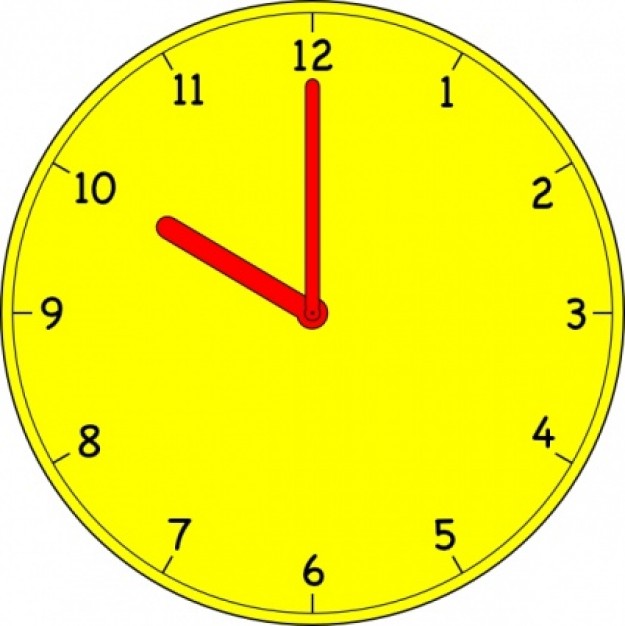
“It’s ten o’clock. Do you know where your children are?” If you grew up or were a parent in the 1960s, 1970s or 1980s you heard this question every night before the late newscast came on. It was a public service announcement that made sense then, but may be a bit confusing in today’s world. Back in those decades most children were what we now call “free range kids.” They played outside for hours at a time, often with little or no supervision other than a quick glance outside a window from a parent. They wandered away from home to visit with neighborhood friends, not always bothering to check in with parents before doing so. It wasn’t unusual at all for children to return outdoors after dinner to play in the dark under a street light or on someone’s front porch. It was a time of innocence when parents and kids both rarely worried about being harmed. Everyone knew everyone else and watched over one another. Perhaps the freedom that little ones enjoyed back then was fueled by naivety, but it was highly unusual for someone to be lost or harmed, there was little reason to worry.

The closest thing to a dangerous experience that I recall came when my youngest brother was playing a game of football in his bare feet in an overgrown field of grass. Hidden in the tall weeds was a broken bottle with its ragged edge pointing upward. When he stepped back to catch a pass he placed his unprotected foot on the shard of glass which immediately severed his achilles tendon. He bled profusely, but my mom and I miraculously got him to the doctor’s office in time to get it stitched back in place. I remember my mother instructing me in how to apply pressure to the wound to keep the bleeding to a minimum while she drove the car. I was quite frightened but didn’t let my mom see my fears. Of course at that time none of us were wearing a seatbelt and my mother did not carry health insurance either. The former was not yet invented and the latter was too expensive. The doctor did all of the surgery in his office proclaiming again and again that it was a miracle that my sibling didn’t bleed to death on the way over. I suspect that our final bill was little more than around twenty dollars and that even included pain medication that the doc threw in for good measure.

Needless to say times have changed so very much. Parents who allow their children to roam freely today run the risk of being reported to CPS. Few doctors would meet a patient at the office and take care of such a serious situation, especially if the family was uninsured. The world often feels far more dangerous than it ever did back then. Most of the time there are very few children playing outside for hours, and never all alone. They are busy with more carefully planned activities. Play dates have become the norm rather than random knocks at the door from friends seeking adventure. Children spend hours involved with computer games and surfing online. The real dangers lie in encounters with child predators masquerading in anonymity. Bullying either online or with texts has become epidemic. It’s no longer a matter of wondering where your kids are, but of whom they may be encountering on the worldwide web. The simplicity and innocence that marked my childhood and that of my own children seems to be a relic of the past. Parents have to be more careful than ever, even as they hover nervously.

I’m  not certain when everything began to change. Perhaps my experiences come from living in a city that had fewer than a million people when I was young and then somehow became a behemoth of over four million in a short period of time. Being in a place that large certainly makes a huge difference in how willing parents are to allow their children the freedom to interact without their watchful eyes. The dangers seem to grow exponentially in a major urban area. Still it just seems that over the years we have become more worried as a whole society. Maybe our twenty four hour news cycle has made us more aware of what might happen if we ride a bicycle without a helmet or drink from a water hose. I still wonder nonetheless why we no longer see children roller skating down the sidewalk or climbing the tree in the front yard even when their parents are around to guard them. Where are the street basketball games? When did our kids stop playing hop scotch on the driveway? Are they missing something wonderful, or is their world actually just an improved version of ours?

Children today certainly appear to be happy enough. I’ve always known youngsters to be quite adaptable. They tend to accept whatever reality is theirs. They don’t feel that they are missing something that they have never experienced. The child who lives in a high rise building in New York City learns to play in different ways from a counterpart growing up on a farm in Iowa. Both of them will tend to be perfectly happy as long as they are nurtured and loved. Perhaps the nostalgia that old folks like me have is thought to be quaint or even strange by the children of today. They would think it unwise, perhaps even crazy to ride down a highway in the bed of a pickup truck. They might easily bore of lying on their backs staring up at clouds searching for shapes of animals.

Sometimes it’s difficult to tell if things are getting better or if we have lost something special that we once had. I suppose that the reality is that we will always move ever forward, and while it may feel pleasant to lose ourselves in memories we are better served by joining in the forward progress. We have surely learned a great deal about how to be healthier and safer than ever before. We understand what smoking will do to our overall health. We realize that wearing seat belts and engineering safer cars has truly saved lives. We have used our common sense and our inventiveness to prevent harm and injuries to our most vulnerable. I suppose that it is a very good thing that we no longer have to ask where are children are when the clock strikes ten.