
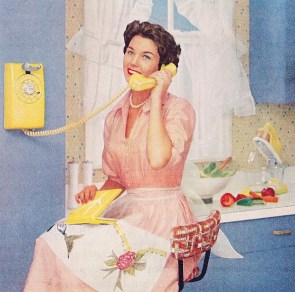
 When I was searching for a teaching position at the beginning of my career I had a general interview with a man who was old enough to be my father. He mentioned that he had worked for the school district for his entire career and that he had seen a number of changes over the years. He knew a great deal about me before I even showed up to his office because I had to include a photograph of myself with the application and I had checked a number of demographic boxes including one delineating my religion.
The personnel officer explained that he had decided to interview me in spite of my religion because “the people of the area had eschewed their former prejudice against Catholics.” He went on to provide me with a bit of history including stories about citizens who at one time had firebombed the local Catholic Church in an attempt to drive the parishioners out of the region. He said that during the shank of the baby boom they had to change their thinking a bit because there was an extreme shortage of teachers and so they began to reconsider their ban on hiring Catholics. To his delight he learned that hiring ladies who had formerly been nuns was a boon for the schools because they were well trained and most willing to follow directives. Eventually the district policies became more liberal and even encouraged Catholics to apply for jobs.
I was appalled by what I was hearing but I tried to maintain my composure because at the time there was a glut of teachers in Texas and I really needed to land a job. I simply smiled and nodded my head as though I felt proud that I was talking with such a “progressive” man. I may have given away my true thoughts, however, when he noted that I had already impressed him by wearing a nice perfume to the interview. He liked that it wasn’t overpowering but more like a bouquet of flowers. He also complimented me on wearing a sensible suit, stockings, and heels. All of my attention to detail in dress indicated to him that I would be an organized and presentable member of any faculty.
We eventually got down to business and actually discussed educational issues and I got a job but I never quite forgot that strange interview. The concepts of discrimination and sexual harassment were still years away from becoming the cannon of labor law. Women were only beginning to enter the workforce in earnest and many of the changes that we now take for granted were yet to happen. In fact, during the time when I was growing up and preparing for my role in society the world was a very different place, particularly for women.
In 1960, I was twelve years old. I wasn’t paying a great deal of attention to anything outside of my tiny sphere of influence but I sensed that remarkable things were happening. During the decade in which I became a teenager and worked my way through middle school and high school there would be almost a cataclysm of change for groups of people who had long been barred from equal participation in the politics and business of this country. By the time I had reached the age of twenty near the end of the decade the world would be a different place than it had been when I was a child.
Back in 1960, most women in the United States were stay at home moms. The occasional trailblazer that I encountered seemed exotic to me. I remember we had a neighbor who worked as a commercial artist. There were whispers among the ladies on our block that this poor soul was unable to conceive children and so she had buried her sorrows in work. She took an interest in me and often invited me to her home with my mother’s approval. She showed me how to draw and delighted me by insisting that I had real talent that I should continue to develop. She was so modern and sophisticated and I secretly wanted to be just like her. I never saw the sadness in her personality that so many of my elders seemed to think was the driving force of her existence. That was early in the transitional period and women were still mostly relegated to follow a career path not of their own making.
My mother was a single parent which made her quite unusual for the times. She often spoke of struggling in some of the most basic ways. She had always relied on my father to take care of the financial and business end of things. He had also guided her political decisions as well. She told us that she felt lost without him and noted to me that the wise woman should always defer to her husband regarding howto vote. Even as a child that seemed strange to me but it was definitely the way things worked back then. Women were still regarded as less than their male peers. A married woman could not yet get credit in her own name. Instead everything was listed under the husband’s domain. Contraception with birth control pills was in its infancy and most women who attempted to limit the number of pregnancies resorted to often ineffective methods like rhythm. I suspect that much of the baby boom can be directly attributed to the lack of a universally sound system for managing conception.
I was a bit of a snoop whenever my mother visited with her friends. Back then I was expected to leave the room so that she and her buddies might speak privately about matters that they felt were too mature for my young ears. On one occasion I overheard my mom comforting an acquaintance who was in tears. The woman’s unmarried daughter had become pregnant and she had aborted her fetus on her own using a knitting needle. Sadly she had botched the process and severely injured herself. She was in the hospital and there was concern that she might not survive the infection that was ravaging her body. She was only eighteen years old and I knew her well. Even though I was a good six years younger she always welcomed me and treated me as though I were one of her contemporaries. She introduced me to music and magazines about teenage idols. My eavesdropping had unwittingly made me privy to a concept that had hitherto been unknown. Somehow I managed to figure out what was happening without giving away my infraction. It was the first time that I heard about abortion and I was both stunned and horrified but I dared not mention my fears to my mother. It would be many years before Roe vs. Wade made abortion available to more and more women. I would eventually decide that abortion is wrong for me under any circumstances but I feel certain that this young woman and many like her would take matters into their own hands regardless of whether or not such things are legal. For them it is far better to have a sanitary and legal way to end such unwanted pregnancies.
Women in 1960 adhered to rather strict dress codes and rules of modesty. They had to wear hats to mass in Catholic churches. Some pastors even condemned sleeveless attire. Female teachers were not allowed to wear slacks. They were required to cover their legs with hosiery. Pregnant women hid their baby bumps under billowing smocks. Few women exposed their breasts except when wearing bathing suits which were usually one piece, often with little skirts. Until the day that she died my mother often commented on my own dressing habits with a bit of shock that harked back to the days when guidelines were far stricter than they are today.
Over time I watched the rights of women increase bit by bit. It became illegal to bar women from employment based solely on their sex. All fifty states eventually allowed them to vote in all elections. They began to receive benefits hitherto undreamed of as more and more engaged in careers outside of the home. Maternity leave is now taken for granted but in 1960, it was still a long time in coming. An interview like the one that I endured so long ago would merit grounds for a lawsuit in today’s world but back then I was just happy to be able to work without derision or questioning of my motives.
I wish all women and young girls the best of luck in the future. We are still struggling to determine just how to keep balance with the many demands made upon us. We don’t seem quite ready to fully embrace and accept one another’s choices as to how to best enjoy our femininity. There are still many barriers and in some parts of the world our kind are treated as little more than possessions, inferior chattel. Our work is not done but the outlook for our daughters and our granddaughters is better than it has ever been. Today there are more young women enrolled in universities than men. Women are in professions that once barred them from membership. They are active politically and running international corporations. Nineteen sixties type thinking seems ancient and quaint but it was all too real and it’s only been a bit more than fifty years since it was the way things were. We’ve come a long, long way! I can’t wait to see what lies ahead.

