The Yanks Come Home

The Yanks Come Home

Each of us is unique and yet through a combination of nature and nurture we also share common traits and histories from our ancestors and our relationships. Our characteristics and our personalities come together to make us who we are and how we react in the world around us. I am a mixture of European DNA and a lifetime of experiences in the United States of America. I have always been curious about the long strand of genes and stories that brought me to my personal place and time. I have been surrounded by books and tales and inherited traits for all of my life, and I have sought answers to questions that swirl in my mind.

In a sense I have been slowly moving in search of the source of so much of who I am from the time that I listened to my father reading fairytales to me and the days when my English teacher, Father Shane, enthralled me with literature and poetry from the greatest authors of Britain. I am a “Yank” who desperately needed to see the place from whence I came, and so I embarked on a journey meant to enlighten me and answer the questions for which I longed to find answers.

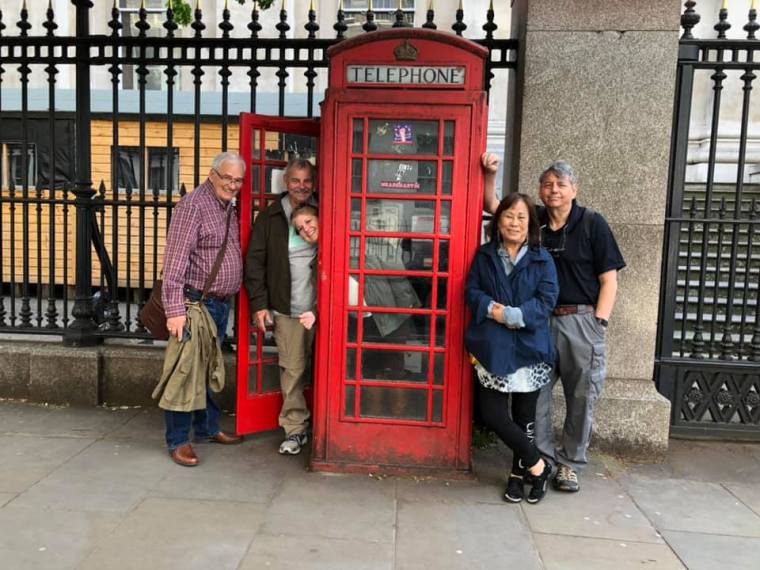
Thus I planned a trip to England with my husband, and my siblings and their wives that was to commence in the middle of May and end on the anniversary of my father’s death which seemed a fitting tribute to him and the people who had made him. It would prove to be more than a casual adventure, and instead provide me with the a kind of spiritual appreciation of the intricate dreams and journeys of the people who came before me. I have witnessed my own humanity in the eyes of strangers in a foreign land who nonetheless seemed so much like me.

Our trip began with the irritations and vagaries of rainy weather that left my brother and his wife stranded in Houston and threatened to prevent the rest of our party from making a connection in Dallas. Luckily we had a determined pilot who got us where we needed to be just in the nick of time. Our economy seats were hopelessly uncomfortable and so we spent the night fully awake and thinking that perhaps we might never again want to board a plane to fly home unless we upgraded our accommodations.

I had to admit that one night of torture in cramped conditions was nothing to fuss about when compared with the dangers and discomfort that our long ago ancestors must have endured as they traveled on ships to a world of unknowns. I wondered what hardships had driven them to leave kith and kin behind, and thought of how awed they would be to see me watching movies while a bird like machine flew me across the Atlantic in only a few hours. Somehow my complaints seemed overblown when viewed through the lens of their realities.

It was around noon London time when we arrived. Thanks to the help of Gerald Warren, a friend and work colleague who travels frequently to that glorious city, we knew exactly how to navigate from the airport to our hotel in Bloomsbury. We took the Heathrow Express to Paddington Station and then secured a taxi for a ride to the Holiday Inn where we would stay for the next fifteen days.

Since it was a Sunday we quickly left our rooms in search of the traditional English Sunday roast, and found a nice pub just across the street that was serving the food we sought in a warm environment filled with locals who chattered happily with one another. My husband Mike had grown up eating his grandmother’s roast and Yorkshire pudding. She had immigrated to Texas from Newcastle just before World War I when she was only eight years old. While she grew to love her new country she often recalled hearing the strains of “Auld Lang Syne” when her ship departed and she could never again enjoy that tune without feeling a bit of wistfulness. All that she had known seemed to have been left at that dock, but she never forgot the traditions of her native land which included having afternoon tea and preparing Yorkshire pudding with roast beef on Sundays.

The roast, potatoes and carrots at the pub were quite good, but the Yorkshire pudding was rather disappointing. Mike had eaten the muffin like delicacy that his grandmother made and he was searching for some that might come close to hers. Ours was not even close to his granny’s. Nonetheless we felt quite satisfied and ended our first day in London with a leisurely walk around the neighborhood. We were tired from staying awake all night and eager to begin our tour in earnest on the following day, so we went to the Russel Square underground station that was just around the corner from our hotel and purchased Oyster cards to cover the cost of rides on the Tube in the coming days.

I was already enchanted by what little I had already seen of London and I felt somewhat like a young and eager child as I tried to quell my anticipation of the wonders that lay ahead. Thanks to the common language, the friendliness of the people,  and the advice from Gerald and others who had already visited England I felt certain that we were in for a glorious time. My brother Pat and his wife Allison were finally on their way to meet up with us, and I had rain gear at the ready for London’s notoriously wet weather. I was ready and so I fell soundly asleep feeling as though in some spiritual way I was back home visiting relatives. I felt that we Yanks had finally come home.

Our Hidden Universe

person holding string lights photo
Photo by David Cassolato on Pexels.com

As an educator I have always been interested in the human brain and how it works. Sadly because it is so complex and we still have much to learn about it and what information we do have is sadly incomplete. Part of our difficulty in understanding it lies with the fact that we have only been seriously studying the brain for a little over a hundred years. Superstitions giving the brain a kind of spiritual aura actually prevented examinations out of a sense that it is wrong to invade the sacred nature of the mind. We are far behind the kind of knowledge that we have of our hearts and other organs of the body when it comes to the brain. Unlocking the inner workings of that most marvelous aspect of who we are may one day help us to eradicate some of the most life changing and difficult of the diseases that stalk us.

I dream of a day when we will literally be able to mend our brains in the same ways that we repair hearts. Surely the universe of our minds holds secrets to eradicating mental illnesses, learning difficulties, and other diseases that now so confound us. I can’t think of more challenging and ultimately rewarding research than studying how and why our minds work. As an educator I have seen the heartbreak of those who struggle to grasp ideas and concepts. As a caretaker I have watched my mother’s beautiful mind attacked by mental illness. As a friend I observed a delightful man slowly losing his ability to think and remember. I have seen the ravages of Parkinson disease steal away a cousin’s adventurous life, and I watched with horror as a brain tumor killed another a dear sweet loved one. I witnessed in great sadness as a friend succumbed to the ravages of ALS. It seems obvious to me that we need to support the people who are quietly working to find out how the mechanisms in the brain that control the very functions of our bodies work, and why the processes sometimes go awry.

I’ve often heard that we use only a small portion of our brain’s potential. Why is that so? Are the geniuses among us simply those who have unconsciously tapped into the power of their minds in a better way than the rest of us? What differentiates such souls from the crowd? Think of how wonderful it might be to truly understand how to coax more of those abilities out of each and every human. How exciting would it be to eradicate the kind of learning disabilities that educators see all of the time?

Our brains are encased in a bony structure that both protects them and hides their inner workings from us. We have machines that can record blood flow and even demonstrate where thinking is happening, but what we really know about the brain is rudimentary. It is as though we are still working with theories about humors and using leeches and blood letting to fix problems. Our psychotropic drugs work only sometime, and our therapies are often hit and miss at best. We do what we can with our limited knowledge and in the meantime some of the most intense suffering on earth continues in those with diseases of the brain.

I often think of how smallpox ravaged the world for centuries and is now almost unseen in the world. I dream of a time when we might be able to identify all forms of brain disease and cure them with medications or surgeries. I know that there are indeed individuals devoting their lives to discovering such miracles. We don’t often hear about them or even send our monetary support to their efforts, at least not until someone that we know is struck by brain disorders that rob them of the ability to care for themselves.

We spend a fortune on pizzas on the day of the Superbowl. We rush out to see the latest movies hardly thinking about the cost of entertainment. We treat ourselves to a four dollar cup of coffee without much regret. Our expenditures make us feel good, but think of how much better we might feel if they were deliberately aimed at the kind of research that is slowly unlocking more and more secrets of the brain. A slight change in our budgets here and there might allow us to invest in work that is as important as anything we humans do.

I know young people who are earnestly concerned about phenomena like PTSD, depression, dementia, strokes, multiple sclerosis. They want to earn the knowledge and the credentials that will allow them to delve into to inner workings of the brain, but doing so costs money that they sometimes do not have. It is important that we all agree to support the efforts of those who might one day discover how to eradicate some of our most confounding problems. The work may be tedious and may require more time than we wish, but in the end the efforts may lead mankind to solutions for difficulties that have plagued us since the beginning of time. If we can make to the moon or Mars surely we have the power to have better understanding of the hidden universe of our minds. 

We have the foundations for success in place. We just need to be sure that the momentum continues. Individuals and families are waiting for the answers that will change their lives and end incalculable suffering. They keys are inside our brains waiting to be found. This is who we really are as humans. By using the triumphant side of our natures to find the good, we may be able to counteract the conditions that cause us to despair. Then we will truly be able to proclaim, “What a piece of work is man!”

Forgiveness

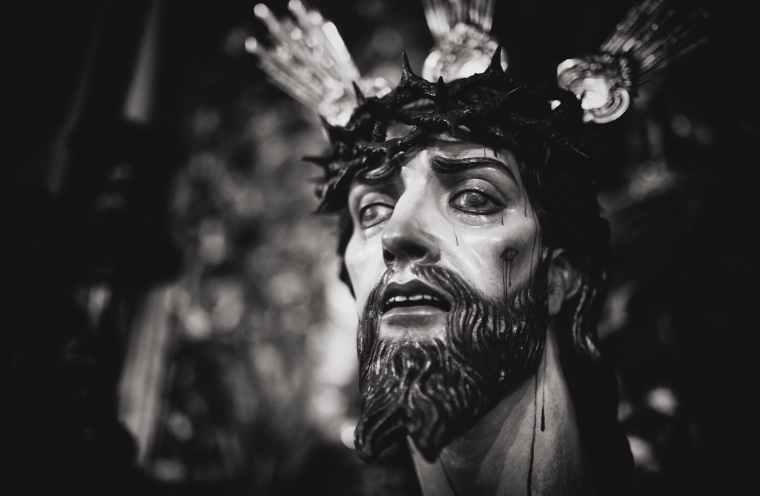
gray scale photography of jesus christ head
Photo by Alem Sánchez on Pexels.com

When I was twenty years old I became the caretaker for my mother when her bipolar disorder sent her into a psychotic state. At the time I was sorely ignorant of mental illness and lacking confidence in my own abilities to assess the situation and advocate for the very best care for her. I would make a decision regarding her therapy that would haunt me for well over forty years. I allowed my own instincts to fold under pressure from her doctor mostly due to my ignorance and non confrontational nature. I agreed to a treatment for her that I knew she would hate. I did not have the courage to stand my ground and insist that the doctor try something else. Nonetheless I learned from this incident and grew exponentially into a person who would never again be influenced to act against my own sense of right and wrong. Sadly, even though I changed I was never quite able to forgive myself and whenever my mother’s illness reared its most profound ugliness she would remind me again and again of what she saw as my betrayal of her. It took a great deal of internal reflection and wise counseling for me to finally accept that I was worthy of mercy.

Each of us has a story of something that we handled badly, something that we replay in our minds over and over again as though we might somehow change the outcome or at least assuage our guilt. On a rational level we know that we just need to genuinely apologize to anyone whom we have hurt, and then demonstrate through our actions that we have genuinely learned and changed. If we are willing to become better then there is little reason to continue to berate ourselves or to be reminded by others of our transgressions. Forgiveness should mean that our faults will never be mentioned again, and yet we all know of situations in which an offender is never allowed to fully transform because someone continually thinks of them as the incarnation of their sins rather than their contrition.

In the gospel of a few Sundays ago Jesus had died, risen from the dead and was with some of his apostles once again. Lovingly he chose not to remind them of how some of them had denied him when he most needed their support. He did not focus on the moments when their human frailties caused them to react badly. Instead he loved them for coming back to him and demonstrating their belated faith in him. It did not matter what had happened in the past because he knew that they loved him at that moment.

The Christian message is one of forgiveness, and yet so many of us pridefully hold grudges against people whom we believe have hurt us. Particularly in today’s society once an individual has displayed egregious behavior we tend to forever hold that person in infamy even when he/she makes attempts to repent. It is a prideful thing that we do forgetting that each of us has fallen from grace at one time or another. We want understanding for ourselves without granting it for those whom we have stereotyped with a broad brush of negative judgement.

Certainly there are acts that seem unforgivable and make it almost impossible to associate with any kind of absolution. When we think of the Holocaust we sense a special kind of evil that only God himself might unravel and pass judgement upon, but for the most part the hurts that we inflict on ourselves and others can be reversed. When people truly attempt to become better it is important that like Jesus we embrace them as they have become rather than what they used to be. Continually reminding them of the past is as cruel and hurtful as any wrong that they may have done.

I’ve always been impressed by stories of forgiveness and the people who demonstrated great love and compassion to those who had wronged them. They abound in our history, but of late they are the exception rather than the rule. Abraham Lincoln understood that if our country was to survive as a union we would have to have to embrace the people who had attempted to rebel against the nation, forgiving them for what they had done and moving forward without continually chastising them. Of course he was tragically assassinated and the resulting tendency to punish has bled over into the current political environment. As a society we focus on missteps rather than the evolution of character. It is not what a man or woman may have once done in a moment of thoughtlessness that should matter, but rather what kind of person he or she has ultimately become. 

I am a huge fan of Robert Downey Jr. not just because he is a highly entertaining actor but because I believe him to be a good man. There was a time when his addictions were so severe that he almost lost himself and his career. He was slowly dying in a haze of drugs and alcohol that made him unreliable. Nobody trusted him even after he had done much work to rehabilitate himself. He could not get the insurance necessary to land even a minor part in a motion picture. It was Mel Gibson who was fighting demons of his own who came to the rescue, offering his own money as faith in Robert Downey, Jr. Ultimately Downey’s career was resurrected, but the loveliest thing about him is that he never forgot the kindness form Gibson who also became a pariah because of an outburst when he was drunk and under the influence of his own mental illness. Downey has appealed to the motion picture industry and one time fans to demonstrate some compassion for Mel Gibson just as he was given. He understands as well as anyone that life is a continuum, a journey in which we struggle to become better versions of ourselves. He knows how important it is to cherish those who make great efforts to change.

We seem to forget that Jesus modeled forgiveness again and again. The stories of his mercy resound in the Bible, and yet even many who profess to believe in his words turn their backs on those who fall. It sometimes feels as though our society has become a judgmental nag when what we really need is more absolution. The strongest people in our world are not the ones who are unwilling to see the goodness emerging in a fallen soul, but those who embrace those who change with love and clemency. 

The Appointment

blue and silver stetoscope
Photo by Pixabay on Pexels.com

We never really know when something that we say or do will have a stunning effect on someone. I can think of instances when certain people briefly entered my life and left impressions so strong that I still think of them and feel thankful that my path crossed with theirs. In such moments it felt as though we had been meant to encounter one another for all time in a kind of spiritual appointment.

When I entered my sixties I had mostly been lucky enough to have little need of doctors, but I decided that it was time for me to have a better than usual checkup. I’d heard of an executive screening at Kelsey Seybold Clinic that included all kinds of tests and a conference with the doctor all within the span of a couple of hours. The appointment included breakfast after the required fasting and a personal conference with the doctor to discuss problems and further steps. It was a kind of concierge setting with no waiting and a very personal feeling.

I didn’t know any of the doctors at the clinic so I randomly chose a Dr. Dickerson and then jumped through each of the diagnostic hoops. When the time came for my diagnoses I met a man who exuded interest in my case, but admitted that he had almost nothing to discuss in our guaranteed time together because he had found nothing troubling about my health. He laughingly asked me if there was anything concerning me that I wanted to share with him. Thinking quickly I began to discuss my mother’s difficulties with bipolar disorder and the toll her illness had taken on her and on me in the forty years since she first showed symptoms of being mentally ill.

Our discussion began with generalizations but soon led to my full-blown admission of the struggles that had continually worried me. I spoke of the guilt that I often felt for having to be so aggressive in my mother’s care. I described the chasm that had developed between my mother and me because of the role reversal in which I so often had to become the adult. Not long into the conversation I realized that Dr. Dickerson had a crystal clear understanding of what was happening and how both my mother and I felt about it. He admitted that psychiatry was one of his areas of interest and continued to to probe my state of mind, sometimes helping me to fill in the blanks when I struggled to describe my frustrations. Ultimately I cried openly, letting out all of my fears and anger without filters. It was something that I had never before done.

Dr, Dickerson allowed our conference to continue for over an hour during which time he gave me a new and healthy perspective regarding my role as a caretaker for my mother. He suggested that I use my experiences to help others in similar situations. He believed that my teaching skills and my love of writing might gain even more purpose if I were to honestly describe the journey of our family and the love that had glued us together even in the most desperate times. He asked me to focus more on my own compassion and strength rather than on the mistakes I felt I often made, and his parting prescription was that I write a book about what our family had learned about mental illness.

I have written that book which still languishes because of fears that I have of hurting someone who may misunderstand my message. I’ve had to think about that conference with Dr. Dickerson again and again because his words indeed made me feel healthy and brave. His name is included in my dedication because I don’t believe that I would have had the courage to put my feelings and my history into words without him. As I do my best to finally go public with my story I also cling to the advice that he so wisely gave me on that fateful day. When my story eventually sees the light of day it will be in great part because of the encouragement that I received from Dr. Dickerson.

I never had the privilege of returning to see Dr. Dickerson again. Changes in insurance and the policies at Kelsey Seybold Clinic made that impossible. Nonetheless I have always believed that somehow he and I were fated to meet if only that one time. Never before or since had anyone tapped so clearly into the turmoil that raged inside my head over the uncertainty that I had always felt regarding the role I played in getting psychiatric help for my mother. I had the support of very close individuals but I still constantly questioned myself and worried that I was not doing enough or even perhaps doing too much. Dr. Dickerson cleared the demons from my head and demonstrated kindness at a time when I surely needed it.

It’s amazing how such chance encounters happen. They always feel planned even as they are serendipitous. It is as though the heavens themselves conspired to create the intersection that made the powerful moments occur. There is a miraculous feeling to them, an other worldly aspect that can’t be explained. They are beautiful and memorable, but often fleeting, a single moment in time that provides us with whatever it is that we truly need.

I know that somehow I was supposed to meet Dr. Dickerson and that I was deigned to heed his words. I will always be thankful for my encounter with him as well as other times when I suddenly found myself in the right place at exactly the right time. Those appointments seemed random, but I believe that they had been made before I even knew that I needed them. Miracles abound.

Summer Is Coming

photo of sunflower
Photo by icon0.com on Pexels.com

I have a love/hate relationship with summer. I enjoy the long days and the possibilities of adventure, but the season brings back memories of tragedies that I have endured, and then there is the heat and humidity that slows my energy and puts me in a state of lethargy. “Summer is coming” is a phrase that causes worries to silently fill my head. I fret about storms and hurricanes that may find their way to the places where me and my family and friends live. I feel a caution and not too little anxiety in summer that does not leave me until the end of September when the first hints of fall shorten the days and cool the air. I suppose in my distrust of summer I am quite different from most of the people I know.

I do not like the heat of summer. I seem to wilt and lose my energy as the mercury rises. I become sluggish and prone to stay indoors. I don’t like using all of the electricity that is needed to keep my home at a reasonable temperature, and I hate summer fashions that leave so little to the imagination. Summer is a time when I suppose I should head to cooler places for a long stay, locales where I may still need a jacket and do not require machines to cool me.

Summer is the time when far too many people that I have loved have died. I have a difficult time recalling birthdays, but I seem to always remember the dates on which my favorite people left this earth. I go into a kind of quiet sadness at the same time that everyone else appears to be celebrating the joys of warm days outdoors. I harbor groundless fears during that time, watching for signs that someone I know will have a heart attack or a stroke or a mental breakdown because summer is when those I care about have endured such things. I don’t want to dwell on the negative, but somehow the timing of tragedy in my life almost always coincides with the summer months, and so I am cautiously optimistic when June rolls around.

Hurricane season coincides with the summer, and it terrifies me. I fear the weather reports, and watch for signs that a storm may come my way. I know the kind of destruction that those heartless freaks of nature impart on humanity. I have seen firsthand the sorrow that they may bring. I cry at the thought of a Katrina or Harvey or Maria randomly choosing an area to destroy. I don’t think upon such things every minute of every day or I would surely go insane, but I do carry a healthy fear in the back of mind. I remain alert and prepared until the danger has passed.

I worry about too much water and too little when the summer comes. I’ve seen entire forests on fire and witnessed the loss of whole towns in images on my television. I’ve watched my own plants whither under the hot summer sun unless I ply them with water that I feel guilty using when there are people dying of thirst in some parts of the world like Jordan where water is only available once a week. It seems so ironic that California may be on fire at the very same time that homes are filling with the ravages of rain in my city.

As a child I loved the summer. My mother would cut my hair each June so that breezes might caress my neck. I’d live in shorts and sleeveless tops with bare feet grown brown from the sun and the dirt. I’d run and play and ride my bike with hardly a notice of the heat. I’d enjoy the peaches, plums and watermelon of the season, and the freedom of lessons and homework. I had few worries other than how to fit all of the fun with my friends into each day. I’d read books next to an open window in the high heat of the afternoon or join in a competitive card game with my playmates. I never thought of the weather or its consequences. Worries about tragedy were not on my radar, at least not until my father died.

I sometimes long for the innocence of my youth when “summer is coming” meant swimming at a city pool and Sundays at Clear Lake with my cousins. Summer meant total freedom with adventures that would have rivaled Tom Sawyer. My skin would freckle and brown and I never once worried that I might be damaging my health or in danger of developing skin cancer. I was a free range kid of the highest order, running without shoes in the woods, romping in the muck of the ditch behind my cousin’s house, and playing almost arm breaking games of Red Rover with the multitude of kids who lived up and down my long street. I quenched my thirst from the garden hose and played from the first light of dawn until the street lights came on in the dark. I don’t recall feeling uncomfortable when I went to bed in our unconditioned house where the temperatures had to be in the high eighties. Nor did I ever worry that some evil might come into our home by way of the open windows that never closed during that season, even when we were away running errands.

Perhaps I have become too old to fully appreciate the summer. I get hot and cranky if I am outdoors for too long. I dislike the feel of the sunscreen that I am compelled to slather all over my body to protect me. I don’t like the way I appear in shorts and skimpy tops. I’ve become grumpy about the very time of year that once enchanted me, and that actually makes me sad. I so want to feel the unbridled pleasure of my youth when I lived in the joy of the moment rather than considering what might go wrong. Returning to that kind of exuberance is something that I intend to seek. Summer is coming and I want to make the most of it and be unafraid.