Tick Tock

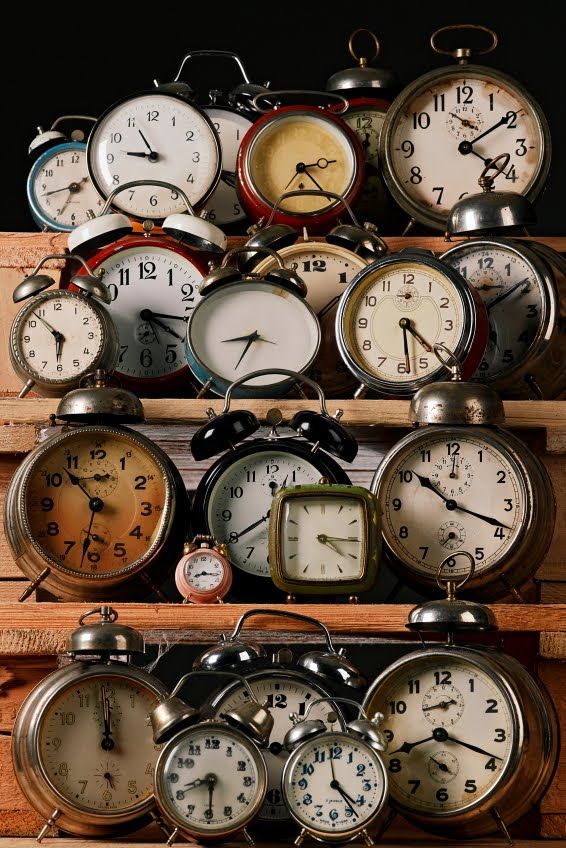
collection of vintage alarm clocksChange, chaos, confusion! No, I’m not speaking of the political realm but something far more insidious, the springing forward to Daylight Savings Time that occurs each March. Even after a week people are still dragging around trying to adjust their internal clocks to the loss of an hour and wondering just why we insist on torturing ourselves by moving the hands of our mantlepieces twice a year. Who thought of this process and does it really make a difference of any kind?

During World War I someone decided that Daylight Savings Time might help the country save energy. Maybe it was a good idea back then but somewhere along the way as our world turned into a twenty four hour frenzy of lights, television programming, computer use and shopping the concept of everyone quietly turning off their lights and going to bed doesn’t appear to be what it might once have been. Research shows that having an extra hour of daylight does little to curtail the use of electricity, gasoline, natural gas or any other form of energy, not the least of which is because we use the same hour’s worth of lighting when we rise in the dark each morning that we would have used if night came a bit earlier in the evening.

I recently read that more people have heart attacks and wrecks in the first weeks after a time change than at other moments in the year. Farmers report that their animals have difficulty adjusting to changing routines as well. So the burning question that keeps coming back to mind is why we torture ourselves by doing something that most of us dread? Why don’t we just choose either Daylight Savings Time or regular time and then stick with it forever? It would certainly be easier on the constitution.

I generally reach the point at which I am fully accustomed to the new timing just shortly before it is about to readjust again. I sleep well in those last weeks and feel a level of energy that is unbounded. Once we go through the gruesome alteration process I find myself dragging for weeks and I am plagued by insomnia for months. I suspect from comments that I hear that most people feel the way that I do. I don’t particularly care if my mornings are dark or my evenings come a bit earlier as long as I get to become acclimated to one way of marking time or another and then never again have to change unless I choose to travel to a different time zone.

Unfortunately we seem to be doomed to continuing the silly tradition of switching from one method of timing to another simply because we once started it. Have you ever noticed how reluctant we are to abandon a process once we decide to try it? It is some crazy aspect of human nature to prefer sticking with a plan even if that plan proves to be ridiculous. We see it most especially in government where that status quo becomes the way of doing things ad infinitum. We fear the idea of admitting that we my have been wrong about the merit of an idea and so we commit ourselves to absurdities again and again. It almost takes a rebellion to repeal a rule once we have made it part of our routine.

I applaud states like Arizona and Indiana that don’t go along with the time change shuffle. They merrily buck the tide and enjoy the certainty of no loss or gain in hours. They have no need of clock changers who must spend wasted time moving the hands of timepieces back and forth, back and forth twice each year.

I once saw an interesting documentary detailing the unbelievable number of days that it takes just to adjust all of the clocks that belong to the Queen of England. Many of them are complex antiques that must be very carefully calibrated and only experts are able to do so properly. It is a herculean task that is both expensive and time consuming.

I feel as though we have so many truly important problems in the world and recalibrating the time again and again should not be one of them. I advocate for suspending this policy and freeing ourselves from the tyranny of sleepless nights and energy-less days. I call for letting the natural rotation of the earth determine the timing of our habits just as it did for the thousands of years before someone got the not so bright idea of artificially determining when our days should begin and end.

Since it is more than likely that we will never rid ourselves of this onerous habit I instead extend my sympathies to those who become discombobulated each March and then again in the fall. I feel for all of the teachers who must spend the next many weeks looking at students slumped lazily on the tops of their desks. My heart goes out to the mothers of babies who insist on keeping to their sleep routines regardless of what the clocks may say. I understand the frustration of pet owners whose kitties and puppies react to the sun rather than the manmade schedule. For those like me who are now spending their nights staring at the ceiling I give you the hope that this too shall pass sometime around September or October just in time for it all to begin again.

What a piece of work is man. We sure know how to make things more complicated than they need to be. Maybe instead of making so many more new rules we may want to consider getting rid of some of the ones that make our lives more difficult. Starting with omitting all of the time changes seems to me to be a great place to start.
Murder and Adventure

140812163037-blood-countess-slovakia-castle-horizontal-large-galleryMy grandson Jack is quite active in theater arts in high school, so much so that his senior superlative award deemed him the most likely to win an Academy Award. Ironically his life plan is to become a computer specialist and his intent is to put his acting days to rest while attending Texas A&M University, so the probability that he will fulfill the prediction regarding his thespian abilities appears to be slim to none, unless he uses his computer skills at Pixar one day.

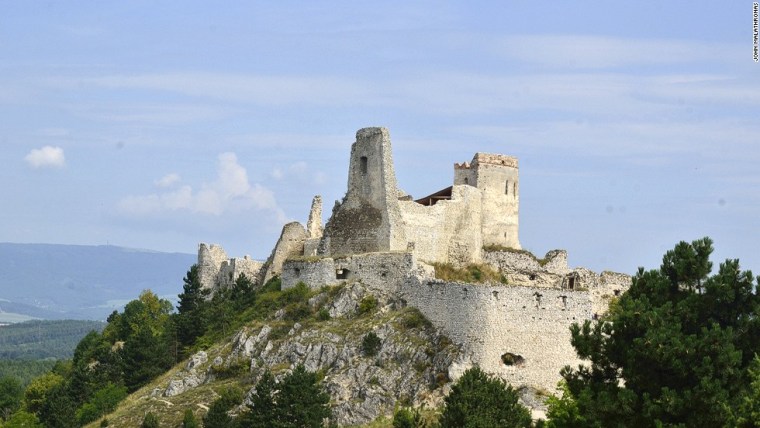
Jack’s final role will be in an original one act play written by his teacher about a Slovakian, Countess Elizabeth Bathory, believed to have been one of the most prolific serial killers in history. In a twist of irony she lived in the very town, Cachtice Slovakia, where my grandfather, Pavel Uhrik, was born. As was common in that part of the world well into the twentieth century, the ruling class held sway over the peasants to such an extent that the common folk lived in dire want and virtual obscurity. If a woman living in a castle hired one of them to work for her and then that laborer disappeared few would have thought much of the incident, especially in medieval days. Life for the vast majority of Slovakians was a dreary affair with the quest for work and food always the main concern well into the twentieth century. Little wonder that my grandfather Pavel Uhrik ultimately chose to immigrate to America just before the outbreak of World War I.

When I study the history of Slovakia I begin to better understand Pavel and why he chose to live his life the way he did. He came from a highly stratified political culture in which landowners held sway over the majority of the population. While the wealthy owned vast areas of land, their workers were tenants subject to the whims of their masters who all but owned them. They often lived in small cramped huts without running water or electricity. Hunger stalked them like a marauder. Few had the time or the means to pursue education beyond the fifth grade so among them there was an exceedingly high rate of illiteracy. The very conditions that made their lives so miserable also made them targets of prejudice. Without opportunities for change they either resigned themselves to the hopelessness of their lives, or found a way to leave their dreary situations behind by becoming immigrants to places like the United States.

I never met my grandfather but I heard countless conflicting stories about him. He was proud to be Slovakian but even prouder to be an American. His children knew little about his past life because he tended to be secretive which is true of many immigrants. In retrospect it seems likely that his former life had been so harsh that he found little to boast about. He was a practical man who believed in moving forward rather than looking back. He would have had little reason to speak of a time when he lived in miserable and perhaps even humiliating conditions.

Pavel was also an exceedingly stoic man. He worked hard everyday to provide for his family and almost furiously rejected even acts of charity. Perhaps accepting gifts or money that he had not earned made him feel too much like owing something to another and he fiercely insisted on maintaining the freedom that he had secured in his new country. He paid cash for every item that he purchased and carefully saved from his small salary so that he might build a home for his family. He purchased land and livestock and boasted that in America he was a man of substance, something that might have been impossible to achieve in his old country.   

He filled his home with books, a grand luxury and sign of his personal success. He insisted that his children take full advantage of the educational opportunities that were afforded them. On Sundays he often read to them from the many volumes that he collected. He insisted that their futures were to be found in learning and hard work. He noted that he was the master of his own destiny as they were as well, and that nobody makes it anywhere without effort.

He was not always treated well by his fellow Americans nor were his children. They endured taunts and were victimized by misunderstandings caused by their cultural and physical differences. He counseled his children to ignore the slights and to prove themselves with positive accomplishments. There would be no whining or self pity allowed in his home. They were to hold their heads high and be satisfied that they had a safe, if very small home, and food on the table every single day. While he never alluded to want in his native land, there was an understanding among his children that they were quite fortunate in the grand scheme of things.

All of the aspects of having made it that most probably had been missing in Pavel’s early life were found in his great adventure in America. He was eternally grateful to the country that had made his existence and that of his children so much better, even when its treatment of him lacked hospitality. He knew all too well how horrible the alternative would have been and so he counted his blessings rather than focusing on the imperfections. His children would follow his lead in this regard, urging all of us from the third generation of Americans to appreciate our good fortune and to abstain from comparing ourselves to others.

Our own children and grandchildren are now so distant from the realities of Pavel Uhrik that they are hardly able to imagine their great great grandparent’s worldview. The extended family has become so successful and so Americanized that few would think that a little over a hundred years ago the founder had sailed away from a life without prospects to one with ill defined but exciting promise. He had moved from a town in which a wealthy woman was free to murder almost six hundred innocent souls simply because nobody had enough energy to check on the nameless peasants whose lives had so little value that they easily faded into obscurity.

Now Pavel’s great great grandson Jack will play the part of a man determined to change the fate of the unwashed souls who were being so horrifically tossed aside in his ancestor’s old land, someone who stood up to a system that was so unfair. Because Pavel took a courageous risk, Jack is well on his way to fulfilling his own dreams. He has both benefited from and taken advantage of the opportunities that were a gift handed down through the generations from Pavel. In a twist of fate the circle of life begun so long ago has returned to it’s beginning and provided an opportunity for all the sons and daughters of Pavel to give thanks that we are exactly where he might have dreamed that we would one day be.

Purpose

puzzleI recently heard a woman from the Hoover Institute at Stanford University speak about the elusiveness of happiness in today’s world. It seems that we humans are seeking peace and joy for ourselves more than ever and somehow our searches are leaving us empty handed. In a time when we should be feeling more comfortable and joyful than ever, we are ironically filled with anxiety and guilt. Instead of groping aimlessly for answers, we should realize that true contentment is generally found in leading a purposeful life, but what is that actually, and how do we find it?
Purpose has as its object the finding of meaning or a grand design in life. It is going to be different for each of us. Unfortunately we are surrounded by many so called experts who seem intent on undermining our individual efforts to define what is most important, complicating our attempts to find ourselves in a world that can be quite cruel if it thinks that we have chosen unwisely. We are encouraged to use our talents well and often doing so involves being all things to many different people. We have many unique responsibilities, possibilities and characteristics that make us tick. The process of determining how to live can be quite overwhelming unless we are strong enough to follow our own hearts rather than the dictates of others.

I myself have been utterly confused from time to time as I mapped out a pathway for my personal existence. I wanted to be a writer but was told again and again by well meaning adults that thinking of myself as a word smith was a frivolous and self centered activity that would never amount to much. I decided to become a teacher but was often reminded that I might have been a doctor or a lawyer and made more of an impact on the world. I also felt a compelling sense of responsibility to my family which I believed should always come first. It was difficult and confusing to balance all of my personal desires with the needs and ideas of everyone else. It was only when I found out what gave me a real sense of purpose that I found the contentment that I sought.

I prefer the immaterial rewards of teaching to those that are monetary. I am altruistic by nature and need to feel a strong sense of meaning in my work. I have felt the most comfortable with myself in knowing that I have attempted to do my best to care for my loved ones and friends. I have learned how to carve out time to fulfill my desire to write alongside my life’s work. In other words I have found purpose along many different avenues and that has brought me much joy. Being myself has been a process of trial and error, satisfaction and disappointment. I have learned much about myself along the way and that self knowledge has helped me to know what I must do.

Because something works for one person does not necessarily mean that it will work for another. One need not seek careers in service to others to find happiness, nor is joy  necessarily found in the more creative ventures. Sometimes the mundane is a font of delight for some folks.

My grandmother was the epitome of contentment and yet her life was built around an unchanging routine of cooking, sewing and gardening. She found true elation in rolling biscuits with the precision of a master chef. She marveled at the gifts of nature when she strode through the rows of vegetables that she had planted, wearing her sunbonnet and overalls like Paris fashions. She created quilts and crocheted tablecloths worthy of kings with little more than feed sacks and her imagination as her tools of the trade. She always wore a smile of satisfaction on her face.

My sister-in-law spent a lifetime working as an engineer in a world that was dominated by men when she first dared to enter it. By the time she retired she had done wondrous things and pioneered the role of women in a field that had once been hostile to her. She reveled in the challenges, determined to prove that women can be leaders in unconventional careers while still successfully raising a family. She fulfilled all of her desires in a very different way from me and my grandmother.

I have found that the key for anyone is to do what makes him/her excited about getting started each day. When that sense of expectation is missing, so will the joy be absent. Far too many people feel like drones in a beehive, working for the man rather than for themselves. They fear admitting their discontent and making the changes that they need to find relevance in the way they spend their days. It takes great courage to face down the devil of misery but the rewards for doing so are immeasurable, even when the whole world may see the move as being irresponsible or ridiculous.

I was only eight when my father died, but old enough to notice that he didn’t appear to like his work. He was a mechanical engineer who often switched jobs and who spoke longingly of other fields that he might have entered. He was the bread winner for our family and he had spent years getting his degree. I suppose that he felt honor bound to continue in his work even though it was seemingly joyless for him. He was a man of so many talents and perhaps he simply needed to try something a bit different but he never got or created the opportunity to do so.

I know a man who was also an engineer who left that career path to become a teacher. He is an extraordinarily talented educator who found his true vocation in a classroom. He has won awards for his ability to motivate youngsters and best of all he has discovered his niche, his purpose. He walks through life with a huge grin on his face. There were those who thought that he had lost his mind when he first announced his intention to change professions but his transformation from misery to elation has convinced even his biggest detractors of the reasoning behind his move.

Each of us has a special role to fulfill in this world. If we manage to find a perfect match for our talents and our interests our lives will be transformed. We all need to encourage those who are seeking satisfying destinies, not by insisting that they follow traditional routes but by supporting them as they try the things that make them feel most alive. Happiness is indeed found in purpose, in finding the justification for our existence. We must explore as we seek answers for not just how to live, but why. When we unravel that glorious personal puzzle we experience a sense of happiness that is indescribable. Everyone should enjoy such a discovery. 

Finding Marion

shamrocksThere is a theory that most people will be completely forgotten within three generations. After that time nobody still living will have heard the sound of their voices or felt the impact of their personalities. They may leave behind photographs or documents attesting to their presence on this earth but essentially they are defined not by memories but by images. Of course the modern era is rectifying this with digital footprints that might include recordings and moving pictures. Such used to be the purview of only the wealthy but now even common folk have access to technology. This is not the case for most of those who came before us and so they are slowly but surely being forgotten.

I have a great grandmother who is a mystery. I think that her name was Marion Rourke but of that I am not certain. She was the mother of my grandfather, William Mack Little. He told us that she died three days after he was born. There is no record of any of this. In spite of my relentless searches, Marion remains a cipher, as though she never even existed.

Of course there has to have been such a person because William was not just found in a cabbage patch. He had a father named James Mack who took him to live with a woman that he called his grandmother known as Sarah Reynolds. Sadly I have been unable to find any records for these individuals. They walked on this earth as though they were ghosts, phantoms of my grandfather’s imagination.

William never knew Marion but he thought enough of her to name his first born daughter after her. It was his touching way of honoring her. I suspect that he always wondered who Marion was and what she was like, just as I do. It saddens me to think that she died at what should have been one of the happiest moments of her life. She had a good strong son who would ironically live to be one hundred eight years old. He was a very kind and intelligent man who treated women with the highest regard. He no doubt would have been a dutiful son to the woman who brought him into the world.

Marion’s last name indicates a connection of some kind with Ireland. My grandfather always claimed to be half Scottish and half Irish and I have verified such roots with a DNA test that I once took. I wonder if she was born in the Emerald Isle or if she was a descendent of someone who originally came from there. She had a beautiful name and was someone’s daughter, but who might that have been? She was obviously quite poor according to what little my grandfather knew of her. He was her first child and I wonder what happened that made her so ill that she died.

When I had my first daughter my labor was long and hard. There were complications and my doctor later told me that in the old days I might have lost the baby or even died myself. I wonder if I somehow inherited the same genetic disposition for difficult birthing that Marion had. Do I have an idea of what she might have endured? Was she alone and frightened as things went awry? Did she realize that she would not live long enough to see her son grow into a man? Such thoughts haunt me as I attempt to remember her without any facts to steer me in the right direction.

I try not to forget Marion. Someone has to think of her. Each St. Patrick’s Day I celebrate the Irish in me and attempt to imagine my great grandmother. I cook corned beef and cabbage and celebrate my own life that would not exist were it not for the sacrifice of her own. I so want to know her and probably never really will.

My grandfather is not quite sure where he was born nor where he spent his childhood. It was somewhere in Virginia where he was able to see hills in the distance. By the age of thirteen he was orphaned again when his grandmother died and he became a ward of the state. He chose John Little as his guardian because he was an honorable man, a graduate of West Point. Grandpa took “Little” as his last name in honor of the individual who helped him to complete his journey into adulthood. Sadly John Little died of typhus when he was in his early thirties leaving my grandfather all alone again. Grandpa had to fight hard to find reasons to to stay alive, and somehow he always did. He had an optimism that was inspiring. I wonder if he inherited that trait from Marion? Would she have been proud to see him overcoming one challenge after another?

I feel a kinship with Marion both as a woman and as her great granddaughter. I know that she lives somewhere in me. I would love to know where she was born, what she did as a child, how she met James and where she was finally buried. It has been a kind of holy grail for me to find out who she really was and I am not yet ready to give up even though I have spent years searching for someone who seems not to have even existed. She deserves to be known and loved and treasured.

On St. Patrick’s Day I will once again prepare my traditional meal and think of her. It is possible that I will be the last person to do so. She will one day become forgotten just as the countless individuals who came before her. I am determined to tell her story even if I have to fill in the blanks to describe the details. I know from the scant information regarding her untimely death that she had been loved enough by James to bring forth a child and that hers was a difficult existence devoid of the medical help that might have insured her survival.  I know that her son was a strong, bright and healthy man who would have been a joy to her. I know enough about genetics to realize that she must have been an intelligent woman. Her DNA has helped to produce some quite outstanding descendants.

Marion is a name said to have derived from the Hebrew “Miryam” which means “sea of sorrow.” I hope that this is not an accurate description of hurt and pain that my great grandmother may have endured. I would like to believe that she found peace and that somehow she knows how well things turned out for her son and his son and finally for me.

Howdy

1d230bcc4636998c02292d3ef09b2982I’ll never forget the feeling of disappointment that Texans felt when Alaska became a state. The home of the Alamo known as the Lone Star state had reigned as the largest in the nation, a distinction that it not so secretly enjoyed, only to be toppled by a faraway newcomer. Suddenly our second place status stole some of our bragging rights and mostly silenced our boasts about the enormity of our home. Still, anyone who has ever travelled from El Paso to Orange not only understands the daunting distance of such a drive but has seen the dramatic changes in the landscape that lie along the highway. Texas is a place of incredible diversity and describing it in a few words is almost impossible.

I’ve been as far west and as far east as one might go in Texas. I’ve seen the plains of the north and the deserts of the south. I’ve observed the people in both small towns and large cities. I’ve come to realize that there is no one size fits all representation of the diversity of my state which in some ways is a microcosm of the world at large. I would be hard pressed to choose one place or area that might serve as the essence of all that is Texan.

The hill country around San Antonio and Austin certainly might be the heart of Texas. Those cities after all are fairly close to being at the center of the state and as the home of the Alamo and the capitol they can lay claim to historical and political importance. Both places also lie a rather lovely area of the state with majestic vistas and an old west feel. They are in the part of the state that most closely complies with the imagery of Texas and Texans that most outsiders have when they conjure thoughts of this far more complex place. Certainly the progressives, intellectuals and artisans of Austin are a great deal different from the refinery workers of the blue collar town of Port Arthur, but they both call themselves Texans. 

I suspect that if I were to ask citizens in all of the other forty nine states to name one Texas city, they most often would mention Dallas. If I were to require them to describe Dallas they might speak of wealthy cattle and oil barons living on ranches with names like South Fork. Television has a way of fixing ideas in our mind that often wander far from actual reality. The real Dallas is a modern metropolitan wonder with congested freeways, skyscrapers and malls filled with everyday people who look and act little differently than their counterparts in Los Angeles.

The Gulf Coast of Texas is yet another area unlike the stereotypical visions of the state. It is a place of worldwide commerce, meandering bayous, rapidly changing weather and an amalgam of cultures and cuisine. It is a magnet for beach bums and innovators alike. It has evolved over time from a strange mix of ideas that created a kind of crazy quilt that can’t be easily defined. It is friendly and welcoming and generally nonjudgemental, a place where it seems possible to accomplish the impossible and where rocket scientists dream big alongside welders.

Then there is the far west of Texas that is home to miles and miles of farms and ranches that stretch so far into the distance that they appear to be endless. It is a lonely place of wide open spaces, an area where one might find solace in getting away from the rat race of the modern world. It is wild and requires toughness to withstand. Out west humans compete with the harshness of nature under a sky perennially filled with stars. It is one of the last outposts of a way of life that pioneered the expansion of the United States. It is mankind in competition with the elements and in tune with the wonders of the earth. It is a place of both harmony and dissonance, verdant farms and drought ridden ghost towns. It is a place of peacefulness and one that requires toughness and determination to survive. 

Texas is a grand state of unimaginable size and diversity and each March with the regularity of the clock it bursts alive with the colors of wildflowers, most notably the bluebonnets. Near Chappell Hill and Brenham the lovely indigo colored blooms create beautiful carpets in fields and along the sides of the roads. The people of Houston drive from the business of the city to enjoy the sight of the lovely buds that seem to embody all that is best about Texas. I wonder if there is any other state in which its citizens are so taken by the annual flowering of the countryside. For those of us in Texas venturing forth to observe the bluebonnets in all of their glory is a pilgrimage that must not be missed in the spring.

The small towns that host the visitors fire up their pits and roast briskets and sausages that have a distinctly Texas flavor. They offer blueberry pies and fruit kolaches for the hungry travelers, made from recipes handed down from one generation of Texans to another. In a beloved creamery there is ice cream unlike any that is made in other parts of the world. It melts sweetly on the tongue and says, “I am in Texas,” in a sensory way that must be experienced to understand. There are crafts and antiques to view along with Mother Nature’s finery. It is a festival of Texas culture that warms the heart and brings out smiles on even the grumpiest faces. It is a not to be missed tradition.

I’m a Texan through and through, but I am only one variety of the remarkable citizens of our state. Our ancestors came here from the world over, all hoping for an opportunity to live better lives than in the places from whence they came. Many dreams have been realized here and even today Texas is growing in population by leaps and bounds simply because even the commonest person has a chance to succeed with just a bit of imagination and a willingness to work hard.

Texas still has relatively inexpensive land and a variety of jobs. It lives up to its name as a welcoming place. Its monicker comes from the Spanish word “tejas” which means “friend.” We do our best to be an inviting host and we don’t mind at all if someone decides that they would like to tarry long enough to make our state a home. My husband’s kin came from Georgia and England. Mine were from Virginia, Kentucky and Slovakia. We embrace neighbors from Mexico, South America, Vietnam, Germany, Russia, Nigeria, and all across the globe. Texas is a regular United Nations  with a distinctly open and friendly nature. It is a one of a kind creation of many minds and ways of living. It is a place quick to shout, “Howdy!” It is my home.