Keep On Trucking

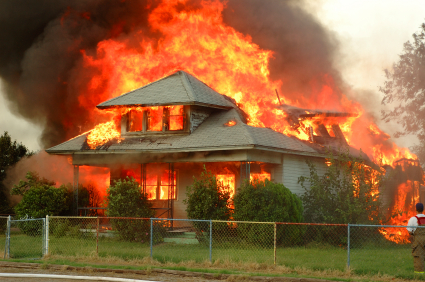
Burning-HouseOn Good Friday I was preparing food for our family’s Easter celebration when a heavy cloud of dark smoke suddenly poured from my oven. As I ran across the room to turn down the heat a small flame erupted in the bottom corner of the appliance. I called for my husband to come help with the situation and just as he raced down the stairs an inferno engulfed the entire cavity. We reached for the fire extinguisher that we store in our pantry but when we attempted to open the oven to apply the fire retardant it was latched shut. Our only option was to yank the appliance out of the wall just enough to create a small crack that allowed us to spray away. Luckily our efforts worked and the blaze was soon out leaving behind a rather nasty mess and an oven that was undoubtedly ready for the scarp heap.

In the same week my daughter was happily driving her new car when she approached a red light. Of course she halted as required but sadly the youngster behind her was so busy texting that he didn’t notice that the traffic was at a standstill. He plowed into the back of her auto with full force. Her beautiful car was a shambles of its former self.

Meanwhile across town a friend went to bed admiring the wood flooring that had just been placed in his home. He was proud of the dramatic and lovely change it had made in his abode. When he arose the following morning expecting to see the gleaming planks he was instead greeted to a most disastrous sight. Water covered the area that had looked so wonderful only hours before, ruined by the overflow from a toilet that had run all through the night.

Each of these incidents were maddeningly inconvenient and costly. It would take days, even weeks to repair the damage that was so unexpected, but eventually all would be set right once again. All three of us were fortunate to have the ability to overcome our disasters, unlike so many whose lives spin frighteningly out of control. While these examples were fixable they demonstrate the importance of keeping the events that occur in our lives in perspective.

My house didn’t burn down as it might have. My daughter walked away from her accident unscathed. My friend’s home was not flooded so badly that it was rendered uninhabitable. Sadly I know people who have faced far worse.

One of my aunts who was in her nineties at the time watched helplessly as her home burned to the ground, eliminating everything that she owned including irreplaceable family heirlooms and treasures. I have known several people whose loved ones have died in car accidents, including myself. I have friends who used to live in New Orleans who came home to total devastation after hurricane Katrina. Such losses are indescribable. They haunt the psyche for years and leave scars that tend to quietly inflict pain. 

We all want to think that we have a modicum of control over our lives but reality demonstrates time and again that the possibility of the unexpected happening is always there. At any given moment our lives might be thrown into utter chaos. We don’t dwell on such facts because we would be immobilized with fear if we did. Instead we go about our daily lives sometimes sweating a bit too much about the small stuff instead of focusing on our blessings. We take the food on our tables for granted. We forget to tell our family members and friends how much we love them. We grumble and complain.

Of course my husband and I were upset over the prospect of having to purchase a new oven and repair the damage to our cabinetry. We certainly might have used the money in other ways, but once the smoke had settled so to speak we began to realize how fortunate we were. Had we both been in another room our kitchen might have been far more damaged, perhaps even destroyed. In another time in our lives we might not have had the money to purchase a new oven and would have had to scramble to find a way to fix the problem. As it was, we had just received a tax refund that essentially covered the costs.

My mother lived on the economic edge for most of her life but she nonetheless always remained optimistic. She used to brag that God loved her so that He somehow took care of every problem that arose for her. Such was her faith that she told us when we were children that she had a money tree from which she would pluck funds when they were needed. She herself lived without an oven for several years because hers had quit functioning and she did not have the funds to get a new one. Rather than complaining she made do until she had accumulated enough to get a new one. She joked that by the time she finally had a way to bake again she realized that she really didn’t need to roast or broil. She didn’t allow herself to worry over things that were in reality inconsequential.

The truth is that there are people on this earth who will never have an oven or a car or a wooden floor. They live in places racked by famine, disease and war. Their lives are so out of their own control that they only have the freedom to exist, and sometimes even that liberty is taken from them. We on the other hand enjoy luxuries that we take for granted, worrying over problems that in reality don’t matter as much as we may think.

I am an admitted control freak even though I have learned time and again that so much of what happens is beyond my reach. The only thing over which I have total power is my own attitude. I can choose to stew over the randomness of occurrences or I can choose to roll with the punches and take the actions needed to set myself aright. There is little point in crying once the milk is flowing across the floor.

I take heart from the courage of the incredible people that I know such as the mother whose six month old son was diagnosed with leukemia who kept a smile on her face throughout her years long ordeal. I think of the friend whose daughter was killed by a drunk driver. She has channeled her grief into counseling others and spreading healing by sharing her own story. I marvel at the woman who had to reinvent herself after hurricane Katrina at a time in life when she should have been retiring comfortably. I am daily inspired by a former student whose brother was murdered and her fight to bring justice for him and all individuals marred by violence. I think of a dear friend who daily cares for a husband sidelined by a severe stroke and dementia. All of these individuals have risen from the ashes of their circumstances in triumph. They have found new meaning for their lives and new appreciation for even the smallest of blessings just as my mother always did.

I know not what challenges will come my way. None of us ever do. My only hope is that I will find the inner strength and positive attitude that will allow me to keep my footing and keep on trucking along. It is after all the best that we might do regardless of the circumstances.

A Cosmic Perspective

hqdefault

Every one of us is, in the cosmic perspective precious…In a hundred billion galaxies, you will not find another.  — Carl Sagan

When we are young we often disdain the idea of being different from others. As we grow older we revel in the idea of being unique. It is a lovely thought indeed that each of us is as individual as a snowflake. There is one and only one of us in all the universe, which makes each person a treasure not to be taken for granted. What a wonderful thought it is to be so special, so why is it that we sometimes engage in self hate and negativity?

There is certainly nothing wrong with wanting to improve ourselves. We study so that we might increase our knowledge or learn a new skill. We eat well and exercise to make the most of the bodies that we have. We have fun trying new things with our hair or using makeup to highlight our best features. We involve our minds in spiritual pursuits as a way of finding our inner essences. With the right attitude we grow in wisdom and grace and become better versions of ourselves.

Of course we are never quite perfect. Each of us has flaws, but those things need not define who we are. I once read an interview with Kiera Knightly in which she laughed at the idea of being beautiful. She pointed out all of the physical imperfections that she has, none of which I had ever before noticed. The sum total of her parts are in fact lovely, and those little problems that she notes as she gazes in the mirror matter little to those of us who think of her as being a very pretty woman.

We are all influenced by popular culture. We strive to be in style even when doing so is not particularly comfortable. We wear ridiculous clothing and shoes that almost deform our aching feet. We diet to the point of starving ourselves lest someone see us as a bit too full figured. We engage in group think, fearful of developing our own ideas. We wonder what others are thinking about us when in all probability they are not thinking of us at all.

I used to be so self conscious, believing that somehow I might become the subject of ridicule. I was once going to perform in a talent show and I almost became sick with nervousness even though I was part of a large chorus. My mother quite wisely told me that in all likelihood the only people who would even see me would be my family and a few of my closest friends. Of course, she was right. As I think of events over the years I realize that the only people that I actually remember are the ones that I already loved and cherished. There was no need for me to worry at all, just as she said.

Most of the time what makes someone appear to be outstanding has very little to do with appearance or even level of intelligence and more to do with how they interact with the people around them. Someone who is generous, kind, and interested in others becomes beautiful and exciting in our minds. Just seeing them smile at us or listen to our cares and concerns makes them wonderful in our eyes. True beauty is actually much more than skin deep.

Approaching the world with optimism and genuine concern for others brings out the best in each of us. We need not follow the crowd. In fact, we always seem to admire those who march to their own drumbeats, unwilling to conform to the demands of society. Each of us should be proud of our uniqueness. It is what makes us special in billions of galaxies. It is in our differences that we are at our very best. Celebrate who you are every single day.

The Old Is New

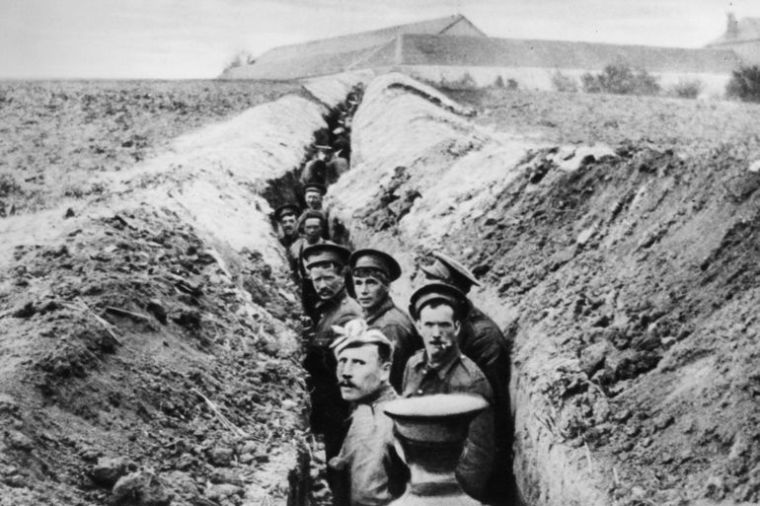
In The TrenchesIt was a dark time in history. The world was engaged in a heinous war whose purpose seemed unclear to most who tried to understand why millions of young men were dying. The brutality of the battles was unimaginable. Modernity had changed the nature of fighting in truly horrific ways. Mankind had not yet outlawed the use of chemicals as weapons. Nothing, it seems, was taboo, and so young men were permanently mutilated by agents like bombs and sarin gas. Never before had there been such murderous activity in mankind’s seemingly relentless quest for power. World War I is a war that we often ignore when in reality its effects continue to plague us to this very day.

The United States initially watched events unfold from afar. It’s hard for us to believe but our nation was very much a kind of backwater region at the onset of the twentieth century. Most of the world powers still thought of our government as a fluke in the annals of history, hardly worth noticing when compared to the vast influence of Austria-Hungary, Germany or Great Britain. Militarily the United States was ranked number seventeen, just behind Serbia. Few paid much attention to our still very young country as they engaged in an epic struggle in Europe.

At the beginning of World War I the United States was in debt and still far more rural than urban, but it had incredible natural resources and manpower which became a lifeline for nations like Britain and France during the fighting. With so many of their young workers unable to farm or work in factories it fell to the United States to supply the food and material needed to survive. The USA became a beehive of activity all while insisting on a neutral stance regarding the war. Initially most Americans were disinclined to become involved in a dispute that seemed to be more of a disagreement between royal relatives than a meaningful cause. Instead they enjoyed the fruits of commerce that were occasioned by the war.

The war that was supposed to be resolved in a matter of weeks dragged on with horrible consequences for European nations. The citizens watched helplessly as their youth were killed or maimed in heretofore unseen numbers. After almost four years of fighting France was on the verge of capture and collapse. Britain was little better. Russia was boiling over with a revolution that would dramatically alter the course of that country for the next hundred years. It appeared that Germany would soon dominate Europe. The United States enjoyed its relative safety and newfound prosperity while Europe burned.

Germany believed that it might break the will of Britain and France, thereby winning the war, if only the United States were prevented from sending supplies, and so they boasted that ships traveling across the Atlantic toward Europe would no longer be safe. Their gamble backfired and resulted in a declaration of war from the United States. Within months hurriedly trained American soldiers and weapons, began arriving to bolster the Allies, breaking the stranglehold that Germany seemed to have on the continent. By turning the tide of the war and helping the Allies to win the United States earned the respect of all the world. Suddenly our country had become a superpower and a king maker. For better or worse we have played that role ever since.

A hundred years ago President Woodrow Wilson justified our country’s involvement in war as a way of spreading liberty and democracy. It is an idea that is bandied about to this very day, but then as now a sizable number of people question the arrogance of interfering in the affairs of other nations. Such thinking was again used successfully as a rationale for World War II but lost its luster during the engagement in Vietnam. Presently the world finds itself in a confusing quagmire in the Middle East, a part of the world many of whose problems began with the peace negotiations at the end of World War I. One hundred years later we are seeing the results of arbitrarily dividing the spoils by redrawing colonial maps in a manner meant to punish the losers rather than consider the needs of the people living in the areas once ruled by European monarchs. The roots of today’s problems were unwittingly planted by power brokers whose intent had little to do with spreading freedom.

The world changed dramatically a hundred years ago particularly for the United States. We took on a mantle of responsibility back then that has always had an aura of discomfort. By nature we want to be the good guys, the heroes, but tiny voices of caution echo inside our heads. Part of our nature wants to be left alone, just as our forefathers who fought for their independence from an ever invasive government. Another side of our personalities feels compelled to constantly fix whatever we see as being broken including other governments. The tension between these two points of view are as prevalent today as they were back then. Our divisions are in reality nothing new.

One hundred years ago even as we appeared to be saving the world conditions were ironically far from ideal in our own backyard. Women were still fighting to win the right to vote. Race riots broke out in cities across the country in the summer of our victory. Many of those who had spoken against going to war languished in prisons. We still had much to do at home before serving as advisors to the world. Hypocrisy quietly reigned much as it often does.

Everything old becomes new again. After a hundred years much of the idealistic thinking of those who supported World War I has been tarnished by reality. We find ourselves feeling anxious as the world smolders as though coals of discontent from our past have once again caught fire. We ask many of the same questions and silently worry that a truly peaceful world is a pipe dream, the stuff of fools. We wonder if our warlike natures will always and for all time inevitably take hold. We would sometimes like to wish ourselves back to a time when we were number seventeen in the world and nobody expected much from us, but we know that our ship has sailed and now we much pray for the wisdom to find answers that will do the least harm. As we do so we would do well to remember the lessons from history.

The Strong

AlejandroAt one of my grandsons’ recent track meets there was a fun race that featured beefy football players running against one another. Of course there was also a big twist to the competition. Each of the guys, who looked like defensive linemen, had to carry a tire as they circled the track. They had everyone laughing and having a good time, and I was reminded of a story that my grandfather loved to tell.

Grandpa grew up in small town Virginia. In fact he was so far out in the country that he wasn’t even sure if the place where he lived even had a name. The townspeople had to create their own entertainment. There were no theaters or musical venues or such, just whatever talent they were able to throw together from the locals.

On one occasion the citizens decided to have a race between the biggest guys in the county. The idea was that they would have to run through a course carrying heavy barrels of flour. They had to ford rivers, climb over fences and go through fields strewn with rocks while lugging the heavy containers. The path extended for several miles and was so treacherous that only a truly strong man would be able to survive the grueling adventure.

Grandpa said that everybody’s money was on one particular man who was built like  Paul Bunyan. His arms and legs rippled with muscle and he was well over six feet tall. My grandfather was in total awe of this contender, and so he wagered a small amount of his earnings on the outcome.

From the beginning of the race this incredible hulk of a man sprinted far ahead of the competition. Nothing seemed to stop him and in one phenomenal show of prowess he even climbed over a fence without stopping to set down the heavy barrel. Grandpa laughed as he pointed out that there was actually no contest, and his bet was as safe as if he had placed his money in the bank.

We humans have always had a fascination with individuals who hone their bodies into powerful machines. Here in the Houston area we are all enamored with J.J. Watt, an affable defensive player for the Houston Texans who at times seems to most surely be related to Superman. He has performed some spectacular feats on the football field and in the locker room, including jumping from a standing position to the top of a chest that was at least three or four feet off of the ground. When I think of J.J. I understand the admiration that my grandfather had for his hometown strong man.There is something almost mystical about such people. They metaphorically represent the strength of mind and body that we all wish to have.

Of course we are not all made of the necessary stuff to enable us to accomplish such remarkable physical feats. Even in the race with the tires that made us all laugh at my grandsons’ track meet there was one young participant who was significantly smaller than the rest and in spite of tremendous grit he was not able to keep up with the bigger boys. Still, there was something quite appealing about his willingness to try even as he fell farther and farther behind. In the end he received as much cheering and applause as the winner. We all somehow knew that his positive attitude was as laudable as size and speed.

My grandfather’s stories all had a common theme, namely that we humans are continually faced with challenges and the best among us fight with all of their might to succeed. He himself overcame one difficulty after another, and somehow lived to tell about his adventures with a hint of laughter and the wisdom of someone who had traveled along life’s highway for one hundred eight years.

We love our athletes because we understand how much hard work and pain it takes for them to do the things that they do. They push themselves beyond the limits that so many of us simply accept. This is also true of those who take their minds to heights of thinking and learning that literally result in unheard of discoveries. There are people among us who are not satisfied with being ordinary and their dedication to their craft separates them from the ordinary.

A couple of weeks ago one of the former students of KIPP Houston High School performed in his senior recital at Wabash College. To say that Alejandro Reyna is talented would be an understatement as evidenced by what he has achieved since the beginning of his education there. As a freshman he regularly wrote a blog detailing the adjustments that he had to make in a place far away from home with a culture unlike his own. His openness and sincerity made his writing an instant hit, but it was only the beginning of the incredible things that he would ultimately do. By the time that he had reached his senior year he had composed original music for oboe, piano and strings in addition to being a proficient singer. The works that he wrote were stunning and plant him firmly in the ranks of incredibly talented individuals. In his own way he is as splendid as the strong men who have been the stuff of fascinating legends. We will most surely continue to hear from this exceptional man. 

Each of us is endowed with particular talents, but we don’t always push ourselves to be our very best. Athletes work hard and often ignore pain. Those who are brilliant move beyond the ordinary in their quest for knowledge and answers to questions. There is much perspiration involved in achieving greatness and that is why we humans are so in awe of those who push the envelope of life. They become our heroes and live in the stories that we tell of them. Alejandro Reyna has already earned a place among them and he has only begun.   

A Winter Tale

BM_Comfort476x290I vividly remember having the measles. It seemed to be the final insult in a year that had brought me nothing but grief. My father had died only months earlier leaving me confused and bereft as our family struggled to find its footing. We had moved into a house that was nothing like the ones we had been considering at the time of his death, but it had brought us great comfort in the short time that we had lived there. We had gone full circle, returning to the neighborhood and the school that we had left only a year before. The people who lived near us and those who attended our church had been welcoming and we had been gradually settling in to a new way of life without Daddy.

My mother’s selection of a home for us had been a very wise choice, but we were still navigating through a year of milestones that reminded us over and over again that the man who had been such an integral part of our lives was gone. Somehow we had made it through birthdays, Thanksgiving and Christmas, starting the new year with the realization that we were going to actually make it on our own. Still I was feeling those sudden bursts of grief that seem to come and go in the first year after a loved one’s death. I often felt sorry for myself and my family, silently hoping that our tragedy had only been a dream. As the months went by it had become more and more certain that our new reality would never again include our father, so when I felt the first symptoms of illness that winter I thought that I was just having another bout of sadness. I felt so tired that I uncharacteristically retired to bed early.

By the following morning I was raging with fever and my head felt as though it was going to explode. I felt so dizzy that I hesitated getting out of my bed so I called my mother for help. My throat felt dry and scratchy and it seemed as though every bone in my body ached. I had at times dramatically wished I were dead like my father, but that was just a way to garner attention from my overworked mom. Now I wondered if my bizarre request had somehow been granted because I truly felt as though I had one foot in the grave.

My mother took a quick look at me and asked me to lift the top of my pajamas. Underneath the soft flannel was a scarlet colored rash that caused her to shake her head and declare that I had the measles. She immediately went into action, calling our family doctor who agreed with her assessment and advised her over the phone rather than having me come to his office. He did not want me to expose the rest of his patients to my highly contagious disease, so he and my mother discussed how to best treat my illness.

It was a bitterly cold winter that year in keeping with the somber tone of our household. The heater seemed to whir away continuously and I was so happy that our neighbor, Mr. Sessums, had put it in fine working order for us. I felt quite snug under quilts that my grandmother had made and somewhat relieved that I did not have to go to school on that day. My teacher was a woman who terrified me and any time spent away from her was welcome in my mind. I willingly stayed in my bed and fell into a deep sleep.

When I awoke my room was quite dark and I wondered if I had slumbered all day. Mama informed me that I was not to look out my window, watch television or turn on the lamps in my room lest the lights damage my eyes. She explained that having measles was very serious and that I needed to follow her instructions to the letter so that I might recover quickly and without any long term side effects. Since my fever was still quite high I had little inclination to disobey her. For the most part movements of any kind sent my head into a tailspin and so I languished in my room listening to the sounds of my family going about its routine.

As my seemingly endless bad luck would have it, Houston had one of the biggest snows in its history only a day or so after I was afflicted with the measles. I could hear my friends and family celebrating the uncommon occasion up and down the street. My brothers had snowball fights and built a snowman with my mother. They breathlessly recounted how glorious their fun had been from the safety of the hallway. Their cheeks were tinged with a bright red glow of excitement and I wanted more than anything to experience the adventure that they described to me.

Mama reminded me again and again that I was not to even peek through the blinds to view the white stuff on the ground. She was a good nurse but I truly doubted that her extreme caution was necessary. When she and my brothers returned to the winter wonderland to make snow angels I saw my opportunity to find out for myself what a true snowy day looked life. I gingerly squinted through a tiny gap in the wooden slats of the blinds and saw a glorious sight unlike any I had ever experienced in my hometown. The yards were covered with a lovely white dusting of frozen precipitation. Snowmen smiled in front of every home and children were bundled up in winter wear that they hardly ever had occasion to use. The sound of laughter filled the air as the winter party delighted young and old alike, everyone it seemed but me.

My mother never knew that I had so blatantly disobeyed her. For a time I worried that as punishment for my transgression I would become permanently blind, but when that never happened I felt justified in seizing that daring moment. Soon enough I was back in school and forever immune from catching the measles, something that seemed to make my mother quite happy. I would not understand the full extent of what I had endured until later in life when I was pregnant with my own children. It was then that I was told of the dangers of catching the measles while carrying a baby in the womb. None of those fears would apply to me, and later when they were born my girls would receive an immunization that would insure that they would never have to worry about catching the measles as I had.

The World Health Organization has officially declared that measles have been eradicated in the United States. My childhood experience is a thing of the past, an historic event that no longer happens in our country. Much like my grandfather’s stories of smallpox, my recollection of having the measles is a curiosity that my children and grandchildren will never truly understand. Thank God for that.