Talking About The Weather

Photo by Ralph W. lambrecht on Pexels.com

When my grandparents were in their late seventies they fulfilled a dream to live on a farm. They were not just retirees who sat on the front porch admiring their land. They were full fledged cultivators who worked from the crack of dawn until late in the evening growing crops which my grandmother then canned and shared with family and neighbors. It was hard work, but they reveled in it and not even our summertime visits to their place halted their labors. Usually by the time that we awoke each morning they had already been working in the fields for hours. 

By noon the sun would be bearing down so brutally on the Arkansas land that my grandparents would take a break from their labors. We would sit on their front porch sheltered by an overhang shielded by screens designed to keep the bugs from invading our space. Big box fans did their best to move the mostly still air and Grandma provided cold drinks to quench our thirst. Since none of us had air conditioners in our homes back then, we endured the heat without too much complaint, but when the temperatures inched over one hundred degrees our talk would almost always focus on the weather. 

My grandparents lived in the hills near a tiny town called Caddo Gap, Arkansas where summers were ferociously hot and winters brought snow and ice. In the fall they enjoyed the changing colors associated with that time of year and the spring marked the beginning of their months of toiling over their crops. Their’s was a cycle repeated over and over again in tandem with nature. Sometimes a flash flood would hit and keep them captive in their home until the waters receded, but they were always prepared to survive with their fresh supply of milk from their cow, eggs from their chickens, and canned vegetables in the cellar. The seasons and the weather ruled their days and nights and thus were a constant topic of discussion.

There was a time when talking about the weather was noncontroversial. It just was a fact of life that everyone took for granted. Depending on where one lived there were certain weather events that tended to occur regularly and some that were a less frequent but possible occurrence. I grew up near the Gulf of Mexico and understood that now and again a hurricane might come our way. Preparing for such an eventuality was commonplace. We knew what supplies we might need if a big storm headed our way. We kept stashes of batteries, flashlights and water along with gas stoves and canned foods to sustain us if the worst happened. I remember filling the bathtub and all of our big pots with water in advance of hurricane Carla with the idea of having a means of flushing toilets and washing ourselves if our utilities were damaged. Sometimes it would take weeks for the electricity to come back and we adjusted until things returned to normal once again. 

Somehow the storms and droughts and tornadoes and fires and blizzards seem to be happening more often than in the past. When they come their intensity is often more extreme as well. Even if nobody ever mentioned phrases like climate change or global warming I suppose we would sense that the weather is not exactly as it once was. There is a frightening uncertainty about it that even belies our preparations. We don’t expect three or four days of unrelenting downpours that bring six feet of water into our homes and yet that has happened more and more often. We are not accustomed to such long stretches of drought that our forests become kindling but it has almost become a way of life.

We humans are innately control freaks. We have long had dominion over the land and sometimes over other people. It’s been quite some time since most of us have had to produce what we eat. In well developed countries we tend not to notice the weather much until it is unusual. We enjoy our cooled and heated homes and cars and take those things for granted. Life seems so good and so perfect. There are no noonday breaks from the sun for us. We keep working in our air conditioned or heated bliss. Our food is delivered in trucks. Weather is an inconvenience only when it interferes with our routines. Somehow we have ignored it for so long that it only gets our attention when it wreaks havoc. Otherwise we don’t seem to notice the impact that we are having on it, and that our impact is not good. 

Talking of the weather is no longer an everyday thing like it was for my grandparents whose progress in the fields depended on what was happening in the atmosphere. As with so many things these days the weather has become political. We fight and disagree over how to address it, or whether it is even necessary to address it. We expect our government to stay out of the business of harnessing our habits of creating problems, and then expect that same government to save us when a weather disaster occurs. We seem either unwilling or incapable of becoming more attuned to the sacrifices we each need to make if we are to undo all of the damage we have done to our planet. It is almost unthinkable to consider spending a summer in the south without air conditioning, and yet it was done all the time before about the middle of the twentieth century. We don’t want to do the heavy lifting of scaling back our misuse of the earth’s resources. In fact we don’t even seem to want to talk about it, and we make fun of those who do. 

My grandparents were in tune with the weather. They grew up in a time when there often was no glass on the windows of their homes. They learned how to survive the heat of summer and the cold of winter. They worked around the vagaries of temperature and climate. They wasted nothing and used little. All of that changed as we became more modernized and began to take our conveniences and our government for granted. We want it all and we want it now, a concept that would have been foreign to my grandparents. They understood the need for sacrifice and sharing quite well. They would not have understood our hesitation to conserve and cultivate habits that enrich the natural resources of our world. They would have easily spoken about the weather and our role in it rather than denying that we have any impact whatsoever in the acceleration of disastrous events. 

So let’s really begin talking about the weather and what we will have to do to keep it from ultimately making life more difficult for all of us. If we love our planet and each other it’s time for some hard conversations and some new ways of living.  
A Real Prince of A Man

Photo by cottonbro on Pexels.com

Time magazine has named Harry and Meghan as members of the one hundred most influential people of 2021. Sadly people are mocking both Time and the couple as being unworthy of such an honor. I would like to submit that not only are they in fact incredibly influential, but also rather courageous for bringing a discussion of mental illness into the public consciousness. The mere fact that people view their honesty as a kind of selfish weakness is proof that we are not yet ready as a society to deal with mental illnesses in a rational and productive way. 

We all know that Harry was only twelve years old when his mother, Diana, died. He has often spoken of how traumatic that event was for him. He has spent much of his life attempting to deal with the scars that her death left with him. For the most part he was forced to combat his fears and sorrows alone because our world seems to believe that children are so flexible that we need not worry much about their reactions to tragedy. Furthermore, we are all expected to adapt to challenges with a stiff upper lip, and this would be even more true for Harry given his royal background. The truth is that he is still dealing with the backlash of his enormous loss. In speaking publicly of his torment he hopes to let people know that their own trials and fears are worthy of attention, respect and therapy. 

Harry is aware of his mother’s struggles with mental illness as well. She attempted to be as honest as he has been and was often degraded because she brought her issues to light. She was a beautiful woman who married a future king and as such she was expected to be perfect, always in control of her emotions. Her mental afflictions made it impossible for her to be so. She suffered in the public eye. In many ways she was destroyed by the general refusal of society to accept that mental illnesses are real, not the imagination of weak individuals. They afflict individuals regardless of their status in life. For the most part they make people feel uncomfortable, and so as a whole we do not want to talk about them. We nervously shun anyone who broaches the topic the way Harry and Meaghan have begun to do. 

Frankly, I believe that are doing a great service to the world at great personal cost. They both know that their honesty has generally resulted in insulting backlash and yet they persist. They are willing to endure the negativity to present an important message about the presence of mental illness in the world and the lack of understanding associated with it. For this they should be resoundingly commended.

I have often written about my father’s death and my mother’s bipolar disorder. For decades I hid those things from even close friends. They have been stunned to learn that I was only eight when my father died. They did not realize that much of my shyness and quirky behavior stemmed from the fear of death that I felt as a young child. Because nobody ever talked with me about what had happened I know for certain that I still retain unresolved issues. I am different than I might have been and different from others as well. Keeping my feelings under wraps only compounded the frightening feelings that haunt me even to this day. 

Eventually my mother became overwhelmed by the symptoms of bipolar disorder. I became her caretaker at the age of twenty. I spent the next forty years finding doctors for her, making sure that she took her medications, putting her back together after psychotic episodes. It was daunting, but what made it even worse is that I did not feel comfortable sharing her story and mine with others. The few times I tried I sensed the discomfort in my confidant. I realized that people cringe with discussions of mental illness. I mostly kept the truths of my life to myself and I often felt so alone. 

When my mother died ten years ago I went public just as Harry has done. Some people have been very supportive. Others have backed away, unwilling to listen to the horror of mental illness. I have written many blogs on the topic. I have completed a book. I sob just thinking about the impact that mental illness has on the victim and the families. I understand exactly what Harry is attempting to tell us. I know that it is something that he believes is important. I realize that he hopes to once and for all time being mental illness out of the shadows of indifference, fear, and myth. I too pray for these things because I have seen the destruction of a beautiful human being, my mother, first hand. 

I applaud anyone who broaches the topic of mental illness. It is not a sign of weakness. It is not a selfish act. It is not a way of getting attention. It is incredibly hard to do because those of us who attempt such conversations know all too well that we are driving many people away when we try to educate others on the realities of this dread disease. I tip my hat to Harry while I also chide those who would be cruel enough to ridicule a man who has endured so much sorrow and sincerely wants to help others. We won’t ever be where we need to be with mental illness until there comes a time when everyone applauds Harry rather than mocking him. He is indeed a prince of a man, and I believe that his mother would be quite proud of him.

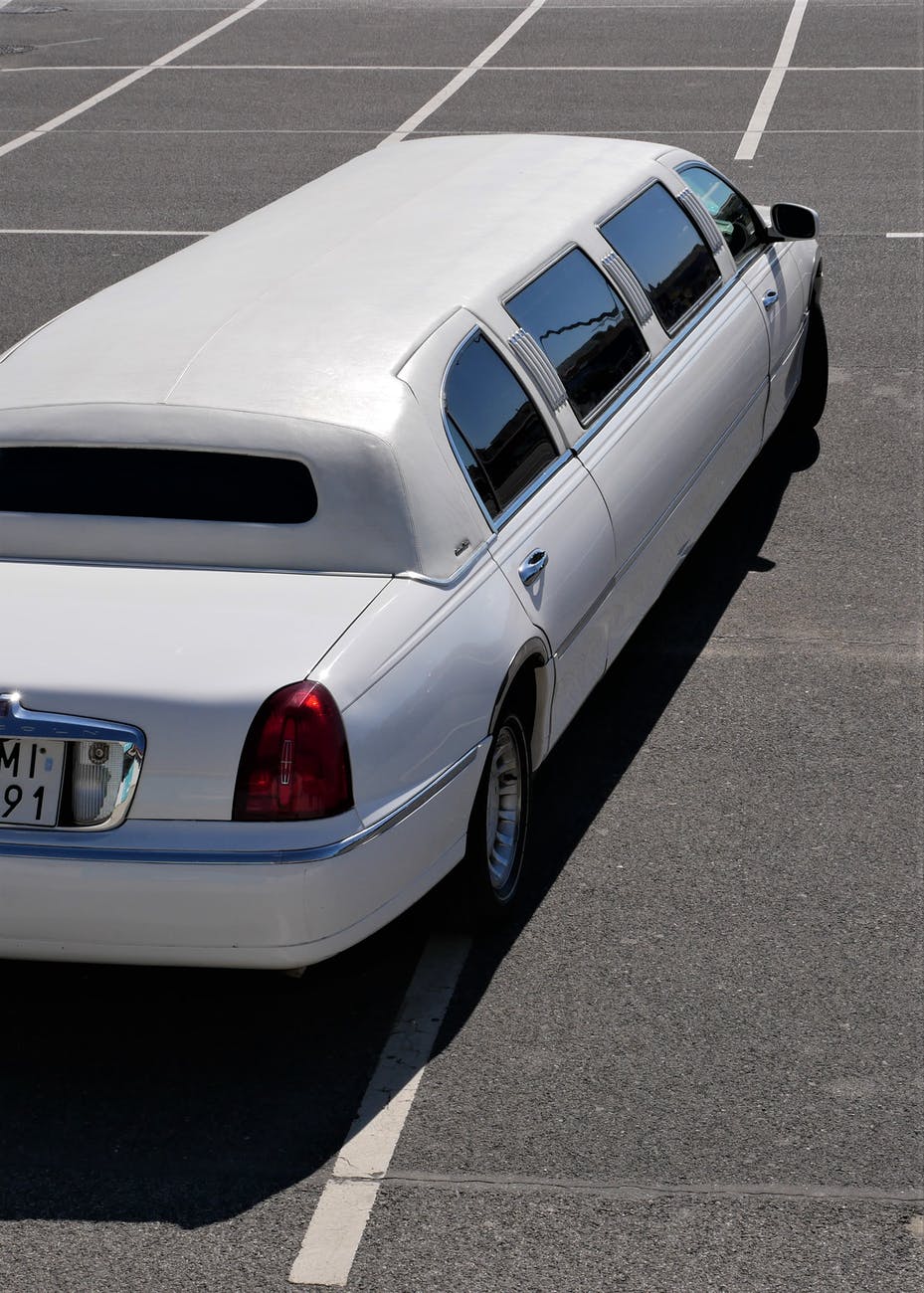
The Limousine

Photo by David Duky on Pexels.com

I’m an ordinary soul. Until I was well into my forties the only time I rode in a limousine was on the sad occasion of my grandmother’s death. I suppose that there may have been some folks who rented limousines for their senior proms, but I never knew any of them. When I got married, my new husband and I left the wedding reception in his father’s car. It was a bit fancier than the old Dodge that he inherited from his grandmother that would become our means of transportation in our early years of marriage. Somehow it never occurred to me to dream of cruising in a limo. It was something that I did not miss at all, and then came an unexpected opportunity.

I was teaching in a middle school that held an annual fundraiser. Not so surprisingly the government never gives enough funding to education to cover all of the expenses needed for providing students with an exceptional learning experience. Virtually every campus turns to fundraisers to earn extra cash, and ours involved turning our students into competitive salespeople hawking a variety of candies, wrapping paper and home products. Students received different kinds of incentives and awards for their efforts in making the fundraiser successful. Even the teachers got some perks if the kids in their homerooms exceeded expectations.

One year I found myself in charge of a homeroom filled with go-getters who were determined to win the most coveted prizes. As a result I became a kind of rockstar of fundraising even though I secretly harbored a hate for those things. One week the salesmanship of my students gave me a shot at grabbing cash in a machine that pumped out bills of varying value for one minute. After a few minutes I figured out a winning technique and walked away with close to seventy-five dollars. My prejudice against turning our kids into door to door salespersons began to wane ever so slightly as I pocketed the gains of their efforts.

At the end to the weeks long process the individual students who sold the most were part of a lottery for the grand prize which was an afternoon riding anywhere they wished in a limousine. One of my students won the coveted reward ,and our entire homeroom was excited for him. There was a catch, however. He had to have one of his parents accompany the group on the glamorous journey. Unfortunately both his mom and dad worked long hours and insisted that they could not miss work for anything so frivolous. My students was devastated until his mother suggested that he find out if a teacher might be allowed to serve as the chaperone. When his plan was approved, he asked me to be the adult who would ride along. Because he was a wonderful young person, I immediately agreed.

The student chose three of his best friends all of whom were polite, well-behaved, hardworking souls. I knew that the adventure would be relaxing and without any trouble so I became excited about what we might do during our five hours rolling around Houston. The plan that the boy created was a testament to his lack of experience living the high life, but it turned out to be great fun.

Our first stop was at a miniature car track not far from the school. All of the boys raced each other for a couple of hours at no cost. When they had finished they spent a few more time playing gaming machines while the limousine driver waited patiently for his next command. Once their gaming interest was sated my student suggested that we drive to a local fast food drive-in where everyone ordered burgers and shakes. By this time the boys had endeared themselves to the chauffeur who quite willingly lowered his window when the food was delivered to the car, and in his best English accent said, “Pardon me. Can you bring us some grey poupon?”

We all laughed hysterically while the server insisted on knowing who the mystery boys in the back of the limousine might be. Playing his role perfectly the driver insisted that he was not at liberty to say, but they were rather famous stars who were out enjoying some fun in between filming. By that time my role was to pretend to be the nanny.

We ended our journey at a collectable comic book store where each of the boys perused the merchandise while a clerk eyed them with interest. Eventually they each chose an item and the chauffeur paid. The student who had won the prize noticed that the store sold lottery tickets and asked that we get one of those as well. When the clerk hesitated and pointed out that it was illegal for minors to buy such things, the prize winning boy quickly noted that he wanted to buy it for me, his nanny. He explained that he wanted me to perhaps win so that I would not have to work so hard anymore. He told the clerk that I was such a lovely woman that he wished for a better life for me.

The rattled clerk sold us the ticket on the proviso that one of the adults would have to pay for it. The chauffeur quickly complied since he was the man with the funds from the fundraising company. As the baffled young man behind the counter handed me the ticket he whispered his inquiry, “Who is that young man? Is he famous or something?”

I smiled and told him that I would be fired if I were to provide that information and we left almost running to the limousine lest we burst into laughter and blow our cover. Even the chauffeur was part of our silly shenanigans at this point. He opened the window that separated him from the rest of us and boasted that he had never had so much fun. He complimented me and the boys for being so polite and well-behaved. He admitted that he had been wary of this job, but all of his fears had been for naught. As he left us at the front of the school he bowed and wished all of the young men a wonderful future.

I was only in a limousine three more times after that. Two were as part of funeral trains for loved ones. The third time was with a student who was participating at the state final of a debate contest called the Great Debate. Once again I had been lucky enough to be chosen to accompany him along with his mother and the school sponsor of the debate team. We were squired around Dallas to the hotel where he would meet his debating foe. In a time before the Affordable Care Act his task was to advocate for the creation of a national healthcare system.

The judges were impressive dignitaries including a justice of the Texas Supreme Court. His opponent was a confident fellow who appeared more than ready to tear apart my student’s arguments. Because I had once been a debater myself I knew that both young men would have to be on their best game to win. I was nervous for them.

From the start my student was disarming. If he was anxious, he did not show any hesitation. He answered each point that his rival made with great clarity. The competitor came back with equal force. I worried that the judges would have a difficult time discerning whose arguments were the strongest and defect to personal beliefs. Still, I felt very good about the abilities of my student whether or not he ultimately won.

During the time that we were waiting for results my student admitted that he had indeed been apprehensive the entire time. He was impressed with the abilities of the other debater and felt that in many ways the contest had been a draw. We were all quite tense until the judges finally returned.

They too spoke of how difficult it had been to make a decision. They noted the consistently excellent debating skills of both young men. Ultimately they had leaned toward my student as the winner. He would earn a nice check to apply to his tuition at Georgetown University where he planned to begin his college studies in the fall. We cheered with the greatest of joy.

We rode back to the airport in the limousine catching the eyes of everyone we passed on the road. I’m sure they wondered if some dignitary was inside. I knew that the young man at the center of our ride was one day going to do such great things that he would indeed be a distinguished individual. For now his future lay ahead and it seemed fitting that he would launch it like the rockstar that he was.

I doubt I will ride in a limousine ever again but I’ll always remember those two unique times with my students. Nothing gives an educator more joy than being part of the lives of truly wonderful young people. Both of these boys were winners then just as they are now. They deserved to be treated like someone special because they were. It’s too bad that everyone does not have such a wonderful experience as a reward for just being good. We too often neglect to acknowledge the most exceptional young people among us, complaining instead about those who are troubled. Maybe we’d do well to spend more time rewarding the virtue that abounds.

My Privacy and My Good Name

Photo by Mikhail Nilov on Pexels.com

I suppose that I’m not the first person to sit in her arm chair and consider the possibility of running for President of the United States to save the country. It’s fairly easy to lounge on the sidelines and point out all of the flaws of those who accept the mantle of leadership and responsibility for our great big crazy democratic republic. It’s a tough job, but somebody has to do it. Why not me? 

Of course getting to the White House requires running through a gauntlet of campaigning and extreme vetting by the media and the opposition. It’s unlikely that anyone will make it all the way without some real or imagined scandal being disclosed. The sport of politics is vicious these days to say the least, and throwing one’s hat in the ring takes a certain level of courage and hubris, but I’ve thought about it now and again nonetheless.

Last night I had a recurring dream of totally rearranging the furniture in my home. I was moving heavy pieces from one room to another and shuffling objects around to create a more pleasing arrangement, an update or modernization of what I have. I encountered one problem and interruption after another in spite of my careful planning. I had a vision that looked great on paper but didn’t quite come together in reality. Unexpected disasters took my focus in unanticipated directions and so even after an entire dream cycle of working very hard I still had a mess on my hands when the morning came. I awoke feeling exhausted and somehow defeated. Sometimes I imagine that is what it must be like to be President. 

Still, from a far away perspective it feels as though I can see the problems and solutions for our country better than those who have inhabited the Executive Office. Maybe the fact that I even think that I have the answers is a good sign that I possess enough audacity to throw my hat in the ring. I’m not so sure, however, that I am willing to put myself and my family through the wringer of inspection and criticism that will surely follow even though my life is truly an open book. I can say without hesitation that what you see with me is what you get, and yet I feel certain that an enterprising journalist or pundit will somehow interpret my past in ways that make me out to be someone that I am not. At least that appears to be the way things work in the world of politics. 

So I will begin my political ambitions with full disclosure of the aspects of my biography that may cause some ripples and tongue clucking. I admit that in my youthful fervor I was opposed to the war in Vietnam. My friend Claudia and I eagerly joined groups that spoke out against the escalation that sent more and more troops into the jungles for a cause that increasingly seemed to be fruitless. In truth my participation in anti-war events was entirely limited to agreeing that I did not want to lose another American in battles that seemed ultimately hopeless. When the marching and protesting began I left the ranks because I was not keen on becoming involved in potential violence. I was a rather wishy washy proponent of pacifism that had more to do with being around cute young men than real fervor. 

What will no doubt become public in a campaign is a photo from a University of Houston yearbook from the nineteen sixties that shows me as a member of the Students for a Democratic Society. I sit beaming front and center with my friend Claudia, not realizing at all that some considered the group to be communist and verging on terrorist. Ultimately I would come to learn that many though of the SDS as a very unAmerican group, but I was just a dumb eighteen year old kid who thought she was saving the world by joining, taking the photo, and then promptly backing out of any commitments. I mean I was also good buddies with cute guys from the young Republican Club as well.

I have always been open about my mother’s mental illness. I suppose that given the tragic state of her mind it might be argued that I am a bit genetically predisposed to a bit more quirkiness of personality than some. I do sometimes become overly emotional about things and I overthink all of the time, but those traits also make me enormously compassionate and logical as well. I’ve made it a long way without succumbing to mental illness and I actually believe that my familiarity with it is a plus. I understand quite well the incredible need for reforms in how we help those whose minds are ravaged by chemical imbalance.

The one thing that even I can’t seem to defend is my age. In truth I agree that I am too old for the job. Ironically I am actually younger than the two fellows who most recently ran for the highest office in the land. I am of the mind that we’ve now given five Baby Boomers a chance to set things right in our country and it’s time to turn over the reigns to Generation X. I’m not like Queen Elizabeth who clings to her title until her heir is too old to even matter. I truly believe that there is a season for every generation, and now we must look to younger souls. The world will soon belong to them and their children. They should have more of a say in how that world should look. 

So after briefly announcing my candidacy I am compelled to withdraw on the grounds that deferring to the next generation is most certainly the wisest path. I’ll be happy to consult with anyone willing to take the reins, but for now I’m content to keep my privacy and my good name and return to my arm chair to kibitz.

A Visit With Mother Nature

Photo by SHVETS production on Pexels.com

I got to spend some time with Mother Nature yesterday. She seemed tired, worried, careworn. We’ve had a long relationship. She knows that I love her, but somehow I did not know what to say to her when I saw her looking so ragged. It’s been a tough year for her. In fact she’s been abused by us for quite some time now. She doesn’t like to complain, but I can tell that she has reached a breaking point. She is, after all, so generous to the whole world and yet we too often ignore her. Surely we’ve all seen the signs that she is having a very difficult time. So why are we so reluctant to take the steps to care for her, to help her heal?

I actually cried as she told me how dehydrated she often is. There are fires in her belly that she knows are slowly destroying her. Sometimes she is overwhelmed by terrible storms that wash over her, drowning her so that she can hardly breathe. She suffers from the heat of burning fevers and then has chills from a coldness than runs through her body. She’s tried to ignore these symptoms and just carry on as she always has, but lately she has been unable to deny that something is terribly wrong. She is worried. She needs help.

She did not say how she got this way. She is kind like that. Nonetheless I knew that we have collectively done this to her. We have taken her for granted. Ignored the signs that she was ill. Used her. Stolen from her. Chipped away at her. 

I took her hands in mine and cried as I apologized for my own part in her destruction. She hugged me with her warmth and for a moment there was so much strength and beauty in her face. She was not able to keep up the pretense for very long. Her shoulders sagged. Her breathing was labored from inhaling the pollution of our neglect. I asked her what she needed, what we all might do to make her well again. 

She told me that her recovery will be difficult for all of us because we have waited so long to deal with her injuries, but it is not impossible to help her heal. We simply need the will to make some changes in how we treat her. We will have to undergo a kind of group therapy together so that we might learn to live in harmony with her. She worries that if she breaks we may all suffer with her, so she wants more than anything that we will understand how much she needs us and we need her. 

I hugged her and made a promise that I would do my best to help her. I thanked her for all of the joy that she has brought me from day to day. I spoke of sacrifices that I am willing to make and insisted that I would rally others to stand by her side as well. I became animated with ideas for what we might all do to guarantee that her health improves. I was sincere, eager to please her, to let her know how much I love her. 

She smiled weakly at my enthusiasm. It pleased her to know that I truly want to help, but she warned me in her motherly way that the road ahead will not be easy. she insisted that there will be tough times when I simply want to give up the fight for her. She wanted me to understand that much like killing a cancer inside a human body, the journey ahead will seem to get worse before it gets better. Still, if we do nothing, she will surely begin to die. 

Hers was a stark truth that I did not want to hear. Mothers are like that sometime. Their honesty ruffles us, makes us want to put our hands over our ears so that we might pretend that everything is better than it really is. She gently put her hands on my face and turned my gaze so that I was looking into her loving eyes. She quietly explained that she would never become well all by herself. She described the way parts of her might become so diseased that they would cease to exist unless we provide her with the medicine and therapy that she needs. She urged me to understand that her time was running out. She pleaded with me to walk with her on the difficult journey ahead, knowing that it might be one of the most difficult things that I have ever done.

I earnestly promised her that I was ready to do what I must do for her. I reminded her of the ways that I have cared for my mother, my children, my husband, myself. I assured her that I knew how to endure and overcome tough times. I have the will to set things right. I also understand that I will not be able to save her alone, so I must find others to join me in the effort. 

We changed the subject for a time. Mother Nature did not want to leave me feeling sad or defeated. She is protective of me and all of my fellow humans. Her birds came to greet the two of us. The sunshine of her smile radiated around me. She pointed to the flowers that bloom all around us, the creatures great and small that live with us, the magnificent forests and mountains and rivers and oceans. I thanked her for those gifts and parted with a profound promise that I will do my best to make her well because I love her and I know she loves me.