
 President Obama and Secretary of Education Arnie Duncan announced this weekend that they plan to ask school leaders to significantly reduce the amount of classroom time that students spend taking tests. They have suggested a guideline that would reduce that number to two percent of the school year or less. Secretary Duncan has traveled thousands of miles to locales all across the country and he has learned that teachers, students and parents are all feeling overwhelmed by the massive amount of emphasis being placed on tests. The general consensus from all sides is that the tests are determining what happens in the classroom far too often, leaving students unmotivated and stressed. The announcement represents a dramatic shift in thinking about what constitutes a proper way to measure accountability in our nation’s classrooms. The question that remains is whether or not this will have any real impact on schools or if it will only be a symbolic gesture. Continue reading “Testing, One, Two, Three, Testing”
Category: Commentary
Why You Gotta Be So Mean?
 There is a certain irony that I use social media to publicize my daily thoughts and yet I am a constant critic of that same wild and untamed source of information. I both love it and fear it. I understand its power and wonder how it manages to drive so much thinking, some of which is frightening. It is both a blessing and a curse of our modern existence. I love connecting with long lost friends but ask if jotting down a few pithy phrases now and again is truly akin to a real relationship. Mostly I worry about our tendency to instant message whatever pops into our minds without benefit of forethought or editing. Continue reading “Why You Gotta Be So Mean?”
Time is Art
 The beauty of the Internet is that it is filled with the creative ideas of mankind. Once in awhile I stumble across an idea that is enchantingly beautiful and yet strangely simple. Today was one of those days. I clicked on one of those advertisements that tease us from the side of the regular features of a news service. My eye was drawn to a black and white image of a young father and his infant son. It was one of those typical photographs that new parents often take with their children. There was nothing particularly special about it. The father held the baby’s face close to his own. He bore a rather restrained expression as though his wife had somehow caught him at a moment when he didn’t realize that a camera was nearby. Both he and the child were shirtless and their hair was askew as though they had just awakened from a nap.
Once I took the bait and clicked on the picture, I learned that both father and son had posed in the same manner and the same location for twenty one years. A slideshow that accompanied the article acted as a kind of historical record of the changes and sameness that results from the passage of time. Each year of the young boy’s life he and his father posed shirtless and without any special grooming in front of the same wall for an annual photo. The project continued year after year. In the beginning the father was fit and trim with a full head of dark black hair while the child was wide-eyed, innocent and dependent on his parent. The changes over time were more subtle for the father, of the kind that we tend not to notice in ourselves or the people that we love until one day we glance up and realize that in the passage of time we and the people around us have grown old.
The boy’s transformation was far more noticeable. As each year progressed he grew taller and more aware of his surroundings. By the end of the images he stood head to head with a father who had become gray, heavy, and wrinkled. In between the men was a new figure, the boy’s baby son. The photo essay ended with the words, “Time is art.”
I suppose that I may be a bit too old to begin a pictorial project such as the one that so touched me but I became excited at the idea of having young families do something similar. What an amazing gift such a tradition would be! In fact, there is little reason to set a limit on how many years that one might do such a thing. Such an historical and emotional record is priceless!
I have read about similar things that parents have decided to do. Mothers have kept yearly journals about their children. Fathers have written birthday messages detailing their hopes and dreams for their offspring. The key to the beauty of such things lies in sticking with the plan throughout the years. It is akin to creating a kind of time capsule for loved ones. I certainly wish that I had thought of such a thing. It doesn’t take a great deal of time to snap a photo or jot down a few words but the message is so powerful and, yes, it is art!
As I write and post my blogs each day I have to archive the older ones to make room for the new. I always print a copy of my writings and place them in plastic sleeves that I store in binders. (I realize that the mention of storing things in binders dates me but I am a woman of my own generation and that is what we do.) My hope is that one day when I am gone one of my grandchildren or great grandchildren will leaf through my little essays and begin to understand who I was and what my time on this earth was like. In discovering me they will perhaps learn about themselves for each of us is the sum total of both the past and the present.
I for one would be overjoyed to find a treasure trove of photographs, letters, or writings from my ancestors. I mostly imagine what they may have been like. I have little tangible evidence of the kind of people that they were. Dates and locales provide only minimal information. Ancestry.com tells me only that they existed. I must piece together the stories of their lives.
I once did an oral history project with my paternal grandfather. He was the last living member of that generation, well over one hundred years old when I thought to record some of his stories and thoughts. The technology that I had at the time was ancient compared to what most of us have today. The sound on those tapes is garbled and at times it is almost impossible to hear his exact words. Still, I have a fairly accurate picture of the man who so loved to regale us with tales from his younger days. Unfortunately I was so taken by the magic and the humor of his words that I neglected to obtain solid information about his ancestry. As a result I have been unable to connect him to anyone who might have been a parent or grandparent. I would advise all young people to gather as much information about their forebears as possible while those who are privy to the answers are still alive. Waiting only creates mysteries rather than living chronicles.
We are all so busy. Life dashes past us. Twenty one years seems both an eternity and a blip in time. We trudge through the routines of day to day and then we blink and a lifetime has gone by. It would be quite clever if each of us found a way to record the passage of the years with some never failing tradition. Perhaps it is never too late to begin even if we have missed earlier opportunities. One day the tiny efforts that we make will undoubtedly mean the world to someone, especially if our projects are easy to find.
We have so many images on our phones and thoughts in our heads. We should all take the time to record them somewhere in a form that will be easy for those who come behind us to access. I am certain that they will want to know us. Time is art and art is truth. We mustn’t let it pass us by unnoticed.
The Stepchild
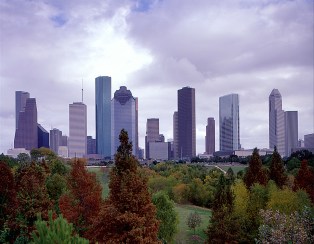 Houston is a city invented in the minds of real estate brokers and businessmen. Geographically it had no features that might have indicated that it would one day become a mega power. It is as flat as a place can be, hot for most of the year, devoid of rivers linking it to other places. The early hucksters who first imagined building a town in Houston often sold its potential to out of town folk with posters depicting a quaint village surrounded by mountains. When the individuals who had bought into the fake depictions arrived they usually had no means of doing anything other than staying even though they had been duped.
Somehow Houston attracted innovators and investors with grand ideas. These were men who convinced railroad magnates to tie the city into the commercial system that crisscrossed the country. They were the same types who conceived the plan of connecting Houston with the Gulf of Mexico by building an artificial route to the sea via a ship channel. The early Houstonians were visionary enough to create a university that would become known as “the Harvard of the South.” They recruited talented young doctors to found medical facilities that would grow into a world renowned center of excellence. When World War II broke out the city of Houston was poised to tackle the business of producing the necessities of battle. By 1948, Houston was a city on the move and somehow its growth never stopped. Today it is the fourth largest city in the United States and forecasters predict that it will overtake Chicago in the next two decades. Continue reading “The Stepchild”
The Humanity

All summer long and well into the early fall days we have seen the images of refugees from warring and authoritarian nations pouring into Europe. Countries there have been overwhelmed by the level of human misery and sadly these poor souls represent only the tip of the iceberg of suffering. While governments grapple with difficult considerations, all I see are desperate people who have grown weary of despots, war, and privation. Mostly I notice that so many of them are fairly young men who appear not to have families with them.
Closer inspection reveals a trend that is far from new. It seems that many of the immigrants searching for respite in foreign lands are heads of households. Their almost universal goal is to find a secure place to live so that they might one day send for wives and children who remain in harm’s way. They have made the difficult and unsafe journey alone because to bring women and small children would have been far too dangerous. They travel best if they only have to care for themselves. They have become familiar with the laws of the lands where they hope to live. They understand that once a country accepts them and they establish a foothold they will have the right to send for their loved ones. This is the plan. Their hopes and dreams depend on making this a reality. Continue reading “The Humanity”

