The Art of Instructive Debate

Photo by Werner Pfennig on Pexels.com

Anyone who follows my blogs knows that I am an advocate for free speech. I generally have no problem speaking my mind, and I value the opinions of others even when I disagree with them. I like healthy back and forth discourse unless it gets personal or ugly. While there is no law against belittling someone, I find it unnecessary and offensive. In general if a person’s argument is only to make fun of others, it indicates that they really have no rationale for their beliefs.

I was trained in the rules of competitive debate. I learned how to research both sides of an argument, defend either side and refute the presentation of my opponent. Ridicule or sarcasm was not a winning strategy. I had to be ready with factual evidence to prove my points. The more expert the information that I conveyed was, the more likely I would win. Sadly debates that I see today, whether with members of a panel or in the political realm, tend to deteriorate into challenges of who can talk over the other person with the most audacious insults. I find them to be informative only to the extent that they identify persons who don’t actually have much to say. 

In college I had to write countless papers. Many of them were persuasive, and I did not have the freedom to choose a particular side. There were times when I was successful at convincing my readers to do or believe something with which I did not actually agree. Such experiences taught me to seriously study situations and issues with an open mind before drawing conclusions. They were also enjoyable exercises for me. Since then I have taken great delight in sitting with a group of people willing to dialog in a polite and meaningful manner. I don’t mind at all when a diversity of ideas and opinions are offered. In fact, I prefer that to sitting inside an echo chamber where everyone sounds the same. 

Many people have lost the skill of active listening and persuasive discussion. They begin planning their rebuttals before they even hear the totality of the points that the other person is making. Often they become so emotionally unhinged that they descend into insulting the other person’s intelligence or even their appearance or personality. Sadly this type of debate is accepted far too often. The goal is to shut someone down rather than to rationally defend an idea. 

I remember watching the first televised debates between John Kennedy and Richard Nixon. While I was quite young at the time and never a Nixon fan, it bothered me that so many people focused on his appearance during the back and forth, instead of what he was saying. I felt that somehow such reactions were missing the point of having two political candidates present and defend their beliefs. Somehow that first venture into a national debate has only deteriorated more and more over the decades. Now people laugh at jabs about an opponent’s wife or the size of a candidate’s hands as though the ones able to amuse us are somehow stronger leaders than those unwilling to descend into the depths. 

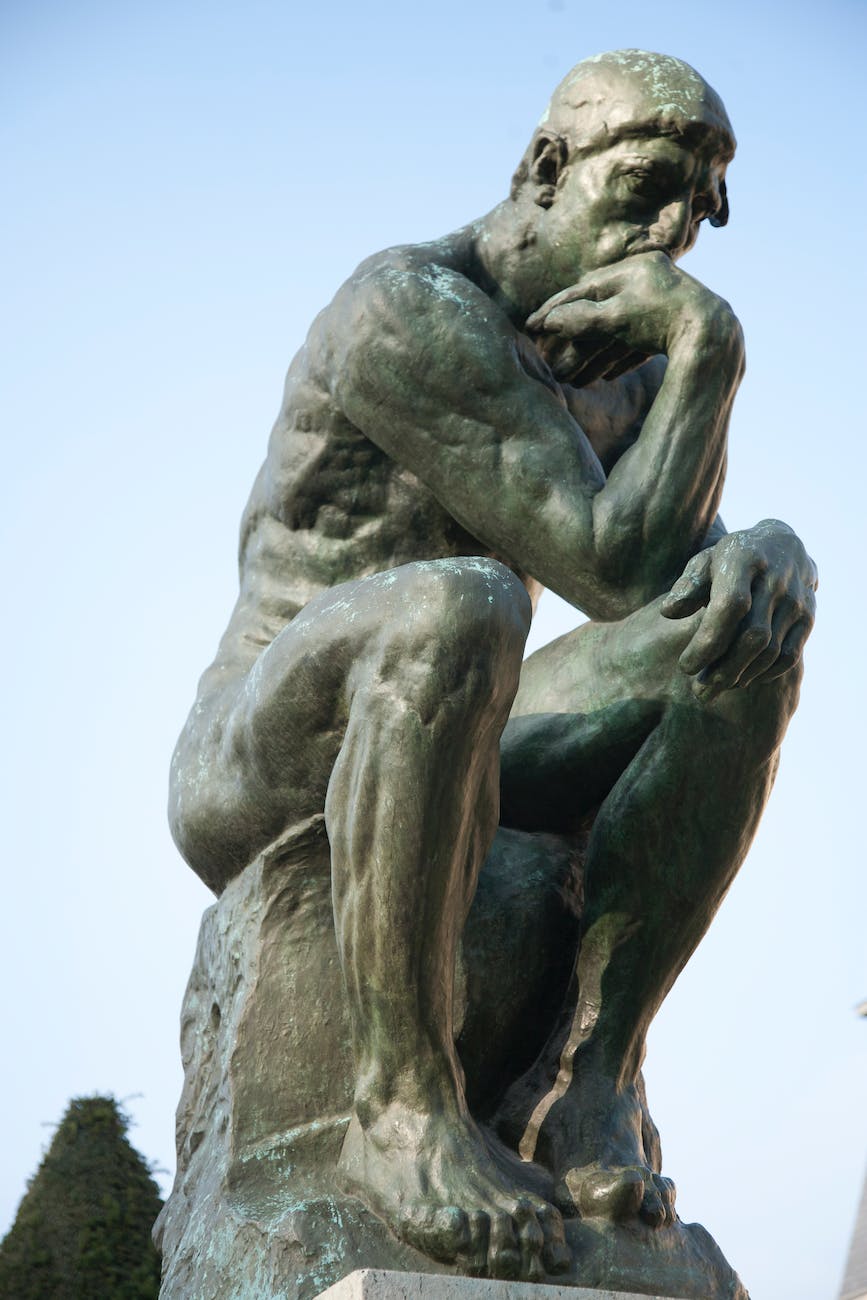
I would be much happier if we had formalized Socratic discussions or Lincoln/Douglas style debates with rules that kept each speaker focused on issues rather than personal attacks. It’s one thing to refute a person’s platform, but another to insult their family. It may be free speech, but it is really lazy speech. A more formal approach would help us to determine truth rather than feelings. 

I recently brought up a topic on Facebook that prompted many response from multiple sides of the issue. I did my best to keep everyone focused on providing support for their statements rather than being sidetracked by snarky digs at the people who disagreed with them. For the most part a very healthy debate ensued with only a few off-topic regressions entering the conversation. At the end everyone agreed that it had been helpful to understand how and why people were taking different sides. 

Many of the problems that we have in our society today come from misguided attempts to derail important discourse. We have trouble finding common ground because we continually fight civil wars of words. We approach important issues like combatants unwilling to compromise even if it means accomplishing nothing. So many problems go unanswered unless there is a plurality of like-minded people to push their way through while totally ignoring the concerns of the minority opponents. It results in a constant state of discontent from one side or another. It’s no way to run anything, much less a government. 

I know that these are things we don’t really enjoy thinking about. We allow the degradation of our discourse because we don’t like to rock the boat. All the while it only seems to become worse because we have done nothing to point out the flaws of debate by insult. We have the power to stop it, but it would mean voting against anyone who uses such means to gain power and anyone who supports them as well. Soon enough our leaders would see that we demand respectful debate and action on issues that includes compromise. I believe that we should all be free to be you and me and still be respectful. That’s my idea of free speech. We don’t see enough of it these days. Perhaps we need to insist that more of our leaders learn the art of instructive debate and we the people would also do well to do so.

We All Die From Gut Trouble

Photo by Kindel Media on Pexels.com

Last year when I went for my annual physical with my Primary Care Physician, he commented that he did not have another patient in my age group who looked and acted so young. In fact he marveled at my lack of serious health problems. I was thrilled to hear such things and I wondered if I carry the same genes as members of my family who lived to see one hundred years of life and more. Somehow each of us is made from a combination of DNA that comes down the line from our parents and grandparents and beyond. 

I’ve often told the story of my paternal grandmother providing me with a medical history of her family. Of course she was not well versed in medical terminology but she nonetheless alerted me in her folksy way. She looked me in the eye and told me to always remember that people in our family all die from gut trouble. Ironically she did indeed died from colon cancer not long after her revelation and I have always been vigilant regarding the gastroenterology aspects of my body. 

In addition to my PCP, I visit my “gut” doctor, as my grandmother would have called him, on a yearly basis. I’ve endured endoscopies and colonoscopies multiple times in the fear that I might one day follow in the footsteps of my ancestors. So far the only real problem that I have is chronic heartburn caused by a hernia that I did not realize I had. If I religiously take medication for that I can generally operate without problems, but if I skip even one pill I am reduced to a state of severe pain. It is so bad that I have at times considered going to an emergency room even though I know that there is little they might do. 

It’s amazing how we are able to repair so many problems with modern medicine. My grandmother was not so lucky and she told me that many people in her family rid themselves of heartburn by drinking vinegar back in the day. In truth, that was a wonderful idea. It seems contrary but it actually reduces the burning sensation of heartburn. There have been times when I have used that trick to calm the acid backing up into my esophagus. It takes an hour or so to work, but eventually it calms things down so that I am able to go about my day. 

I once visited an Amish furniture store and they sold baked goods, jellies and home remedies as well as the lovely tables and chairs that they build so beautifully. I found a little jar filled with “Amish Heartburn Relief.” Of course I had to try it even though it cost more than the pills that I get free with my insurance each month. I knew that in spite of medication the night would come when I would be awakened by acid coursing up my throat. 

Surely enough, that moment came and I rushed to my medicine cabinet to try the Amish fix. I almost laughed out loud as I swallowed the suggested amount. It was like taking a slug of apple cider vinegar. It was no better or worse than the remedy my grandmother had suggested, but it worked and that was all that mattered to me. About an hour after ingesting it I was sleeping peacefully once again.

It’s amazing how we humans experiment to find ways to keep ourselves feeling well. I often wonder who the adventurous souls were who determined by trial and error how to treat ailments. Of course they went through some strange phases like using leeches, but over time we seem to get better and better at finding remedies that actually work. I find help my from my doctors and never through the grapevine, but back in the day I suppose that there were times so desperate that people were willing to try almost remedies. 

I can remember a time when there was talk of replacing a person’s heart. The very idea sounded like something out of science fiction. It also seemed to be so dangerous that it would not be worth the risk. Indeed the first iterations did not always turn out well, but over time the experts learned what had worked and what had not and made improvements. Now it is almost commonplace to transplant hearts and kidneys and other organs of the body. It really boggles my mind to think of such things. 

I’m a stickler for going through my doctors first. I trust them because they have never let me down. When it comes to home remedies I only use them as a stopgap measure until I can see my physician. Even then I refuse to ingest anything that I would not use to make food. There is no way that I would rely exclusively on the advice of a neighbor rather than going to my doctor. I know for certain that my grandmother died of colon cancer that had overtaken her body when she ignored it for many months. Her doctors were devastated by the realization that they might have been able to treat her successfully if only she had come to them sooner. Somehow she forget her own warning that everybody in her family dies from gut trouble. I don’t intend to do the same thing.

I’ve learned from family yore that a great great grandmother was known as “Doc Reynolds” because of her knowledge of folk medicine. She used herbs to keep people healthy and to cure common illnesses like colds. She created poultices for rashes and wounds. Evidently people came from all around to consult with her wisdom. Perhaps in a later day she might have actually gone to medical school and become Doctor Reynolds. I’m proud that she knew what to do in a place where no doctors were around, but I live near one of the best Medical Centers in the world, so I choose the professionals instead. Maybe I will be lucky and not be one of the family members who dies from gut trouble because I take my prescribed pill everyday and keep my Amish remedy close at hand. Who knows, one day I may be able to assuredly tell my grandchildren that they don’t have to die from gut trouble.      

Wisdom

Photo by Charl Durand on Pexels.com

Anyone who reads my blog regularly is well acquainted with the fact that my mother was a very interesting woman. She became a widow at the age of thirty and raised three little ones to adulthood by herself. Just after I left home she began to show the signs of mental illness that eventually would be diagnosed as bipolar disorder. With loving support from family, neighbors and her bosses she managed to work until she was able to retire with a small pension and a monthly Social Security check. Through it all she maintained an optimistic and generous spirit along with an uncanny wisdom that she shared with an eye toward the future. 

Mama believe in the scriptural admonition that there is a time for every season, and by that she meant that each of us must know when it is the moment to play our different roles in life. She had nurtured us when we were children, but encouraged us to fly away from her protective nest when we became adults. She was a working mom by necessity, but she surrendered her job in her sixties with the comment that it was time for younger folk to have the privilege of her position. She at times fretted that older people too often cling to the reigns of power longer than they should, sometimes making it difficult for the next generation to have their turn at running things. 

When people in their seventies boasted that they were still heading companies and working forty hours a week, my mother would sniff and ask why they were not willing to train younger folks to try a hand at their jobs. She believed that it was never a good idea to overlook the up and coming generation or to scorn them by an unwillingness to trust them. She felt the same about politicians, believing that there should be limits to the amount of time that people hold powerful positions, even it they were lifetime appointments.  

Mama was highly respectful of young people. She believed that in living longer we humans had a tendency to focus on the wisdom of the old while ignoring the beliefs of the young. She felt that we had become lopsided in the running of families, businesses and governments by allowing decades long control by a particular individual or group that might instead have stepped aside to give the next generation a chance to find their own way and to demonstrate their talents.

My mother also believed in sharing wealth before death. She was not one to hoard what few treasures she had. When she died she had little of great value because she had already given away much of what she had managed to accumulate during her life. She preferred the idea of providing young people a financial boost to leaving them fortunes when they had grown old. She often noted that she did not worry about becoming a King Lear whose family abandoned him once he had transferred his power to them. She believed that a well run society depended on helping each successive generation and demonstrating faith in their capabilities. 

I often wonder what my mother would think of so many Baby Boomers hoarding their power and their money. She’d wonder why the leading candidates for the presidency in our country are old men who should stay home and leave the running of the country to the generation of their children and grandchildren. She would also be asking why so many speak of our youngest adults with so much derision. Instead she would no doubt insist that it is the natural progression of things to embrace the vibrant ideas of youthfulness. She would remind me that even Jesus carried out his mission on this earth before he was thirty three years old. 

My mother gave me and my brothers infinite levels of confidence in ourselves because she encouraged and respected our thinking even when it diverged from hers. She often laughed at the impact our philosophies had in changing her mind about things. She grew as we did and she saw that as a very good thing. She rarely chided us unless she saw us growing insular and selfish. 

My mother helped me to find my footing when I was a fledgling teacher. Her words of wisdom were simple. She told me to embrace each of my students just as they were and to always demonstrate to them that I valued their differences. Once I stopped judging and ranking the children who came to me, but instead understood that they could and would learn at different paces and in different ways, I became the teacher that they needed. 

I doubt that I would be the person I am today without my mother’s wisdom. Her voice still resonates inside of me. I see the future generations as our hope, not our downfall. I realize that it is now my time to support and encourage the generation that will take humankind into the future. My mother taught me how to look forward rather than holding on to the past. Her influence has served me well.    

Learning A New Trick

Photo by mali maeder on Pexels.com

I’m that person who has a difficult time just sitting quietly doing nothing. I have friends who meditate each day, but I always feel distracted by my inclination to be busy whenever I attempt to slow the thoughts that race through my mind. I suppose that if I were to admit to one aspect of my personality that might need a bit of change, it would be learning how to simply relax and live in a moment. Instead I am more inclined to be measuring the progress of each day by counting the tasks I have accomplished from dawn to dusk. The more I have done, the better I feel, but perhaps there is something to be said for simply becoming one with the beating of my heart and the breaths that I take. 

I have a dear friend who once showed me the tiny closet that she had converted to a place of prayer. Inside she had placed a large pillow on which to perch while candles and incense filled the air with lovely scents. She told me that she often read inspirational texts and then closed her eyes and simply listened to the silence around her. She shut out the hustle and bustle of the world each day in a spiritual moment that brought her closer to a kind of nirvana and allowed her to understand her place in the vast universe. 

I often think of a sonnet by William Wordsworth whose words seem to describe my own dilemma, “The world is too much with us, late or soon. Getting and spending we lay waste our powers.” I see myself being distracted by so much during the day, that really is not as important as I often deem it to be. I instinctively know that I don’t really have to keep my home spotlessly clean or fret over the weeds in my garden, but nonetheless I grow anxious when things feel out of order. 

I greatly admire those who purposely pause to care for themselves, those who can leave dirty dishes in the sink or step over clothes thrown on the floor. My mother who had once run her household with an unbending schedule learned to let the cobwebs stay in the corner while she serendipitously drove to just sit watching the ocean waves. Life became a glorious adventure for her instead of a series of tasks to be done. 

I find my relaxed side whenever I travel with my trailer. On those excursions I do not set an alarm. I eat whatever I wish. I wander without aim. I see the world and its people in a spiritual way. I allow myself to relax and I free my mind to get in touch with beautifully random thoughts. It is as though each journey is a pilgrimage that sets me free from being too much with the world. 

Recently I read an article about a man’s discovery of Deer Island in Maine. He noted that he had first heard about the place when reading Travels With Charley by John Steinbeck. Later a friend would tell him that Deer Island was an enchanting place that no words might actually describe, so he decided to go see it for himself. He learned that there was indeed something magical about being there and his advice was that to fully know it, one must actually go there. 

I suppose that one day I would like to wend my way to that island. It would need to be a slow trip in which I tarried for a time here and there. Perhaps it would be nice to first head east along the coast of the Gulf of Mexico, stopping for a day or even a week in Louisiana, Mississippi, Florida and Georgia. I’d definitely want to spend time in Savannah, a wondrous little town that still fills my heart with the most pleasant memories. 

This adventure would have to take many weeks so as not to become tiresome from the drive. I would want to slowly inch my way up to Maine, avoiding the hubbub of cities and instead finding the secret hideaways of nature. Eventually I would travel along the Atlantic Coast to places that my ancestors of long ago might have visited. I’d watch the flora and fauna change as I travelled northward and begin to imagine the earliest people who roamed through the forests before Europeans sailed from across the ocean. My imagination would be set free to simply enjoy the gifts that still linger beyond the grip of civilization. 

For now, my task is caring for my aging father-in-law. I think that to do the best possible job of making his days comfortable I must learn how to relax and meditate on my own. I suppose that I may start by reading passages from books sent to me by friends. I will progress slowly and perhaps with practice I may actually learn how to stop the world for a time each day. I am an old dog, but I don’t think that I am beyond new tricks just yet. There is no better time than the present to try to find and enjoy silence, to hear the wind and revel in simply existing without a plan. It sounds rather pleasant, so I think I will try.

The Joy of Tea

Photo by Ekrulila on Pexels.com

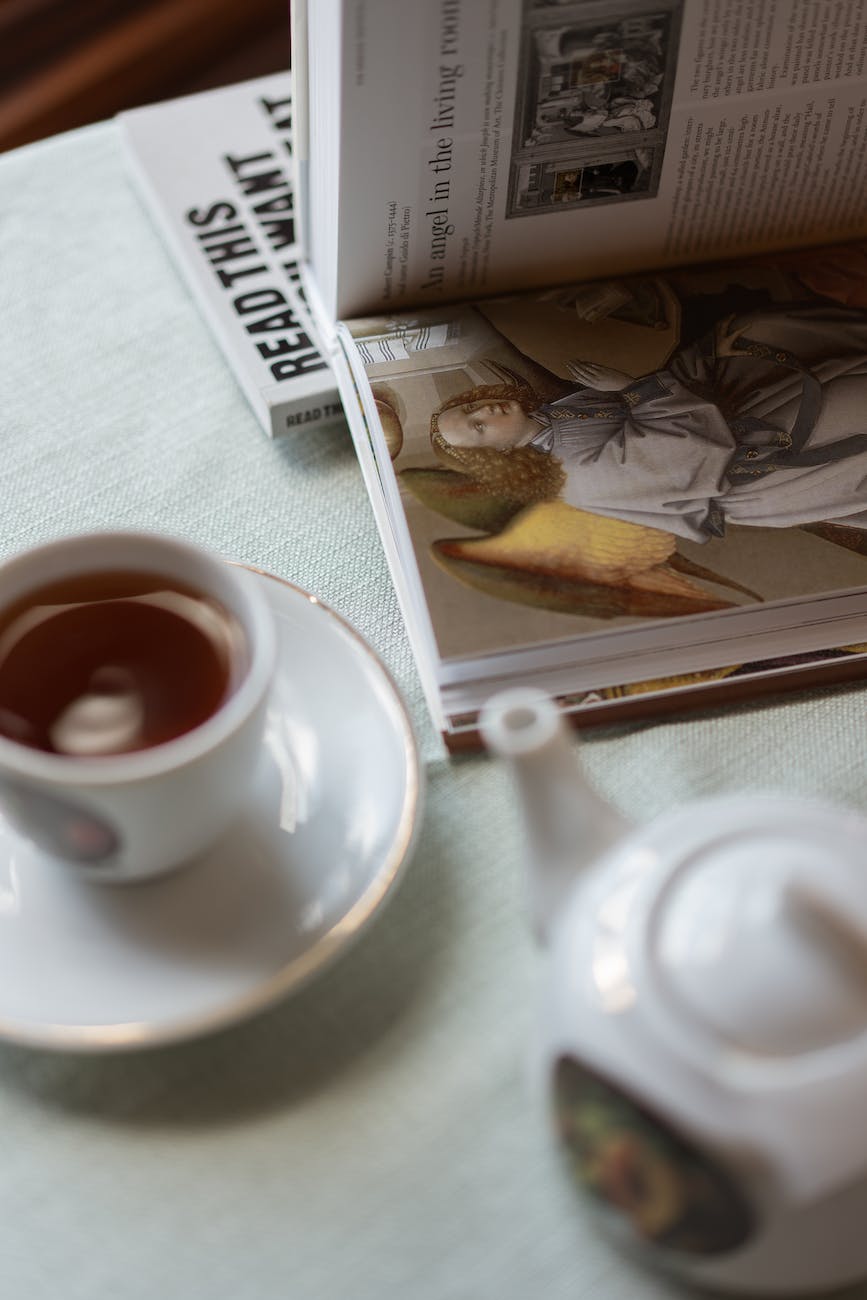
I grew up in a household that was all about coffee. My mom was hardly able to utter a word before she had her first sips of dark black brew each morning. My grandmother gave her grandchildren milky cups of weak coffee filled with sugar. The only thing I really liked about coffee was the smell, and even as I grew older and desirous of the kick of caffeine to start my day I remained unimpressed by the favorite morning drink of most of the people that I know. It was not until I met my mother-in-law that I encountered the joy of tea.

It began on Sunday afternoons when we visited my husband’s parents for a family dinner. Once the leftovers and plates were cleared from the table where we had enjoyed Sunday roast with Yorkshire pudding, the men would generally scurry off to see what kind of sports were on the television. My mother-in-law instead began the process of making tea, an art she had learned from her mother, an immigrant from England. 

My mother-in-law had an assortment of teapots that were worn and stained from brewing countless batches of tea. Her favorite was a rather nondescript chubby little pot that she called “Little Brown Betty.” She had inherited it from her mother who had taught her the correct way of brewing and serving tea. When the water was heated just enough she poured the hot liquid into the pot and swished it around to warm it before putting the tea inside and then covering it with just the right amount of hot water. 

She would carry the brew to the dining table along with pretty china cups and some cookies that she called biscuits in true English tradition. I loved the mildness and flavor of the tea from my first sip and I have never turned back. It is my morning drink of choice, the way I start each and every day. 

Over the years I have tried many different teas. My favorite is Earl Grey, but I am open to trying any variety. A trip to Victoria, British Columbia in Canada a few years ago led me to a blend from the Empress Hotel that is delightfully perfect. It was there that I also learned about the luxuries of an afternoon tea time done exquisitely. I found myself wishing that my mother-in-law had been with us to watch the masterful presentation of tea, scones, and tiny sandwiches.

I seem to collect tea wherever I go. A dear friend introduced me to chai tea and I immediately became a fan. My sister-in-law showed me a tea store in Estes Park that had a fabulous variety of every sort of tea including Cream Earl Grey. Sadly the owners sold the business and the new owners discontinued the brands that I had so enjoyed. When in England I purchased so much tea that I had to pay a fee for my overweight suitcase. 

One of my former students once invited me to a morning tea time at her home along with her brother who had also been a student of mine. She served many different Asian teas that were delightful. Her brother presented me with tins of the various varieties that we had tried as well as a wonderful book outlining the history of tea and tea making. He also gave me several beautiful tea sets that I enjoy using when guests come to visit.

There is something slow and purposeful about tea. It forces me to tarry for awhile, to slow down my pace from frantic to relaxed. When done right it is a kind of ritual that honors the people partaking of the brew. It is a tradition handed down over time and I have been lucky enough to learn of it from my mother-in-law.

I have converted a few of my grandchildren into tea aficionados and I have a niece who used to come to my home every Tuesday afternoon for tea. Covid interrupted that little tradition and now she is a high school student who is far too busy to pause from all of her activities. I generally sip on my tea alone now. As I drink from my cups I think of all of the joy and social interactions the taking of tea has brought me and countless souls over time. It is more than just the consumption of a caffeinated drink, it is an art form.

One of the grandsons whom I took to the Empress Hotel so enjoyed the tea from there that I used to regularly send him a box. He’s in his first year of college now and no doubt has little time for the rituals associated with tea, but I suppose it might be a wonderful surprise for him to receive a little bit of heaven in the mail. I think I will order some of that tea for him today. I hope as he sips on it he remembers the love that we all felt when we were together just as I remember my mother-in-law so expertly preparing the delightful pot of tea for me.

The history of tea is filled with all sorts of intrigue including revolutions. It’s more than just some tiny leaves turned into a delightful brew. It is my way of clearing the head, enjoying a moment of tranquility and remembering the love that went into creating the many cups that folks have enjoyed.