True Love

true-love_2767240He and his friend were giddy in an anticipation of their inside joke. It was a sibling setup, the kind of thing that big brothers sometime do to their little sisters for a laugh. It was supposed to just be all in good fun. He had agreed to go along with the impish brother’s plan to embarrass his unwitting sister, but he was unprepared for what would actually happen.

The two men sat at a table eating the dinner special. Just as agreed he demanded to speak with the cook, his coconspirator’s target. They winked at each other in anticipation of her reaction, stifling their amusement until the preplanned time. She seemed to suddenly appear, a tiny little thing with a puzzled look meekly inquiring, “May I help you sir?”

His chest heaved. His throat constricted. He had not expected to be so taken with her. Suddenly this was no longer a joke. He had never before been so utterly thunderstruck by another human being. His brain began whirring as he knew that he had to abandon the original plan. He took a deep breath and smiled at her. “I wanted to know who made this delicious food. I wanted to tell you to be prepared, because I am going to marry you one day.” 

She smiled and quickly glanced at her confused brother with the kind of knowing look that siblings give one another. It was a sweet moment, and little could she have known that the gentleman who had so complimented her would indeed one day be her husband.

Theirs would be a true love story. He called her his “buddy” and they not only shared the gift of parenting two children but also enjoyed just being together. He showered her with affection and she made him feel more of a man than he felt that he really was. They laughed their way through life’s ups and downs, sharing dreams and hard work and disappointments. They were a team as perfect as ever there was and then came the diagnosis.

She was very sick. The cancer had spread throughout her body. They dismissed her from the hospital and sent her home to die. He was by her side day and night, rarely leaving for more than a few minutes. He became her nurse, caring for her medical needs and soothing her when the pain became almost unbearable. He lay beside her running his hands through her hair and caressing her fevered cheek. He reminded her of how much he had always loved her. He silently prayed for a miracle that would never come.

He was bereft when she died. He never quit talking about her even as the years stretched from one to ten to twenty. His eyes would light up when he told stories of their time together. She was still the love of his life and never a day went by that he did not miss her. He kept her photograph on his bedside table. She was the first thing that he saw each morning and the last thing before he fell asleep each night.

Eventually he too became ill. Not even surgery helped. He slowly sank into a state of confusion that we thought had been brought on by the drugs designed to ease his pain. He told us that she had come to visit him and asked if we had seen her. He seemed happier than he had been in a very long time, and then only a few days later he died.

Love is a beautiful thing, and I am a sucker for stories and movies about romance whether they are tragic or comic. I suspect that I am not alone in that regard. The world has been savoring literature from Romeo and Juliet to Pride and Prejudice for centuries. Mostly the characters of such efforts are young and beautiful. Their’s is love borne out of the passions of youth. Rarely do we see the chronicles of older couples, and yet in so many ways those tales are far more moving. It is in the twilight years that the true ardor of a coupling often becomes the most apparent. Thus it was with my grandparents, and this was their story, one that resonates again and again. They had created a bond with one another that was profound.

Such moving partnerships tend to be quiet and seemingly ordinary and yet each of us has witnessed such unwavering love between people that we have known. These kinds of relationships are selfless and spiritual. They are examples of exactly how young couples should strive to be with one another. Such couples survive all of the challenges that real life throws at them because their partnerships are not shallow, but rather based on a deep and abiding connection between two souls that grows as the two share milestone after milestone.

Instead of watching silly reality shows about superficial people who look for love in all the wrong places we should ask the true survivors to share their experiences. We need to hear from the couple that makes the time to laugh and celebrate regularly with their children, grandchildren and great grandchildren. We would be wise to hear from the caring and devoted wife whose husband has been sidelined by ill health. How nice it would be to realize that love ultimately has little to do with appearance or status and that contentment may be had just sitting together in a backyard.

We all too often paint a very misleading picture of love and marriage for our young. They harbor expectations but rarely think of their own obligations. They forget the importance of their own kindness and patience. They don’t understand the power of being someone’s “buddy.” True soulmates walk with one another through rain, fire and glory. They grow together with all that such an idea implies.

I worry a bit about our world. The kinds of connections that were so visible between my grandmother and grandfather are no longer happening as frequently as they once did. So many are afraid to become committed to another. We have far too many broken and toxic relationships, and I wonder how our young will learn how to truly love as I did from my grandparents. It is in the role models that we see and the stories that we share that we form our own ideas of how to behave with someone that we love. Sadly of late we tend to be focused on the underbelly of marriage rather than the most beautiful examples of how it should be.

If we truly want to be the change that we wish to see then it is up to each of us to find the most incredible couples that we know and introduce their stories to the world. It is time that we once again see just how extraordinary love can be.
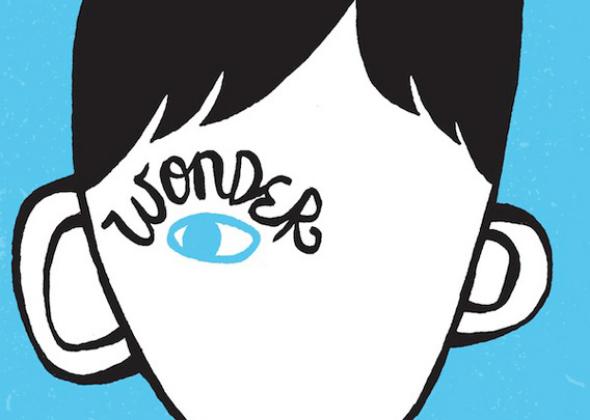
Wonder

121009_DX_WonderBook.jpg.CROP.promo-mediumlargeWe pretend not to care about physical appearances, but then our responses to beauty or lack of it tell a different story. Our world is filled with products and procedures that we purchase and use to improve our looks. We study the icons of pulchritude with an eye to imitating the imagery that they project. We don’t want to be shallow enough to react on the basis of someone’s physical traits, and yet whether consciously or subconsciously we somehow seem to judge facial features, body types, hairstyles and clothing. Researchers have told us that those with pleasing physical attributes are often perceived as being more intelligent and worthy of leadership positions. Even as we pray that we ourselves will not be judged solely by the way we look, we somehow fall victim to viewing others in such ways and worrying about how they in turn are seeing us.

We are often our own worst critics. I remember reading an interview with Keira Knightley in which she laughed at the very idea of being a beauty. She proceeded to point out every flaw in her face and her body as though it was common knowledge that she was in truth a rather homely girl. I recall thinking that we all do such things with ourselves as we gaze in the mirror day after day. Each of us sees aspects of our appearance that go unnoticed by others. I hate my lack of a strong chin and the fact that one of my eyelids droops just enough to make my eyes seem uneven. I suspect that most people really never think of those things when they see me, and yet deep down inside I am self conscious and even find myself wondering what they are thinking about my features.

Sadly we are a superficial society in spite of our protests that such things don’t really matter, particularly when it comes to women. We dissect every inch of our female political figures, critiquing their hairstyles and their wardrobe choices. Little wonder that young girls begin to worry so much about how they are developing as they bloom into womanhood. They take note of whether are not they are ever complimented as a beauty even when they understand that such things should not matter.  They watch the cruelty of their classmates toward those who don’t possess the attributes deemed attractive by the public. Adolescence can be an extremely stressful time for anyone who is a bit different and most of us have endured that trying time, so we should know better than to fall victim to superficialities.

There is an exceptional book by R. J. Palacio called Wonder that tackles the topic of who we really are by telling the story of Auggie, a young boy born with Treacher Collins syndrome, a rare disease in which the facial bones do not form properly. Auggie has been homeschooled because of the many health issues and surgeries associated with his illness. Now he is ready for middle school, and his mom believes that it is time for him to attend public school and learn how to navigate in a world that can sometimes be very cruel. His journey is fraught with not just the usual junior high taunts and stresses, but with the added difficulties resulting from his physical differences. In the end Auggie and his best friend learn the importance of what really makes each of us incredible, and Auggie himself realizes that he is truly the wonder that his mother tells him that he is.

Wonder has become a best selling novel that is treasured by young and old readers alike. My granddaughter who is an avid reader counts it among her all time favorite books. This summer a grandson will read it as part of his summer assignments for entry into the sixth grade. I suspect that many people have been challenged to rethink how they view the people around them while learning about the miracle that is Auggie. The novel demonstrates that sometimes the people who appear to be the most lovely have very ugly souls, while those who do not fit our standard definitions of beauty are in fact the most gorgeous people in our lives. It reminds us not to judge a book by its cover or a person by his/her face.

We all know that once we truly love someone we lose the ability to see them as anything other than amazingly wonderful. We care little about how they look for we have experienced their kindness, their generosity the very depth of their souls. We are able to see inside their beautiful hearts rather than only gazing at the skin deep aspects of their appearance. Wonder laments those who are incapable of experiencing the true meanings of life even while it celebrates our true essences. It focuses on the importance of friendships, character and the uniqueness that makes each of us special.

This summer a movie based on the book will be released and it is sure to become a classic. We owe it to our young people to either watch the film or read the novel together and then discuss a topic that we too often ignore. It is our duty as adults to help our children to realize that each of us is absolutely perfect just as we are. It is in finding the beauty in ourselves that we begin to see it in the people around us. Once we move past our own worries and concerns a whole world of possibilities opens up for us and it is spectacularly lovely.    

Memories of Summer Past

46211978-Children-racing-in-the-park-on-a-sunny-day-Stock-Photo-playing-child-park.jpgWhen the weather gets warm and the school year comes to a close I have a tendency to hark back to my childhood, and oh how wonderful it was. We didn’t have air conditioning back then even though Houston was as hot as it is now. We used a big attic fan and open windows to keep cool. Mostly though we stayed outside where there was always great adventure to be found. The hose was our water fountain and source of play all in one.

My usual wardrobe consisted of a pair of shorts and a sleeveless crop top. I don’t think I donned a pair of shoes from the end of May until the end of August unless we went to church or a store. My mother usually cut my hair into what she called pixie style, but it had mostly function and very little style. It kept my neck cool and was easy to care for. My feet would turn almost black by the end of each day and I often sported a ring around my neck from dirt and sweat that my mother called “Grandma’s beads.” God only knows I survived cuts from glass and punctures from nails.

I remember waking up early each summer morning. Somehow getting up with a rising sun was much easier when a day of fun lay ahead than during the school year. We were mostly on our own for entertainment. If we dared to hang around complaining that we were bored Mama would admonish us to go outside and play. Truthfully we rarely had trouble finding something to do. There were kids all up and down the block as excited about creating adventurous times as we were. We rode our bicycles up and down the neighborhood and across the bridge over Sims Bayou to Garden Villas. There we played games at the park and visited the mobile library.

All of us were quite inventive back then. At Karen’s house we built tents on her mother’s clotheslines out of sheets and blankets. At the Cervenka’s we dug an underground room. We teamed up for street baseball and had serious Red Rover tournaments. Sometimes I broke off from the boys and played with my dolls with Candy and Jeannie. Groups of us also created shows to which we would invite the entire neighborhood. I even tried my hand at amateur journalism by creating a newspaper with stories about all of the happenings.

Once in a great while my mother would treat us with a big thermos of ice water with enough cups for our friends. It was a welcome change from the hot rubbery tasting water from the hose. She was also known for inviting our friends in for lunch and she made the best sandwiches ever. When the temperature crept above one hundred degrees she allowed us to host game tournaments at the kitchen table. Monopoly and Canasta were two of the favorites and we played like Las Vegas professionals vying for world titles.

We enjoyed riding to Hartman Junior High to swim and to Ripley House to take art lessons and such. I most of all loved lying on my bed in front of the windows reading books while a hot breeze wafted over me. Reading was the surest way to be allowed in the house. As long as we were quiet and didn’t make a mess our mother was happy.

Mostly though we stayed outside until it grew dark each evening and grudgingly suspended our play when Mama called us in to take baths and get ready for bed. We spent a great deal of time lying on our backs gazing at the stars. We identified constellations and talked of things that are important to children. I remember feeling gleeful upon seeing the fireflies lighting up the nighttime and playing shadowy games of Swing the Statue.

On Friday evenings we always went to visit my grandmother, even in the summer, and that meant seeing all of my cousins. Our favorite past time was a game we called Hide and Find which was little more than a variation on Hide and Seek. We tended to stay outside because our parents filled Grandma’s tiny living room with smoke from their cigarettes. When we did go inside it was usually to watch wrestling or The Twilight Zone. On rainy evenings we spied on the brothers and sisters who were now our parents as they argued over poker games and who was our grandmother’s favorite child. We ate slices of rye bread and washed them down with a weak and sugary version of coffee. There was nothing quite like those weekly reunions that we thought would never end. Like Peter Pan we were in no hurry to grow up.

I rarely witness the kind of lifestyle that we had back in the fifties and sixties. Children today mostly stay inside of their air conditioned homes. When they come out to play their parents are with them, watching to be certain that they are safe. Most of the time they are not home, instead away participating in a host of organized activities. They are warned not to drink from water hoses because they might ingest dangerous chemicals that will make them sick. They wear shoes to protect their feet, kneepads to keep their shins from being skinned and helmets to insure that they will not endure head injuries. They make us look like free range renegades, children who should have been referred to CPS. The fact is that we were loved and cherished by parents who taught us how to fend for ourselves. We tackled bullies on our own and learned early on how to engage our creativity to occupy the hours. We truly believed that our childhoods were wondrous and we mostly invented the fun of each day with other kids rather than adults.

I suppose that the world is not quite as safe now as it was back then. The windows were always open and even though we did not see our mothers, they saw and heard us every minute. They had a neighborhood spy system that kept them continually informed. We were a different kind of gang than the ones that are now so dangerous. We took care of each other and learned how to share and be part of a team. Like Tom Sawyer and Huckleberry Finn we were summer explorers who found great adventures in our own backyards with adults from one house to another silently and stealthily tracking our movements. There was an innocence back then that parents today can’t afford to assume is present and oh how wonderful it was.

I sometimes sit and watch my neighborhood from my living room window. It is mostly quiet even when the children are not in school. I hope that they are somehow having as much fun as we did and that they will have memories that are as happy as mine. There was something rather lovely about the utter simplicity of my youth that seems to be missing today. I understand why, but it saddens me to think that children have to face ugly truths and realities about which we were oblivious. Some progress is wonderful, but having to grow up without the freedoms that I so enjoyed seems to be a loss for the new generation of children. Perhaps they are okay and don’t even know what they are missing, but I for one often wish that I might go back for just one more summer day from the time when I was young, and I would like to take a youngster along to witness just how marvelous it was. 

A Mind Is A Terrible Thing To Waste

agy_rajz_radir-400x200There was an old advertisement that asserted, “A mind is a terrible thing to waste.” I’ve often thought of those words as I have seen more and more individuals afflicted with Alzheimer’s disease or dementia. Watching someone who once bore a quick wit slowly but surely become less and less aware is one of the saddest and most difficult aspects of growing older. It is especially hard on the caretakers of those individuals.

I used to possess a photographic memory. I was literally able to recall the exact page number and positioning of a fact from a textbook. I once answered a question on a history test while visualizing the caption under a photograph that contained the information. Back then I took my ability for granted, assuming that I would always be able to pull information from my brain with little or no effort. I have unfortunately learned as I age that I am less and less able to quickly find the information that I need from the recesses of my gray matter.

I’ve read that exercising the brain is as important as keeping the body healthy. Experts claim that performing mental activities regularly helps to keep forgetfulness at bay. That is partly the reason why I write daily and tutor young people in mathematics. Such activities force me to push my mind as much as working out on the elliptical activates the muscles in my legs. Nonetheless I all too often find myself groping for a familiar word or having to review a geometric definition for the umpteenth time. Just as my gait has slowed, so too has my mental acuity.

I don’t generally worry that I will somehow become less able to function with my mind because my genetics seem to be less inclined toward senility and more toward broken bones or gastrointestinal diseases. My grandfather was still reading and discussing lengthy history books at the age of one hundred eight and my mother was sharp and witty until the moment that she drew her last breath. I haven’t seen evidence of diminished brain capacity even among my aunts and uncles. Still I worry simply because I have seen so much of it in the families of my neighbors and friends.

There is a man who lives near me who is my age. He recently began to frighten me a bit because his behavior became erratic and he was making inappropriate comments. I found myself avoiding conversations with him because I truly wasn’t sure that I was safe around him. Soon enough another neighbor revealed that the unfortunate soul was suffering from early onset Alzheimer’s disease. His wife had asked that we not drive him to the store for cigarettes and wine as we had unwittingly been doing.

Not long after hearing the reasons why the neighbor was acting so strangely his wife asked my husband to drive her to the scene of a car accident in which he had been involved. She tearfully recounted how he had stolen her car keys and snuck out of the house in an attempt to run away. He only got a few blocks down the road before he had wrecked the car. He could not remember how to call home but luckily his wallet contained the necessary information to alert his frantic family. As my husband drove her she literally begged for advice as to how to deal with the situation. She has been attempting to work which requires leaving him home alone. She was beginning to realize that he probably was no longer able to fend for himself in her absence.

The plight of those who have brain disorders along with the members of their families are heartbreaking. I have a dear friend who cannot leave her husband without finding a kind soul who will watch him in her absence. Her life has become far more insulated that it should be at her young age. One of my aunt’s lives in a retirement community with a husband in his nineties who is mostly unaware of his surroundings. She and her sister care for him without complaint but I know that they are the kind of women who love getting out and about, a freedom that they rarely enjoy these days.

A woman that I have known for years now lives in Georgia in a small apartment caring for her husband whose mental and physical health has been severely stressed by multiple strokes. Her days are repetitive and she is far away from friends and family. She is very much alone in her labors save for the visiting nurses who come a few times each week to give her an hour or so to herself. I talk with her via Facetime as often as I can but she really needs so much more support and it is not very abundant.

Still another friend visits her ninety something mother at a nursing home multiple times every single day just to be certain that her mom is getting the care that she needs. My longtime friend is a true angel who rarely complains that she must schedule her days to include those regular visitations. When she does have to leave town she has to find people who are willing to perform her duties. Sometimes that means hiring strangers and hoping that they will fulfill the responsibilities properly. In truth her trips are tainted with worry because few people invest the level of loving care into the duties as she does.

None of us ever really know when we or a loved one might begin to slowly lose mental capabilities. There are foods that we might eat and physical and mental exercises that will help, but in many cases the onset is simply inevitable. As more and more baby boomers age the epidemic only grows, impacting so many lives. Paying for care is increasingly expensive and usually results in families spending the victims into poverty. Some care facilities will accept Medicare once the individual is literally dead broke, but others are reluctant to deal with the multitude of paperwork involved. Many of those with brain disorders therefore stay at home, taxing the resources and patience of family members.

We hear a great deal about the medical needs of young people which is as it should be, but the stories of the elderly often remain hidden and forgotten secrets. We don’t often think of the individuals like my neighbor who spend their days in a kind of confused state. He was once a rather entertaining fellow who enjoyed attending parties and regaling us with funny stories. Now he barely makes sense as he reaches into the recesses of his mind for words and ideas. He is incredibly healthy aside for his Alzheimer’s. He might otherwise have been out enjoying his retirement with hobbies and trips. Now he is confined to a life so unlike his personality and even our attempts to visit with him seem to fall on a kind of blankness in his mind. It is so difficult to communicate with him on any meaningful level.

As more and more people enter the years when such diseases begin to show their symptoms we need to fund the kind of research that will result in improved memory or even a cure. It is not just the afflicted who suffer but their families and friends as well. Perhaps it is time that we have a month dedicated to learning more about such debilitating diseases. Maybe our sports teams need to wear special uniforms to remind us of those who are suffering. Yes, the mind is indeed a terrible thing to waste and yet somehow we have so many whose essence is being slowly erased and we do so little to talk about what we might do to help.

The Secret

devil-in-the-white-mansion-556-1415558594.jpgI’ve been told that I should have been a psychologist or maybe a detective or perhaps a lawyer. I am a fan of murder mysteries and true crime. My interest in such things have not so much to do with enjoying the macabre as having a profound curiosity about human nature. People are fascinating to me and I often find myself wondering what leads someone to perform dark deeds. I have friends who are fellow travelers in my hobby of studying the facts in a murder trial or attempting to solve a crime. Among them is my godson who is only a fifth grader. He and his mom listen to podcasts on his way to school and among his favorites is Martinis and Murder. When I visited with him last week he and his mother recommended several movies and television series that I should watch. Among them was Foxcatcher, an Academy Award nominated picture based on the true story of John DuPont, a man from one the wealthiest families in the United States. It was a great film with a fascinating tale and incredible acting particularly from Steve Carell.

I mention this movie not so much to review it or to be a spoiler but to comment on the fact that even those who seemingly have everything are sometimes actually bereft. John DuPont was believed to have well over two hundred million dollars back in the nineteen eighties, an amount that is unimaginable to most of us. He lived on a vast estate, traveled in his own private plane and was virtually able to enjoy his wildest dreams and yet he suffered from a personality disorder that eventually devolved into mental illness. He had been alone and friendless for most of his life and seemed to be a disappointment to his mother. He struggled to find a place for himself in spite of philanthropic efforts designed to bring himself attention. He seemed to be an individual who was unable to connect with others and form healthy and loving relationships. In the end his life was a tragedy.

How often do any of us hear that money can’t buy happiness? Our next thought is that we would surely like to try our hand at proving that having a large bank account may in fact be the golden ticket to satisfaction. I know I’ve daydreamed about such things before. I imagine myself paying for college educations for my grandchildren and those of friends. I insist that I won’t change my lifestyle that much, but will just make a few renovations to my home and take some exotic trips. I plan to give large donations to the University of Houston and don’t exactly blush at the idea of having a building named after me even though I claim that I want my largesse to be anonymous. I protest that I want no attention drawn to my good deeds, and I only desire to possess a fortune so that the people that I know and love will not have to endure the stress of worrying about making a living and such. Of course, once I reflect on such ideas I realize that it is impossible to receive such a large windfall without having it change everything about my life, and I realize that I would never be ready for the attention that would surely come my way.

I suspect that there is something gloriously wonderful about the anonymity of being a regular working stiff that most of the folks who live in River Oaks or other such places never have. They have to constantly worry about people’s motives in befriending them. They are watched so closely that a bad hair day becomes a headline. They are criticized continuously for the things that they do or don’t do. They sometimes have to find ways to isolate themselves just to get away from prying eyes whereas nobody cares how I look when I make a quick run to Walmart or even that I choose to shop there.

I remember how shocked the world was when Jacqueline Kennedy remarried after her beloved husband John was assassinated. She made a curious choice in the person of Aristotle Onassis who was much older than she was and not known for his good looks. He whisked her and her children away to an island, however, which was no doubt precisely what she wanted for her family. He had the means to allow her to live for a time without the pressures that come from being a wealthy and famous celebrity. Hre children were able to grow outside of the limelight. It was a brilliant choice on her part and I suppose that she loved him for giving her this great gift.

After all is said and done we are all just human. It is certainly important to have enough income to have a home stocked with food and the basic necessities. It helps to be able to provide for our children’s educations and everyone enjoys the ability to afford a little fun now and again. Essentially none of us need millions or billions of dollars. What we do require is love and comfort. Abuse and heartache have no economic bounds. We tend to think that having more money will allow us to solve any problems that arise but time and again we are reminded that such is not the case. The darker side of our natures has been known to assert itself all across the financial spectrum. Somehow we find ourselves being more shocked when there is violence in a family of means than when it occurs on the so called other side of the tracks.

Some of the happiest people that I have ever known have had very little. Their wealth lay not in bank accounts, real estate holdings, or possessions but in their relationships. They are the souls who inspire us with their big hearts. What they have to give is compassion. I continually learn of the angels among us who perform good deeds that are astounding. They take the last of their paychecks to quietly purchase a wheelchair for the victim of an accident or to buy groceries for a family in need. They rarely mention their kindnesses. They do not look for gratitude. They teach their children the value of people rather than things. They enjoy the simple pleasures of long conversations with friends or walks on cool spring days. It doesn’t take much at all to make them smile. They love good jokes and laugh from the bottom of their bellies. They may have to pinch pennies to pay for an unexpected repair, but they choose not to worry because somehow they always find a way to get things done.

Our human experience brings us many emotions. We all have moments of suffering. Money if used in the proper way will most certainly eradicate some of our troubles and woes but it is never the panacea. How we feel almost always boils down to how we approach the realities that test us. If we believe that things are the secret to a wonderful life we will probably find disappointment again and again. It is in truly honoring every person that we encounter without ulterior motives or unrealistic expectations that we find the happiness that we seek, and that rarely costs a thing.